Lemdro.id

2,359 readers
24 users here now

Our Mission 🚀

Lemdro.id strives to be a fully open source instance with incredible transparency. Visit our GitHub for the nuts and bolts that make this instance soar and our Matrix Space to chat with our team and access the read-only backroom admin chat.

Community Guidelines

We believe in maintaining a respectful and inclusive environment for all members. We encourage open discussion, but we do not tolerate spam, harassment, or disrespectful behaviour. Let's keep it civil!

Get Involved

Are you an experienced moderator, interested in bringing your subreddit to the Fediverse, or a Lemmy app developer looking for a home community? We'd be happy to host you! Get in touch!

Quick Links

Lemdro.id Interfaces 🪟

Our Communities 🌐

Lemmy App List 📱

Chat and More 💬

Instance Updates

!lemdroid@lemdro.id

founded 2 years ago
ADMINS

Did you know that the Voyager app is available at m.lemdro.id?

1
79
submitted 1 year ago* (last edited 6 months ago) by ijeff to c/android


Start your journey into the Fediverse by subscribing to our starter communities. We're actively working with subreddit communities and moderators on their transition over.

Our Mission

Lemdro.id strives to be a fully open source instance with incredible transparency. Visit our GitHub for the nuts and bolts that go into making this instance soar and our Matrix Space to chat with our team and access the read-only backroom admin chat.

Interfaces

Our Communities

Other Neat Communities

Seeking Experienced Mods

Are you interested in exploring options to migrate your tech subreddit to the Fediverse in a way that supports decentralization or are you an experienced moderator who is interested in joining one of our mod teams? Get in touch!

A Fediverse home for developers

Are you developing a Lemmy app and looking for a home community for your project? Get in touch!

2
3
 
 
4


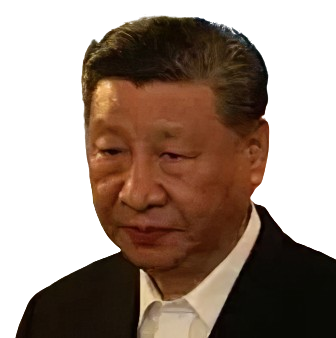
cross-posted from: https://lemmy.sdf.org/post/49395941

Archived

Here is the full report: “Save Our Mother Tongue”: Online Repression and Erasure of Mongolian Culture in China

The Chinese government is waging a systematic campaign to erase Mongolian language, music, and culture online, using surveillance and intimidation of activists, platform shutdowns, and content removal to silence users and digital spaces where Mongolian identity once thrived, PEN America and the Southern Mongolian Human Rights Information Center said in new report, released today.

“Save Our Mother Tongue”: Online Repression and Erasure of Mongolian Culture in China, documents how vibrant digital spaces that once enabled Mongolians to communicate in their own language, share their music and literature, and organize peaceful protests, have been dismantled. Based on 20 in-depth interviews, including with Mongolians in exile and some who recently left China, digital research, and public records, the report shows how the rapid growth of Mongolian-language internet use in the early 2000s triggered a wave of digital crackdowns. These crackdowns intensified after protests erupted in 2020 over a new policy imposing Mandarin Chinese as the language of instruction.

“This is not just about censorship – it is about erasing Mongolian culture and identity and leaving Mongolian people living in China isolated from their own identity,” said Erika Nguyen, senior manager at the PEN/Barbey Freedom to Write Center at PEN America and co-author of the report.

“The Chinese government has made basic acts many of us take for granted, like speaking your language, listening to your music and participating in digital community spaces, not only almost impossible but something that is actively dangerous. This is also a chilling glimpse at what will happen if tech companies continue to give governments unfettered control over what can and cannot be available online.”

A new policy in 2020 that replaced Mongolian with Mandarin Chinese across all subjects in schools sparked protests that swept the Inner Mongolia Autonomous Region. This led to a swift and brutal suppression from the government during which 8,000 – 10,000 Mongolians were placed in police custody. This real-world repression was followed by an escalating crackdown on online posts protesting the policy. More than half of interviewees for this research, all of whom now live outside of the region, were banned from WeChat, a widely used mobile app in China, because they took part in the protests online and in real life.

A Mongolian who left the region after the protest explained, “I participated in the protests in Inner Mongolia in 2020, driven by my deep concern for the preservation of our language and culture. The atmosphere was charged with hope, but that quickly turned to fear as the government cracked down on dissent. …they implemented widespread censorship, shut down social media, and silenced anyone who dared to speak out.”

Following the protests, the Chinese government paid particular attention to suppressing the use of the Mongolian language: nearly 89% of the 169 cultural websites written in Mongolian – a vertical, left-to-right writing system unsupported by most digital platforms – reviewed by PEN America have been shut down, converted to Mandarin-only access or stripped of content related to Mongolian life and culture, including discussions of Chinggis Khan. Mongolian words, songs, and historical references are routinely censored or labeled “separatist.”

The report found that other ongoing attempts to eradicate the Mongolian language, expression, and community include: arresting and forcing “re-education” on Mongolian activists and educators who posted online; using digital platforms for forced “confessions” to publicly discipline and intimidate Mongolians; restricting language-specific messaging apps that were designed and coded to support Mongolian script; shutting down chat forums and online meeting spaces where people wrote in Mongolian and discuss Mongolian language and culture; and removing Mongolian music from music apps.

“To express ourselves online – that would mean telling our stories on our terms, in our own voice,” said one exiled Mongolian activist interviewed for the report. “It would mean Mongolian words, poems, and music thriving – not hidden in encrypted chats, not erased by algorithm or policy, not punishable. It would mean Mongolian children seeing their language in pixels as well as textbooks, feeling seen, alive, and proud.”

[...]

“Imagine waking up one day and not being allowed to communicate with your parents, grandparents, or siblings in a language they understand,” said Enghebatu Togochog, director of the Southern Mongolian Human Rights Information Center. “That is what has happened to Mongolian people living in China. Online cultural communities are not just nice to have but an essential part of allowing people to fully enjoy their cultural rights – that is what the Chinese government is taking away and what we must urgently fight to protect.”

These violations against Mongolian people are reflective of a wider crackdown by the Chinese government designed to stamp out any minority language and culture in the region, including Mongolian, Tibetan, and Uyghur.

[...]

The report concluded that governments, multilateral institutions, tech companies, cultural institutions, and donors must act collectively to hold the Chinese government accountable for violations of the cultural, linguistic, digital, and free expression rights of ethnic minorities. They must press for the release of detained Mongolians, the repeal of laws and practices that suppress minority identity and speech, support Mongolian cultural initiatives, and provide protection and support to Mongolians in exile at risk of transnational repression.

At the same time, the research found, China continues to publicly display a “sanitized” or touristic version of Mongolian culture through foreign influencers and international media in order to be able to claim to international audiences that it is supportive of Mongolians’ cultural rights.

“The Chinese government is willing to go to great lengths to tout the type of Mongolian culture it deems acceptable to an international audience while actively undermining Mongolians’ rights to determine and develop their own culture,” said Nguyen.

5


6
 
 
7


Literally every time I use Open Source stuff, I get a massive headache.

Idk wtf I'm doing

Every little problem requires copy-pasting stuff from a random stranger on a forum.

Too noob to do this nerd stuff

8
 
 
9
9
ichPIel (lemmy.blahaj.zone)
submitted 42 minutes ago by jh29a@lemmy.blahaj.zone to c/ich_iel@feddit.org


Norddeutsche Zugfahrer kennen dies

10
9
submitted 43 minutes ago* (last edited 26 minutes ago) by RoflmasterBigPimp@feddit.org to c/ich_iel@feddit.org


Mir ging es die Woche über so gut, dass ich direkt gegenlenken musste mit ein paar internationalen Nachrichten.

Musste fast lachen, als ich das hier gelesen hatte:

https://feddit.org/post/24602757

EINEN TAG? Ihr streikt EINEN TAG?!

Meine Brüder im Geiste, Verdi legt das Land regelmäßig lahm für Tage und denen geht es "nur" um Lohn und Arbeiterrechte.

11
 
 
12
7
submitted 27 minutes ago* (last edited 26 minutes ago) by thelastaxolotl@hexbear.net to c/slop@hexbear.net


They are really something else

Tweto

13
 
 
14


I forgot to check the size of the sourced png for the logo. I had to login via tui & delete the file. It was silly. Much better now with better icon.

15
16


Taken on 21 December 2025.

17
18


I've always been underweight, my entire life. Even as a teenager. I've not been able to get above 125, and at the moment, I'm at 103. My BMI is 14.8. I know I need to eat at least double the calories, but I get nauseous if I eat too much. I'm also lactose intolerant and allergic to tree nuts, so it makes it hard to supplement with protein shakes. I tried the fairlife protein shakes but I think my digestive tract doesn't agree with monkfruit.

I don't know what to do. I'm tired of feeling weak all of the time, and having no energy. It feels like my bones themselves hurt. I have a doctor's appointment in a couple of weeks where we're going to discuss testing my thyroid, but I'm feeling like I'm damaging my body beyond repair at the age of 29. I already broke my leg once. I have an implant from it, and the surgeon was very concerned about my weight and that I might have osteoporosis.

This is mostly a ramble. I'm gunna go eat spoonfuls of peanut butter and try to make myself feel better for awhile. If you have any tips, please advise. Thank you.

19
20
6
submitted 36 minutes ago* (last edited 31 minutes ago) by SwagliacciTheBadClown@hexbear.net to c/neurodiverse@hexbear.net


Being not immune to culture, I saw recent articles about the Solid Snake active listening; more accurately “Aizuchi“. Being a generally poor listener, I decided to give it a shot!

I’d say it works well! At the very least it gets me to pay enough attention to where I can even offer an interjection. Normally I’m just waiting to talk, but this turns that on its head enough to make a difference in how i converse. Kinda neat!

Anyone else tried this or similar?

https://web.archive.org/web/20250925045309/https://www.upworthy.com/solid-snake-active-listening-tips-ex1

21
 
 
22
 
 
23


Not really a special bird here in the Netherlands, but I liked the picture :)

24
 
 
25


cross-posted from: https://lemmy.sdf.org/post/49395941

Archived

Here is the full report: “Save Our Mother Tongue”: Online Repression and Erasure of Mongolian Culture in China

The Chinese government is waging a systematic campaign to erase Mongolian language, music, and culture online, using surveillance and intimidation of activists, platform shutdowns, and content removal to silence users and digital spaces where Mongolian identity once thrived, PEN America and the Southern Mongolian Human Rights Information Center said in new report, released today.

“Save Our Mother Tongue”: Online Repression and Erasure of Mongolian Culture in China, documents how vibrant digital spaces that once enabled Mongolians to communicate in their own language, share their music and literature, and organize peaceful protests, have been dismantled. Based on 20 in-depth interviews, including with Mongolians in exile and some who recently left China, digital research, and public records, the report shows how the rapid growth of Mongolian-language internet use in the early 2000s triggered a wave of digital crackdowns. These crackdowns intensified after protests erupted in 2020 over a new policy imposing Mandarin Chinese as the language of instruction.

“This is not just about censorship – it is about erasing Mongolian culture and identity and leaving Mongolian people living in China isolated from their own identity,” said Erika Nguyen, senior manager at the PEN/Barbey Freedom to Write Center at PEN America and co-author of the report.

“The Chinese government has made basic acts many of us take for granted, like speaking your language, listening to your music and participating in digital community spaces, not only almost impossible but something that is actively dangerous. This is also a chilling glimpse at what will happen if tech companies continue to give governments unfettered control over what can and cannot be available online.”

A new policy in 2020 that replaced Mongolian with Mandarin Chinese across all subjects in schools sparked protests that swept the Inner Mongolia Autonomous Region. This led to a swift and brutal suppression from the government during which 8,000 – 10,000 Mongolians were placed in police custody. This real-world repression was followed by an escalating crackdown on online posts protesting the policy. More than half of interviewees for this research, all of whom now live outside of the region, were banned from WeChat, a widely used mobile app in China, because they took part in the protests online and in real life.

A Mongolian who left the region after the protest explained, “I participated in the protests in Inner Mongolia in 2020, driven by my deep concern for the preservation of our language and culture. The atmosphere was charged with hope, but that quickly turned to fear as the government cracked down on dissent. …they implemented widespread censorship, shut down social media, and silenced anyone who dared to speak out.”

Following the protests, the Chinese government paid particular attention to suppressing the use of the Mongolian language: nearly 89% of the 169 cultural websites written in Mongolian – a vertical, left-to-right writing system unsupported by most digital platforms – reviewed by PEN America have been shut down, converted to Mandarin-only access or stripped of content related to Mongolian life and culture, including discussions of Chinggis Khan. Mongolian words, songs, and historical references are routinely censored or labeled “separatist.”

The report found that other ongoing attempts to eradicate the Mongolian language, expression, and community include: arresting and forcing “re-education” on Mongolian activists and educators who posted online; using digital platforms for forced “confessions” to publicly discipline and intimidate Mongolians; restricting language-specific messaging apps that were designed and coded to support Mongolian script; shutting down chat forums and online meeting spaces where people wrote in Mongolian and discuss Mongolian language and culture; and removing Mongolian music from music apps.

“To express ourselves online – that would mean telling our stories on our terms, in our own voice,” said one exiled Mongolian activist interviewed for the report. “It would mean Mongolian words, poems, and music thriving – not hidden in encrypted chats, not erased by algorithm or policy, not punishable. It would mean Mongolian children seeing their language in pixels as well as textbooks, feeling seen, alive, and proud.”

[...]

“Imagine waking up one day and not being allowed to communicate with your parents, grandparents, or siblings in a language they understand,” said Enghebatu Togochog, director of the Southern Mongolian Human Rights Information Center. “That is what has happened to Mongolian people living in China. Online cultural communities are not just nice to have but an essential part of allowing people to fully enjoy their cultural rights – that is what the Chinese government is taking away and what we must urgently fight to protect.”

These violations against Mongolian people are reflective of a wider crackdown by the Chinese government designed to stamp out any minority language and culture in the region, including Mongolian, Tibetan, and Uyghur.

[...]

The report concluded that governments, multilateral institutions, tech companies, cultural institutions, and donors must act collectively to hold the Chinese government accountable for violations of the cultural, linguistic, digital, and free expression rights of ethnic minorities. They must press for the release of detained Mongolians, the repeal of laws and practices that suppress minority identity and speech, support Mongolian cultural initiatives, and provide protection and support to Mongolians in exile at risk of transnational repression.

At the same time, the research found, China continues to publicly display a “sanitized” or touristic version of Mongolian culture through foreign influencers and international media in order to be able to claim to international audiences that it is supportive of Mongolians’ cultural rights.

“The Chinese government is willing to go to great lengths to tout the type of Mongolian culture it deems acceptable to an international audience while actively undermining Mongolians’ rights to determine and develop their own culture,” said Nguyen.

view more: next ›