
The requirement that it goes through jurors who are your peers is the point. The requirement came from where a judge appointed by the King might not be fully trusted to act in the public's interests, but the King's interest. The ability to judge someone guilty devolved to a jury because it was a lot easier to do this than any other form of check on judicial power.
this post was submitted on 02 Oct 2026
20 points (71.7% liked)
Ask Lemmy
41709 readers
1399 users here now
A Fediverse community for open-ended, thought provoking questions
Rules: (interactive)
1) Be nice and; have fun
Doxxing, trolling, sealioning, racism, toxicity and dog-whistling are not welcomed in AskLemmy. Remember what your mother said: if you can't say something nice, don't say anything at all. In addition, the site-wide Lemmy.world terms of service also apply here. Please familiarize yourself with them
2) All posts must end with a '?'
This is sort of like Jeopardy. Please phrase all post titles in the form of a proper question ending with ?
3) No spam
Please do not flood the community with nonsense. Actual suspected spammers will be banned on site. No astroturfing.
4) NSFW is okay, within reason
Just remember to tag posts with either a content warning or a [NSFW] tag. Overtly sexual posts are not allowed, please direct them to either !asklemmyafterdark@lemmy.world or !asklemmynsfw@lemmynsfw.com.
NSFW comments should be restricted to posts tagged [NSFW].
5) This is not a support community.
It is not a place for 'how do I?', type questions.
If you have any questions regarding the site itself or would like to report a community, please direct them to Lemmy.world Support or email info@lemmy.world. For other questions check our partnered communities list, or use the search function.
6) No US Politics.
Please don't post about current US Politics. If you need to do this, try !politicaldiscussion@lemmy.world or !uspolitics@lemmy.world
7) No Hit-and-Run questions.
Please don't delete your post for no apparent reason. If you plan on deleting a question later, say so in the post, or if you feel that you have a good reason to remove it, message a mod beforehand. It's not fair to the ones who took their time to answer, and it's not in the spirit of the community.
8) No Bots.
Posts or comments from bots, LLM's, AIs, Neural Networks, Transformers, or Marvin the Paranoid Android are not welcome in AskLemmy. Real humans only please.
Reminder: The terms of service apply here too.
Partnered Communities:
Logo design credit goes to: tubbadu
founded 3 years ago
MODERATORS
Former British colonies are using Common Law. Other democratic countries are using Civil Law. Common Law == Jury, Civil Law == Judges.
To ensure that only a group of one's peers, fellow citizens decide if they're guilty of a crime. The government doesn't get to decide you're guilty
The government doesn’t get to decide you’re guilty
I want to call out how important this is. This is one of the strongest checks against corruption in the countries that have it.
As a concrete example, if we didn't have this in the US, I'm not sure there would be much to stop Trump's justice department from bringing cases against Trump's enemies in front of Trump appointed judges, and sending them to jail. Jack Smith and James Comey would likely be in jail right now if we didn't have jury trials.
Exactly, it's one of the things we do most correctly. It's inefficient and it works worse under ideal conditions. But a government shouldn't be a finely tuned machine that only works when everything is going right. It's a lumbering mess that's going to be sabotaged, poorly stewarded, and have maintenance deferred. It's your daily driver car and you probably ain't both rich (and sure you'll stay that way) and the sort excited to spend all your time working on it. A Porsche will just give you problems when you defer maintenance, what you want is the Honda or Toyota best fit to your needs with the bells and whistles you really need. Jury trial is the justice system for that.
It forces the government to get the consent of the governed before it sentences anyone to anything. If the grand jury says "these charges are vindictive bullshit" they can stop a trial from even happening. If they let it through then another set of 12 citizens have to be convinced (beyond a reasonable doubt if it's criminal, which would be prosecuted by the government, or a preponderance of the evidence if it's a civil trial, which is prosecuted by the victim). And that's why Trump keeps pushing to reduce jury trials.
Jury duty exists because of the jury trial.
The use of the jury trial exists as a counter to the state potentially obtaining control of the courts and using it to impose criminal legal penalties on those it dislikes. You'll notice that Donald Trump has had investigations against and can have charges issued against a lot of people that he doesn't like. But a prosecutor then has to be able to successfully make their case to a jury. Not much action on that front.
Some "want to avoid" scenarios include the legal system under the Nazis:
https://en.wikipedia.org/wiki/Law_of_Nazi_Germany
From 1933 to 1945, the Nazi regime ruled Germany and, at times, controlled most of Europe. During this time, Nazi Germany shifted from the post-World War I society which characterized the Weimar Republic and introduced an ideology of "biological racism" into the country's legal and justicial systems.[1] The shift from the traditional legal system (the "normative state") to the Nazis' ideological mission (the "prerogative state")[1] enabled many of the subsequent acts of the Hitler regime (including its atrocities) to be performed legally. For this to succeed, the normative judicial system needed to be reworked; judges, lawyers and other civil servants acclimatized themselves to the new Nazi laws and personnel. As of 2021, a few laws from the Nazi era still remain codified in German law.[2][3][4][5]
Or the Star Chamber:
you explained it well.
It's not Western countries, it's countries that inherited English common law UK, US, etc). France for example doesn't have juries iirc. The judges act more as investigators than as referees.
France has a jury system since the Revolution. The idea was to let the People judge itself. But only criminal affairs are judged with a jury nowadays.
Which is where it's actually needed. Civil juries are nice but there's less potential for harm if they're not there.
The U.S. doesn't have that either it's up to each state.
i dont believe germany has either.
We have Schöffen that supposedly bridge the gap between 'the people' and the court. That's a slightly different system though and they only participate in like 10-15% of court cases iirc.
Japan has an incredibly high convicted rate.
this is not a good thing.
Not only for the obvious reason (or, well, the one I think is obvious), but also because tons of crimes go unreported or never followed up on because the system doesn't think it will get a conviction and lower the rates. This includes rape and sexual assault.
I don't know about the historical reasons. But I do think it is good to have some ordinary people influencing the judgement as well, rather than just some judge sitting in their ivory tower.
That whole "... of your peers" thing. Supposedly, it's harder to influence and corrupt 12 jurors than it is a single judge.
I have seen cases where the judge reversed the juror's decision, although I think that's really rare.
Typically that happens when the judge made an error. As in, based on the evidence, the judge should have dismissed the case as a matter of law and not allowed the case to go to jury at all. If the motion the attorney submitted to the judge wasn't very good, or they were rushing through their papers and didn't have time to really think things through, the issues with the case may not have been clear to them until listening to all of the evidence.
and the jurors themselves can be biased as hell too. and the way they are chosen isnt foolproof. they want pushovers for jurors.
load more comments
(1 replies)
Actually I thought I just saw something on NHK News that Japan is starting to do something very similar to juries; I think they call them lay judges.
Also be aware that in parts of the US, judges are elected by the constituents, which can be good or bad.
I personally think it's better to have 12 people deliberating over the evidence etc and formulating reasons for their conviction than one
I'd rather have a professional judge me than some randos who just want to get home quick (but also, some countries have three judges and I think it's possibly the best way to deal with the problem)
in a country where the majority of judges are elected by popular vote or placed by political agendas? nah i'd take the jury
load more comments
(3 replies)
People who have no education regarding the law should not be deciding anything regarding the law.
They generally don’t. Juries do not interpret the law, they just look at the evidence for both sides and decide which is right. The judge tells them what the law is. In fact, attorneys for both sides really don’t want lawyers or legal professionals on juries.
To be fair, they are not making the law, nor are they making the punishment. They are only determining guilt. If that requires education, then it's the courts job to do so during the trial so the jury can make an informed choice. And in the most extreme cases, all the jurors must come to a consensus - meaning that as a whole, the outcome is beyond reasonable doubt regardless of who is in the jury.
To do any less means to give certain individuals more power. And we have special cases for that too, as not everything requires a jury. So unless you're willing to give up all power, this should be a sufficient balance of power.
Jury duty still sucks though.
load more comments
(1 replies)
While I agree, jury duty can also be extremely damaging psychologically to the random people picked for it. It's kind of a weird thing to think about that I'm just hanging out and one day could get forced into hearing gory details of a fucked up crime that will give me PTSD just because it is my civic duty. (I know most cases are not this, but is it worth it?)
Tbh it’s really not that hard to get out of jury duty. If all else fails, just start handing out zines about juror nullification, they’ll ask you to leave.
You can conscientiously object, you are not forced to go through it if you are not psychologically able to.
load more comments
(5 replies)
I would personally rather put my fate in the hands of 12 ostensibly average people than one judge.
To me it is the complete opposite. The judge at least knows the law, whereas the jurors have to make a best guess based on their gut feeling.
If the judge makes the wrong call, you can still appeal the decision.
Coincidentally my country does not have jury trials (and nor do I think they are very common outside of the anglosphere?)
The point is that the law is guided by the people, not the other way round. If you have a selection of random people it should be a snapshot of society. They are presented with all the evidence and everything is explained thoroughly before they make a decision, and it can take weeks. I personally think this is far better than leaving it to some old man with outdated and conservative ideas, which is most judges here in the UK.
The law says go to prison for a decade for posessing weed.
Then the law should be changed.
With a jury system you can end up in the situation where they will apply the law to the fullest if the jury doesn't like you, but it gets ignored if they do like you. Examples where this would apply could be racism, sexism, homophobia, etc.
A properly functioning justice system should be blind and apply the law equally to everyone, and a jury system makes that less likely. A judge can also have biases, but they are supposedly at the very least a professional and an expert on the law, and are meant to act accordingly.
A judge can also have biases, but they are supposedly at the very least a professional and an expert on the law, and are meant to act accordingly.
"Are meant to" and "supposedly" but unless there's a mechanism to hold them accountable those are just wishful thinking. And at a certain point you run into "who watches the watchman?" I don't have confidence in a jury to put aside bigotry but I don't have confidence in a judge to either.
Yeah that's the opposite side of the jury nullification coin. There's better examples than weed. In a lot of cases cops plant evidence of crimes and there isn't much that the law would have to say in court, but the jury might suss it out.
My country has juries and I agree with you 100%. I've seen how these complete idiots perform their duties and I'm not trusting my fate to that.
That almost surely depends on what you are accused of, the evidence against you and, obviously, whether you did it.
If it's something where the fallibility of humans can be exploited, or there is obvious government overreach that people would hate, a jury is probably your best bet.
Look at all the recent grand juries in the US refusing to even indict people for things that, on paper, are illegal. Prosecutorial overreach is one reason juries exist as a check on the system. Jury nullification is a check on the system. Yeah you might have done it, and everyone may even agree that you did it, but your peers have decided what you did was justified, or shouldn't have even been illegal in the first place.
If it's a very technical issue, and an average person is unlikely to understand small nuances that make the difference, you probably want a bench trial. Have the expert determine your guilt based on the specifics that matter. Don't rely on 12 average people having to be taught about a technical legal matter, or understanding very specific wording in a law, especially if that wording excludes the exact situation you are in. Legalese is written for specific accuracy, not average readability.
It's a historical quirk. When the Anglo-Saxons invaded Britain and set up a new government, there was one King, and there was one King's court. As in, all court happened in the King's court. The King would travel to various areas of the country to hold Court. However, as the government and legal system grew, the number of cases outgrew the King's ability to hear them all. He couldn't be in so many places at once.
So, juries were a pragmatic solution. For minor issues, the locals in question were charged to handle their own affairs on the King's behalf. However, for major controversies and felonies, they had to travel to the King's Court.
Over time, the jury system became an established part of the culture. A judge can be biased or corrupted unfairly, but it's the will of the people to only deliver just punishment.
Juries exist for jury nullification. It's a check against the problem in law where, when its made easier to convict people who did something bad necessarily makes it easier to convict someone who doesn't. All laws are like this and it goes both ways. Anti-littering laws could be construed to convict an old person who didn't notice something slipped out of their pocket. Speeding tickets come with a low fine because everyone speeds, but this limits how much super speeders may be punished.
countries that inherited the English common law. Personally I think the French system is better but here we are.
What is the French system
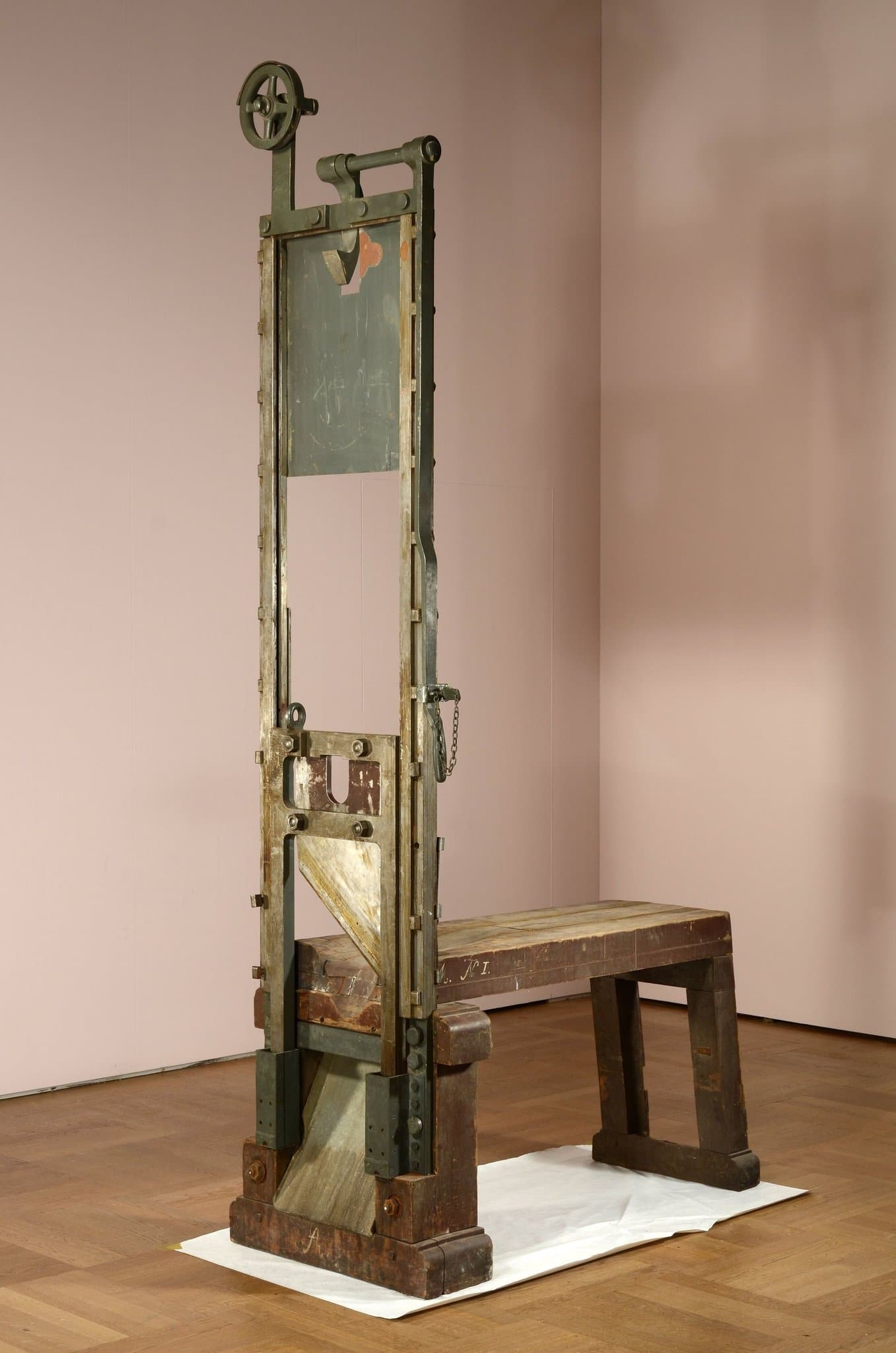
Strangest rocking horse I've ever seen. How do the peasants enjoy it without the rockers?
in the US, some people never get a juror summons, while others get it every year, if not more than once. and they often use recent DMV renewal/registration , and recently voting as primary source of jurors. many jurors cant AFFORD to have time off for being on jury duty at all.
better to have a pool of willing jurors(who wants to be on jury duty every year) that they can rotate around, so as to not invite biases.
view more: next ›