techsupport

3201 readers
12 users here now

The Lemmy community will help you with your tech problems and questions about anything here. Do not be shy, we will try to help you.

If something works or if you find a solution to your problem let us know it will be greatly apreciated.

Rules: instance rules + stay on topic

Partnered communities:

You Should Know

Reddit

Software gore

Recommendations

founded 3 years ago
MODERATORS
1


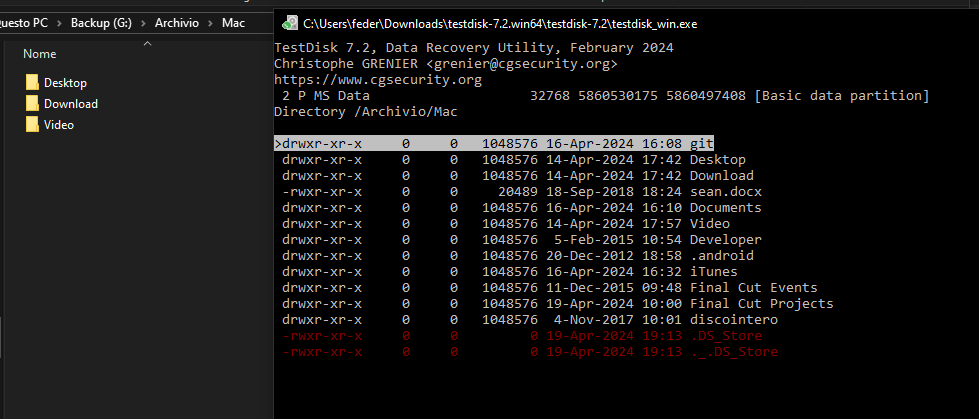
I have disassembled and dedusted the disk drive and still get this error on an Commodore 64. Is it probable that the floppy diskettes are simply demagnetized by now? I am trying to recover some of dad's old essays and poems.

Edit: the error channel says READ ERROR

c8eiyKfeMEkJNX4.jpg

Edit2: the read head is not rusted. In fact, it looks like new. ๐Ÿ˜… Tried both LOAD"*",8 and LOAD"$",8 on another ten or so disks, with the same file not found error.

2


I'm a fan of symphonic metal, and something about that is telling YouTube Music that I must fucking love repetitive, soulless AI slop featuring guitar sounds.

It's probably just time to set sail, but I do appreciate the convenience of streaming. Seeding a playlist with a single song has let me to a lot of music that would have otherwise flown under my radar, but every fucking time it plays something I haven't heard before nowadays, it's just more AI slop. Thumbs-downing them doesn't seem to do shit.

Youtube Music is the only service I'm aware of that work doesn't block (which... honestly why would they disallow Pandora, but leave Youtube?? I digress...) so that's what I've been using. But I do have my phone, so I could run an alternative off of that.

The obvious answer would be YT with filters, but... I don't actually see a way to set a filter - you just search a song and it does its thing. If I could just block every channel made after... idk, 2022, that would pretty well solve the issue... Is there a way to do that? That'd definitely be the easiest option.

Otherwise, is there better streaming service (which for me means decent selection of metal / actually categorizes its subgenres, and active ban of AI slop)?

The convenience of running this from my workstation just isn't worth the amount of garbage flooding YouTube.

3


I have two routers. One of them encrypts everything with a wireguard interface and routes all traffic through my VPN provider. The other one is "plain", unencrypted, and it is used for services that need a public IP. If all these services need is a public IP address that leads to the router's wan port, I can still encrypt my DNS traffic, I thought, so I set up DNS over https (DoH), using my VPN provider's servers. To do this on OpenWRT, which is my router's operating system, I needed to download any one package that provides this functionality. I couldn't just configure ports, firewall rules, NAT or whatever and be happy... Of the settings that this DoH package came with lets you choose a "bootstrap DNS". It was configured to Google's and Cloudflare's servers by default, but I changed it to Quad9's. Everything works fine. My VPN provider confirms that I am using their DNS servers and that my DNS traffic is encrypted.

What is going on under the hood? What is this "bootstrap DNS"? Why isn't it as easy as exchanging public keys, as with regular traffic that goes through my VPN router's wireguard port?

4


If i would, hypothetically, have a few different drives in a raid5 array in different physical locations, and one was seized, how much data could be reconstructed from that drive?

(I was reading about A/I and their R* system a bit, and this semi-related idea came to mind)

5


A cloud provider's web GUI eats all my RAM when downloading big files. I would like to download the files using wget or curl instead, but I assume I'm going to need some cookie or token in the argument URL that authenticates the request?

Is there any browser add-on or other means to extract said information so that I can copy paste it into the terminal?

6


I have just dedusted (compressed air in spray can), relubricated (Vaseline) and cleaned the read head(s?) of (cleaning tape cassette) my VCR and now I would like to start digitizing mom's collection of VHS tape cassettes.

I just learned that the ports of a modern GPU - a 3080 in my case - cannot be "reversed" and used for input. Which leaves me with those USB dongles, right? Or are there PCIe solutions that are more robust? I can only imagine such a little USB device heating up almost instantly...

Any and all advice is welcome. ๐Ÿ˜Š

I know Linux and I have experience with recording audio. I know a little Shotcut and even less OBS.

7


Is this just a weirdly unsupported piece of hardware, or does it seem partially broken?

Notes

Images are hosted on Catbox.
The drive is connected via USB. ID 152d:2338 JMicron Technology Corp. / JMicron USA Technology Corp. JM20337 Hi-Speed USB to SATA & PATA Combo Bridge
Information provided is from memory as I wasn't noting down results. It took several days to do the tests, often due to unrelated software issues, and my lack of knowledge regarding the different OSs.

Logs

Below are filtered kernel log messages - some messages were repeated way too much

Linux

[303803.821623] usb 1-4: new high-speed USB device number 62 using xhci_hcd
[303803.953712] usb 1-4: New USB device found, idVendor=152d, idProduct=2338, bcdDevice= 1.00
[303803.953735] usb 1-4: New USB device strings: Mfr=1, Product=2, SerialNumber=5
[303803.953745] usb 1-4: Product: USB to ATA/ATAPI bridge
[303803.953752] usb 1-4: Manufacturer: JMicron
[303803.953758] usb 1-4: SerialNumber: 622222222222
[303803.956959] usb-storage 1-4:1.0: USB Mass Storage device detected
[303803.957727] scsi host0: usb-storage 1-4:1.0
[303804.972734] scsi 0:0:0:0: CD-ROM            ATAPI    CD-R/RW 48X16    9.GH PQ: 0 ANSI: 0 CCS
[303809.784518] sr 0:0:0:0: [sr0] scsi3-mmc drive: 48x/48x writer cd/rw xa/form2 cdda tray
[303818.737158] usb 1-4: reset high-speed USB device number 62 using xhci_hcd
[303826.573935] usb 1-4: reset high-speed USB device number 62 using xhci_hcd
[303838.238333] sr 0:0:0:0: Attached scsi CD-ROM sr0
[303838.238795] sr 0:0:0:0: Attached scsi generic sg0 type 5
[303845.622418] usb 1-4: reset high-speed USB device number 62 using xhci_hcd
[303918.801647] usb 1-4: reset high-speed USB device number 62 using xhci_hcd
[303936.512741] usb 1-4: reset high-speed USB device number 62 using xhci_hcd
[303941.673166] usb 1-4: reset high-speed USB device number 62 using xhci_hcd
[303950.281142] sr 0:0:0:0: [sr0] tag#0 FAILED Result: hostbyte=DID_OK driverbyte=DRIVER_OK cmd_age=1s
[303950.281164] sr 0:0:0:0: [sr0] tag#0 Sense Key : Illegal Request [current] 
[303950.281176] sr 0:0:0:0: [sr0] tag#0 Add. Sense: Illegal mode for this track
[303950.281186] sr 0:0:0:0: [sr0] tag#0 CDB: Read(10) 28 00 00 05 5d ec 00 00 02 00
[303950.281192] blk_print_req_error: 80 callbacks suppressed
[303950.281198] I/O error, dev sr0, sector 1406896 op 0x0:(READ) flags 0x80700 phys_seg 1 prio class 2
    REMOVED LINES
[303961.227527] I/O error, dev sr0, sector 0 op 0x0:(READ) flags 0x0 phys_seg 2 prio class 2
[303961.227544] Buffer I/O error on dev sr0, logical block 0, async page read
[303961.227559] Buffer I/O error on dev sr0, logical block 1, async page read
[303961.408769] Buffer I/O error on dev sr0, logical block 14, async page read
[303961.497219] Buffer I/O error on dev sr0, logical block 15, async page read
[303965.403967] scsi_io_completion_action: 46 callbacks suppressed


GhostBSD

ugen0.2: <JMicron USB to ATA/ATAPI bridge> at usbus0
umass0 on uhub0
umass0: <JMicron USB to ATA/ATAPI bridge, class 0/0, rev 2.00/1.00, addr 1> on usbus0
umass0:  SCSI over Bulk-Only; quirks = 0x4000<NO_SYNCHRONIZE_CACHE>
umass0:2:0: Attached to scbus2
cd1 at umass-sim0 bus 0 scbus2 target 0 lun 0
cd1: <ATAPI CD-R/RW 48X16 9.GH> Removable CD-ROM SCSI device
cd1: Serial Number 622222222222
cd1: 40.000MB/s transfers
cd1: 0MB (1 2048 byte sectors)
cd1: quirks=0x10<10_BYTE_ONLY>
(cd1:umass-sim0:0:0:0): READ(10). CDB: 28 00 00 00 00 00 00 00 01 00 
(cd1:umass-sim0:0:0:0): CAM status: SCSI Status Error
(cd1:umass-sim0:0:0:0): SCSI status: Check Condition
(cd1:umass-sim0:0:0:0): SCSI sense: ILLEGAL REQUEST asc:21,0 (Logical block address out of range)
(cd1:umass-sim0:0:0:0): Error 22, Unretryable error
(cd1:umass-sim0:0:0:0): cddone: got error 0x16 back
    REMOVED LINES
pid 3525 (xfburn), jid 0, uid 1001: exited on signal 11 (core dumped)
(cd1:umass-sim0:0:0:0): READ CD. CDB: be 00 00 00 00 00 00 00 01 f8 00 00 
(cd1:umass-sim0:0:0:0): CAM status: SCSI Status Error
(cd1:umass-sim0:0:0:0): SCSI status: Check Condition
(cd1:umass-sim0:0:0:0): SCSI sense: ILLEGAL REQUEST asc:24,0 (Invalid field in CDB)
(cd1:umass-sim0:0:0:0): Error 22, Unretryable error
(cd1:umass-sim0:0:0:0): cddone: got error 0x16 back
    REMOVED LINES
(cd1:umass-sim0:0:0:0): READ(10). CDB: 28 00 00 02 71 16 00 00 01 00 
(cd1:umass-sim0:0:0:0): CAM status: SCSI Status Error
(cd1:umass-sim0:0:0:0): SCSI status: Check Condition
(cd1:umass-sim0:0:0:0): SCSI sense: ILLEGAL REQUEST asc:64,0 (Illegal mode for this track)
(cd1:umass-sim0:0:0:0): Error 6, Unretryable error
(cd1:umass-sim0:0:0:0): cddone: got error 0x6 back
    REMOVED LINES
(cd1:umass-sim0:0:0:0): READ(10). CDB: 28 00 00 02 71 16 00 00 01 00 
(cd1:umass-sim0:0:0:0): CAM status: CCB request completed with an error
(cd1:umass-sim0:0:0:0): Retrying command, 3 more tries remain
(cd1:umass-sim0:0:0:0): READ(10). CDB: 28 00 00 02 71 16 00 00 01 00 
(cd1:umass-sim0:0:0:0): CAM status: SCSI Status Error
(cd1:umass-sim0:0:0:0): SCSI status: Check Condition
(cd1:umass-sim0:0:0:0): SCSI sense: UNIT ATTENTION asc:29,0 (Power on, reset, or bus device reset occurred)
(cd1:umass-sim0:0:0:0): Retrying command (per sense data)
(cd1:umass-sim0:0:0:0): READ(10). CDB: 28 00 00 02 71 16 00 00 01 00 
(cd1:umass-sim0:0:0:0): CAM status: SCSI Status Error
(cd1:umass-sim0:0:0:0): SCSI status: Check Condition
(cd1:umass-sim0:0:0:0): SCSI sense: UNIT ATTENTION asc:28,0 (Not ready to ready change, medium may have changed)
    REMOVED LINES
(cd1:umass-sim0:0:0:0): PAUSE/RESUME. CDB: 4b 00 00 00 00 00 00 00 00 00 
(cd1:umass-sim0:0:0:0): CAM status: SCSI Status Error
(cd1:umass-sim0:0:0:0): SCSI status: Check Condition
(cd1:umass-sim0:0:0:0): SCSI sense: ABORTED COMMAND asc:b9,0 (Vendor Specific ASC)
(cd1:umass-sim0:0:0:0): Retrying command (per sense data)


Haiku OS

KERN: usb_disk: got device name "ATAPI CD-R/RW 48X16 9.GH": No error
KERN: Media changed from /dev/disk/usb/3/0/raw
KERN: DMAResource@0xffffffff95066028: low/high 0/ffffffff, max segment count 16, align 1, boundary 0, max transfer 524288, max segment size 18446744073709551615
KERN: usb_disk: got device name "ATAPI CD-R/RW 48X16 9.GH": No error
KERN: usb_disk: unhandled ioctl 10102
KERN: Last message repeated 3 times.
KERN: usb_disk: sending or receiving of the data failed: No error
KERN: identify(110, 0xffffffff955a3978)
KERN: usb_disk: sending or receiving of the data failed: No error
KERN: usb error control pipe 38: timeout waiting for queued request to complete
Last message repeated 2 times
    REMOVED LINES
KERN: usb_disk: unhandled ioctl 10102
KERN: usb_disk: sending the command block wrapper failed: No error
KERN: usb error control pipe 38: timeout waiting for queued request to complete
Last message repeated 2 times
    REMOVED LINES
KERN: usb_disk: sending the command block wrapper failed: No error
KERN: usb error control pipe 38: timeout waiting for queued request to complete
Last message repeated 2 times

Testing methods

Operating systems were installed and set up in Oracle VirtualBox on Arch Linux host. CD-RW drive was passed to VMs via USB passthrough.

Usability summary

Operating system Status
Linux Fully broken
OS/2 Warp 4.52 Fully broken
Haiku OS Disc size detection, eject/load
OpenIndiana (Solaris) Data read, analog audio playback
ReactOS Data read - same as known good drive
Android Data read via 3rd party app - limited by app feature set
GhostBSD (FreeBSD) Digital and analog audio playback (incl. CD-Text)
Windows Full functionality

Test results

I'll start with common OSs first.

Linux

Detects the drive when it's empty. Otherwise it just keeps resetting it over and over, as can be seen in logs.
It might eventually load disc info after several minutes, as well as initiate disc blanking over cdrecord, but that will also take several minutes of waiting, if it ever happens.
There's also a small chance of full system freeze-up until the drive is physically disconnected.
This has been tested with other distributions inside a VM, with the same results.

Windows

Mostly used under Windows 2000, but it also worked on Windows 10.
Everything fully works.
image

GhostBSD (based on FreeBSD)

Analog (left) and digital (right) audio playback work just fine.
Image
Data discs do not load.
Burning has started randomly on one occasion, but eventually failed.
image

OpenIndiana (fork of OpenSolaris)

Loading data discs works, despite (probably unrelated) error being shown first.
image image
When it comes to audio playback, I don't know what to use. VLC doesn't support audio CDs over there, and sound-juicer appears broken. It is however possible to use analog playback, though CD-Text isn't being displayed like it was on BSD (cdda-player).
image
Burning discs did not work. Brasero always reports the disc as full, even when blank.
image

OS/2 Warp 4.52

This one was a bit painful to set up as I had to install and set up (in CONFIG.SYS) USB and USB CD drivers. Former I had to download, latter was already provided in CP2 (but disabled by default).
Audio CDs cause a time-out.
image
Data discs won't load either.
image

Haiku OS (Beta)

Disc drive is recognized, as well as formatted size of the disc, but that's it.
image
Eject/load works.
Other software (SMPlayer and BurnItNow) did not see the drive.

Android (using MLUSB mounter)

It may be based on Linux, but it acts so dumb someone had to make an app that acts as a USB device driver.
image
It gets recognized just fine.
image
And it loads data from the disc. That's all this app can do.
image
Everything this does works here.

ReactOS (open-source clone of Windows) (Alpha)

Data reads quickly and reliably, just as well as in Windows.
image
When it comes to audio and other software, it either isn't recognized at all, or causes a freeze-up.
image image
Opening audio CD with file explorer only shows 1KB .cda files which are of no use.
Bittersweet news: it behaves exactly the same with a known-good drive. So maybe once those issues are fixed, it will be just as good as in Windows.

Conclusion

I have no idea whether this is a drive issue, or it's just doing something really non-standard.
I have also tried it with a different controller, making a chain of IDE -> SATA -> USB, but this was equally broken.


Edit 1: :::spoiler -> ::: spoiler to fix formatting outside of Lemmy-UI

8
8
submitted 1 week ago* (last edited 1 week ago) by resterWink@lemmy.darkc0de.one to c/techsupport@lemmy.world


So, I have had fun getting into some data CDs again. Writing data in single session TAO and with multi-session TAO CDs. I am not having issues with writing the sessions on Linux or OpenBSD, but I am having issues actually mounting any session other than the first one burned!

In cases where I am working on Linux I try to mount via
sudo mount -t iso9660 -o session=1 /dev/sr0 /mnt/cdrom yet it mounts session 0!

On OpenBSD I run this command doas mount_cd9660 -s {session-offset-sectors} /dev/cd0c /mnt/cdrom and it gives me the same behavior mounting the first burned session despite being directly given another.

Does anyone have some insight on to why this is?

P.S

  • The sector information for BSD was gathered with doas cdio info /dev/cd0c and on Linux via sudo cdrecord -minfo -dev=/dev/sr0
  • The CDs were burned with ISOs generated via mkisofs -R -J -o out.iso -iso-level 3 {directory}/ (the cdrtools version) and recorded to the medium via sudo cdrecord -v -multi -data -tao -eject -speed=52 -dev=/dev/sr0 out.iso on Linux and doas cdrecord -v -multi -data -tao -eject -speed=52 -dev=/dev/cd0c out.iso on OpenBSD
9


Isn't a full HD resolution ( 1920 x 1080 ) almost four times less pixels than 4K ( 3840 x 2160 )? I think I understand that a higher bit depth gives me more information per pixel, resulting in for instance less banding, but I still expected my 1080p 10-bit video files to look very soft and literally low-res.

10


I was just gifted a Commodore 64 by my dear and beloved father. It came with a third party 5.25 inch floppy disk drive, an FD-148. The 1530 Datassette C2N unti I just bought separately and went for $15.

ddlD3En8Va4Qsq9.jpg

I am also lacking a power supply unit, but those go on some auction sites for about $20, so non problem there. Now, to the problems.

I have two 5-pin S-video cables, which I cannot connect to any monitors that I have. I am going to check the thrift stores in my area to see if they have any monitors with those 8-pin holes (into which the 5-pin plugs go). Even if they don't, buying an S-video to SCART converter is no problem, and then putting a SCART to HDMI on top of that shouldn't be a problem either. Here is the S-video plug.

aNRWOoG6w8hmz23.jpg

The real problem is the disk drive.

f9TptqQBX5bwMmt.jpg

I powered it up, no problem. The problem is the 6-pin serial data cable.

1Y7sZEvDZ0Ki8pJ.jpg

When the Datassette arrives and I finally buy a PSU and convert the S-video to HDMI, I will probably be able to read any diskettes and cassettes that haven't gotten demagnetized.

But I would really like to thank my father for gifting me all this by somehow backing up his old texts, poems and essays from these floppy disks into PDF or whatever.

Questions:

  • is it possible to "simply" find a "dumb/passive" 6-pin serial data to USB adapter?
  • if not, could it be possible to open up a 3.5 inch floppy drive, peel the 6-pin data cable and directly interface with the floppy drive's controller, which in turn I would connect to some interface/controller on a modern motherboard?
  • other?

I am not having my hopes up at all. I am fully prepared to simply take pictures of the Commodore's output with my smartphone, making the pictures look as good as possible using my experience in photography.

Thanks in advance!

11


The router has a DNS configured and works with all other devices.

Public DNS, such as 9.9.9.9, do work.

I'm using OpenRC's netifrc (a script brings up my network interface) on Artix Linux (Arch based).

12


When installing MegaSync for the first time, I used this command from their website in order to install it: wget https://mega.nz/linux/repo/Arch_Extra/x86_64/megasync-x86_64.pkg.tar.zst && sudo pacman -U "$PWD/megasync-x86_64.pkg.tar.zst"

And no, even using -Sy didn't work. I guess me being an idiot and not understanding how Linux works or why it functions like this, I can no longer install anything with pacman as it complains about a repo database file for "Arch_Extra" being missing now :(

Looking at the command, I assumed the download would temporarily switch to that repo that was necessary to download the program, not completely alter how my pacman works though...

I'm not sure why MegaSync would just override everything and ruin my pacman like this.

13
14
15


Update: thank you all for your detailed and kind input! I finally tried crimping on an 8P8C connector onto an Ethernet cable. I failed. Miserably. But at least I finally learned what's actually happening - or what's supposed to happen: the teeth of the connector actually puncture the individual wires in order to make contact with the conductors inside. Sic. But omg is it a game of patience. ๐Ÿคฃ

I actually just want to shorten one that I'm already using. ๐Ÿ˜Š

16


Hi, I am new to lemmy.zip. I find the interface a little confusing. Why, by default, do i first have to click on a post, then only see all the comments, then click on the post again, to see the actual post? Is there a setting to click on a post and immediately see the actual post, maybe with all the comments already? Am i missing something? And what are all the community subscription blocks on the right good for? This is very different to other social media interfaces I have usedโ€ฆ

17


I'm watching Percy Jackson, and there are a lot of dark scenes in this series. And they're ruining it! When Grover took off his hat to show Percy his horns, they were nothing more than a dark gray glint on a black field. Jellyfin's HDR tone mapping gets the colours right, but the brightness is abysmal. Any dark scene is incomprehensible.

I'm using nvidia hardware acceleration, Mobius tone mapping, auto tone mapping mode, PC tone mapping range, 0 tone mapping desat, 100 tone mapping peak, and no tone mapping param. I've been fiddling with these settings for two hours, and I've barely been able to get this show any brighter.

Is there some hidden menu where I can just enable a brightness slider, maybe? Or is there some ideal combination of tone mapping settings? The dark scenes in this show are unwatchable, and it's the same for a lot of other HDR moving pictures.

18


Work only supports iphones and I want to text like I can on android from my various computers from this phone. Seems like only way is from a mac? Maybe a mac VM?

19


Hello, everyone. ๐Ÿ‘‹

I experience a persistent issue with having no sound during the MS Teams meetings. Other meeting attendees can hear me and I don't hear them, which complicates communication significantly. The volume bar in the settings is also greyed out.

Usually, I access MS Teams meetings via the links that are shared with me. I don't have a Teams / Microsoft account either. I have tried to access meetings via browsers (Brave, LibreWolf with relaxed settings, even Chrome and Edge) and teams-for-linux app.

I have tested pretty much all the possible Sound profiles and only Duplex seems to be recognized by Teams (I see Built-In Audio Analog), just it seems inactive for output sound. The pavucontrol settings seem fine. The system sounds work fine. I can listen to music etc. with the current settings. The issue seems to be isolated to MS Teams specifically.

System.: Linux Fedora 44 kde

Hardware: Lenovo Y530 laptop.

20


Whenever I download bigger files, my RAM fills up and the tab/download crashes. Is it possible to "fsync" downloads with Firefox (really Librewolf, but still) so that it goes directly into storage instead of RAM? Or to adjust the amount of memory used before it is dumped into storage?

21
5
submitted 1 month ago* (last edited 1 month ago) by akunohana@piefed.blahaj.zone to c/techsupport@lemmy.world


Edit: feedback
Thanks for all the advice! Here's some funny feedback: it was a faulty drive ๐Ÿคฃ give me back my feelings ๐Ÿ˜ญ obviously I'm sending it back

dhWvundoMJKYgdc.jpg

I have just received my Seagate 18TB IronWolf Pro HDD and the specs say that the logical sector size is 512 emulated. Moreover, Seagate says that switching to 4096 sector size is as easy as doing a quick format (Windows terminology?). I suppose on Linux this simply means creating a filesystem with that block size? For instance mkfs.ext4 -b 4096 /dev/device or - in my specific case - cryptsetup luksFormat --sector-size=4096 and then creating a file system?

What confuses me is the Arch Wiki article on advanced format that has instructions on how to use hdparm to tell the firmware to use a certain sector size.

Do I need to do the hdparm thing, which seemingly conflicts with the Seagate instructions?

22
4
submitted 1 month ago* (last edited 1 month ago) by akunohana@piefed.blahaj.zone to c/techsupport@lemmy.world


In this economy, I somehow managed to get my hands on a brand new 18TB IronWolf Pro HDD for $500.

I have four 4TB SSDs on top of which I have made a logical volume with lvm, which in turn I encrypted with LUKS. Now, I want to backup everything inside that LUKS container, but I'm a little but unsure of which "layer" to copy or to clone.

  1. Just cp/dd the contents of the LUKS container like I would any other file?
  2. dd the LUKS container itself - in other words, close the container and copy/clone the mapped volume, which is encrypted?
  3. dd the logical LVM volume - in other words, close/"unmap"/whatever the logical volume and dd?
  4. dd the underlying raw disks? Although I don't see how that would be recoverable/usable/readable on the backup HDD.

The data is not critical. It's just some Linux ISOs that would be nice to have backed up so that I don't have to download them again.

Edit: the HDD is to be installed on the same system as the SSDs. The HDD is also going to be encrypted, but without a logical volume, since it has enough space on its own.

Please advise. ๐Ÿ˜Š

23


It's been doing this for at least a month or so, but I haven't made any changes on my end during that time like new extensions or anything.

Video will be playing normally, then randomly the start of that video's audio will restart as a new track. The original continues progressing with the video, but whatever audio they used for the intro just butts in and now I'm hearing two iterations of the same video almost like it's running in two tabs.

Refreshing the page fixes it, but navigating from that page to somewhere else in YouTube does not - like I can return to the homescreen and the original audio track cuts out as expected; but the one that started randomly will continue to play, even on the home screen, until I refresh or navigate to a different website.

I assumed this was more anti-user bs aimed at firefox users, so I've just been tolerating it until a fix comes out; but searching the web I don't see any complaints about this, so I think it's screwy on my end.

Windows 10, Firefox.

Edit-

Oh, and sometimes it will start randomly playing audio in the homescreen of one of the videos that appears there. I don't actually click any of them, I'll just be scrolling through them, and suddenly "HELLO INTERNET! WHACKADOO BOB HERE WITH ANOTHER--" refresh page to shut him up. This started around the same time.

Idk if it's trying to do a mouseover preview or something, but it'll be a video I scrolled passed a good minute ago and just randomly starts blasting.

/shrug

24


This is an FYI for anyone who needs it rather than a request for help. Any comments or insight are gladly appreciated.

I have been tasked with taking inventory of several dozen iPad a16. These things have been sitting unopened for years. As I'm popping them in the charger, adding tracking tags, setting them up, doing updates, I have noticed that the tablets put into Magic Folio cases get stuck at 1%. I had one charging for a whole day.

It wasn't until I removed the cases and powered off the tablets that they started charging. It was quite a repeatable process.

For one, since they battery is at such a low state, the device seems to need every bit of power to get past 1%.

Secondly, the folio draws power from the iPad, and apparently needs enough that the tablet can't charge.

Third, the back of the folio is connected by magnet to the back of the device. I discounted it several times, but there were a few tablets that wouldn't charge up beyond 1%. My thought is that there is current running through the induction coil continuously and the folio's magnetic attachment creates resistance here, increasing the current somehow.

Anyway, those are my observations. Hopefully they help someone in the future. None of my searches indicated that the case could be the issue.

25


I've tried invidious and pipepipe/newpipe. E.g. can't watch this rather innocuous short abt fireworks affecting animals https://invidious.nerdvpn.de/watch?v=3qbR8TqdBjc

view more: next โ€บ