EDIT: fwiw I hunted down this thread and it turns out that OP actually did some self-crit, which was more positive than I was expecting https://www.reddit.com/r/TheDigitalCircus/comments/1ucu9hl/jax_being_trans_and_my_opinion_as_a_cis_straight/

Welcome to /c/traaaaaaannnnnnnnnns, an anti-capitalist meme community for transgender and gender diverse people.
Please follow the Hexbear Code of Conduct
Selfies are not permitted for the personal safety of users.
No personal identifying information may be posted or commented.
Stay on topic (trans/gender stuff).
Bring a trans friend!
Any image post that gets 200 upvotes with "banner" or "rule 6" in the title becomes the new banner.
Posts about dysphoria/trauma/transphobia should be NSFW tagged for community health purposes.
When made outside of NSFW tagged posts, comments about dysphoria/traumatic/transphobic material should be spoiler tagged.
Arguing in favor of transmedicalism is unacceptable. This is an inclusive and intersectional community.
While this is mostly a meme community, we allow most trans related posts as we grow the trans community on the fediverse.
If you need your neopronouns added to the list, please contact the site admins.
Remember to report rulebreaking posts, don't assume someone else has already done it!
Matrix Group Chat:
Suggested Matrix Client: Cinny
https://rentry.co/tracha (Includes rules and invite link)
🏳️⚧️ Transmasculine Pride Ring 🏳️⚧️
EDIT: fwiw I hunted down this thread and it turns out that OP actually did some self-crit, which was more positive than I was expecting https://www.reddit.com/r/TheDigitalCircus/comments/1ucu9hl/jax_being_trans_and_my_opinion_as_a_cis_straight/
Revisiting this after reading through a few hours ago. Really good points made here.
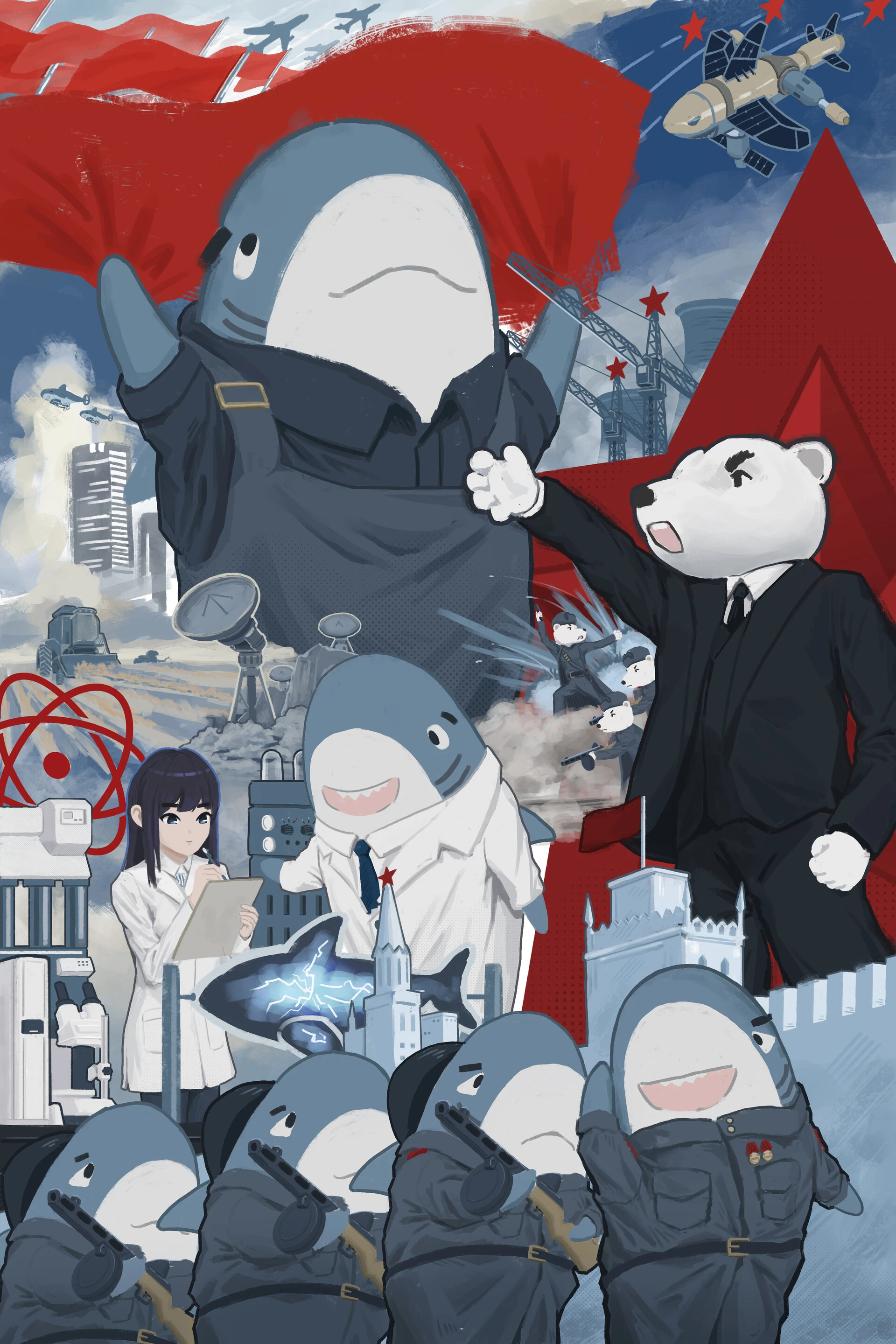
As a tangent it feels like this debate over YA versus “mature” art echoes the Socialist Realism era in which art was intentionally pushed to be relatable and intelligible to the average working person. This was in response to centuries of high-brow and inaccessible art being the only admissible art, an emblem of class barriers and the intentional obfuscation and gatekeeping. The thought was, no, art doesn’t have to be inscrutable and “nuanced”, it can and maybe should be direct. I would love for an actual art historian to add more to this since it’s just my basic understanding.
Quite beside these points about realism, I think there are other reasons that adults today might reach for (apparently) children’s media that has less to do with an adult’s individual arrested development, and more to do with their daily alienation and social invalidation of their emotions and struggle within capitalism. Kids shows usually do a lot of emotional validation which makes them alluring for alienated adults also.
Don’t want to dox my age, but I am very much an adult and I’ve recently got into One Piece and Pokémon, so these ideas have been on my mind anyway. I feel happier since starting these shows, so I don’t care if they’re not adult shows
My perspective of art these days is that everyone, by virtue of being a human with an inner world, has a creative spark and that creative spark can be cultivated through artistic pursuits. Capitalist realism pushes people to only accept a selected class of artisans as artists (who all ideologically reproduce capitalist ideology of course) while the rest of us proles form the unwashed hoi polloi masses who know nothing but rolling around in our own filth consooming various forms of slop. By attempting to snuff out the creative spark that resides within all of us, it also divorces us from our own subjectivity, which among other things dreams of a better world or at least a world that's less shitty as this neoliberal hellworld.
Trying to be a better or more "sophisticated" consoomer is a distraction from what should be the goal of rediscovering and cultivating that creative spark. The deception is thinking consooming shitty Sonic fanfic is somehow completely different from consooming the entire work of Goethe in the original German. Consooming shitty Sonic fanfic is perfectly fine if it leads to something like doing Sonic cosplay or drawing Sonic fanart or creating Sonic ytp or even writing your own shitty Sonic fanfic because those are all acts of creation, expressions of that creative spark, unsophisticated as they may be. While few 13 year olds aren't going to create anything of value, if that 13 year old doesn't give up and continues to hone their craft, they can go on to create great things in their 20s, 30s, 40s, 50s, and so on.
Cultivating the creative spark through creative works prepares us for the most important creation of all: the creation of a better world.
This made me think about the repeated notion that old European capitals are “Disneyland for adults”, how while there is a kernel of insightful criticism, it betrays a lack of imagination on the part of the speaker; because, having lived in a very adult, very serious, very sober world of capitalist America, where the urban districts are built for the exclusive satisfaction of capital and the rejection of human residents — this person already cannot imagine a city that is designed for the pleasure of its residents, designed for use-value instead of exchange-value, except to the extent that pleasure is transactional as in an amusement park.
Bringing this back to my own first comment in this thread: This is precisely why out of all the forms of independent animation out there, I love fanime specifically so much. A work like Tokyo Crystal Mew is particularly illustrative and interesting to look at from this perspective: the way it was never finished, but later videos by the creator indicate that a lot more of the series was planned/made than was released; the way that the first two episodes were remade as the artist honed her skills; the way the visuals go from storyboards to very rough MS Paint drawings to very well-done black and white line animation to very well-done full-color animation, often in the same episode; and the knowledge in the back of your mind that the creator started the series I believe as a preteen and posted the last episode in her late teens, and you can see this in how the quality of the whole show tends to improve as it goes on. Something like Tokyo Crystal Mew is basically a celebration of imperfection and incompleteness, of creativity for creativity's sake; and it basically challenges anyone who sees it to try making their own animation, even if it looks rough, or the writing isn't all there, or you never finish it, making something is still better than nothing. You know?
I dunno if this makes sense, but it's like fanime is Kamina telling you the viewer/Simon to believe in the Kamina that believes in you, to do the impossible see the invisible, row row fight the power. And that's what I like about it: the unbridled human creativity, the unabashed reflections of pedestrian subjectivities.
The thing about alienation driving people to kids' media has been on my mind too lately, as a long-term fan of kids' cartoons who recently read The Catcher in the Rye. — I mean, becoming an adult means being thrown into this whole alienating machine that is being a worker under capitalism, right? And this fact practically gives working class adults a pathological fixation on the people who haven't yet been thrown into the capitalist machine, namely children, and by extent children's things. The form this fixation takes varies between adults based on their individual circumstance and disposition, like some people might proudly be fans of children's media, some people might bitterly despise children out of envy, whatever it may be; but the fixation is always there and cut from the same cloth in any case, because being an adult necessarily means existing in relationship to children as an individual actor in the social institution of age, no different from how men are pathologically fixated on women, cis people on trans people, the unracialized on the racialized, et cetera.
"Anyway, I keep picturing all these little kids playing some game in this big field of rye and all. Thousands of little kids, and nobody's around―nobody big, I mean―except me. And I'm standing on the edge of some crazy cliff. What I have to do, I have to catch everybody if they start to go over the cliff―I mean if they're running and they don't look where they're going I have to come out from somewhere and catch them. That's all I'd do all day. I'd just be the catcher in the rye and all. I know it's crazy, but that's the only thing I'd really like to be. I know it's crazy." —Holden Caulfield
Like you said, there is a spectrum of psychology depending on the person. Though, in general I wouldn’t think of it as pathology or fixation, and the temptation to do so reflects the depth of the stigmas which say, tautologically, that: men cannot be feminine, adults cannot be children, cis cannot toy with gender expression, and so on. That a cishetero man who paints his nails might be perceived as fixated on femininity — in my opinion, this says something about the observer and not about the man per se, as the observer would be projecting a boundary that the man might not perceive. Likewise, we shouldn’t construct a framework of pathology to contemplate adults behaving “like children” unless there is a clear, well, pathology i.e. there is genuine dysfunction. (Not saying you are doing this, I’m sure you understand)
On the reverse of the medal from “childlike” adults, many adults — particularly parents — exaggerate the difference of children from adults. It’s normal in society to think of children almost as a different species entirely, until they pupate and finally metamorphosize into an adult in discrete transitions. Hence for example, the concern about kids degrading their attention spans on social media does not apply also to adults, despite more or less having the same brain structures and reward pathways, albeit more developed. I think this is a similar reasoning to the notion that kids need emotional validation and should receive it from media, but adults do not.
I’m getting sleepy so kind of lost my train of thought, but close enough.
Edit: oh I was going to say something about the strong separation between child and adult having to do with the requirements of capital, having a clear separation between human beings according to their working status (which of course also includes gender). This has historical roots/baggage in the old feudal understanding of age which was different because labor was different, but inheritance was a lot more important so people had to “come of age” for political-economic reasons. Also there is the instutution of marriage which, in feudal times especially, needed clear (and gross) definitions of when girls as property could be legally sold off to another “commodity owner” which also has Inheritance implications.
Yes, very well said! I'm glad that we can have this sort of frank and enlightening discussion, I always appreciate your comments specifically.