War5oldier
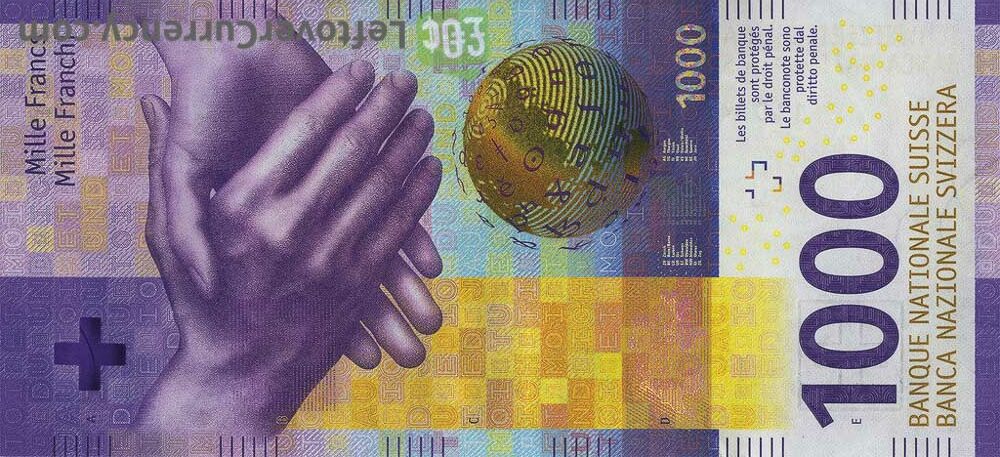
To put into perspective: there’s Beluga (a type of caviar) in Switzerland that costs Fr. 1000 or over 1.2k USD, so a Fr. 1000 bill will be accepted at luxury or high end stores.
I’ve seen a video where a German woman wanted to buy flowers with that bill but was told they don’t have enough change to hand back hence why they politely refused despite the fact this bill exists and is legal tender.
Just have this instead, it's much more compact (~$1.2k in your pocket) -

It's a typo, sorry. Anyway, even though the 500€ note is considered obscure: can high end stores accept that as payment? Euros makes USD look cheap since most of their physical notes from the USD are the same size & look bland. Euro bank notes look colorful in comparison. I would say it's difficult to counterfeit Euro than US Dollars (especially the $100 bill is prone to fakes).
whats with these Euros? Why cant they just accept dollars here
Little did they know, Euro is WORTH MORE than US Dollars at face value as reflected by the exchange rate. A 200€ (~$235) note is higher than $100, and there is a 500€ (~$589) note (although no longer in circulation) but nevertheless, it still exists & definitely more than $100.
From what I've heard, he traveled via a cruise ship bound for Britain by putting that into luggage in a concealed compartment.
romaji
Relying too much on romaji is bad, try to read using furigana (which is a hiragana transliteration on top of Kanji).
Have you ever read subtitles (日本語字幕) without pausing? Whenever I watch a non-Japanese movie, I just enable JP subs and you need a very good grasp on reading Kanji in real time since you're reading translated dialog, and sometimes you can notice translation mistakes if you know where to look based on visual context within the scene. For Japanese movies: I sometimes enable closed captions to understand clearly what they're saying.
I've heard from a friend of mine who works in the service industry over there: it's a pain in the ass for businesses due to how taxes work in Japan, as they're required to disclose the tipped money (otherwise it may be tagged as tax evasion) alongside it being divided amongst employees. What makes it worse, is that in most cases they place either ¥5000 or ¥10000 bills inside the tip jar.
I've heard cases regarding civil asset forfeiture with citizens traveling domestically having large amounts still got it confiscated by DEA agents due to suspicion of criminal activity. So in knowing that, will they still seize non-USD currency: 30,000,000 Rials (~$78,125,000) in cash even though it's being withdrawn from an Omani bank and it's the individual's own money just carried out in multiple stacks.