this post was submitted on 03 Apr 2026
117 points (96.1% liked)
Climate
8512 readers
400 users here now
Discussion of climate, how it is changing, activism around that, the politics, and the energy systems change we need in order to stabilize things.
As a starting point, the burning of fossil fuels, and to a lesser extent deforestation and release of methane are responsible for the warming in recent decades:

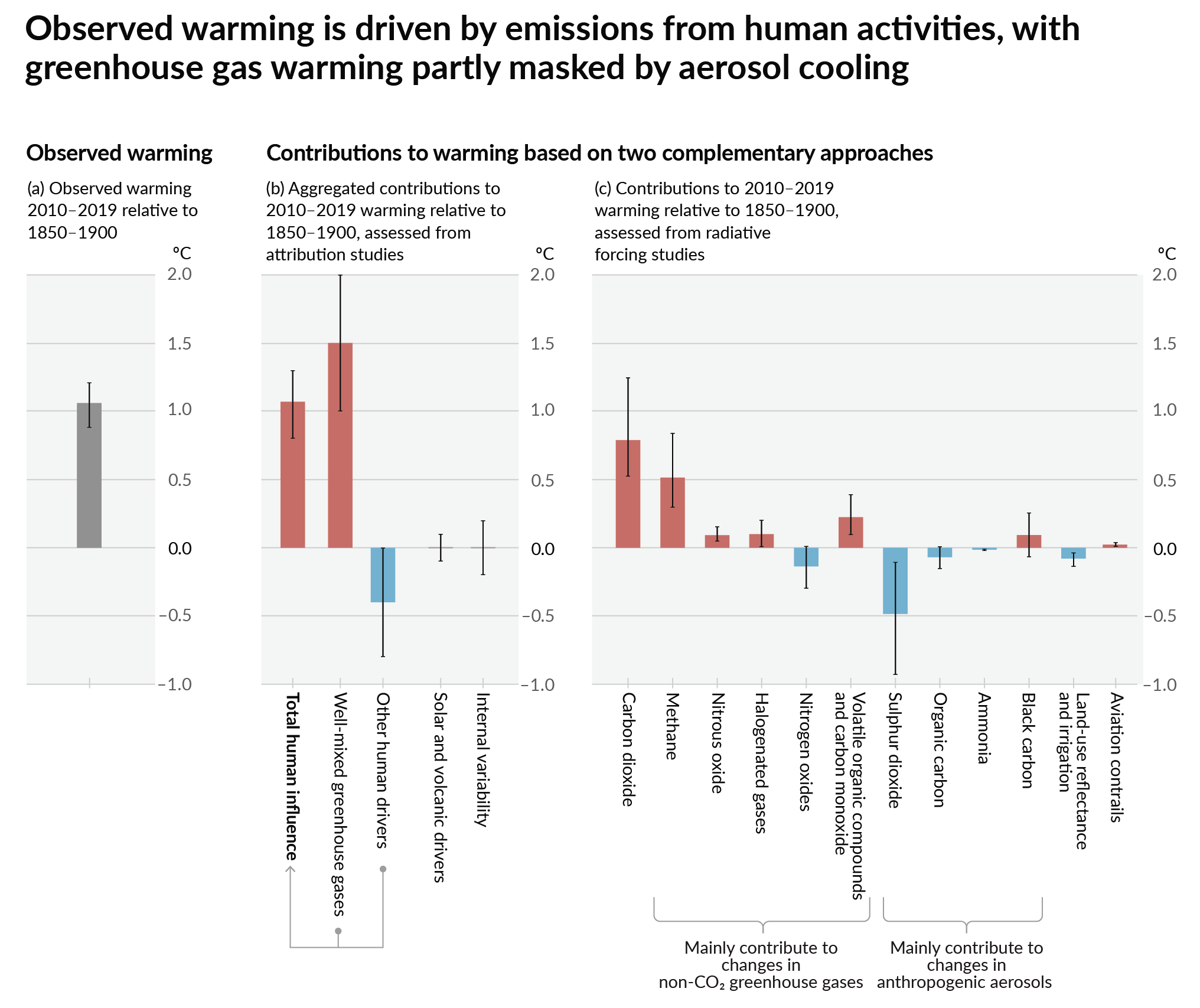
How much each change to the atmosphere has warmed the world:
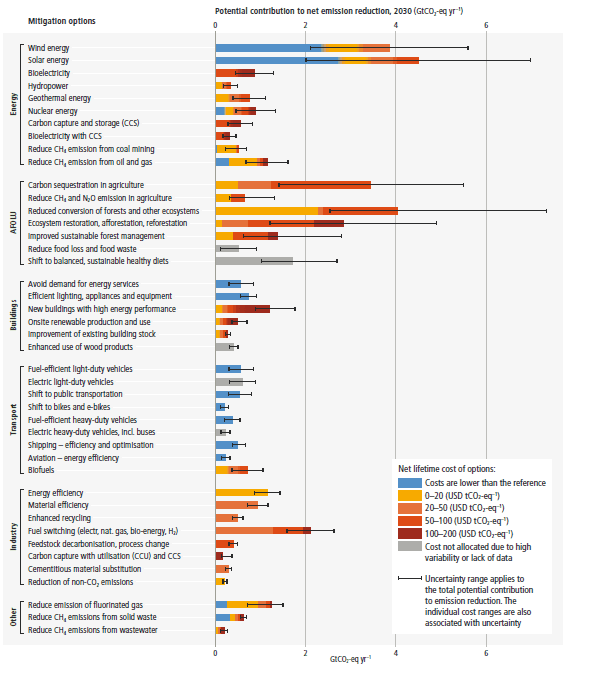
Recommended actions to cut greenhouse gas emissions in the near future:
Anti-science, inactivism, and unsupported conspiracy theories are not ok here.
founded 2 years ago
MODERATORS
you are viewing a single comment's thread
view the rest of the comments
view the rest of the comments
I will not buy an induction stove unless I know what its pulse width modulation frequency is.
PWM is vital; I can melt chocolate on my stove today but “low” often is 100% power at 90% off 10% on and burns food.
Also making sure the boards and chips are hefty enough. I don’t trust Samsung and LG to lay enough of a trace on the board or use a sufficiently large heatsink on the switching circuitry that it’s not going to melt through when I boil water daily. I don’t recall details but last time I was looking into it, even some higher end brands had failure rates after 5-10 years (or sooner if the “power boost” or whatever was used because they cheaped out. My gas stove will survive the apocalypse, but whether it survives the Operation Epic Fail is another thing.
I have burned out three induction hot plates and zero gas ranges in my life (from $120 to $300 units). I keep getting new ones because it's something I can't live without, but it does make me hesitant to drop $4k on an induction range. I also kind of just hate glass stove surfaces for a bunch of reasons.
My first induction stove was a Samsung purchased in 2011-ish. One of the circuit boards had to be fixed in 2021-ish by a third party I found on eBay because Samsung stopped making parts for my stove. A just under 10 year old stove.
My Whirlpool washing machine, bought at the same time as the stove, had an issue at the same time as the stove. Parts were readily available.
My new motto for appliances is “Has the company (name brand) ever made a cell phone or a television? Yes? Then I don’t buy their (large) appliances.”
If you have some space or a septic tank you could always produce your own biogas:
https://www.homebiogas.com/
Damn, I didn’t even think that these are also made as cheaply as possible and in a way that makes them unrepairable.
It’s a lot like electric cars: I get that they’re better but I don’t trust any company to make one that doesn’t do something shitty.
This is irrational past a certain point however, there is no reason non-electric cars won't be programmed to do shitty things to?
This is Xenophobia wrapped up in our emotions around cars, there is little evidence that Electric Vehicles are more vulnerable to being hacked than other kinds of cars, the reason everyone is nervous about this is that "western" car makers are being left in the dust because of their own stupid choices and everyone feels anxious about it. This is how it manifests, a general mistrust in electric vehicles we intuitively seem to have that is a mirage obscuring feelings of insecurity about our own societies.
America's gonna end up getting left behind
If you're comparing new electric cars to new internal-combustion cars, sure. But old internal-combustion cars are a non-enshittified option too, and unfortunately, there's no such thing as an old [mass-market] electric car.
If I could have, say, a GM EV1, or a 2001 Ford Ranger EV, or a 2001 Rav4 EV, or something like that (but with the NiMH batteries swapped for modern lithium ones), I'd totally get an EV. But those cars were all low-volume production when they were new, and are surely even harder to get a hold of now.
The Nissan Leaf is perhaps what you missed. My 2015 Leaf still has 80% SOC on its pack (75 mile range) so it is quite usable for 98% of my driving. It did have Nissan telemetry, but they've phased that out for the old Leafs, plus I simply removed the SIM. Parts available everywhere, third-party independent mechanics know the cars, and there are multiple companies offering battery upgrades, as well.
I didn't miss the Leaf, but I had ruled it out because of the telemetry. This...
...is news to me. Got a source where I can read more?
https://mynissanleaf.com/threads/replacing-nissanconnectev-with-ovms-in-a-gen1-leaf.32715/
What? Tesla is like the worst offender for this.
Which is why Tesla is collapsing as a car brand in the US, most of the people who like Musk do not really want to buy an electric car, it just seemed like the cool thing to do while getting a "self driving" "smart" car.
Everybody who doesn't like Musk won't buy a Tesla because they suck anyways.
Yes but how is it xenophobia?
Because of distrust and paranoia that is applied selectively to electric cars because they are associated with foreign made.
But this is a distrust that is primarily applied to Tesla, an American car company whose cars are made in America. You're not making any sense.
A lot of them these days are Korean, or internationally, Chinese.
We're talking about the subconscious feelings of xenophobes
The feeling comes from real world experiences with electric cars, which for 90% of Americans is primarily dealing with Tesla. Stupid door handles, stupid steering wheels, stupid touchscreen based controls. It's a real complaint, and if it's coming from Americans it's primarily complaining from the dominant electric car brand they've had experience with, which is an American brand with American made cars.
I don’t really want any car made after 2016, and will probably be buying used for the rest of my life unless car companies start acting different.
Also, it has nothing to do with hacking but thanks for showing you’re a tankie.
Ok what does it have to do with?
Also please define "tankie" for me in your own words thanks :)
Data tracking, right to repair, overall build quality, user interface, subscription services, and gimmicky features. And you’re exactly right that it applies to every modern car.
And a tankie is someone who projects xenophobia into a discussion about cars when it wasn’t even mentioned. And also capitalizes it randomly.
What?
Also they’re easily confused and distracted.
sigh
why?
Because slow pulse width modulation will burn my marinara and risotto.
That may not be PWM. My (cheap) induction cooker seems to do actual high frequency PWM at medium-to-high settings, where the heat is essentially always on, but varies total power. It seems to cycle at lower power settings, with multiple-seconds of on and off. "3" is always on; "2" is 5 seconds heat + 10 seconds off. No clue why it would switch modes like that. I'd assume it's a manufacturing cost, but it means they had to implement both PWM and slow cycles.
Any time pulses are used to modulate, regardless of frequency, is PWM.
My cheap induction hot plate has 10 second cycles. So on 10 it’s always on, 9 is on for 9 seconds and off for one, all the way down to level 1.
The problem is that it’s so effective at heating that even a second of full power will burn things.
One way I get around this is to put a thermal mass like a cast iron pan under the pot I want to cook slowly since it evens out the pulses but then it heats extremely slowly.
But I’m not gonna drop a couple grand plus whatever the electrician will cost for something that burns my food.
Yeah, at that point it's just like a shitty resistive heating stove with extra steps.
I’ve done a similar thing on cheap resistive stoves because they also have terrible pulse width modulation.
Sidenote, I love this comment
Would something other than a slab of cast iron work? Thinner or different material like carbon steel?
I know next to nothing about this stuff just trying to understand if we're talking about conduxtivityand heatsinks or like field dissipation
My carbon steel pan doesn’t work as well, probably because it’s less dense and therefore has wider temperature swings than a cast iron pan.
One way I use my carbon steel with it is if I want to sear something in my instant pot insert. It doesn’t work on induction but I can get it rocket hot this way.
There are steel plates for that purpose. I have one for cookware that's not induction friendly, and it works fine, it's just not very convenient.
The thinner it is, the faster it would respond to changes in energy input. Sometimes that's what you want, but the guy you're asking is concerned about burning his food with sudden heat, so he wants something thick that responds slowly.