1
Climate
8543 readers
363 users here now
Discussion of climate, how it is changing, activism around that, the politics, and the energy systems change we need in order to stabilize things.
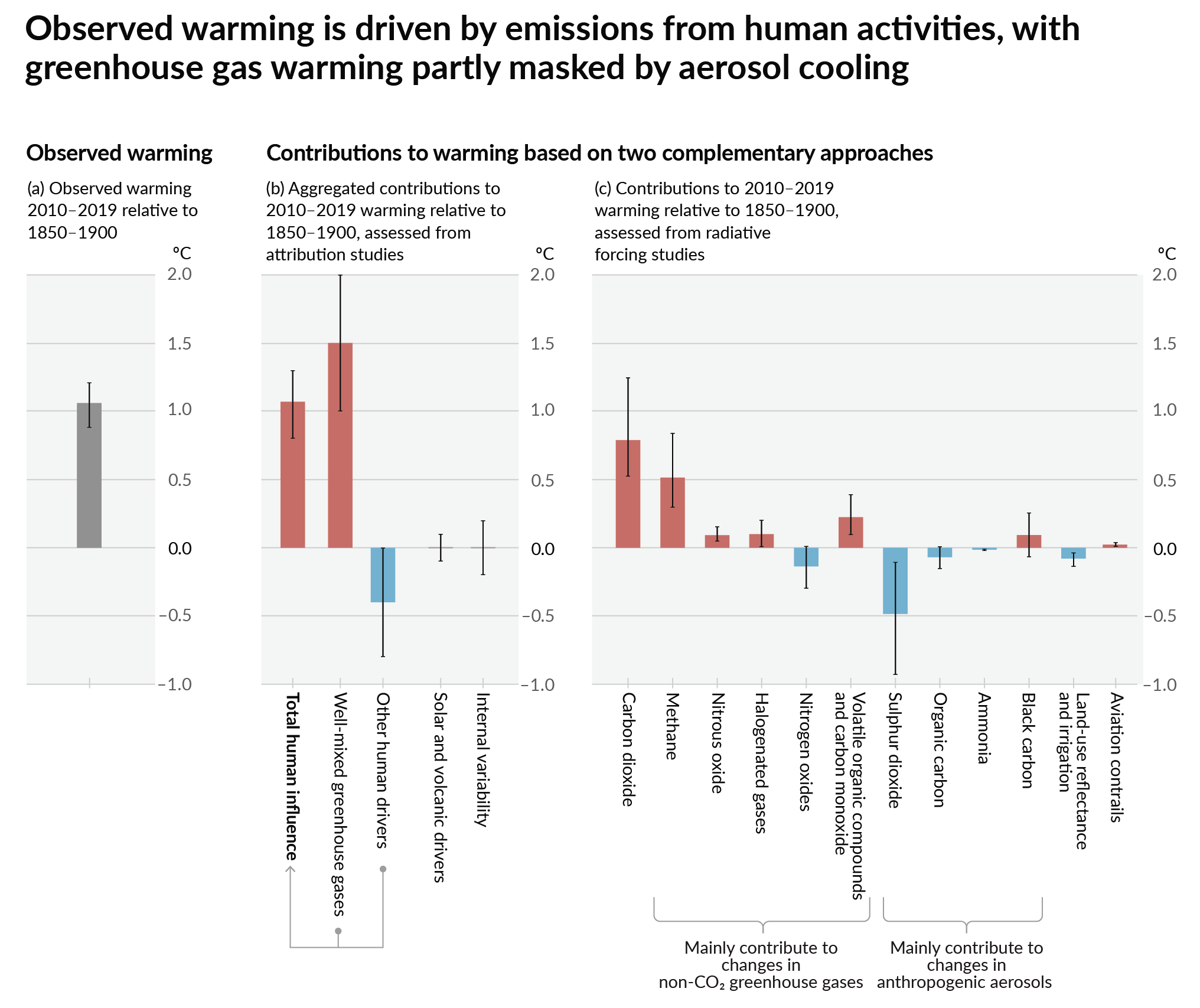
As a starting point, the burning of fossil fuels, and to a lesser extent deforestation and release of methane are responsible for the warming in recent decades:
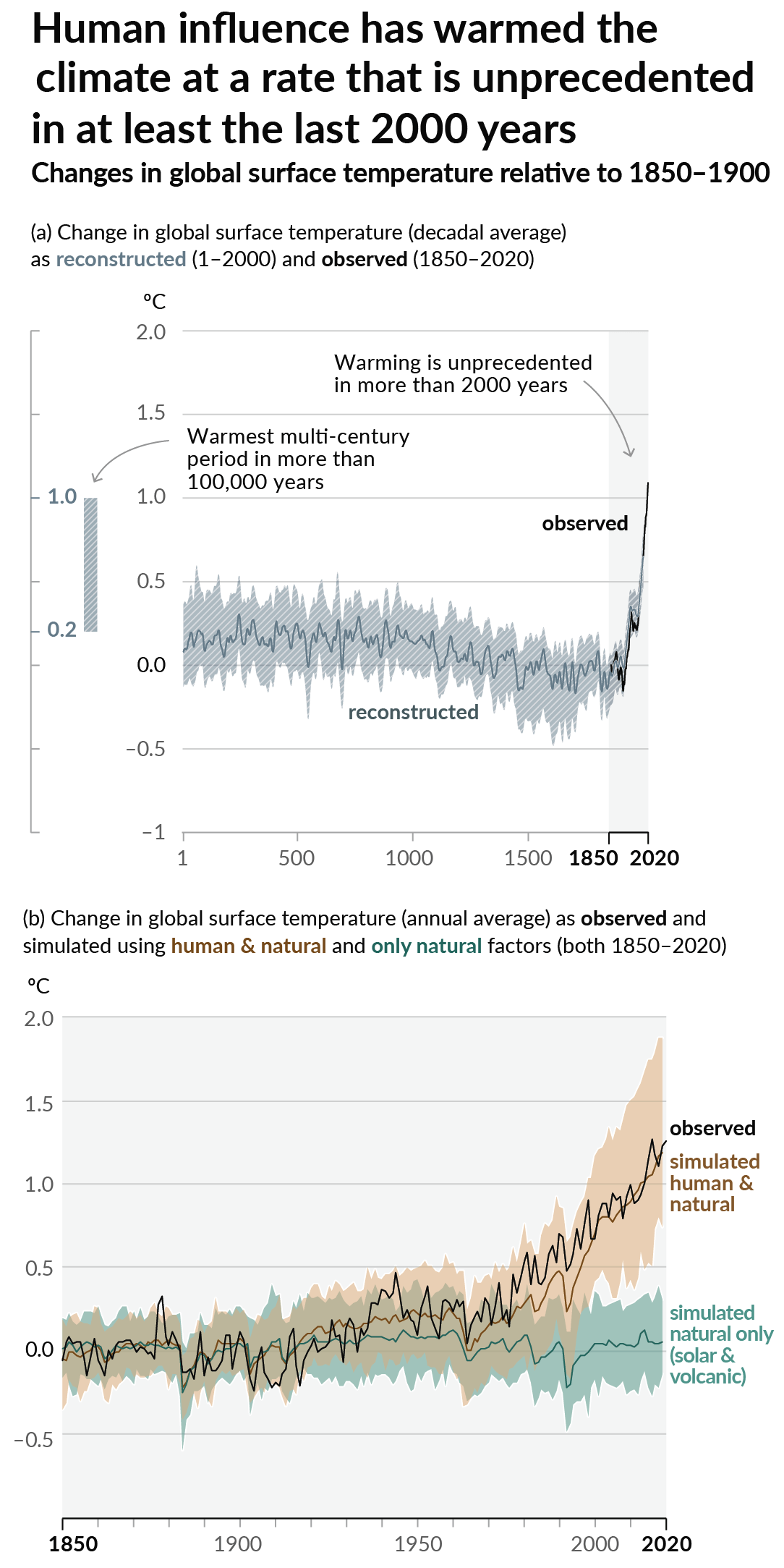
How much each change to the atmosphere has warmed the world:
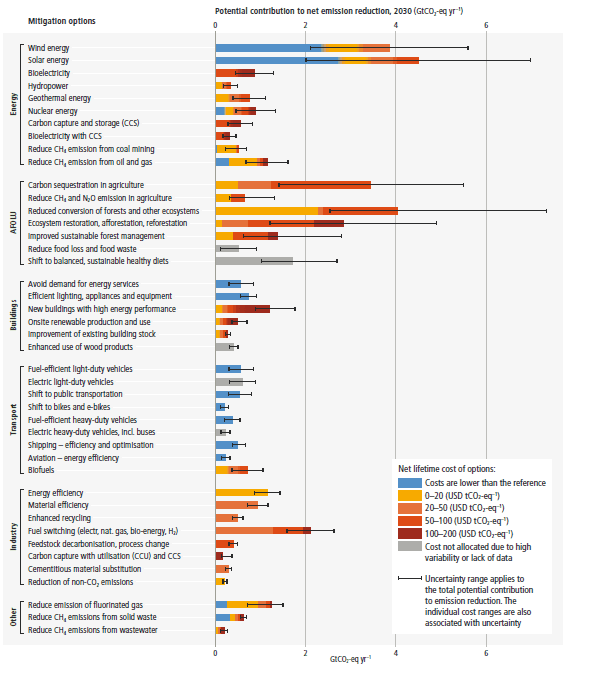
Recommended actions to cut greenhouse gas emissions in the near future:
Anti-science, inactivism, and unsupported conspiracy theories are not ok here.
founded 2 years ago
MODERATORS
2
3
4
5
6
7
8
9
3
"Estuarine ecosystem responses to single typhoon events have been well studied, but the impacts of successive typhoons on three-dimensional chlorophyll a—referring to how the pigment appears throughout a vertical water column and not just at the surface—remain understudied, despite successive typhoons being able to drive cumulative hydrological and ecological changes," said first author Shaojing Guo, a doctoral candidate in the School of Marine Sciences, Sun Yat-sen University, and Southern Marine Science and Engineering Guangdong Laboratory.
...
According to Guo, the study enhances understanding of how chlorophyll a responds to typhoons in and near the estuary under varying discharge conditions—a significant step toward forecasting variations in the estuarine ecosystem during typhoon events.
"Under ongoing ocean warming and increasing extreme climate conditions, the frequency of successive typhoons and extreme droughts or floods may increase," Guo said. "Through their cumulative impacts on physical and ecological processes, successive typhoons cause sustained strong disturbances to ecosystems in the estuary. Thus, our next step should pay more attention on the impacts of these events on the estuarine ecosystems in the future, which need to advance the simulating accuracy of our high-resolution physical-ecological model."

Fig. 2. Distribution of salinity (A to D) and temperature (E to H) observed at sections A and C in the summers of 2021 and 2022. The nearshore and shelf regions are delineated by dark and light gray patches, respectively.

Fig. 3. Variations in salinity in Lingdingyang (left), the nearshore region (middle), and the shelf region (right) during successive typhoons in the CTL (A to C) and Ldis (E to F) runs. Vertical average changes for the CTL (red line) and Ldis runs (blue line) (G to I). The gray patches indicate the passage of Cempaka and Lupit.

Fig. 9. Variations in surface currents before (A), during (B), and after (C and D) the passage of Cempaka, as well as before (E), during (F), and after (G and H) the passage of Lupit. (I to P) same as (A to H), but for the Ldis run. The blue line represents the 32-psu isohaline labeled as the river plume.
6
Fig. 13. Time series of mean Chla budget terms in Lingdingyang (A and B), the nearshore (C-F), and shelf (G-J) regions. Physical processes (Phy) are the sum of Hadv, Vadv, and Vdiff terms. Light red, green, and blue patches indicate the periods during typhoons, 1 to 3 d, and 4 to 10 d after typhoons, respectively.

Fig. 14. Schematic diagram of Chla changes and primary mechanisms during Cempaka and Lupit. The light-yellow shading indicates the change in river plume, and the black lines are the boundaries between the Lingdingyang, nearshore, and shelf regions. The length of vectors indicates the intensity of runoff, current, and upwelling. The Chla and NPP density indicate their magnitude changes, and the gray patches represent the thickness changes of the BCM/SCM layer.
10
11
12
13
14
15
16
17
cross-posted from: https://news.abolish.capital/post/42582
Because methane has around 80 times the warming potential of CO2 over a 20-year period, it has been a major focus for climate action groups. The Global Methane Pledge, launched at COP26 in November 2021, aims to cut human-caused methane emissions by 30% by 2030.
From Earth News - Earth Science News, Earth Science, Climate Change via This RSS Feed.

Fig. 1. Trends in global annual mean methane concentrations from 2019 to 2024.
The NOAA trend is from globally averaged marine surface annual mean data (87). The TROPOMI trend is from blended TROPOMI+GOSAT observations (35). The GEOS-Chem posterior trend is from a simulation using our posterior estimates of methane emissions and OH concentrations for individual years, sampled at the locations of the TROPOMI observations and with the TROPOMI observation operator applied (65). The gray dashed lines show the evolution of atmospheric methane concentrations if sources and sinks had remained constant at either 2019 or 2021 values.

Fig. 2. Contributions of global sources and sinks to the 2019–2024 methane trend as inferred from inversion of TROPOMI data.
(A) Posterior annual estimates of global methane emissions and methane lifetime against oxidation by tropospheric OH. Solid lines indicate results from our base inversion, and shaded areas represent the range from a 27-member inversion ensemble with varying inversion parameters (see Materials and Methods). (B) Attribution of the 2019–2024 year-to-year rise in atmospheric methane to relaxation to steady state from 2019 conditions ( term in Eq. 1), changes in methane emissions relative to 2019 (), and changes in tropospheric OH concentrations relative to 2019 (). The orange dashed line shows the annual atmospheric methane growth rates as reported by NOAA (87) from the deseasonalized trends at marine surface sites and using a conversion factor of 2.77 Tg methane per ppb (88). (C) Posterior annual estimates of global anthropogenic emissions and wetland emissions, with ranges from the inversion ensemble. (D) Posterior annual estimates of global emissions from major anthropogenic sectors including livestock, waste (landfills and wastewater treatment), oil and gas, rice agriculture, and coal mining, with ranges from the inversion ensemble. Note the different y-axis scales between panels.

Fig. 3. Regional distribution of methane emissions and 2019–2024 trends from inversion of TROPOMI data.
(A) 2024 mean posterior methane emissions from the base inversion. Pie chart shows the sectoral attribution of global emissions (Tg year−1) in 2024. Ocean fluxes are assumed to be zero. (B) 2019–2024 methane emission trends fitted by ordinary linear regressions to the annual posterior emissions in each 2° by 2.5° grid cell. Only significant trends (P < 0.05) are shown. Total growth rates for individual geographical regions are shown in the inset.
18
19
20
21
17
Stop Greed, Build Green: A Working Class Climate Strategy
(stopgreedbuildgreen.climateandcommunity.org)
22
23
24
25
49
Global fossil power generation fell after the Hormuz closure due to solar and wind growth
(energyandcleanair.org)
view more: next ›