
LOL @ Seattle....
yeah, bits will be underwater one day. thank goodness most of the town is up on giant ridge lines and hills.
Discussion of climate, how it is changing, activism around that, the politics, and the energy systems change we need in order to stabilize things.
As a starting point, the burning of fossil fuels, and to a lesser extent deforestation and release of methane are responsible for the warming in recent decades:

How much each change to the atmosphere has warmed the world:

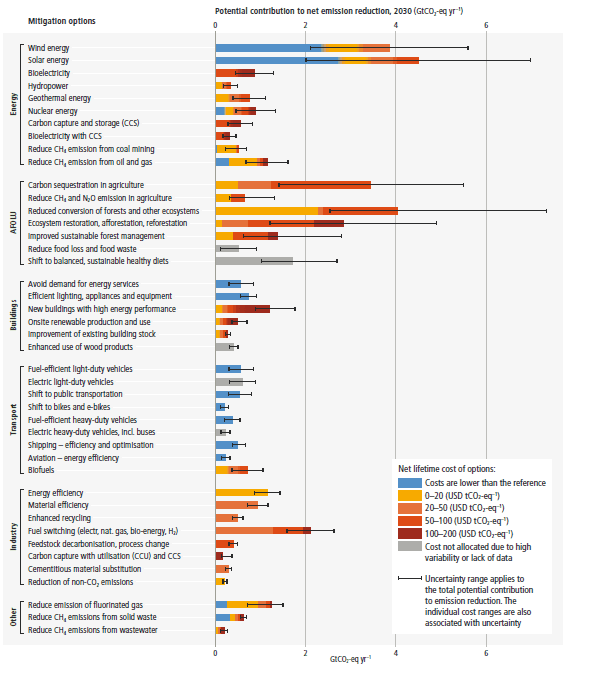
Recommended actions to cut greenhouse gas emissions in the near future:
Anti-science, inactivism, and unsupported conspiracy theories are not ok here.
LOL @ Seattle....
yeah, bits will be underwater one day. thank goodness most of the town is up on giant ridge lines and hills.
the circle is the city location, not the tip of the cone, for anyone else who was confused
Maybe I’m an idiot but how does “mm per year” classify you as being at a high risk of sinking? Seems a lot different depending on your elevation. The highest peak could sink a meter per year and still not be at risk of flooding
True, for not being at risk from flooding from the ocean given elevation (from sea level).
Local flooding: entirely possible. For example, over a few years city X sinks by a cm, because of that in a flood situation there's slightly more flood water. Over a large area that might be quality a few acre-feet of water: that's quite a lot more water.
It's less that the likely hood of a flood increases and more that the severity of a flood increases.
yeah, ima need to see the methodology dawg
I suspect the Houston number is actually Katy or the gre at Houston area as a whole because last I check Houston-proper has taken some action to reduce the pumping of ground water and mostly stabilized? But the surrounding suburbs think not wanting flooding is commi BS probably.
Anything but metric.
I know you refer to the credit card comparison but right at the top it literally says "mm/year".
How much is that in milli-school buses?
If we use a bus at 45' and convert that into milli-school bus you get 0.045 feet = 1 milli-school bus. 1 milli-school bus = 13.761mm.