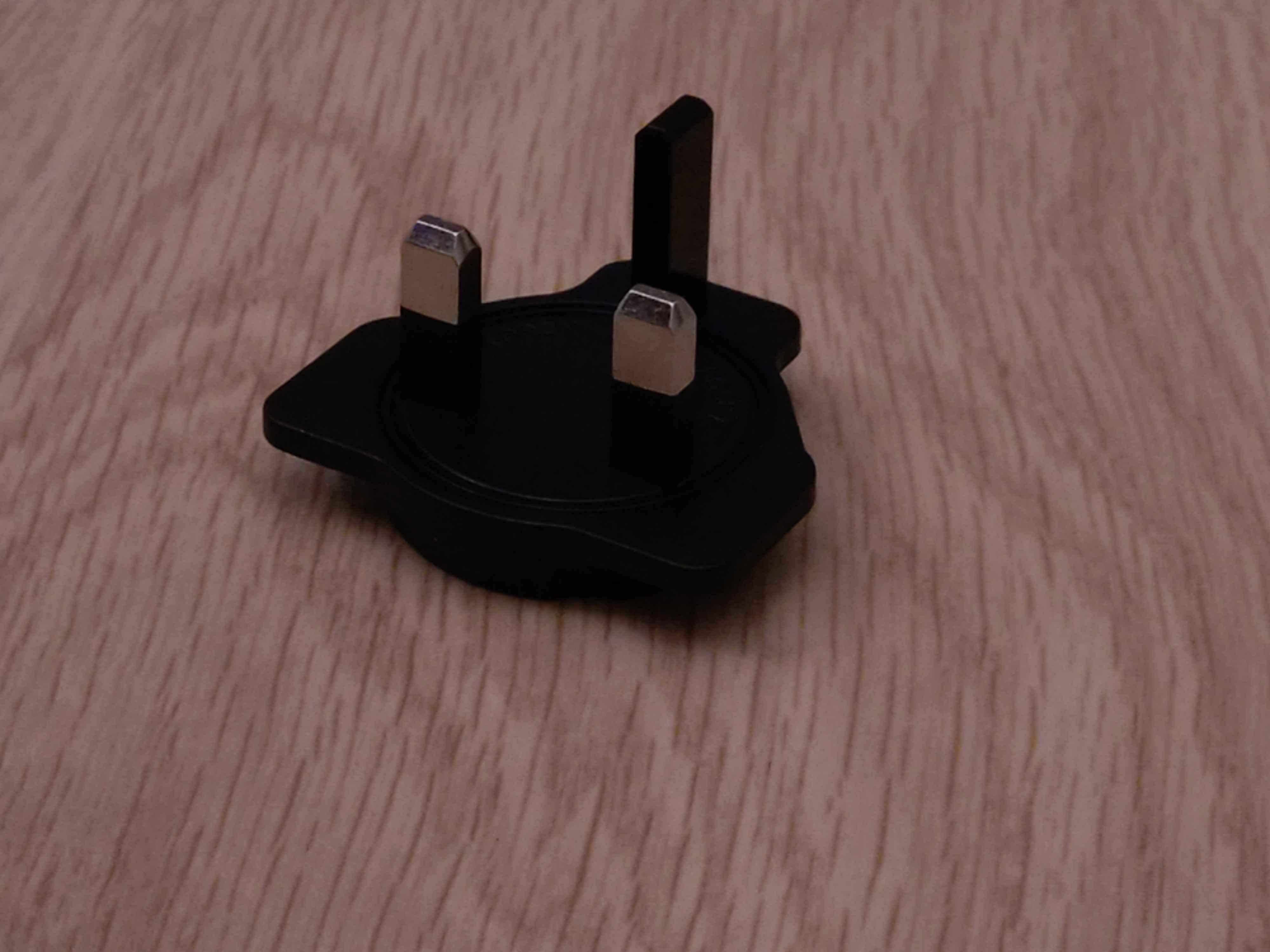
People who joke about legos haven't stepped on this bad boy
Home to all things "Mildly Infuriating" Not infuriating, not enraging. Mildly Infuriating. All posts should reflect that. Please post actually infuriating posts to !actually_infuriating@lemmy.world
I want my day mildly ruined, not completely ruined. Please remember to refrain from reposting old content. If you post a post from reddit it is good practice to include a link and credit the OP. I'm not about stealing content!
It's just good to get something in this website for casual viewing whilst refreshing original content is added overtime.
Rules:
1. Be Respectful
Refrain from using harmful language pertaining to a protected characteristic: e.g. race, gender, sexuality, disability or religion.
Refrain from being argumentative when responding or commenting to posts/replies. Personal attacks are not welcome here.
...
2. No Illegal Content
Content that violates the law. Any post/comment found to be in breach of common law will be removed and given to the authorities if required.
That means: -No promoting violence/threats against any individuals
-No CSA content or Revenge Porn
-No sharing private/personal information (Doxxing)
...
3. No Spam
Posting the same post, no matter the intent is against the rules.
-If you have posted content, please refrain from re-posting said content within this community.
-Do not spam posts with intent to harass, annoy, bully, advertise, scam or harm this community.
-No posting Scams/Advertisements/Phishing Links/IP Grabbers
-No Bots, Bots will be banned from the community.
...
4. No Porn/Explicit
Content
-Do not post explicit content. Lemmy.World is not the instance for NSFW content.
-Do not post Gore or Shock Content.
...
5. No Enciting Harassment,
Brigading, Doxxing or Witch Hunts
-Do not Brigade other Communities
-No calls to action against other communities/users within Lemmy or outside of Lemmy.
-No Witch Hunts against users/communities.
-No content that harasses members within or outside of the community.
...
6. NSFW should be behind NSFW tags.
-Content that is NSFW should be behind NSFW tags.
-Content that might be distressing should be kept behind NSFW tags.
...
7. Content should match the theme of this community.
-Content should be Mildly infuriating. If your post better fits !Actually_Infuriating put it there.
-The Community !actuallyinfuriating has been born so that's where you should post the big stuff.
...
8. Reposting of Reddit content is permitted, try to credit the OC.
-Please consider crediting the OC when reposting content. A name of the user or a link to the original post is sufficient.
...
...
Also check out:
Partnered Communities:
Reach out to LillianVS for inclusion on the sidebar.
All communities included on the sidebar are to be made in compliance with the instance rules.
People who joke about legos haven't stepped on this bad boy
So you’re not saying it’s because the wiring is substandard, but because it’s ring circuits, which are not up to the same standard as if they used a breaker panel.
Isn’t that the same thing?
The standards the UK adopted pass higher voltages and higher currents per household circuit than pretty much anywhere else. They adopted standards that allow them to use use less wiring, less copper to provide the same energy. They can plug in many space heaters on one circuit, where two or three would blow a breaker on a US circuit.
That higher voltage and higher current makes their household circuits inherently more dangerous than household circuits outside the UK. A fault in a UK circuit passes a lot more energy than a similar fault elsewhere, before tripping a current-limiting device. The exact same fault in a UK circuit is far more dangerous than in a circuit pretty much anywhere else in the world. The standards for household wiring in the rest of the world are a lot more restrictive than the standards adopted in the UK.
UK plugs on Japanese appliance in Japanese houses (for example) are overkill. The safety provided by the UK plugs is built into the Japanese breaker panel and wiring. Putting the UK plug/socket into a Japanese circuit provides no significant additional safety benefit. The Japanese plug/socket on a UK circuit would be extraordinarily dangerous.
Electrically, current depends on voltage and resistance/impedance. In practice, (and most importantly to this discussion), current draw actually depends primarily on the characteristics of the current limiting devices such as breakers, fuses, etc. Breakers on UK household circuits are designed to allow considerably more power than comparable breakers around the world.
This is the primary factor I am talking about.
Those fuses are not needed in Japanese (or North American, or most other) plugs. We don't need to protect the "external wiring" separately from the household wiring: the household circuit breaker is rated lower than the "external wiring". Drawing a direct short on the "external wiring" in a UK circuit is not sufficient to trip the UK circuit breaker in the UK distribution panel; they need a secondary current limiter (a fuse) to provide that function.
We don't need fuses in our plugs, specifically because our household circuit breakers are designed to trip well before your fuses would blow. (We do include fuses in any appliance or device with wiring not rated to full current.)
The function provided by those shutters is achieved in the Japanese wiring by lower voltage, narrow holes in receptacles (allowable because they don't need as large a contact to safely carry the lower rated current), a flared base on plugs, protective accessories for outlets in risky locations, and whole-house AFCI/GFCI.
Stick your finger in a 20A outlet, and you'll pull out a burned finger. Stick your finger in a 100A outlet, and you'll lose your hand, or your life. More power will pass through you before the circuit can be interrupted.
The power standards that created the need for UK plugs were developed long before RCD/AFCI/GFCI protections were adopted. Those later protections did not influence the decision to use that plug design.
Our appliance wiring is rated to carry 20A from the receptacle throughout the appliance, or to a secondary current limiter within the appliance. Since the wiring is rated to the 20A the circuit can provide, we don't need the secondary fuse in the plug. This is part of our appliance wiring standards.
If you have a 30A outlet, and you plug a cord rated to 20A into it, that cord will be overloaded before drawing 30A. Which means a fault in the appliance might not be capable of tripping the 30A breaker. For safety, you would need the cord to be rated to 30A to ensure the breaker will trip. The UK doesn't use 30A cords on appliances that only need 2A of protection. They put a 2A fuse in their plug, and use a cord capable of surviving a 2A fault. (In practice, UK cords have about the same rating as US cords; a 20A fuse in the plug would suffice.)
Our breakers are rated at 15 or 20A. We require our cords have to be rated to be able to survive 20A without catching fire for long enough to trip a 20A breaker, even if the device is only expected to draw 2A. We don't need the secondary current limiter, as the circuit breaker is designed and intended to trip before a fault allows the appliance to catch fire.
Different rating. An extension cord rated for carrying 10A continuously will still survive a 20A fault. The voltage drop through that cord will be out of spec, which is why it is only rated to 10A.
Obviously. That has been part of my point the entire time: You use fewer, higher wattage circuits. UK circuits carries more power to pass through your body than a comparable circuit elsewhere in the world. The household wiring standards in the rest of the world are more restrictive than they are in the UK. You are repeating the exact points that I (and others) have been making from the start.
30A @ 240V in the UK. 16A @220V in the EU. 15/20A @ 120V in North America. 20A @ 100V in Japan. Keep those numbers in mind, assume someone is touching a live wire sticking out of their wall, drop the attitude, and re-read my comments from the very start.
I covered that. Different rating. That 15A cord will survive a 20A fault. Its rated at 15A because the voltage drop will be out of spec at 20A draw, not because it will be a fire hazard at 20A. You will be able to get enough current through that 15A cord to trip the 20A breaker. You might not be able to get 20A through a 5A cord before the cord catches fire.
My point is that UK appliances are specifically not designed to trip UK breakers in a fault. US devices are.
In every jurisdiction where fuses are not required in plugs, appliance standards require the appliance to be able to trip the household breaker. This is a fundamental concept of electrical safety.
That's actually false. You're conflating the resistance of "skin" with the resistance if the "body". Once you burn away that skin, your internal resistance drops substantially.
Breakers are only required to trip if the circuit is overloaded. That part is correct.
The internal resistance of drastically undersized wiring may not be capable of passing sufficient current to overload the household breaker. And yet, pretty much the entire world (except the UK) doesn't require fuses on their plugs. The unfused power cords for those non-UK appliances are either a fire hazard OR those cords are required to be able to carry sufficient current to trip the current limiter without catching fire. The latter is, indeed, the case. This is a big part of UL, CSA, CE, and other electrical certification standards around the world.
That's actually part of NEC code applicable in the US and Canada, and I'm not going to delve too far into it, as it really pisses me off. Basically, there is no functional difference between our 15A and 20A components. The standards needed for a component to carry 15A in North America are the same as the standards needed for it to carry 20A. Effectively, our 15A components have a safety margin 5A greater than that of our 20A components.
The historic and technical distinctions for this are well outside the scope of this discussion, and I think it is, indeed, moronic. But yes, technically, we can indeed use certain 15A-rated components on a circuit protected by a 20A breaker.
Here again, you're demonstrating my exact point, despite claiming that what I am saying is "completely untrue": The rest of the world builds its appliances to tolerate at least that 16A fault. For the UK to use that exact same manner of protection, they would need to build their appliances to tolerate a 30A fault. The same appliance would need a much heavier power cord in the UK than in the EU.
Since no rational person would want to overbuild each and every appliance to be able to tolerate a 30A fault, they included a fuse in their plug. That plug, unneeded in the rest of the world, is an essential component in the UK. That plug is what allows the UK to be able to safely use the world's 16A appliances on UK 30A breakers.
(No, the rest of the world doesn't need 16A before "anything" trips. The rest of the world includes their fuses inside the appliance, immediately after the cord rather than on the plug end.)
You read what you wanted to read, and not what I actually wrote:
The rest of the world relies on their (ostensibly) 16A household circuit breaker, and not on a fuse in their plug. For the UK to rely on the household breaker, their appliances would need to be able to handle a 30A fault.
That fused plug is not necessary in the rest of the world. The rest of the world builds their power cables to handle 16A, and puts their 1A fuse inside the body of the appliance. The UK needs that overbuilt plug, specifically because their household wiring standards are so much less restrictive than those of the rest of the world.
I think you've lost the plot. Every time you argue for a feature provided by the UK plug that isn't needed in global plugs, you're making my point for me: The UK plugs are vastly overengineered. The necessity of that overengineering is due to less-restrictive household wiring standards.
240V @ 30A is the highest on the planet. You consistently ignored current rating, despite recognizing that without the special, overengineered fused plugs, appliances would be exposed to them. Your inclusion of this is dishonest.
The claim you're rebutting is not the claim that was made. The claim that was made was that each UK circuit has higher current than a comparable North American circuit. Which is true. A UK household circuit is at 30A, while Canadian/US/Mexican is at 15/20A. American and UK homes use roughly the same amount of total power, but the American home typically distributes that power with roughly 4 times as many, lower-current circuits.
Both of us have rebutted that several times already, in recognizing that a low-current wire is a fire hazard when connected to a high-current household circuit. You make that argument yourself, below.
Conceded. The insulated prongs on the UK sockets are not "overengineering". Such prongs are used on Europlugs as well. That leaves the extremely large size of the contacts, necessitating the shutters.
Everything? Really? My "rebuttal" is to ignore this ad hom.
The rest of the world safely uses unfused plugs. Every argument you make that requires fuses supports my contention.
You're assuming the internal resistance of a wire of sufficient gauge. An undersized wire - such as a power cord intended to be used on a 16A EU appliance - may not be capable of drawing 30A, let alone 1000, without catching fire. It may only draw 28A while it is glowing red hot. That same unfused power cable is perfectly acceptable and perfectly safe on a 16A EU circuit, but is unsafe on a UK household circuit without that special UK plug.
You're ignoring the original point and arguing something tangential and irrelevant. The rest of the world safely uses unfused plugs. Which means that their power cables are simpler in design and construction, but necessitates that their power cable must be able to survive the full rated household current. The UK does not use this "unfused plug" design philosophy. The reason they don't use it is because it would necessitate that their power cables be capable of surviving 30A faults, rather than the 16A in the EU.
The UK does not restrict their household supply circuits to 16A. They allow their household circuits to carry 30A. That standardization decision necessitates the fused plug that the rest of the world simply doesn't need.
Again, conceded: The sleeved contacts are not part of the "overengineering" of the plug. The EU plug uses a similar design. American and Japanese plugs are deficient in this aspect.
Not an accurate observation of my understanding at all, and not particularly relevant to the discussion. The topic of discussion is the relationship of plugs to household wiring.
Conceded, with the caveat that the RCD/AFCI/GFCI device for the 20A circuit will be more sensitive and allow lower current to pass than the equivalent RCD/AFCI/GFCI device on the 100A circuit.
The 15A extension cord in Japan is designed to be plugged into a Japanese outlet. This is the same bullshit historical and technical issue that we have in our NEC code, where identical components often have different nameplate ratings. That 15A extension cord is specifically designed for use on circuits protected by 20A breakers.
Conceded, and irrelevant to the issue at hand.
I addressed this with my diatribe against the NEC's position on 15A vs 20A components. The 15A extension cord is specifically designed for use in a circuit protected by a 20A breaker. It's an asinine provision, but it is there.
I suspect that those cables actually do have a fuse in them, much like the fused plugs used on North American Christmas decorations.
Yes, exactly. Which is why the unfused portions of that device have to be designed to handle at least 16A.
Agreed. I've repeatedly made that exact argument in support of my point.
I confess, I didn't read it. As It wasn't and isn't particularly relevant to the core issue, I'm happy to concede the point.
Again, the topic of discussion is "Why does the UK need these plugs, when the rest of the world doesn't?"
To understand that topic, we do, actually, need to consider the dangers of the UK using the kind of plugs used in the rest of the world.
"Unsafe" is not the correct term. "Unsafe" implies an absolute condition. The UK system is not "unsafe", and I have not argued that it is "unsafe".
"Less safe" is the more accurate description. "Less safe" implies a relative condition. The UK system is "safe enough", even though their household wiring - the wiring between the breaker and the outlet - is significantly "less safe" than household wiring around the world.
A fault between the breaker and the outlet in most of the world develops 2000-4000 watts before a breaker can be expected to trip. Japan's 20A @ 100V is on the lower end; EU's 16A @ 240V is on the higher end of that scale. 2000-4000 watts arcing at a faulty terminal. 2000-4000 watts that can only be dissipated by various potentially flammable building materials around the faulty device.
In the UK, it's not 2000-4000. It's 7200 watts. A similar fault can deliver substantially more energy to those flammable building materials, increasing the risk of fire.
North America mitigates such risks in its 7200 watt (60A @ 120V, 30A @ 240V) circuits by minimizing the number of connections; the number of places where a fault can potentially develop. We don't allow multiple outlets: these circuits must be dedicated to a single, special-purpose outlet only. Europe, Japan, and the rest of the world have similar requirements for such circuits. The UK goes ahead and daisychains their 7200W circuits throughout the home.
By that metric, the household wiring is, indeed, "less safe" than competing circuits around the world. By that metric, UK household circuits are, indeed, substandard, even before they eschew simple straightforward branch topology for rings, which introduce a variety of complex failure modes that can easily overload household wiring.
The "less safe" condition of UK wiring necessitates additional protections at and after the outlet. The safety measures employed in the rest of the world are inadequate to mitigate the dangers posed by the UK's 7200 watt household circuits.
I happen to have (several) 30A 240V circuits in my house and shop. The one I was using tonight has an arc welder plugged into it. Under the applicable electric code in the US, this circuit has to be dedicated. It can serve only one outlet. If I want another 30A outlet, I have to wire a completely separate, dedicated circuit for that outlet. I can only install such outlets in certain places within my home and shop.
That is the standard here in North America. The standard for EU, Japan, and the rest of the world is comparable. North America (And possibly Japan?) has an additional feature in that our 240V circuits are split-phase: They expose the user to a maximum 120V fault to ground. To experience a 240V fault, you have to be ungrounded and simultaneously contact not just one but two opposing hot phases.
The UK daisy chains single-phase, 240V to ground, 30A outlets throughout their homes. They put circuits suitable for arc welding in their bathrooms. They use circuits suitable for arc welding for their alarm clocks and hair dryers.
The UK requirements on 30A circuits and outlets are far less restrictive than the requirements on 30A circuits and outlets in the rest of the world. The UK uses substandard household circuits, necessitating their over-engineered plug.
The UK could have deprecated their 30A circuits in favor of the 16A circuits in use in Europe. They elected to keep their substandard, arc-welder-ready outlets and over-engineer a plug instead.
Of course it is. That's not the issue under discussion. The issue under discussion is "Why does the UK use overengineered plugs not needed in the rest of the world?"
And the answer is because their household circuits are radically substandard relative to those in use in the rest of the world. Without those special plugs, UK circuits would be extraordinarily dangerous.
People die in fires.
Not the topic of discussion. Again, the topic is "Why does the UK use overengineered plugs not needed in the rest of the world?" To understand that, we consider the hypothetical use of non-fused plugs on UK circuits, compared to non-fused plugs on global circuits. When we consider that hypothetical, we realize the exceptional danger posed by that condition, and we identify the need for those plugs.
Because that is not the topic of discussion. The topic of discussion is "Why does the UK use overengineered plugs not needed in the rest of the world?" The danger is not the plugs. The danger is the household circuitry. The plugs are the safety device grafted on to restore the degree of safety the rest of the world enjoys without those special plugs. Of course the plugs are safe. The danger arises when we hypothetically apply the world's non-fused-plug standard to UK household circuits, in order to understand the necessity of those plugs.
Projection.
Indeed, we do. We have detachable appliance power cords built to be plugged into a 15/20A circuit, that connect to devices labeled to 7A, so the cord is similarly labeled. But, that cord is built with at least 18AWG wire, which is normally rated to carry 16A, not 7A. And it doesn't have our normal NEMA 5-15 socket on the downstream end, so it cannot be used as an "extension" cord.
Other than the fact that we don't actually have extension cords labeled (or rated) to carry 7A at all. Or that three 1500W space heaters will draw 37.5A @ 120V, which will easily trip our 15/20A breakers.
We could physically plug them into an extension cord labeled 10A, the lowest rating I've ever seen. But that cord will built with at least 16AWG wire, which is rated to carry 22A in chassis wiring. (It will also be very short.)
The key flaw in your argument is your failure to understand that the world does, indeed, protect its devices with household breakers. We do, indeed, build our devices to carry the full current that our household wiring could provide at an outlet, even where the device itself is intended to draw only a tiny fraction of that current. This is one of the most basic standards in use by UL, CSA, CE, and every other electrical certification body on the planet.
I know you understand the reason behind this standard. What I don't know is why you think the rest of the world doesn't understand it, and hasn't codified it.
Appliance wiring, not household wiring. I clearly specified that. You're reading what you want to read, and not what I actually wrote. You're laughing at yourself, not at what I claimed.
Remember: most of the world safely uses unfused plugs on their appliance power cords. Their 16A household breaker is the only current limiter available to protect those unfused power cables. Those normal sized, unfused cables would be drastically undersized if plugged into a less-restrictive, 30A outlet.
popcorn.michaeljackson