Rivalarrival

joined 2 years ago
[–] Rivalarrival@lemmy.today 1 points 12 hours ago* (last edited 11 hours ago)

Suppose Microsoft adds this capability to Windows, and you edit the registry to disable it. How is that any different?

By allowing the end user to change it instead of locking it down, they are not making a good faith effort to comply, and they lose their liability protection. To maintain their immunity, at the very least they will need to prohibit Californians from disabling the feature.

Canonical is prohibited from adding comparable terms.

I can see the argument for something like iOS.

How is iOS any different from Windows here?

Let's say you own a computer store in California, you sell Windows laptops, and you setup your preinstalled Windows image with the registry edit made, because customers don't like the silly age prompt. How are you not the OS Provider?

Again, to maintain their immunity under this law, they would have to prohibit me from doing this in their licensing agreement. My violation is what protects Microsoft. I would, indeed, be the OS provider in that scenario.

But in the scenario you describe, I'm not the end user.

Neither Canonical nor I can include the same restrictive terms in our OS offerings. We can simply inform our users that the OS is not California compliant. Our users become their own OS Providers as soon as they decide to use them in California.

[–] Rivalarrival@lemmy.today 0 points 12 hours ago (2 children)

And a user of Ubuntu only has access to the functions that Canonical has provided.

That is not at all accurate.

Administrator access to Windows is not at all comparable to root access on Linux. Windows "root" access is held solely by Microsoft, and granted only to Microsoft employees and contractors. They are the only ones with the capability of changing Microsoft's binary blobs.

Canonical doesn't restrict root access. Everyone who installs Ubuntu has root access by default.

Suppose Canonical adds this capability to Ubuntu. Suppose I take an Ubuntu install, and remove this capability. Who is the provider of the resulting OS, Canonical, or me? Obviously, I am responsible for the changes; I am obviously the OS Provider in this scenario. What I am saying is that I was the OS provider before I made the changes. For FOSS software, the end user fits the OS Provider definition that California creates with this law.

[–] Rivalarrival@lemmy.today 1 points 22 hours ago (4 children)

The windows user uses the OS. The windows user does not control the OS. They only have access to the functions that Microsoft has provided. The Attorney General of California won't be able to argue that the sysadmin is the OS Provider of a Windows installation. The OS Provider of Windows is Microsoft.

The Attorney General of California would easily be able to argue that the OS Provider of a particular Linux instance is the sysadmin of that instance.

[–] Rivalarrival@lemmy.today 3 points 23 hours ago

If your code is installed on a general purpose computing device that is provided to a child, you can be fined.

If you provide code to the general public without requesting an age signal from the receiver's OS, you can be fined.

The attorney general of California might consider the JavaScript in your web page to be "content". They might consider it to be an "application". There is no clear distinction. If you request an age signal before providing content, you can be fined. If you fail to request an age signal before providing an application, you can be fined.

The more I read about this law, the less I think it will actually go into effect. It's going to face a whole series of injunctions. The lawyers are going to bill thousands of hours, but the whole thing is going to be scrapped.

[–] Rivalarrival@lemmy.today 3 points 23 hours ago (6 children)

The law doesn't require anything of users, it requires something of OS providers.

For a FOSS OS, any user with root access would be considered an "OS Provider" under the definitions provided in this law. With FOSS, there is no real distinction between "user" and "developer".

[–] Rivalarrival@lemmy.today 3 points 1 day ago

No... The law literally says that if you make a good faith effort then you are not liable.

It used to be that my liability was to the people using my code. If I code badly, they won't use it, and I might be blocked from contributing to a project. That was the worst penalty that I faced for providing bad code.

Now, I might have to argue against a lawyer claiming my mistakes are negligence, and my efforts are in less than good faith, with financial penalties should they prevail.

They merely need to point to my opposition to this law as evidence that I am not acting "in good faith" to support it.

Throwing up our hands and exiting California and Colorado is playing into Microsoft's desires. It is also the only rational response should this law go into effect as planned. Which means the proper course of action is to denounce this idiot law, not lend it our support or rationalize the harm it causes.

[–] Rivalarrival@lemmy.today 2 points 1 day ago (4 children)

You're having a conversation with a troll spanning across at least 10 different communities over three months?

The "context" is that "banning" is clearly one of your primary interests. You might consider starting a community on the subject.

[–] Rivalarrival@lemmy.today 2 points 1 day ago (3 children)

And if I make a good faith effort, but it doesn't work right, that's a $2000 penalty. Every time that snot-nosed, unsupervised kid opens an app.

You could of course decide to not provide to residents of California and Colorado.

Yes, that's exactly what Microsoft and Google want. They don't want my FOSS OS competing with their commercial offerings.

[–] Rivalarrival@lemmy.today 2 points 1 day ago (5 children)

The law effectively only applies penalties to the parents.

This applies penalties to far more than the parents. If I provide an operating system to a California parent, and my operating system does not include this "signal" apparatus, I can be fined $7500 every time a kid launches an application on my OS, for my deliberate decision not to implement their asinine horseshit.

[–] Rivalarrival@lemmy.today 3 points 1 day ago

Hey, can I get on that list too?

[–] Rivalarrival@lemmy.today 2 points 1 day ago

Daylight Savings Time, or Summer Time, is in use for 9 months of the year, and is thus the de facto standard. Daylight Wasting Time, or Winter Time, is only in use for 3 months of the year, which makes it the exception.

[–] Rivalarrival@lemmy.today 0 points 1 day ago

I highly doubt it's ever going to come into effect. We'll see injunctions later this year.


I do steady, part time work as a blacksmith, because I love it.

I also work for a hot air balloon ride company, again, because I love it. But, the balloon business is seasonal and weather dependent. We fly about 8 months out of the year, and about half our scheduled flights are canceled due to weather.

I'm looking for one more hobby/gig to do in the off-season or when it's just not flyable.

Something more interesting than DoorDash... I really don't want to go back to that.


The Outrageous: Homeowner Lannie Fentress was beaten and arrested for trying to put out a fire in his own home.

The Interesting: A special grand jury assembled to investigate the charges refused to indict Mr. Fentress.

The Amusing: That same grand jury turned around and indicted Police Sgt. DJ Newton, the arresting officer.


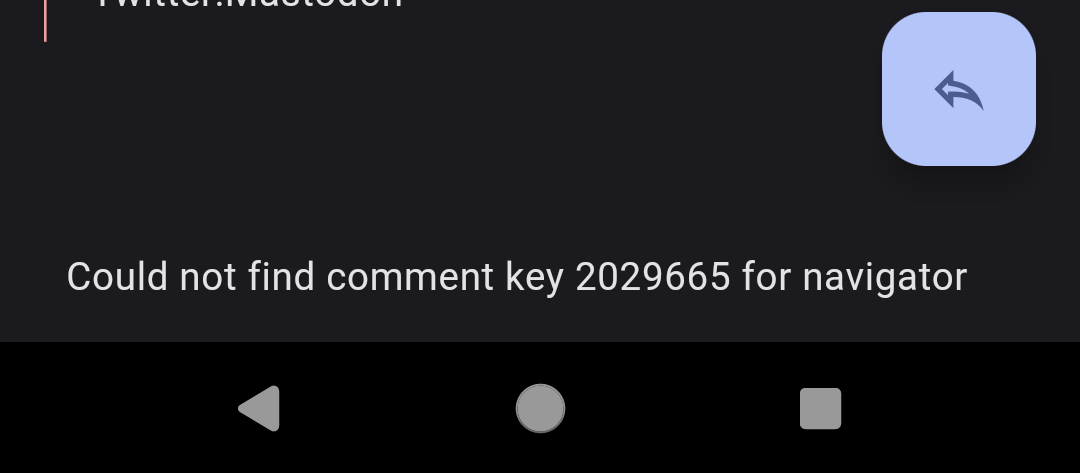
Gripe #1: From inbox, replying directly to a comment, I get the error "Could not determine post to comment to". I don't have this problem when I am viewing a comment in a post's, thread, only when viewing it from the inbox.

Gripe #2: Tapping the comment in the inbox takes me to the comment thread for the post, but does not take me to the specific comment within that thread. In a long thread, I can't always find the specific comment I am trying to reply to.

Edit: version 0.2.4

Edit2: Gripe #3: haven't figured out how to edit posts within Thunder; had to switch to Connect to make these edits...


I am getting this error pretty regularly. I'll see a message in my inbox, and when I tap through to view it in context, it's missing. Can't find a cause or a workaround.

view more: next ›