
You're telling me this contraption is for the ladies AND the fellas?
(Coming soon, the nbicycle: for neither ladies nor fellas)

Kwisarry S(pice) Trumaderach
Sign me up for both as well!
(Real life intervened, which is why it looks like this took hours to write)
Remaking Human Beings
I love the very opening story of the dance troupe, it's just a story that would so obviously never be possible in a capitalist prison state. It would be the kind of premise that could only happen in some sort of feel-good comedy movie, not in real life. And from there, the rest of the chapter makes it clear that the "Gulag" system was tantamount to prison abolition, while also setting forth an extremely clear conception of the Marxist understanding of human behaviour and 'human nature'.
Many other comments talked about other parts of this chapter in detail, so I will just mention a highlight for me that I didn't see anyone else discuss - the part about the judge and the party members at a saint's day festival (so much for the ruthless suppression of religion) collecting everyone's knives so when they got drunk later, no one got stabbed. It's just so pragmatic and non-punitive, in a way that anticommunist propaganda would have you believe a socialist state could never be.
In a capitalist police state, they would either ban the festival, or ban the alcohol, or enforce a curfew, or flood the area with cops and arrest, imprison and perhaps enslave anyone they found making trouble, or just do nothing to prevent a tragedy and then mercilessly destroy anyone who in a heated moment of poor impulse control became a murderer. Or else the festival would be a private event, with paid entry and security guards standing in for the police. There could never be a scenario where the police defuse the situation in a humane and pragmatic way, with the consent and understanding of everyone involved.
And actually, I just realized I might be skipping over the most notable part of the story, which is that the judge went and organized this himself! Could you imagine any US justice stepping down out of their courtroom throne to go out amongst the people and directly prevent crime from happening like this? To pre-emptively stop people from being criminalized in the first place? Of course not.
Youth Set Free
I don't have much to say about this one, as others commented it's particularly bittersweet knowing that all this youthful vitality and wonder was about to be spent fighting off the assault of the united capitalist world. I already said much of it in my comment on the Democratization of Science, but this chapter also hit me with the feeling of how wasted the energy of my own youth was, how completely without direction I felt until I was able to understand that that directionlessness was neither an accident, nor a fault of me as a person, but instead an inescapable feature of capitalism. One which, as the description in this chapter will attest, has not changed in nearly a hundred years.
Despite the bittersweetness, this chapter perhaps makes me the most hopeful about the fight for a socialist world, in the way it describes how quickly a new generation can flourish in new conditions. If we struggle and win, the reward will be to see, in just ten or fifteen years, the 'explosive joy which becomes increasingly plain in the words, the sports, the celebrations of Soviet youth'.
New Men Emerge
As others said, a strong ending which ties many threads together. I particularly like the explicit contrasting of the values of Soviet society and the Soviet citizen against those of the capitalists and especially the fascists. The eternal postwar liberal project is to equate fascism and communism under the umbrella of totalitarianism, so to have the subjects of fascism so specifically decried as slaves of blind obedience, in opposition to the 'strong and original individuality' of the Soviets, this far in advance of anything Hannah Arendt had to say, is an important and useful point.
I also love the quote about "that ability to look on both sides of the question which intellectuals under capitalism prize as a sign of high intelligence, but which Pravda disdains as “division of personality and double-mindedness, Hamletism in romantic colors.”" Postmodernists destroyed, Zizek in absolute shambles.
And I also love the description of the Stakhanovites. The classic anticommunist depiction, exemplified in caricature by Boxer the horse in Animal Farm, is of blunt, foolish illiterates being goaded into overworking themselves by their communist puppetmasters. Instead, here is an image of vibrant, intelligent, passionate master-craftspeople striving to become the absolute best at what they do, to break every record set before, and push and in turn be pushed by their fellows - and not by driving themselves recklessly to exhaustion, but while taking pride in their safety and efficiency. It makes me think of physical record setters like mountain climbers or arctic explorers, or, in a not entirely joking way, of the speedrunning community. So much for the idea that people would have no incentive to work in a socialist system, they were literally competing for high scores! For the love of the game! Once again, how much potential is wasted by capitalism failing to utilize the latent passion of workers?
That also gave me a sudden thought, that Stakhanovism seems so incomprehensible to the capitalist-indoctrinated mind because labor is necessarily devalued in capitalism - it can't be allowed to become a source of pride or identity, because that way lies class consciousness, and because capitalists would always lose at that game. You can only be passionate about becoming the best at activities that are ultimately frivolous - done for their own sake (and ideally requiring large amounts of capital), like sports, car or boat or plane racing, mountain climbing, deep sea diving, etc. And, because all work requires being exploited by a capitalist, anyone born into the capitalist world would understand that someone who voluntarily tries to work harder, let alone tries to set world-records at their job, must be a rube who's been tricked into it (even as capitalism's official line, the protestant work ethic, preaches exactly the same virtue).
All in all, this book has been an incredibly valuable read for me. Even such a comparatively brief overview feels quite comprehensive, and it has filled in so many gaps in my knowledge that I never even imagined were there. I definitely felt many brainworms withering away as I read this. Although it's bittersweet knowing all this hope and progress was about to be beaten down hard by the absolutely monstrous savagery of the capitalist world, the depths of barbarity of which I have to re-evaluate yet again, now knowing in even finer detail exactly what it was they were trying to crush... it still inspires so much hope for how much they were able to achieve in such a short time, and how much beautiful humanity those people possessed.
I return, just in time for the ending! Although I have been keeping up with the chapters, I've been remiss in writing any comments, so I'll try to remember them and give some brief thoughts here.
(Edit: After having hit submit by accident before, I have now actually written something!)
The Democratization of Science
As someone who did a degree in a STEM subject, this chapter particularly hits me in the feelings. More than anything, it's the sense that science is the project of the whole people, that everyone deserves and is encouraged to have an interest in it, that society owes everyone the chance to participate and that the opportunity for participation is repaid in the form of valuable knowledge - and the breaking of human records, just for the sake of it - contributed back to society and which then becomes the property of all.
This could not be more different from my experience at a university under capitalism. I had (mostly) good professors, and I (mostly) enjoyed my classes, but over my whole time studying, there was the stifling atmosphere that all of this was not to improve me as a person, or give me the ability to contribute to real social good, but rather just so I could earn a certificate to get a higher paying job afterwards. The only point was to make me more attractive to employers, so that when I went to the market I could seek out a more premium boss to work for. And as such, the people of my cohort who I was working and studying alongside, and making friends with, would not be my comrades in pushing the limits of human knowledge, they would be my direct rivals in the competition for a job.
Furthermore, the majority of the research projects I saw or heard about going on in the department were not pure research, or aimed at solving some practical problem facing humanity in general, but instead were partnerships with specific companies to improve some specific aspect of their product to make it more profitable. Even useful innovations to certain globally-important technologies were locked behind the fact this work was being done for the sake of one specific company, who could then hoard those advances behind intellectual property laws. In hindsight that's completely obvious, because increasing profits is the primary function of science under capitalism, but at the time, for the younger liberal me, it was extremely disillusioning. I went in truly wanting to spend my life and talents doing something that would help society in a meaningful way, and after working and studying and sweating through exams year after year, the reward was a license to become a better class of mercenary.
For that reason as well, it always felt like there was this pervasive air of, ultimately, indifference to whether I succeeded or not. Because I was paying the price of admission myself - already a fact making it clear that society as a whole didn't care about me doing this - and because the rewards would only belong to me, even though individual lecturers might be passionate about their students succeeding, the institution itself understood that it was just a business and if the customer wanted to waste their product, then so be it. Compare that with the socialist scientific system's exuberant embrace of everyone with the desire to improve their learning and advance the limits of science, as shown in this chapter - it's so clear what an absolute waste capitalism makes of the enthusiasm and desire to do good of those trapped within it. That's not to say it seems like the Soviet system was unconcerned with the skill of the scientists it was producing, but rather that no matter who it was that wanted to participate, they would be welcomed in and encouraged to become the best they could be - because it was in all of society's rational material self-interest to do so!
Reaching the hallowed halls of the academy and finding them a complete wasteland, seeing it in person and feeling that sensation viscerally, was probably the most important cornerstone of my eventual radicalization, even though it would be a long time before I had the theory and vocabulary to properly analyze my experience there. So with this chapter even more than the others, I can feel how radically different my own personal history would have been in a socialist society, in a way that's hard not to mourn for. And to hope that some day we can bring about such a society once again.
The Democratization of Art
Again, I'm struck by how art is the interest and treasure of the whole of society. Under capitalism, people who want to become artists are mocked and belittled, until they become successful, at which point they are celebrated and envied. Capitalist culture is obsessed with the most successful (highest earning) singers, actors and artists, who become important public figures, even as there is a permanent undercurrent of revulsion for artists as people who don't really do 'real work'. And by the very nature of how storing wealth works under capitalism, even if you succeed, the greatest possible reward for creating art is... to become a capitalist. So while some artists may fight against the worst commercialization of their work, or try to use their platform for social good (usually limited to radical-liberalism at best), or choose to live more modestly or give to charity in some way or another - the intrinsic nature of capitalism punishes and suppresses any behaviour outside the path of least resistance.
And for those who never get to be professional artists, unlike the description of Soviet society, where amateurs are encouraged to create things for a purpose, to be displayed somewhere or to liven a specific place up, so that every artwork is in some way contributing to society - or at the very least is produced under conditions of social engagement - under capitalism you either create artworks to try and sell them, or you create art just as a hobby to keep for yourself. (Or if you're really lucky and somehow have a surplus of free time and energy, and live in the right place, you may be able to create art to share with a community - which is ultimately just an echo of the conditions of socialist art.)
I have a hobby making small art pieces, which I do enjoy, but it's like... I create something, I finish it, I get to enjoy it for a while, and then it just becomes this dead thing that takes up room and collects dust, which I either have to store away indefinitely, or find some way to get rid of. Sometimes I find I can't be bothered to start something new, because after all the effort I put in, after many hours of care and work, it's just going to end up in a box at the back of a cupboard. The art that should connect me with humanity becomes just another vector of solipsism and alienation - or, if I was really lucky and skilled, in the best case scenario, it would be another way to become a mercenary. Whereas art created under socialism is, or can be, a living thing to be enjoyed by everyone, and as this chapter shows, was clearly valued as such by Soviet society. Like, I had never considered the idea of acting in an amateur play before now, and in this life I don't think I'm any more likely to do so now, but I did feel a sudden pang of loss for a way of relating to society I didn't even know was closed off.
I went a bit longer than expected, so I'll have to continue in another part...
The Enlightenment was a fundamentally bourgeois project. It was the project of the rising capitalist class that was preparing itself philosophically for sweeping away the ideology of feudalism - the Divine Right of Kings, the supremacy of the Catholic Church, miracles and superstition, things that would get in the way of a well-ordered capitalist economy - even as it was taking political power from the feudal system through both economic domination and revolutionary violence. As such, the Enlightenment was a historically progressive movement at the time it was occurring, reflecting the optimism of a class that was rising onto the historical stage.
However, as soon as feudalism was overthrown as the dominant political-economic system, its vestiges suppressed and subordinated to the new capitalist order, at that very moment the bourgeoisie were no longer the rising, conquering, progressive class, but had now become the ones trying to hold back the tide of history and defend their dominant class position against the now-awakening proletariat.
So, all the historical progressivism of the Enlightenment had to come to a screeching halt, and its promise of a truly rationally-organized society of truly equal humans had to be quietly hidden away and forgotten, with its place being taken in mainstream bourgeois thought by various forms of anti-rational, navel-gazing philosophical nihilism and solipsism, which could ease the anxieties of a capitalist class that needed to believe history had come to an end and that the limits of human capacity had been reached.
The Counter-Enlightenment was therefore a reaction against the ideas of rationality and progress from both vestiges of the feudal system, complaining that all the magic had been taken out of the world by deposing the kings and clerics, and sections of the bourgeoisie itself subconsciously understanding that true rationality could never be allowed to take hold, and that everyone had to stop thinking too hard about how the world works, right now. As a romantic, anti-rational, idealist philosophical movement it is fundamentally reactionary and antithetical to the philosophy of the proletariat.
Before the total stagnation of capitalist philosophy, the last gasp of progress left from the tradition of the Enlightenment was the work of Hegel, whose dialectical idealism was the most advanced level that bourgeois philosophical thought ever reached. More importantly, it laid the groundwork for his students, Karl Marx and Friedrich Engels, to develop dialectical materialism, an advance beyond all capitalist philosophy into a philosophy worthy of the new rising class, the proletariat.
So the philosophical lineage of Marx traces back directly through the Enlightenment, but his work both transcends it and at last fulfils its latent promise.
Flourishing (verb); present participle and gerund of flourish
Flourish (verb); (intransitive) To thrive or grow well.
The barley flourished in the warm weather.
Saddam also believed in berserker mode (chemical weapons)
Definitely 100% bullshit.
Brexit was a split between national industrial capital trying to retain access to its European markets, and a section of US-aligned finance capital salivating over the last strands of copper in the walls. A successful Leave campaign would create a fire sale of distressed assets as UK industries lost competitiveness in EU markets they could no longer freely trade with. That would allow finance capital to buy out everything and either carve it up, or tear up the relevant EU regulations and start really squeezing out every last penny of profit - the current rate of sewage contamination in the UK's rivers and beaches will attest to the latter. Leave was also supported by ideological libertarians opposed to all EU regulations - obviously, as they are nothing more than the attack dogs of finance capital - but who only personally benefit indirectly via patronage from real finance capitalists; ideological racists, which includes large sections of moronic petit-bourgeoisie happy to shoot themselves in the foot if they think it will somehow hurt a foreigner, plus reactionary workers bought into the classic myths about immigrants and crime or benefits; a significant number of the totally politically illiterate who just wanted to press the 'make something happen' button; and an insignificant number of leftists opposed to the EU as a fundamentally neoliberal institution, i.e. the correct position.
As for election interference, 'Vote Leave', one of the many private companies set up to campaign for each side (bourgeois democracy is a joke) overspent the £7million legal limit on campaigning by almost 10% by funnelling it through their youth organization, and after this was discovered the punishment was... one specific guy was fined £20,000, and the company as a whole was fined £70,000, long after their side had already won. 'Leave.EU', a different private company set up for campaigning (bourgeois democracy is a joke), was also fined £70,000 for overspending, again long after they'd won. All of this just demonstrating how completely ineffectual the regulatory institutions are, or rather, that the institutions are designed to uphold what bourgeois democracy really is - a financial contest between competing sections of the bourgeoisie. In fact, having just looked it up, all Remain campaigns combined raised a total of £7.5million, while Leave campaigns received £8.2million, so like... there you go. They bought the result they wanted. The larger capital overpowered the smaller capital and forced the state they share to act according to its will.
And lastly, neither a EU-aligned nor a US-aligned Britain was going to be favorable to Russia cause at the end of the day, it's still Britain, and for as long as their administrative class is composed of people who are still seething about their great-great-great-grand-uncle eating shit at the Charge of the Light Brigade, they will always hate Russia. But for that same reason, any amount of discord in the UK helps Russia, and Brexit also weakens the EU which Russia was in the middle of bargaining with over Ukraine, so they did have clear incentive to put their thumb on one side of the scales - and they almost certainly did so, without being in any way decisive in the outcome *and more importantly, without having created the conditions for Brexit in the first place.
Despite being neoliberal and conservative, a crucial ideological component of the current Russian state is the historical memory of the Great Patriotic War, which forces them into the position of being anti-nazi, so neo-nazis and the most virulent white supremacists have to be cracked down on or else they'll lose historical legitimacy

Meanwhile here is just a tiny selection of Ukrainian fascists and neo-nazis marching proudly in the open with full state support

One of these is obviously much, much worse than the other, and the people of the Donbas have made their choice as to which side of the border they'd like to be on
Dread it, run from it, destiny arrives all the same

You're telling me this contraption is for the ladies AND the fellas?
(Coming soon, the nbicycle: for neither ladies nor fellas)
Lo, did King Georgius of the Hedge, second of his name, perforce, in expansion of his realm, commission that this deed be done.
This story sets my blood absolutely boiling every time it comes up. A 15 year old girl was sex trafficked to Syrian extremists, by a people-smuggling ring run by a man later discovered to be a Canadian intelligence asset, was "married" within 10 days of arriving in Syria, had three children before she was 19 all of whom died, and the day after she was discovered alive in a refugee camp and expressed her wish to come home, she was illegally made stateless by the Home Secretary revoking her British passport in the name of """protecting national security""".
And these savages are literally baying for her blood, gleefully pointing out "It's not illegal because she's not stateless, she can go to Bangladesh, oh but they dispute that she's a citizen and they've said if she goes there they'll hang her for terrorism! Hahaha! pLaY sTuPid GaMeS " 
but she still has extremist beliefs and won't condemn ISIS
OF COURSE SHE FUCKING DOES, SHE'S LIVED IN A TENT IN THE DESERT SINCE SHE WAS 15. HOW COULD SHE POSSIBLY HAVE BEEN DERADICALIZED?? Oh, some fucking "anonymous source" in the Telegraph says she was "an 'enforcer' in IS's 'morality police'"? That's fucked up, did she like do anything or kill anyone though? No? Of course not.
These same fucking people will then turn around and shed their crocodile tears about oppression in Xinjiang. If she was Chinese she'd have been brought back, put in a deradicalization center for a few months to a year, given teaching on why her extreme beliefs were wrong along with some education and training, and now she'd be working in a garment factory or something, with a long and normal life ahead of her. Instead the compassionate, civilized West has condemned her to a legal black hole, trapped with no future in the desert camp that her children died in, for the crime of being kidnapped as a child by our own spies, to an extremist organization that, as we all know here, is a US project.
The whole thing is a perfect encapsulation of the inherent brutal, savage cruelty and criminality of western regimes and the bootlickers in their population. I try to remind myself that there are good people here who also think this is a travesty, but when I read this thread I can only get a few comments in before I get the urge, like bile rising up my throat, to scream UNLIMITED GENOCIDE ON THE FIRST WORLD.
 the forgiveness they have shown her, will in turn one day be shown to them.
Redditors react to a video of a bike ride around Pyongyang
Video: the most normal city ever filmed
Redditors: So spooky! Everything looks... wrong! This guy is taking his life in his hands to film this!
Also Redditors: Looks too normal, this has to be staged, they're actors and this is a propaganda channel!
Side note: my tolerance for western bullshit on the DPRK has reached the negatives, five seconds in these comments and you can cook an egg with my blood. Salute to the small handful of brave comrades pushing back on propaganda in the replies 
Laugh! Laugh at the inferiority of the untermenschen-crafted weapon! 
Featuring such golden comment chains as:
One a/c on the assembly line. Look at manufacturing sites for F-35 and F-22. Dozens of aircraft lined up. That’s the difference.
That’s the first thing I noticed. Russian industrial capacity has literally collapsed, I never realized they were this weak. Compare that to their Chinese allies who have been able to produce an impressive number of J20s pretty fast even though the SU57 had its test flight earlier
Too many people stealing money and limiting their capabilities. Good lol*
*not like our trustworthy Raytheons and Northrop-Grummans, of course 
For when you spy that fash-on-fash violence.
(Great minds think alike but this one has no background)
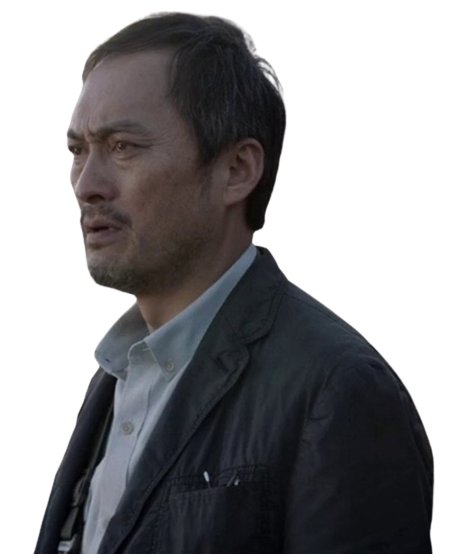


I know it's just cause of the ridiculous rules of the subreddit, but