this post was submitted on 23 Feb 2026
77 points (97.5% liked)

Climate

8358 readers
335 users here now

Discussion of climate, how it is changing, activism around that, the politics, and the energy systems change we need in order to stabilize things.

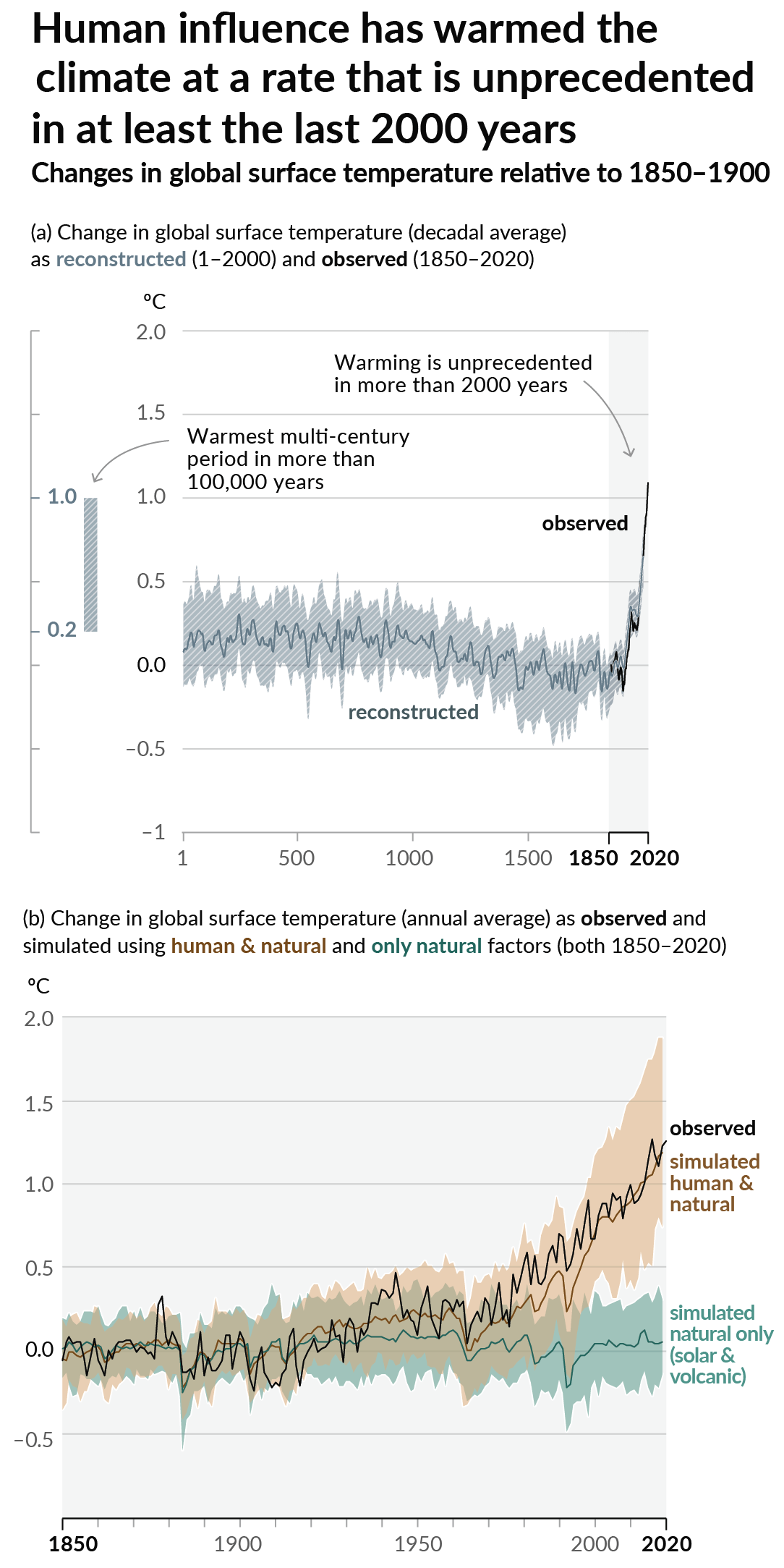
As a starting point, the burning of fossil fuels, and to a lesser extent deforestation and release of methane are responsible for the warming in recent decades: Graph of temperature as observed with significant warming, and simulated without added greenhouse gases and other anthropogentic changes, which shows no significant warming

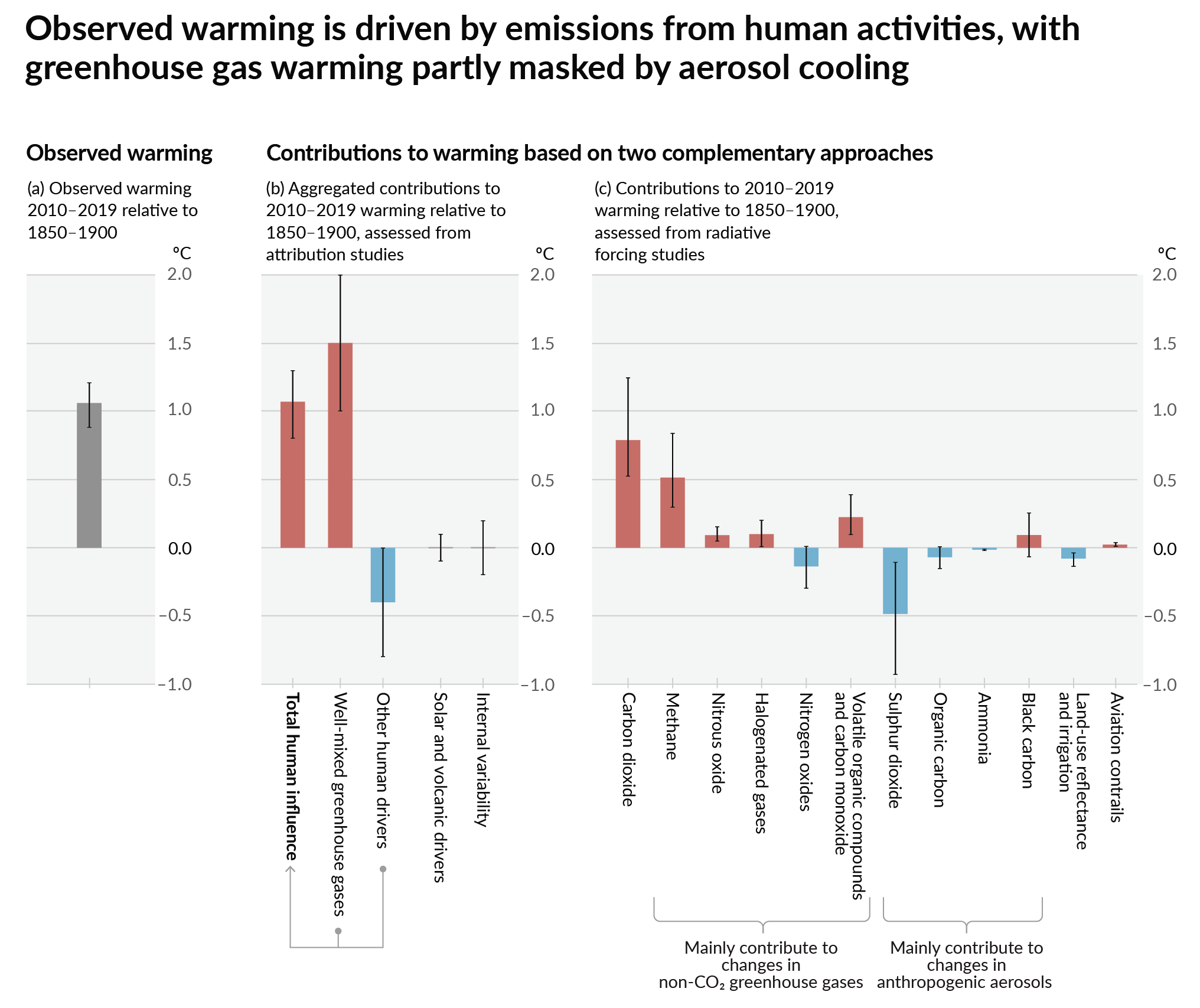
How much each change to the atmosphere has warmed the world: IPCC AR6 Figure 2 - Thee bar charts: first chart: how much each gas has warmed the world.  About 1C of total warming.  Second chart:  about 1.5C of total warming from well-mixed greenhouse gases, offset by 0.4C of cooling from aerosols and negligible influence from changes to solar output, volcanoes, and internal variability.  Third chart: about 1.25C of warming from CO2, 0.5C from methane, and a bunch more in small quantities from other gases.  About 0.5C of cooling with large error bars from SO2.

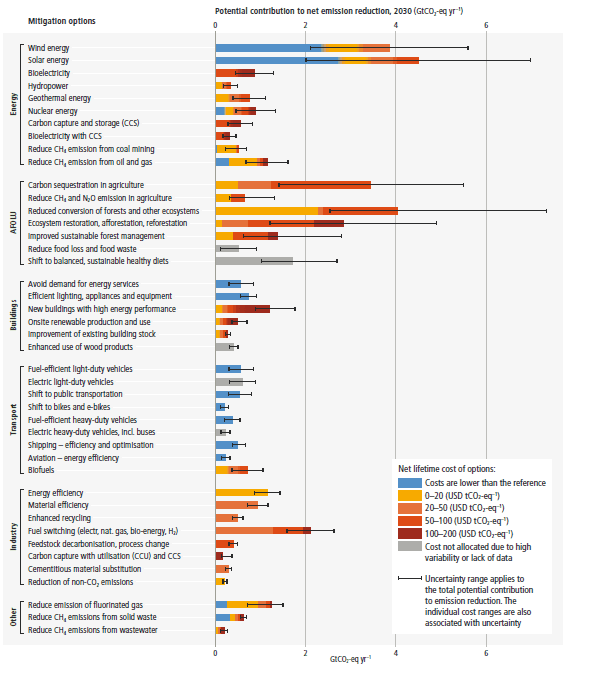
Recommended actions to cut greenhouse gas emissions in the near future:

Anti-science, inactivism, and unsupported conspiracy theories are not ok here.

founded 2 years ago
MODERATORS
top 16 comments
sorted by: hot top controversial new old
[–] fubarx@lemmy.world 12 points 1 day ago (1 children)

Electricity is one of those things that should be run by the municipality. Their incentive wouldn't be to maximize shareholder value, but to deliver a basic need reliably and at the lowest cost possible. At the very least, it needs to be run by a Public Benefit Corporation.

The minute you enter private enterprise into it, things go pear-shaped. A municipal power network wouldn't have problems with solar or distributed neighborhood grids. It just means lower cost for them, so they would encourage it.

They would need to get economies of scale, though. So you can't have it just be city-wide or county by county. It has to be statewide. That way you can spread out the risk and costs. It also means investing in rural wiring since it's no longer a matter of ROI.

Same for gas, clean water, sewage, and broadband. This isn't closet socialism. We currently do this for roads, freeways, state parks, postal service (sorta), and defense.

[–] LibertyLizard@slrpnk.net 11 points 1 day ago

Here in Sacramento our power is provided by an independent public body run by a democratically elected board. Generally it's very well-run and people here have virtually no complaints. We get energy with less fossil fuels for about half the price of PG&E. I have no idea why every community does not adopt this model.

[–] fluffykittycat@slrpnk.net 13 points 1 day ago (1 children)

Over the long term, Electricity will go down and gas will go up. You could put your thumb on the scale by directly subsidizing your bill if you get a heat pump. Rooftop solar helps here too

[–] SaneMartigan@aussie.zone 3 points 1 day ago* (last edited 1 day ago) (2 children)

Got off residential gas in Australia a few years ago. Bills are $600/yr for power, were up to $1500 one year for power+gas. At $600/yr a residential battery investment of $7k isn't worth it for my household. It won't run the AC because I've got a multi-split system for the bedrooms. Had I known I'd've gotten individual units for the bedrooms so I could get on on the battery backup system but I'm not cashed up enough to go pulling out a fairly new multi-AC to replace it with a bunch of individuals for the bedrooms so that I can get AC when the summer heat takes out the power.

e: love the downvote.

[–] Korhaka@sopuli.xyz 1 points 1 day ago* (last edited 1 day ago) (1 children)

I have been thinking of getting a battery, not sure how much it costs to get installed though - labour more than equipment. Could significantly reduce bills, but they are not super expensive in the first place.

[–] SaneMartigan@aussie.zone 3 points 1 day ago

$7k AUD was for a ~42kw FoxESS battery with a 10kw Inverter. I need another $2-3k of work done on the house power supply first. I'm having a lot of trouble finding a sparky to do the mains upgrade that I need.

[–] fluffykittycat@slrpnk.net 1 points 1 day ago (2 children)

I thought that there were heat pump mini splits? Maybe not yet in Australia

[–] Korhaka@sopuli.xyz 1 points 1 day ago

Aren't they unable to do hot water, and pretty loud? Though I would have thought Australia would already have them for AC

[–] SaneMartigan@aussie.zone 2 points 1 day ago (1 children)

There might be. Any of that stuff in Australia is very much "pay a licensed professional" to do the work, so it costs a fortune and companies defend their share in the market rather than embrace new tech.

Here in the US heat pumps are unreasonably expensive too... We already have AC, it's the same damn thing but backwards! There was a government credit to lower the cost, but I'm guessing that mostly affected the sticker price (since it was X% of the cost up to some maximum I think) so the heat pump company can make more. Adoption is more challenging if a building has older central AC as well, since we use different refrigerants now (much better for environment), but they run at a different pressure, so you need to replace the coils and all refrigerant lines, which is expensive.

[–] qjkxbmwvz@startrek.website 6 points 1 day ago (3 children)

In much of California, it's not the electric energy costs that are high, it's the delivery/grid fees. Not that it matters as far as the electricity bill goes, but it's worth noting.

On my recent bill I paid 16¢/kWh for on-peak electric generation and 49¢/kWh for electric delivery. (There's a small baseline credit for delivery so it's a little more complicated, but you get the idea.)

So if someone tries to tell you electricity is expensive because CA is a hippie state with lots of solar, I would be a little skeptical.

[–] silence7@slrpnk.net 6 points 1 day ago

Yeah, a huge chunk of the California electric bill is paying for houses burned down after sparks from transmission started fires, and paying to power the risk of that happening again

[–] adavis@lemmy.world 2 points 1 day ago

In my location in Australia the cost of usage and cost of grid are separated.

I pay roughly 25c kw/h, and each day about $1 for infrastructure. ie whether I use 50kw or 1kw my cost to connect to the grid is the same.

This is for residential, but I presume it may be different for commercial and industrial connections.

[–] Korhaka@sopuli.xyz 2 points 1 day ago

Meanwhile I keep hearing the UK has the most expensive electricity anywhere, sometimes renewables are blamed. I am paying 24p/kWh and my heat pump uses very little energy to run.

[–] MyOpinion@lemmy.myserv.one 1 points 1 day ago

We are being raped by PG&E. Now they get $24 just because we are connected to them. PG&E needs to be taken over.

[–] favoredponcho@lemmy.zip 2 points 1 day ago

Same goes for PHEVs. You face the choice of charging your car or running off gas and California is making it hard to choose to charge.