this post was submitted on 07 Aug 2026
16 points (94.4% liked)

Climate

8934 readers
219 users here now

Discussion of climate, how it is changing, activism around that, the politics, and the energy systems change we need in order to stabilize things.

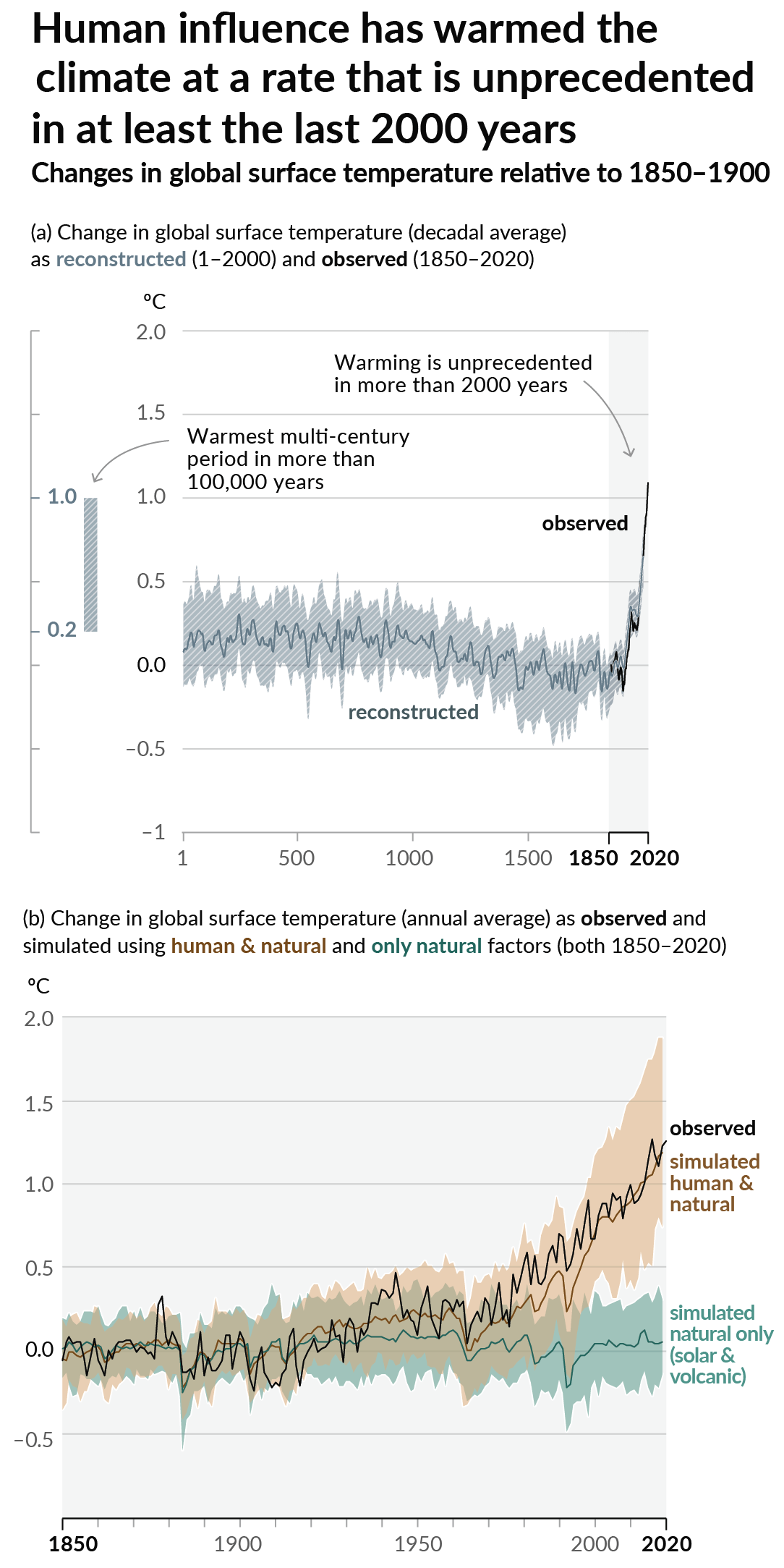
As a starting point, the burning of fossil fuels, and to a lesser extent deforestation and release of methane are responsible for the warming in recent decades: Graph of temperature as observed with significant warming, and simulated without added greenhouse gases and other anthropogentic changes, which shows no significant warming
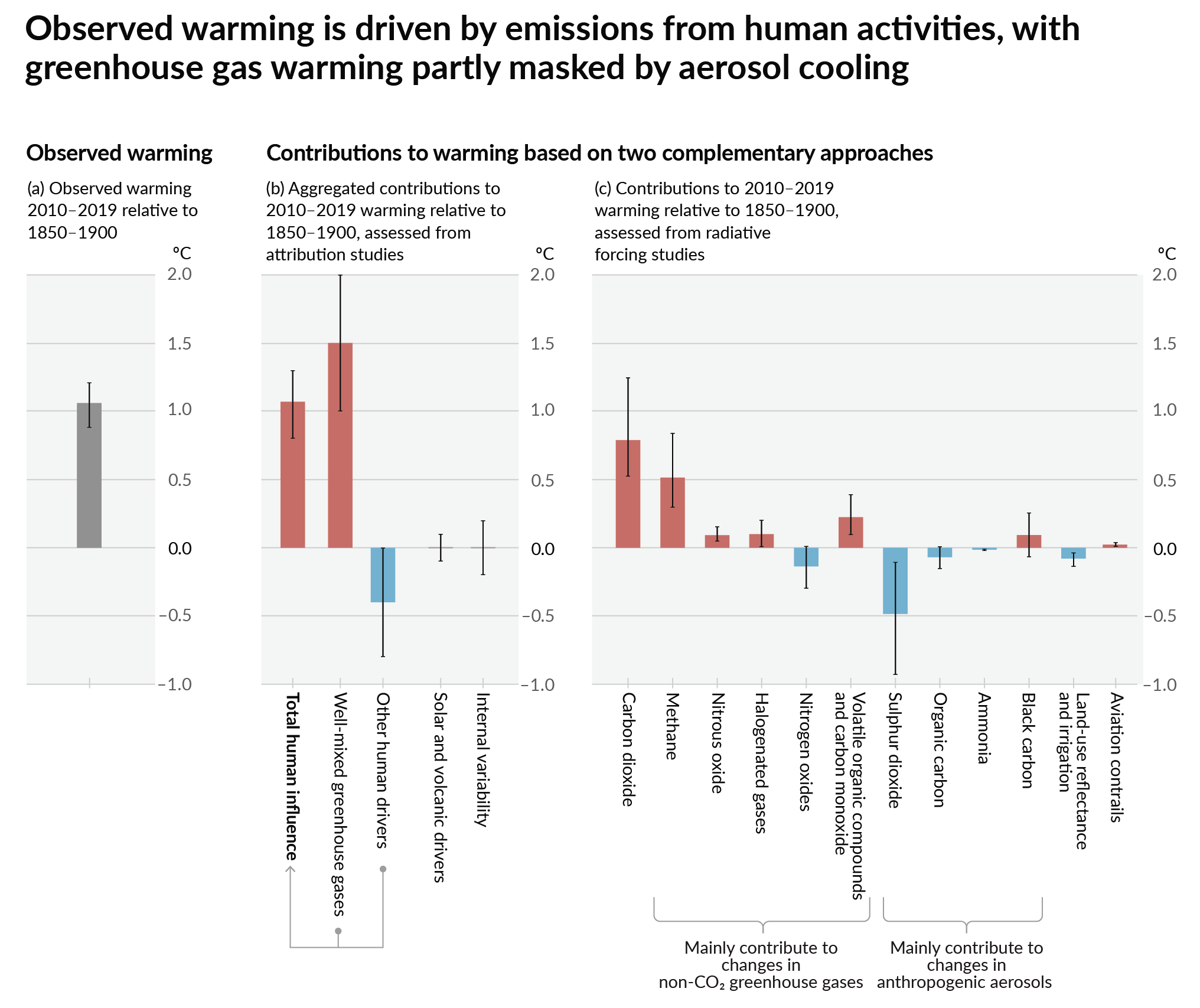
How much each change to the atmosphere has warmed the world: IPCC AR6 Figure 2 - Thee bar charts: first chart: how much each gas has warmed the world.  About 1C of total warming.  Second chart:  about 1.5C of total warming from well-mixed greenhouse gases, offset by 0.4C of cooling from aerosols and negligible influence from changes to solar output, volcanoes, and internal variability.  Third chart: about 1.25C of warming from CO2, 0.5C from methane, and a bunch more in small quantities from other gases.  About 0.5C of cooling with large error bars from SO2.
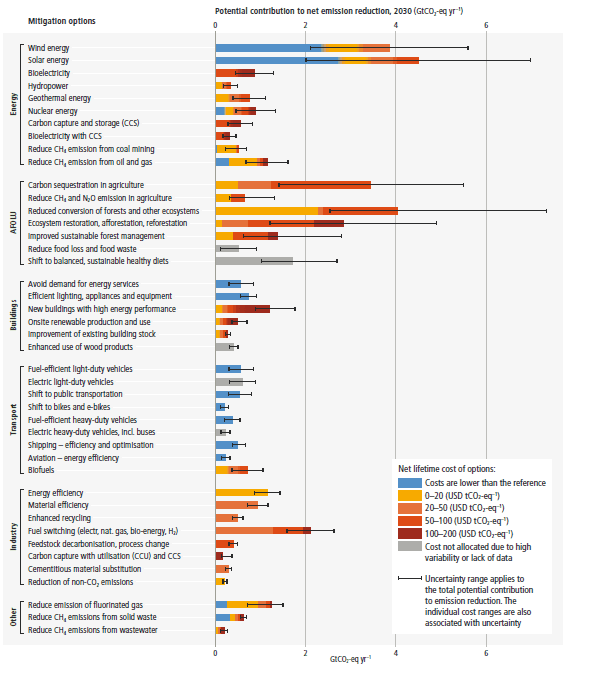
Recommended actions to cut greenhouse gas emissions in the near future:
Anti-science, inactivism, and unsupported conspiracy theories are not ok here.

founded 3 years ago
MODERATORS
 
  • New coal power plants entering operation in China reached the highest first-half year level since 2016, with 10 GW entering operation for every 1 GW retired, despite a policy shift towards tighter control of new project approvals. China commissioned 30 GW of new coal power, up 43% from last year, while retiring only 2.7 GW. Another 25.4 GW started construction.
  • Coal power generation rebounded 3.4% year-on-year in H1 2026, reversing the 2025 decline. The rapid expansion of coal power capacity led to worsening oversupply, reflected both in the increase of wasted wind and solar generation and in falling utilisation of coal power plants.
  • Estimated wind and solar curtailment, including both reported and unreported curtailment, reached 360 TWh in H1 2026, up 49% year-on-year. Had this electricity been absorbed, the additional power supply could have met all demand growth and allowed coal power generation to fall.
  • Long-term contracts continue to reserve a substantial share of limited electricity demand for coal power—coal generators in 2026 are still expected to sign annual contracts covering 60-70% of the previous year’s delivered electricity, turning a risk-management instrument into a barrier to renewable integration.
  • CREA advises phasing out coal power-specific minimum requirements for medium- and long-term contracts in provinces experiencing renewable curtailment or oversupply to help coal transition from a baseload generator towards a flexible backup role.

...

Web Archive link

[Edit to include archived link.]

you are viewing a single comment's thread
view the rest of the comments
[–] supersquirrel@sopuli.xyz 2 points 1 week ago* (last edited 1 week ago)

What? You purposefully excluded that bulletpoint from the list, so I added it back.