videos
Breadtube if it didn't suck.
Post videos you genuinely enjoy and want to share, duh. Celebrate the diversity of interests shared by chapochatters by posting a deep dive into Venetian kelp farming, I dunno. Also media criticism, bite-sized versions of left-wing theory, all the stuff you expected. But I am curious about that kelp farming thing now that you mentioned it.
Low effort / spam videos might be removed, especially weeb content.
There is a cytube that you can paste videos into and watch with whoever happens to be around. It's open submission unless there's something important to commandeer it with at the time.
A weekly watch party happens every Saturday (Sunday down under), with video nominations Saturday-Monday, voting Monday-Thursday. See the pin for whatever stage it's currently in.
view the rest of the comments
I like how the video focuses on a specific point and I would hope instills an spark into people as to why they should oppose Book Worship.
Like Mao put it:
Unless you have investigated a problem, you will be deprived of the right to speak on it. Isn't that too harsh? Not in the least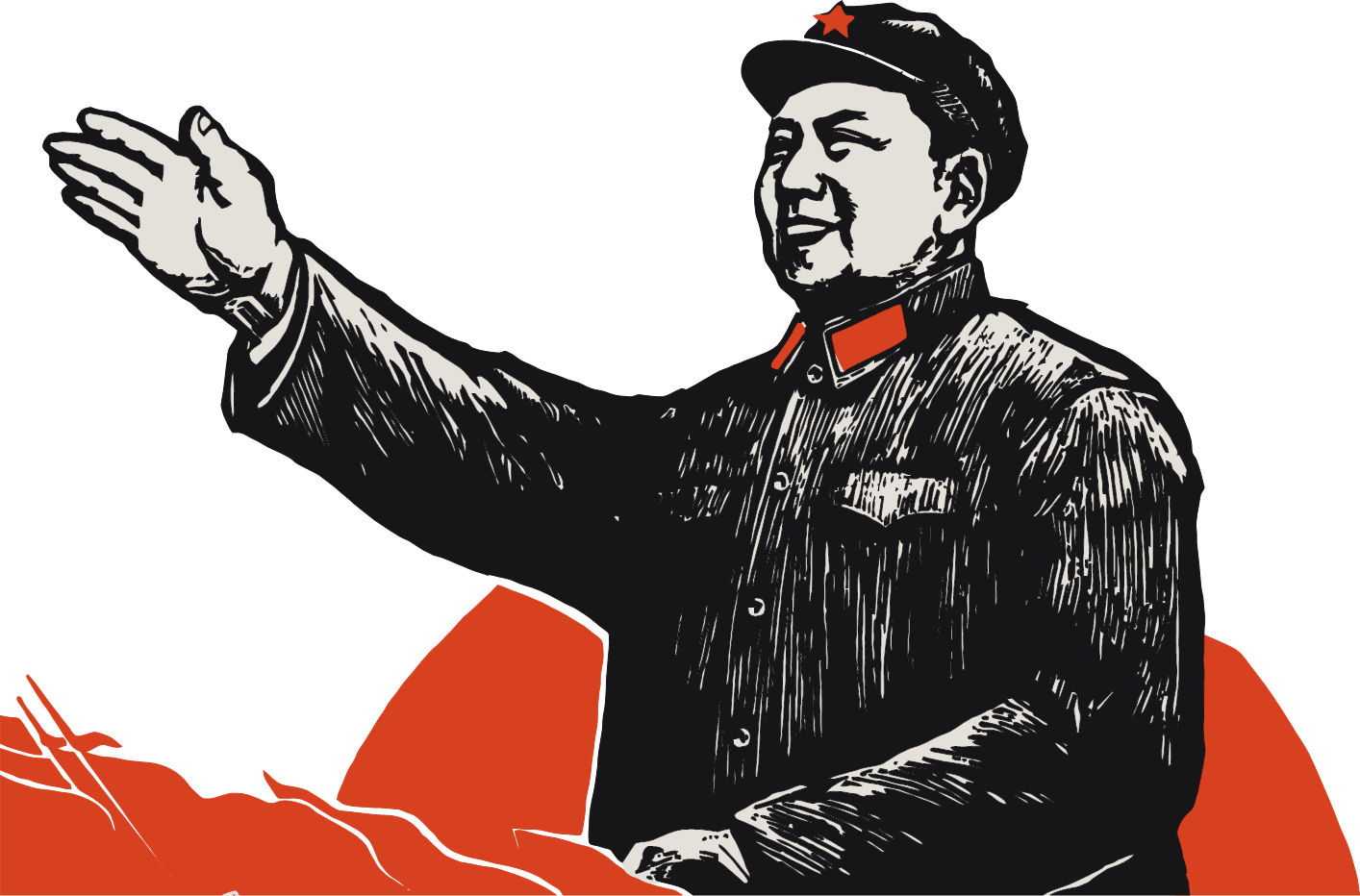
This text is likely way too harsh for a layperson to consume, let alone learn somethin from it. I'm glad we have creators like Lady Indihar who distill it and make it relevant to a current situation.
What's the most annoying situation you can recall of people taking book passages out of context?
Ho Chi Minh saying "It was patriotism, not communism, that inspired me"
But really it's
At first it was patriotism and not yet Communism which made me put my trust in Leninism and in the Third International. Step by step, in the struggle and by combining theoretical study of Marxism- Leninism with practical work, little by little, I came to understand that only socialism and Communism can free the oppressed nations and toiling people in the world from slave
That's a good one.
Left-wing communism to promote electoralism has gotta' be up there.
On The Jewish Question
This is typically viewed and quoted as antisemitic, and used to characterize Marx as an antisemite and self hating Jew.
However, it really isn't that hard to understand. Marx does what he does, taking his time arranging an argument, and then using his interlocutors (an actual antisemite) own arguments against him.
He argues that, if the tropes about Jews are true it is only because of the social conditions which govern all of us. As he says,
If "the worldly religion of the Jew" is "huckstering" and "his worldly god" is "money", then surely this has become true of the Christians as well. Because Marx looks at this "nature" through a historical materialist lens, he doesn't see these traits as eternal 'nature'; he sees them as products of oppression.
Marx goes on to make this comparison in several ways. Pointing out that money and private property are the two forces that truly shape religion.
If what the antisemites say is true about Jews, then the antisemite would advocate for the abolishment of the preconditions that created this Jewish character (exclusion from land, feudal privileges, and the subsequent rule of private property and money) according to their own logic. They should seek the abolition of private property and money in general, since according to them it is all that defines the Jew. Yet, doing so would also abolish Christianity, Christians, and the preconditions that create the antisemite in the same stroke. Because money is the ruler of the day, and no one escapes the rule of money.
"Religion is the opiate of the people" and characterizing Marx as a reddit atheist. Literally the preceding line is "the sigh of the oppressed creature" and he goes on to describe it as a way people cope with being crushed under capitalism. Remove the capitalism, remove the need for coping, and remove the associated social control. He's not saying to be an annoying debatelord talking down religious people for believing in "sky daddies" when they're going to food banks every week to survive. This came up all the time as someone studying philosophy and religion at uni.
I wrote a reply to a reddit thread a while back that covered this. The thread was about a Muslim comrade being told he can't both be Muslim and a Marxist:
Because they're rife with "new atheist" mindset from the early 2000s. Christopher Hitchens was a former Trot and was a willing agent of the empire during that time waging "war" against "Islam" under the cloak that he wasn't attacking people, but their "religion". People regularly misunderstand, or deliberately chose to reinterpret what Marx was talking about in Marx's Critique of Hegel’s Philosophy of Right.
In the first paragraph Marx establishes a few things:
He goes on to describe religion as "the fantastic realization of the human essence since the human essence has not acquired any true reality". By "fantastic realization" Marx identifies religion as a "fantasy", but he then identifies that this "fantasy" is constructed out of the "human essence", in other words, out of all the internal aspects and relations between humans, who have "not yet acquired any true reality". He is saying that religion exists as the absence of collective truth and understanding of our own reality.
Marx then makes this simple observation: "The struggle against religion is, therefore, indirectly the struggle against that world whose spiritual aroma is religion." What he is identifying here is a twofold misalignment with reality. To struggle against religion, something that is created through a collective misunderstanding of the workings of our reality, which in Haggle's time was deeply connected with the state, is to miss the forest for the trees. The State, and the states chosen theology, acts to cloud peoples perception of how the world works which, in turn protects the State, and reinforces the existence of religion. To struggle against religion is to then an indirect struggle against the state.
The paragraph is the one that is the most quoted, and without the above context is often misunderstood. It begins:
People suffer and the hands of the State, a state which creates the conditions for religion to develop. It is natural for people to seek relief from this suffering, and seek comfort from it. Religion provides that comfort, and relief. It lives, however, in contradiction with itself. It is created by real suffering, but it protests against that same suffering which creates it. Without the ability to recognize the State as the source of suffering, which religion often masks in various ways through its own teachings about the world, the cycle of suffering can only continue. So will the development of the people's protest against it. Like opium, religion can only mask the suffering, it can never abolish the conditions that are the source of that suffering, as Marx explains in the next part of this paragraph:
It's important to understand what the vale of tears is in this section. The vale of tears is a phrase from Christianity, which refers to the tribulations of life that Christian doctrine says are left behind only when one leaves the world and enters Heaven. He points out that, to call for the abolition of religion is again, to indirectly abolish the conditions which create religion. This is the part that many atheists miss, especially those of the new-atheist camp. The next paragraph makes this very clear:
The first line of this paragraph illustrates that, the goal of the critique of religion isn't to remove the opium from the masses, and allow them to suffer under the same bondage without it. It is to reveal the chains in which they are bound to. By adopting Marxist philosophy, you have begone the process of dissolution, since Marxism demands a rigerious investigation into the reality we live in. In the Christian context, there is a notion that everything you do in this life is in service of entering the Kingdom of Heaven, which by its very nature means there is very little room for reason to improve the conditions of this life for others. What constitutes the requirements for entry into Heaven changes with the times and places Christianity is practiced. Which is how you end up with the things like Prosperity Gospel and Liberation Theology. They are expressions of the same conditions and contradictions underwhich we currently live.
Many people take this section as the call to action by Marx. It gets distorted from a critique of religion broadly as the expression of the explosive conditions maintained by the state, into a critique of the unwashed masses for believing in an "illusory happiness", a critique of the people who the state under educates and and exploits deliberately, hamstringing their ability to see through the illusion.
The real call to action is in the final paragraph:
Here, Marx is establishing two points of change, one which will take place over the long road of history, and one which is a task that needs to happen now. The immediate task, as marks puts it, is "to unmask self-estrangement in its unholy forms once the holy form of human self-estrangement has been unmasked", which means that once we illuminate that the suffering of people happens at the behest of man, not God, then we can illuminate the ills of man more clearly. Which leads us to Marx's final conclusion:
For a very long time the lines between religion and law, as well as theology and politics were heavily blurred. The divine right of kings is explicitly this contradiction in action. None of this excludes you, a Muslim, from being a Marxist in my view. In Critique of the Gotha Program, Marx had this to say about the emergence of a post wage-labor society:
I believe this also applies to the individual as well. You do not emerge as a fully formed Communist, but as a person who still holds in them the contradictions of capitalist society. This includes the contradictions of religion. You, as an individual may never fully contest with this contradictions, none of us will. However, your participation in the Marxist world view places you in service of history that eventually will abolish the conditions which require the masses to be soothed by religion.