this post was submitted on 23 May 2026
95 points (89.3% liked)

Climate

8669 readers
287 users here now

Discussion of climate, how it is changing, activism around that, the politics, and the energy systems change we need in order to stabilize things.

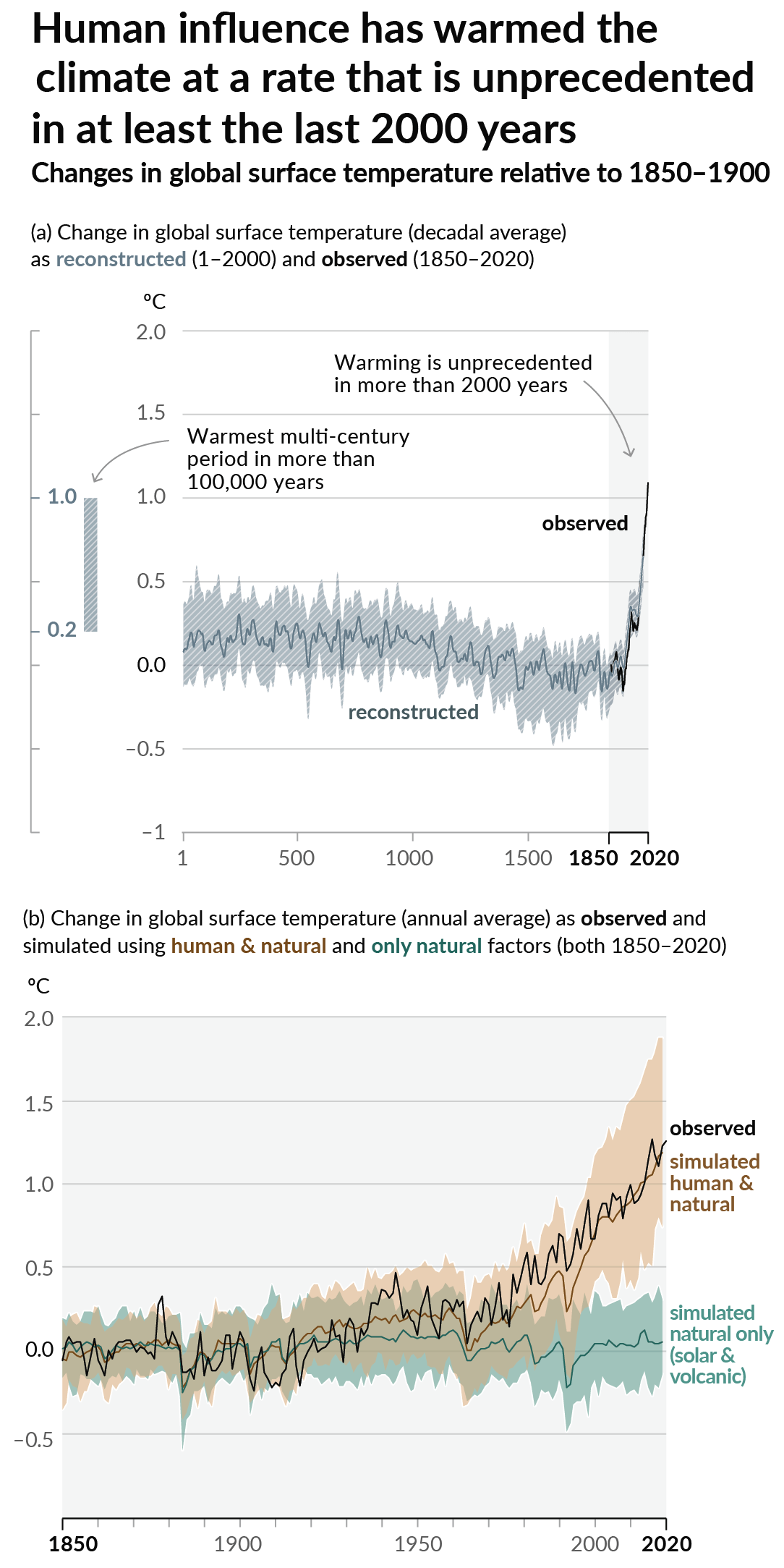
As a starting point, the burning of fossil fuels, and to a lesser extent deforestation and release of methane are responsible for the warming in recent decades: Graph of temperature as observed with significant warming, and simulated without added greenhouse gases and other anthropogentic changes, which shows no significant warming

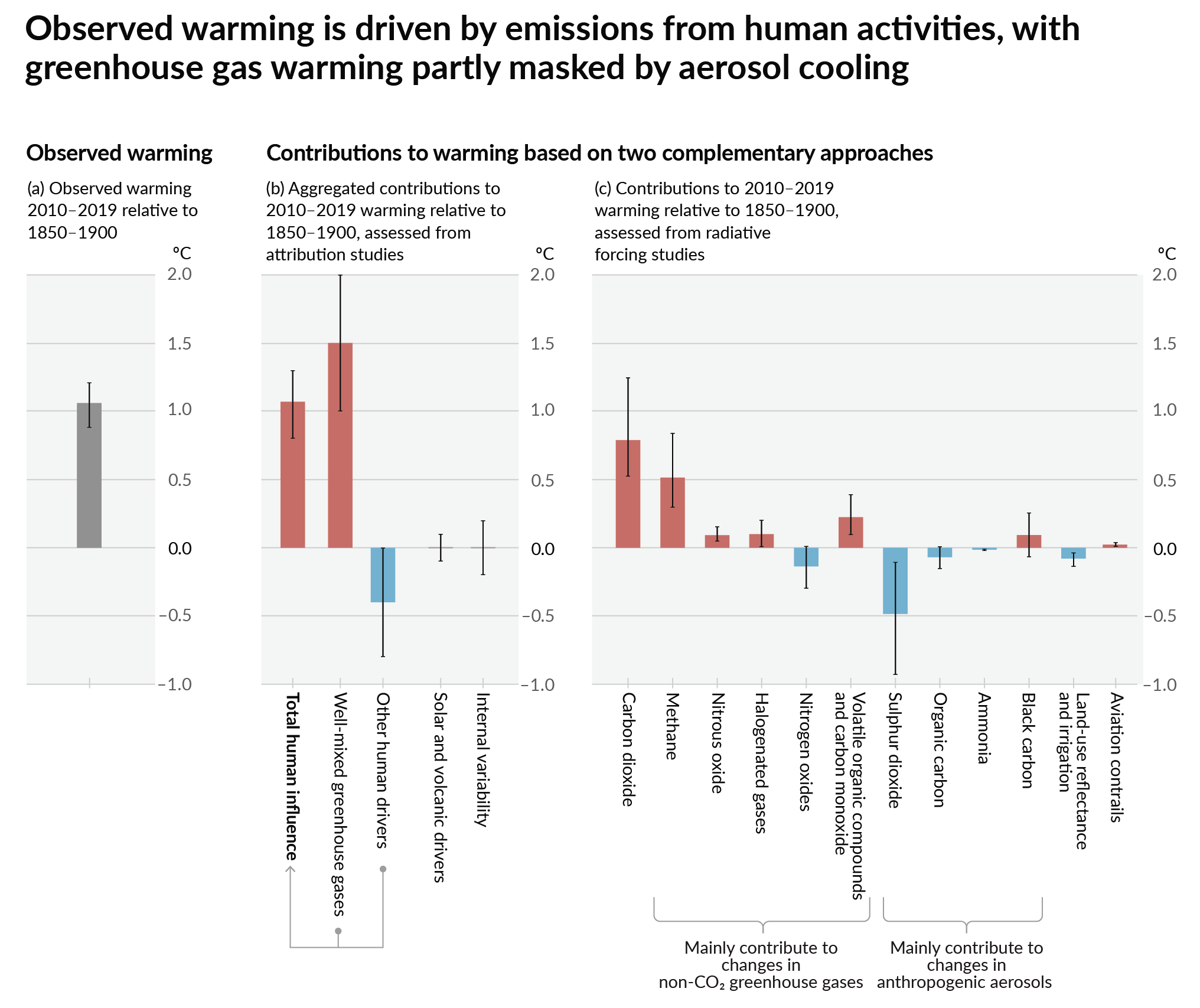
How much each change to the atmosphere has warmed the world: IPCC AR6 Figure 2 - Thee bar charts: first chart: how much each gas has warmed the world.  About 1C of total warming.  Second chart:  about 1.5C of total warming from well-mixed greenhouse gases, offset by 0.4C of cooling from aerosols and negligible influence from changes to solar output, volcanoes, and internal variability.  Third chart: about 1.25C of warming from CO2, 0.5C from methane, and a bunch more in small quantities from other gases.  About 0.5C of cooling with large error bars from SO2.

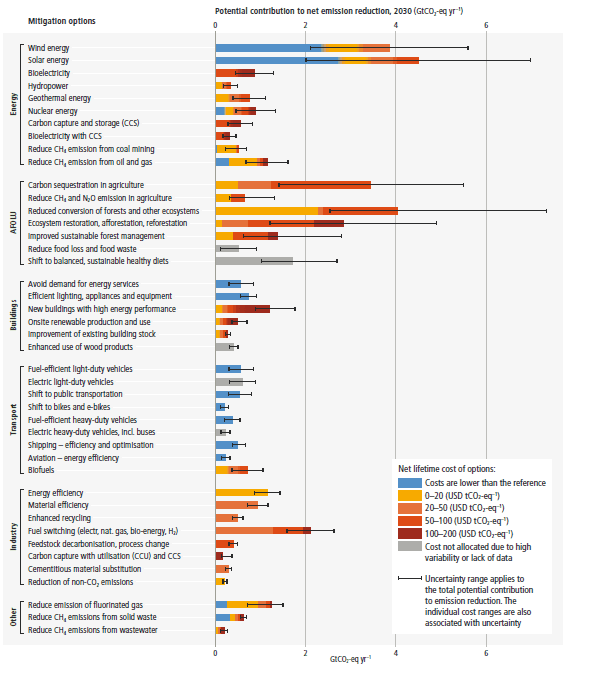
Recommended actions to cut greenhouse gas emissions in the near future:

Anti-science, inactivism, and unsupported conspiracy theories are not ok here.

founded 2 years ago
MODERATORS
 

Food production is responsible for one-quarter of the world’s greenhouse gas emissions.

Eating locally would only have a significant impact if transport was responsible for a large share of food’s final carbon footprint. For most foods, this is not the case.

Greenhouse gas (GHG) emissions from transportation make up a very small amount of the emissions from food, and what you eat is far more important than where your food traveled from.

For most foods — and particularly the largest emitters — most GHG emissions result from land use change (shown in green) and from processes at the farm stage (brown). Farm-stage emissions include processes such as the application of fertilizers — both organic (“manure management”) and synthetic; and enteric fermentation (the production of methane in the stomachs of cattle). Combined, land use and farm-stage emissions account for more than 80% of the footprint for most foods.

Transport is a small contributor to emissions. For most food products, it accounts for less than 10%, and it’s much smaller for the largest GHG emitters. In beef from beef herds, it’s 0.5%.

chart

you are viewing a single comment's thread
view the rest of the comments
[–] foxymochakitten@slrpnk.net 2 points 15 hours ago

The consumption of Elon Musk has been proven to be significantly more effective at reducing carbon than eating pork, beef or chicken