this post was submitted on 01 May 2026
141 points (98.0% liked)
Climate
8606 readers
629 users here now
Discussion of climate, how it is changing, activism around that, the politics, and the energy systems change we need in order to stabilize things.
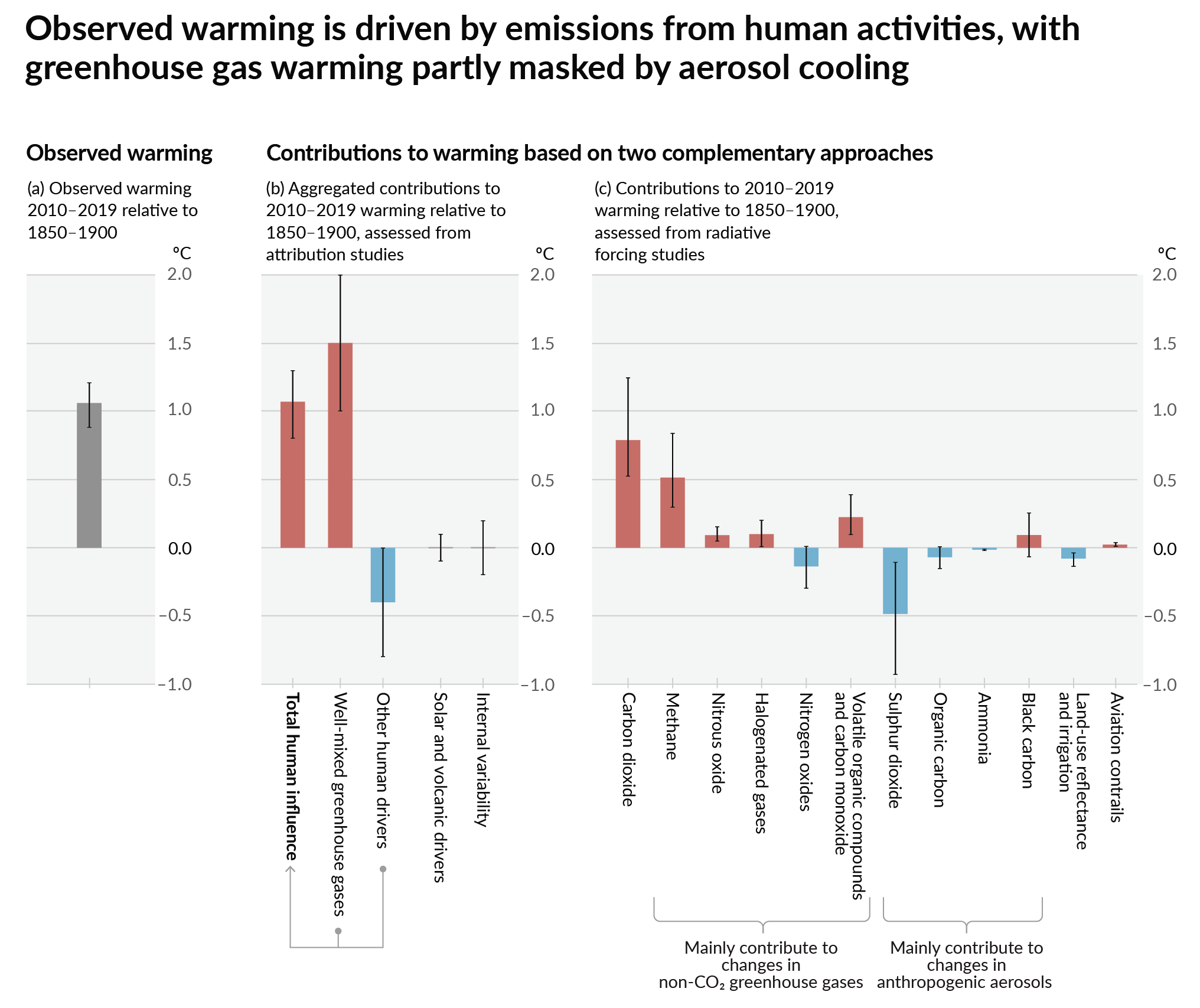
As a starting point, the burning of fossil fuels, and to a lesser extent deforestation and release of methane are responsible for the warming in recent decades:
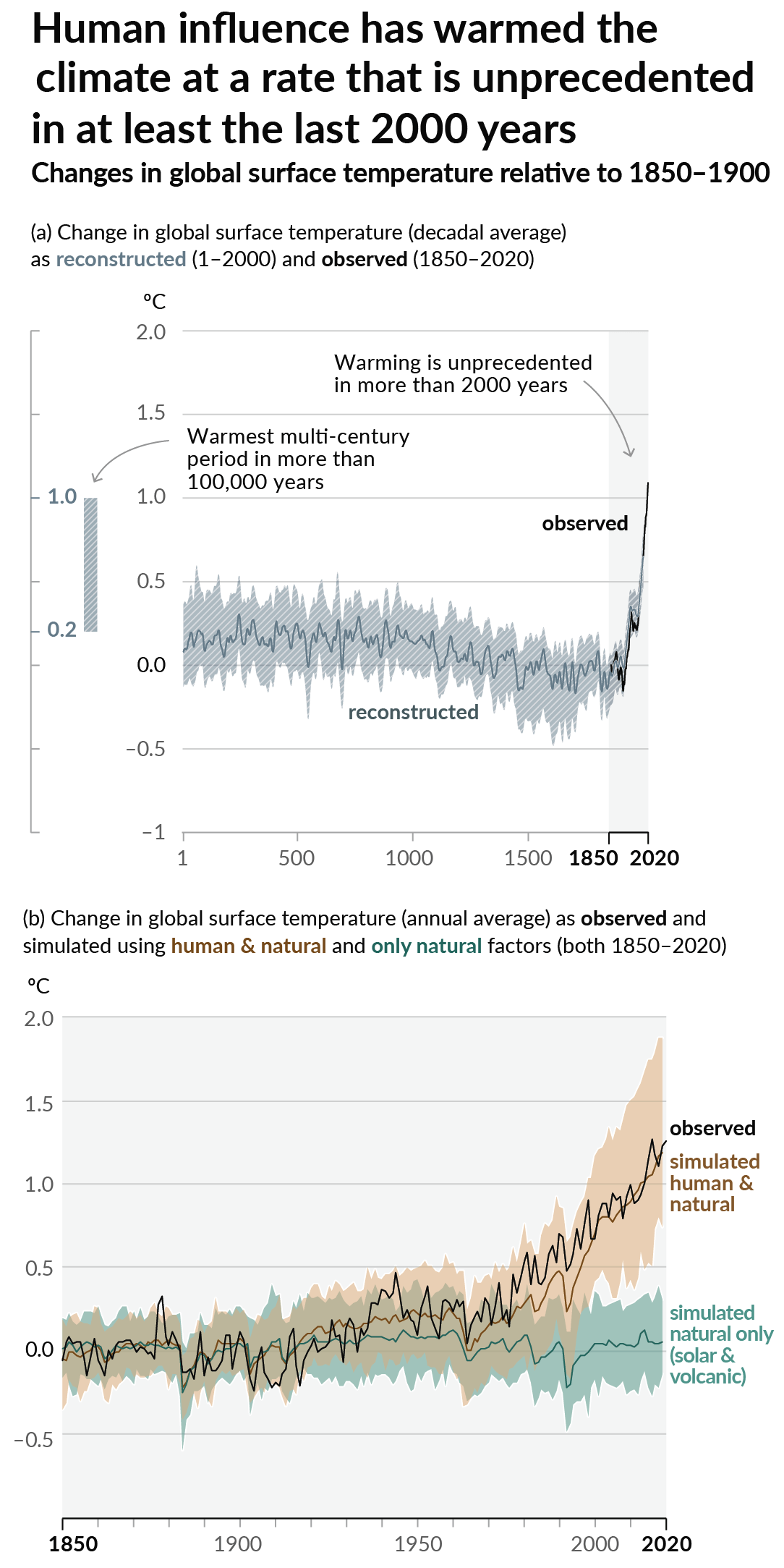
How much each change to the atmosphere has warmed the world:
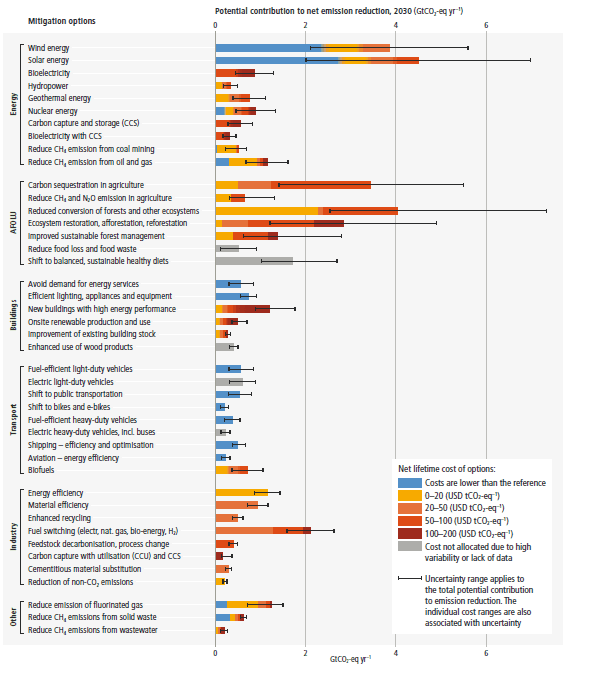
Recommended actions to cut greenhouse gas emissions in the near future:
Anti-science, inactivism, and unsupported conspiracy theories are not ok here.
founded 2 years ago
MODERATORS
you are viewing a single comment's thread
view the rest of the comments
view the rest of the comments
Strangely solar, wind and hydro power are cheaper to build, maintain and cheaper to make electric energy available.
Additionally they don't create highly dangerous waste that needs to be kept safe for a veeeeeery long time and for which no working solution has been found.
What's mostly missing is for the ongoing change towards renawables is storage, but hey, the ascent of electric vehicles comes in handy for that.
Being still in favor of nuclear today is about as tone-deaf as being in favor of still using fossil energy.
Those systems cannot keep up with demand at present never mind the growing need. Nuclear is the best we have weather people want to admit it to themselves or not.
Nuclear is neither able to compete with cost of production per kWh nor with speed of construction of renawables, whether people want to admit to whomever or not.
And the winter nights with basically no light, freezing temps and no wind will stop coming, right? Is your argument that it's preferable to burn coal or oil?
Winter nights are often stormy: wind turbines do their job.
It would seem you and I have very different winters. At -20C, I've never seen more than a gentle breeze.
Smrs are exploding in popularity for this very reason.
Because they don't have to factor in the cost of dealing with the nuclear waste.
This is an error that's been made and still being made everywhere.
Costs are going up regardless of the methods of energy creation. The most important thing is meeting energy demand.
Unfortunately the same can be applied to any equipment that is used in the energy field. How long do solar panels last, how much does it cost to “recycle” them? Same for go wind turbines and anything else. They all have an end of life cost economically and environmentally.
The cost of installing solar has gone down fro quite a while (https://ourworldindata.org/grapher/solar-pv-prices) and depending on your region you can harvest around 1 kWh annually per 1 Watt peak power.
With the price per Watt being a fraction (2024: $0.26) of a Dollar and the life span of solar modules being in the decades, it really is a no-brainer whether you want to install them or not.
While they degrade over the years, they still retain close to 90% of their original power after 20 years and above 80% after 30 years.
They're basically free from maintenance.
The inverters may not last that long, but even for quite big installations at home in the range of double-digit kilowatt peak with annual electric energy procution in the double-digit MWh range, they cost only a few hundred bucks.
The biggest part (by mass) of solar panels is glass, which you are aware can be recylced until the cows come home.
Another big part is aluminum. Recylcing wise the same as glass.
And if you really want to replace them after decades, the amount of material that can't be recycled is quite small and not hazardous. Put it in the landfill.
Wind turbines are in part different as the blades typically can't be recycled afaik. At least they're in the category of non-hazardous waste as well and just like solar panels wind turbines last a very long time plus the towsers and the generators can very well be recylced/reused.
Alas they require more maintenance than solar.
The bigger challenge than finding cheap and not dangerous sources of electric energy at the moment appears to be the storage.
With more and more electric vehicles being on the street and each of them with capable batteries this can be a part of the storage solution alongside of grid-storage.
I choose renewables over fossil and nuclear any time of the day.
Which Germany seems to be, seeing how you import loads and loads of coal and oil power from Poland, not to mention nuclear power from France and Sweden (among others).
I searched for info and there seems to be a clear trend according to https://www.iea.org/countries/germany/energy-mix which fossil is going down, nuclear having gone to 0, total energy imports going down, renawables going up.
Do you say such a transformation can be done over night?
Looking at the USA in comparison I come to the conclusion that a lot of countries are on the right path.
Your electrical production went from >5 million TJ in 2000 to ~3 million TJ in 2024. You seem to be relying on everyone else producing at times with no wind and no sun. Like cold winter nights when everyone else needs their power too. 70-80 Euro cents per kWh was unheard of just 5 years ago. It's not even uncommon where I live now that you've removed what dependability your grid had.
https://www.iea.org/countries/germany/electricity shows a different picture regarding electrical production.
Where's your source?
Btw. you can stop addressing/blaming me; you have no idea where I reside.
My bad. I mixed up "energy" with "electricity", which is not the same thing. Was looking at the domestic energy production graph (second line graph on mobile at least) at https://www.iea.org/countries/germany/energy-mix .
Edit: Your source states that Germany is importing 81% more electricity "now" (2024) than in the year 2000. Still "just" 5.8% net import, but seems (to me) as if my point still stands even if the numbers were the wrong ones.