this post was submitted on 11 Mar 2026
653 points (98.5% liked)
Climate
8429 readers
541 users here now
Discussion of climate, how it is changing, activism around that, the politics, and the energy systems change we need in order to stabilize things.
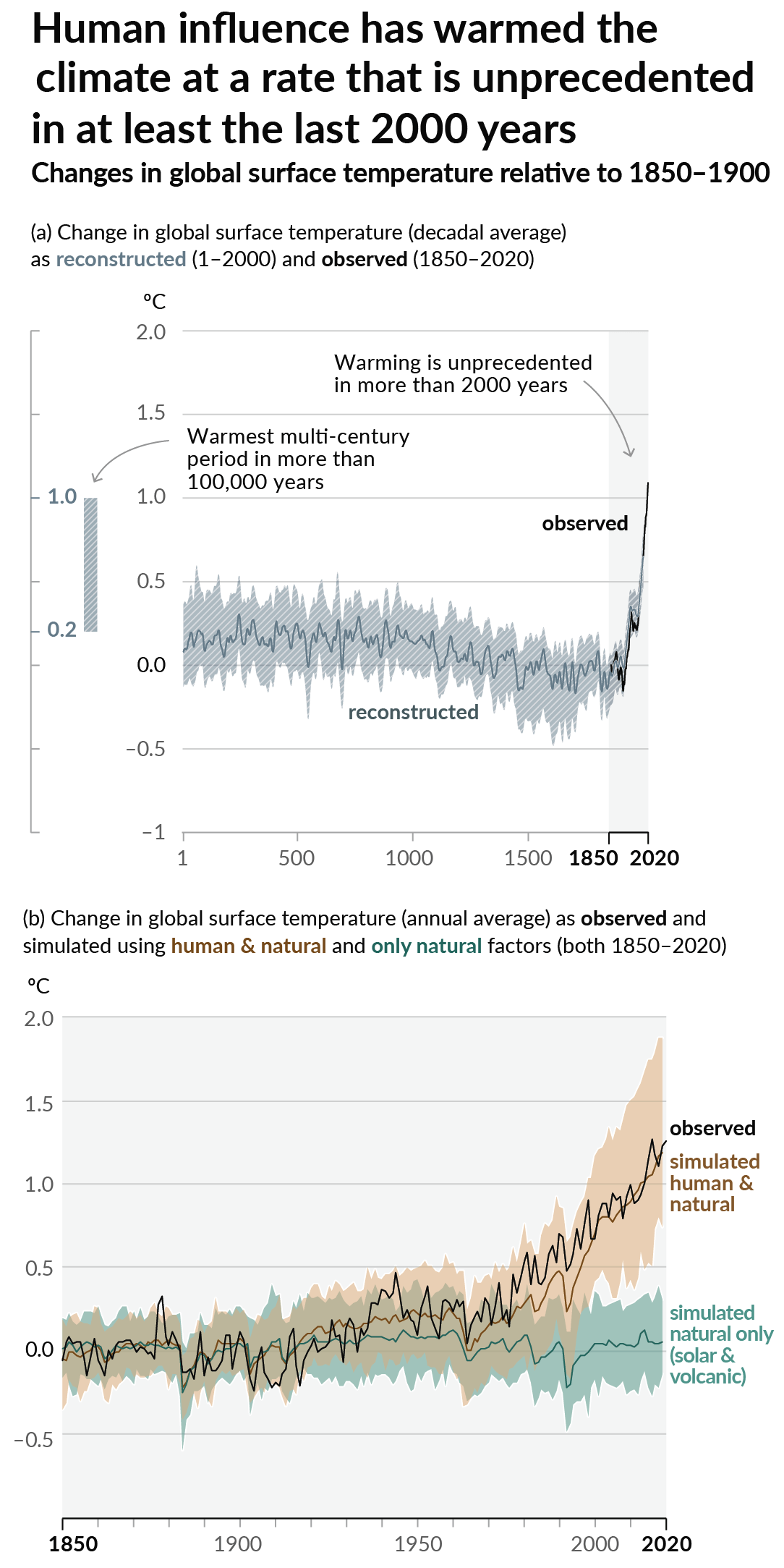
As a starting point, the burning of fossil fuels, and to a lesser extent deforestation and release of methane are responsible for the warming in recent decades:
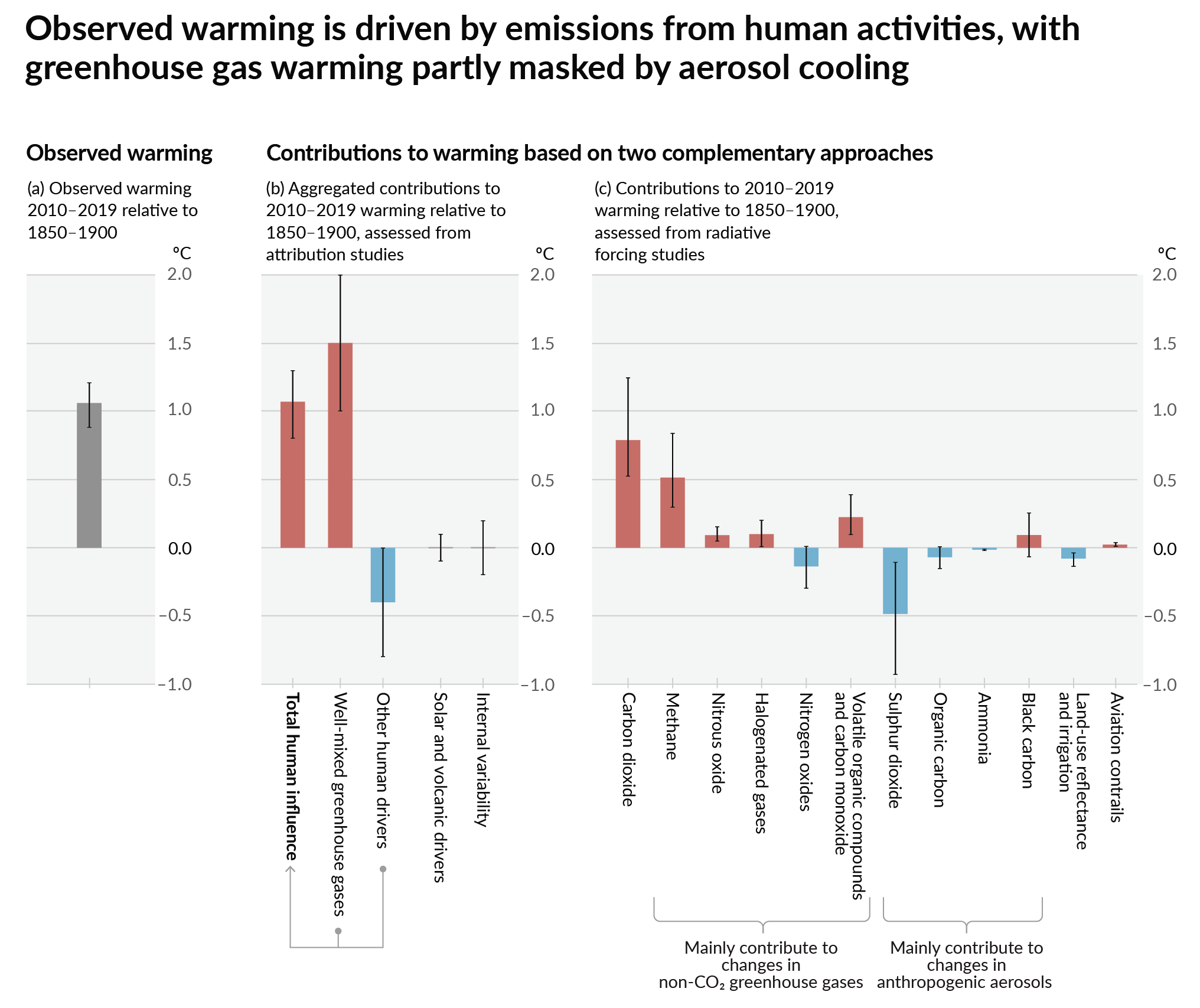
How much each change to the atmosphere has warmed the world:
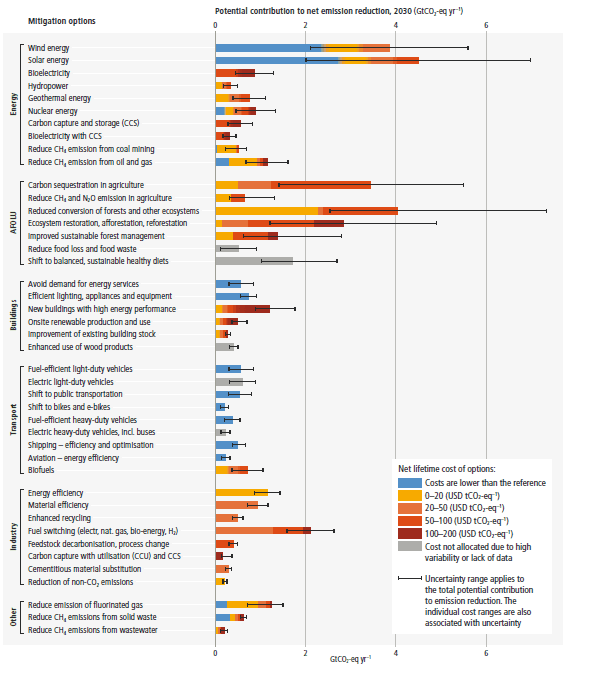
Recommended actions to cut greenhouse gas emissions in the near future:
Anti-science, inactivism, and unsupported conspiracy theories are not ok here.
founded 2 years ago
MODERATORS
you are viewing a single comment's thread
view the rest of the comments
view the rest of the comments
Nebraska actually gets like 5-10x the useable solar power in the winter months compared to Estonia. We essentially don't see the sun from about nov to mid feb.
All of the H2 would have to be generated between spring and fall and stored for winter. Selling it and then buying it on-demand in the winter wouldn't work because fuels shoot up in price come winter. Cost of my wood briquettes tripled between July last year and February this year for an example, usually it at least doubles... And once I've seen them quadruple. Luckily it's a single house worth of solid fuel, it's easy to stockpile. I'm wondering how a couple of terawatthours worth of H2 storage would work.
To be clear, I'm not at all against solar or renewables in general, I just don't see any energy storage solutions that would work for my country if we tried to fix our shit as a nation. On an individual level it's doable, but payoff period is so long that it makes more sense to just keep using grid power.
analysis I replied with didn't require a separate heating solution, though heating 1000l or 2 of hot water in fall would be a great strategy for every home heating system. The reason H2 electrolysis (just sell it instead of using it for heat in winter, though that is also a solution) works even for "your solar shithole country" is the massive summer daylight. No H2 produced outside of the good months.
The issue with the H2 solution is that we still need electricity in the winter, especially as more heating is done with electricity than ever before. If you don't store it in the summer, you'll be buying it from other countries at 10-50x the summer price oftentimes.
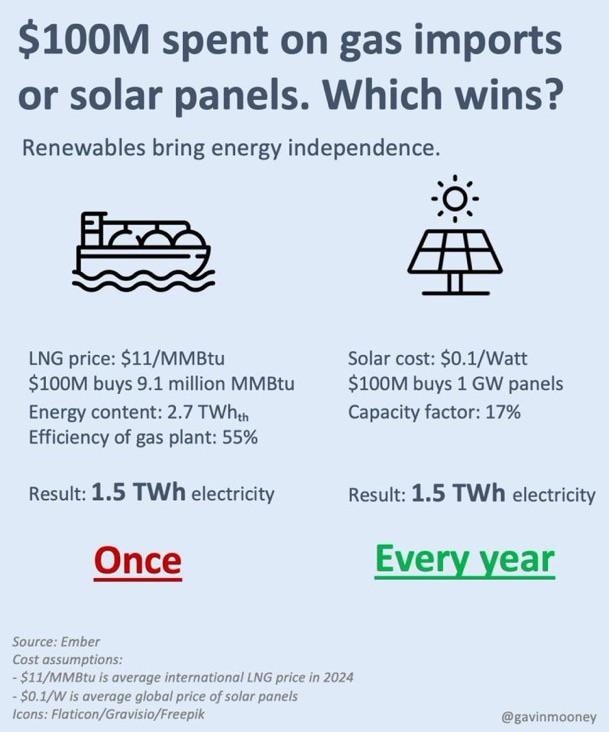
The analysis I'm presenting provides 1kw or 1600mw of continuous 24/7 power at 0 electricity cost including 5% financing costs. Showing that this works in one of the most hostile places for winter solar in the world.
There are indeed a lot of practicalities that can improve upon this. Summer demand is typically 1/2 of winter peak demand. The H2 electrolysis system is there purely to monetize all electricity generated at 4c/kwh. Selling the massive summer surplus at 4c/kwh or more makes more money than H2. Selling the "free baseload" for anything at all makes money, or selling H2 for more than $2/kg.
Wholesale rates in estonia/regional market are 15c/kwh in winter. The model to provide 1600mw baseload takes about 200gw of solar (125kw per kw baseload), that still provides surpluses on average winter day, before accounting for less than 24/7 of peak usage, diverting heat to fall storage systems, using wind instead of all solar, trade with less hostile solar regions bidirectionally/seasonally, use EVs as even bigger battery buffer.
For one, the 1600mw peak isn't as relevant as the 27gwh/day peak = 1100mwh/hour baseload covered by battery = up to 30% smaller system. But even with original large system, there would be 10-20gwh/day in winter available to be sold at up to 15c/kwh profit. $1.5-$3M/day. The giant size of the solar would mean that electricity rates are 4c/kwh everywhere else in the region in other seasons, and H2 system is still needed to ensure 4c/kwh monetization even as it lowers rates everywhere around them. ie. a system this big forces permanent 4c/kwh wholesale electricity anywhere it can trade to for 3 seasons.
Even if there are much more profitable locations for solar than Estonia, the high cost of transmission still makes local systems pay off. Transmission links are a resilience option that is actually more expensive than more local solar, but pays off when neighbours don't adopt solar. OTOH, very small transmission lines work well with battery systems in that they can be trickle imported at 24 hour rate in anticipation of weather/demand/battery charge level rather than as a response to instant supply/demand imbalance surge.
The pricing is hourly and actually gets up to 5€/kwh which is the limit (this is where even modest sized batteries would help a lot) and is sometimes reached, but average was 19 cents in january and february. That does not include the transmission fee which is also several cents. Of course this is where batteries would help.
But mostly my musings about the required battery capacity were with the idea that we should produce our entire demand or more locally, all year round, because people get SUPER pissy when electricity prices go up (which they do any time we have to import electricity).