Working Class Calendar

1600 readers
55 users here now

!workingclasscalendar@lemmy.world is a working class calendar inspired by the now (2023-06-25) closed reddit r/aPeoplesCalendar aPeoplesCalendar.org, where we can post daily events.

Rules

All the requirements of the code of conduct of the instance must be followed.

Community Rules

1. It's against the rules the apology for fascism, racism, chauvinism, imperialism, capitalism, sexism, ableism, ageism, and heterosexism and attitudes according to these isms.

2. The posts should be about past working class events or about the community.

3. Cross-posting is welcomed.

4. Be polite.

5. Any language is welcomed.

Lemmy

founded 2 years ago
MODERATORS
1


Angola Liberation Movement (MPLA) Founded (1956)

Mon Dec 10, 1956

Image

Image: An MPLA poster commemorating the organization's anniversary [digitalcommons.colum.edu]


On this day in 1956, the People's Movement for the Liberation of Angola (MPLA) was founded in a merger between 2 smaller communist and anti-colonial parties. The MPLA was a major faction in the Angolan Civil War, which lasted until 2002.

The MPLA fought for liberation from Portuguese colonizers, alongside the African Party for the Independence of Guinea and Cape Verde (PAIGC), the Mozambique Liberation Front (FRELIMO) and CLSTP, forerunner of the Movement for the Liberation of São Tomé and Príncipe.

From 1961 to 1974, the MPLA waged a guerrilla war against the colonial government in Angola. Following the Carnation Revolution in Portugal, the newly-established Portuguese military government granted Angola independence, which was to be led by a coalition of different anti-colonial liberation armies.

The coalition quickly broke apart, erupting into a civil war between the MPLA, the National Liberation Front of Angola (FNLA), and the Union for the Total Independence of Angola (UNITA). The MPLA won the war, and has ruled Angola since 1975.

At its first congress in 1977, the MPLA adopted Marxism-Leninism as its official ideology. Receiving military support from Cuba and the Soviet Union, they maintained control over most territory in Angola, despite extensive aid to the FNLA and UNITA from South Africa, Zaire, and the United States.

Both the MPLA and UNITA were complicit in war crimes; more than 500,000 civilians were killed during the civil war. UNITA soldiers kidnapped and abused children, using them as child soldiers.

After the end of the Cold War and collapse of the Soviet Union, the MPLA renounced Marxism-Leninism in favor of social democracy. Though no longer a proxy war between the USA and the USSR, the Angolan Civil War lasted until 2002, when a peace agreement was finally reached in victory for the MPLA.


2


Peter Kropotkin (1842 - 1921)

Fri Dec 09, 1842

Image


Pyotr Kropotkin, born on this day in 1842, was a Russian scientist, historian, and anarchist theorist, known for his writings on mutual aid and advocacy of anarcho-communism.

Born into an aristocratic land-owning family, he attended a military school and later served as an officer in Siberia, where he participated in several geological expeditions. He was imprisoned for his activism in 1874 and managed to escape two years later. He spent the next 41 years in exile in Switzerland, France (where he was imprisoned for almost four years) and in England.

While in exile, Kropotkin gave lectures and published widely on anarchism and geography. He returned to Russia after the Russian Revolution in 1917 but was disappointed by the Bolshevik state. Kropotkin's funeral was one of the last public demonstrations of anarchists in the USSR, with funeral marchers carrying anti-Bolshevik slogans and Emma Goldman delivering a speech.

Kropotkin was a proponent of a decentralized communist society free from central government and based on voluntary associations of self-governing communities and worker-run enterprises. He wrote many books, pamphlets, and articles, the most prominent being "Fields, Factories and Workshops", "Mutual Aid: A Factor of Evolution", and "The Conquest of Bread".

"We must recognize, and loudly proclaim, that every one, whatever his grade in the old society, whether strong or weak, capable or incapable, as, before everything, THE RIGHT TO LIVE, and that society is bound to share amongst all, without exception, the means of existence at its disposal."

- Peter Kropotkin


3


Impeachment of Park Geun-hye (2016)

Fri Dec 09, 2016

Image

Image: Seoul where a million-scale protest demonstration took place Photo: Lee Jae-Won / Afro


On this day in 2017, following more than a month of anti-corruption protests involving millions of people, the South Korean National Assembly voted to impeach President Park Geun-hye, who was subsequently sentenced to 24 years in prison.

In October 2016, a political scandal erupted over President Park Geun-hye's undisclosed links to Choi Soon-sil, a woman with no security clearance and no official position, who was found to have been giving secret counsel to the president, access confidential state documents, and use her influence to embezzle funds and win favors for her family and businesses.

After Park, the daughter of former military dictator of South Korea Park Chung-hee, formally acknowledged her connection to Choi, her approval rating sank to a record low of 5% and the population organized en masse against her.

On October 29th, the first candlelight protest was held with about 20,000 participants (estimates range from 10,000 to 30,000). The numbers grew rapidly in the following weeks. On December 3rd, ~2.3 million people hit the streets in a further anti-Park rally, one of the largest in the country's history.

That same day, three opposition parties agreed to introduce a joint impeachment motion against President Park Geun-hye. The motion passed with 234 out of 300 votes on December 9th, 2016. Park Geun-hye was finally impeached on March 10th, 2017, later sentenced to 24 years in prison.

The South Korean protests of 2016-2017 are sometimes dubbed the "The Candlelight Demonstrations" or "Candlelight Revolution" due to the use of candles during many of the protests, a practice that dates back to 1992 in the country.


4


Norman Finkelstein (1953 - )

Tue Dec 08, 1953

Image


Norman Finkelstein, born on this day in 1953, is a political scientist, activist, and author whose works include The Rise and Fall of Palestine (1996). Finkelstein was denied tenure at DePaul University after a public feud with Alan Dershowitz.

As a young man, Finkelstein identified as a Maoist and worked for The Guardian, a Maoist newsweekly. After the 1981 trial of the Gang of Four, Finkelstein had a falling out with Maoist politics.

Following this experience, Finkelstein decided to develop his worldview with meticulous scholarship. Finkelstein recounts spending an entire summer in the New York Public Library comparing historical population records of Palestine to the claims made in the Joan Peters Zionist text "From Time Immemorial".

Finkelstein's work largely debunked the text, which was well-regarded at the time, winning the National Jewish Book Award in 1985. Finkelstein's skepticism of scholarship regarding the Israel-Palestine conflict would continue to characterize his academic career.

In 2003, Alan Dershowitz published "The Case for Israel", which Finkelstein called "a collection of fraud, falsification, plagiarism, and nonsense". Dershowitz began campaigning to block Finkelstein's tenure bid at DePaul University. In 2007, Finkelstein was denied tenure at DePaul University. In response, Finkelstein resigned, and students staged a sit-in and hunger strike in protest.

In 2008, Finkelstein was denied entry to Israel. In 2009, a documentary film about Finkelstein's life and career was published, titled "American Radical: The Trials of Norman Finkelstein".

"My parents often wondered why I would grow so indignant at the falsification and exploitation of the Nazi genocide. The most obvious answer is that it has been used to justify criminal policies of the Israeli state and US support for these policies."

- Norman Finkelstein


5


Thomas Mooney (1882 - 1942)

Fri Dec 08, 1882

Image


Thomas Mooney, born on this day in 1882, was a socialist political activist and IWW labor leader who was falsely convicted of the San Francisco Preparedness Day Bombing of 1916, serving 22 years in prison before being pardoned in 1939.

Mooney was well-known as a socialist and labor radical - he assisted Eugene V. Debs's 1910 presidential campaign, published socialist literature, and was a member of the Industrial Workers of the World (IWW). After the Preparedness Day Bombing, Mooney, his wife Rena, and two associates were arrested and subjected to a show trial.

Convicted on scant evidence, Mooney served 22 years in prison before finally being pardoned in 1939 by California Governor Culbert Olson.

Mooney then began campaigning for his associate Warren Billings's release, traveling around the country making speeches. During this tour, he drew a full house at Madison Square Garden in New York City. Billings was released in 1939 and pardoned in 1961.


6


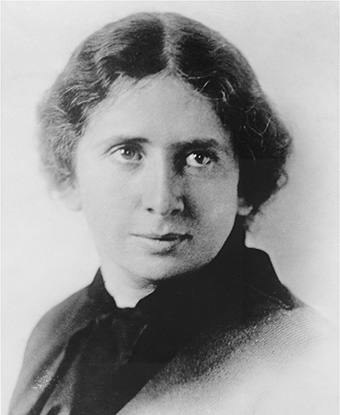
Noam Chomsky (1928 - )

Fri Dec 07, 1928

Image


Avram Noam Chomsky, born on this day in 1928, is an American linguist and anarchist political thinker, notable for his critiques of American imperialism and capitalist media. "Any dictator would admire the uniformity and obedience of the U.S. media."

Sometimes called "the father of modern linguistics", Chomsky is a major figure in analytic philosophy and one of the founders of the field of cognitive science. He holds a joint appointment as Institute Professor Emeritus at the Massachusetts Institute of Technology (MIT) and Laureate Professor at the University of Arizona, and is the author of more than 100 books on topics such as linguistics, war, politics, and mass media.

Ideologically, Chomsky is a libertarian socialist. An outspoken opponent of U.S. involvement in the Vietnam War, which he identified as an act of American imperialism, in 1967 Chomsky rose to national attention for his anti-war essay "The Responsibility of Intellectuals".

Associated with the New Left, he was arrested multiple times for his activism and placed on President Richard Nixon's Enemies List. Chomsky, along with Howard Zinn, was also on a list of American citizens that could be arrested without probable cause in the event of a national emergency.

In collaboration with Edward S. Herman, Chomsky later theorized a propaganda model of mass media in their work "Manufacturing Consent" (1988).

"Any dictator would admire the uniformity and obedience of the U.S. media."

- Noam Chomsky


7


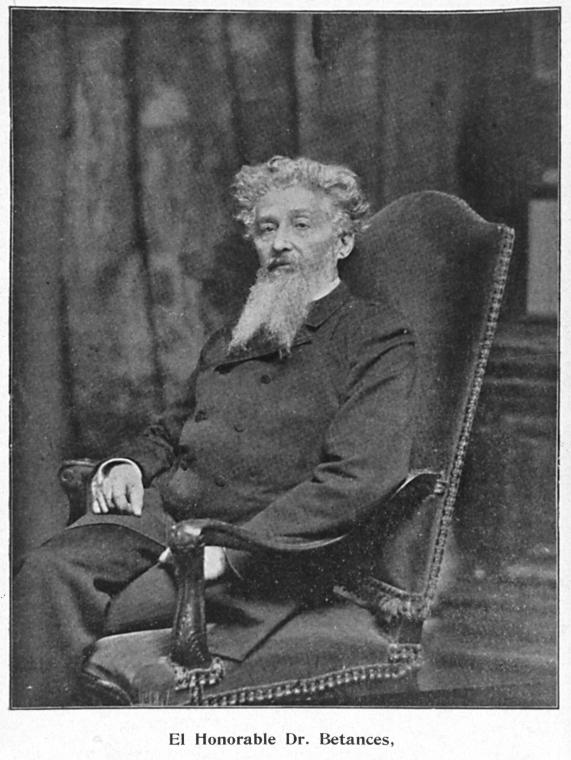
Viktor Chernov (1873 - 1952)

Sun Dec 07, 1873

Image

Image: Portrait of Minister VM Chernov in Petrograd, 1917. Projection print from the negative, black and white; 18x24 cm. - Portrait, breastplate, 1/3 to the right, in a suit. From the Russian State Archive of Film and Photo Documents


Victor Chernov was born in Novouzensk, Russia. He studied law at Moscow University, where he led the illegal students' union. In 1901, with figures such as Catherine Breshkovskaya and Alexander Kerensky, Chernov co-founded the Socialist Revolutionary Party.

Chernov edited the SR journal, "Revolutionary Russia", where he argued against some Marxists who claimed that the peasants were an inherently reactionary social class. After multiple arrests and living in exile, Chernov returned to Russia after the Revolution of 1905, becoming a leader of the SR faction in the Second Duma.

In 1907, Chernov published "Philosophical and Sociological Studies", in which he identified with the philosophy of "empirio-criticism". As such, he was one of the Russian Machists criticised by Lenin in his text "Materialism and Empirio-criticism" (1909).

Under Alexander Kerensky's provisional government in 1917, Chernov served as Minister for Agriculture, and advocated for immediate land reform on behalf of the peasant class, leading the Union of Landowners to consider Viktor their chief enemy.

Chernov was the chair of the briefly existing Russian Constituent Assembly. After the Assembly was dissolved by the Bolsheviks, Chernov joined an anti-Bolshevik government based out of Samara, Russia before fleeing to Western Europe and, ultimately, the United States, where he died in 1952.


8


Swadeshi Cotton Mill Massacre (1977)

Tue Dec 06, 1977

Image


On this day in 1977, around 1,000 workers rioted outside the Swadeshi Cotton Mill in Kanpur, India due to deferred wages, battling with police forces; more than 300 workers disappeared in the aftermath.

The Swadeshi Cotton Mills were some of the oldest textile mills in India, and home to particularly brutal labor strife. A few months earlier, 8,000 workers held management hostage and placed gas cylinders on the roof of the building, threatening to blow the factory up if their wages were not paid.

The December 6th riots became violent when fights broke out between private security and the workers; police intervened by shooting into the crowd of workers. Although official numbers listed 11 dead workers, others have claimed more than 100 people died. 300 workers disappeared in the aftermath of the violence. Both sources provided below state that the government's figures are false, and that the police shooting was completely unjustified.


9


Montgomery Bus Boycott Begins (1955)

Mon Dec 05, 1955

Image

Image: Black residents walking, Montgomery Bus Boycott, 1955 [blackpast.org]


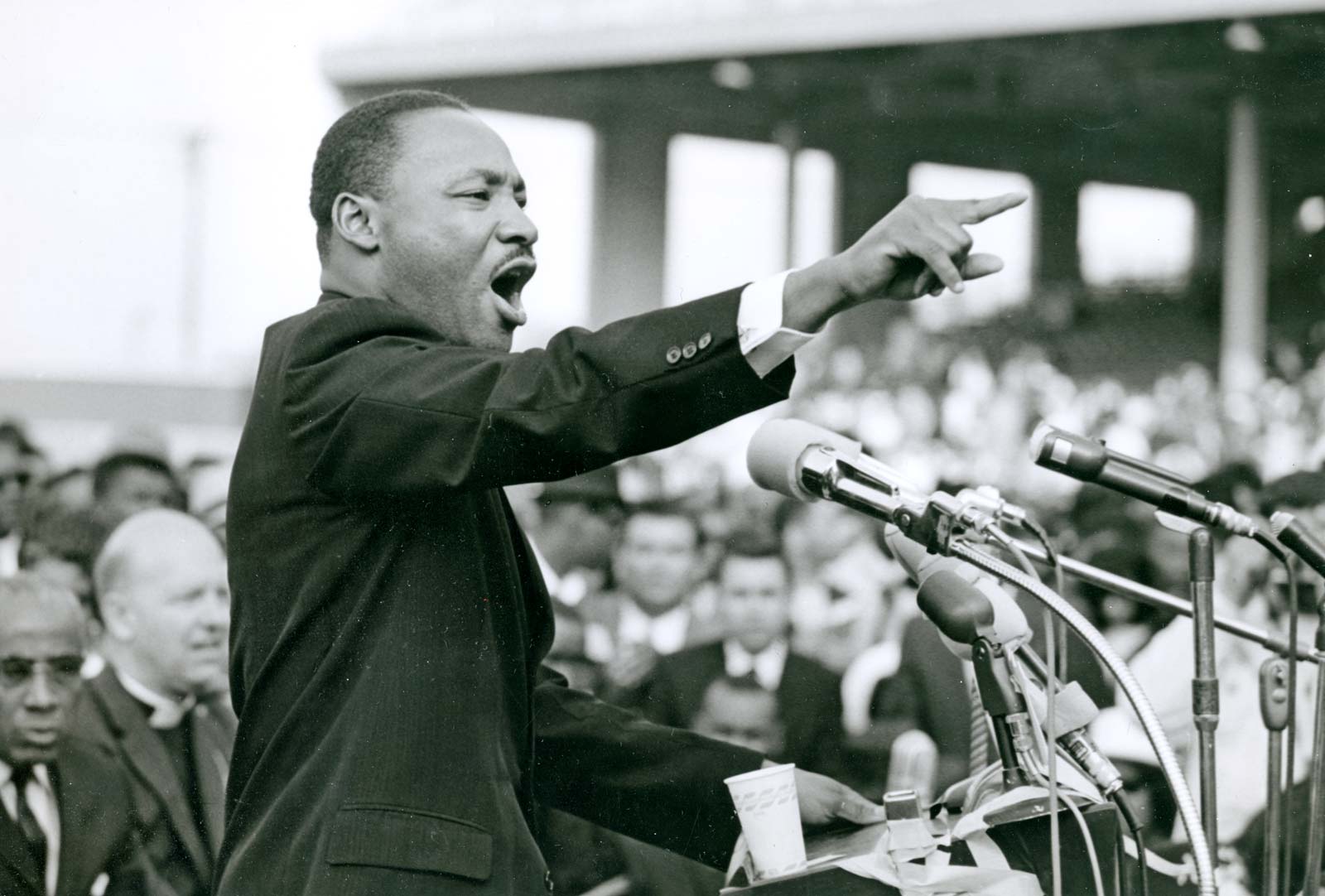
On this day in 1955, the Montgomery Bus Boycott, a city-wide boycott of the white supremacist bus system in Montgomery, Alabama, began, just four days after Rosa Parks was arrested for refusing to give up her bus seat to a white man.

The leader of the local NAACP chapter, E.D. Nixon, used Parks' arrest to launch a bus boycott to try and change the city's bus policies. Ula Taylor, a professor in the Department of African American Studies at UC Berkeley, has noted that organizing efforts by the Women’s Political Council, hundreds of professional class black women led by Jo Ann Robinson, would play an essential role in the boycott's success.

The boycott had widespread support in the black community, and black taxi drivers lowered their fares to match the cost of taking a bus in solidarity. In response, membership of the white supremacist "White Citizen's Council" increased dramatically.

Many acts of terrorism were committed by whites in response to the boycott - the homes of Martin Luther King Jr. and Ralph Abernathy were firebombed, boycotters were often physically attacked, and dozens of activists were arrested.

The boycott ended more than a year later, on December 20th, 1956, when the city passed an ordinance allowing black members to sit where they wanted. The campaign of white terrorism continued, however, and, within the month that followed the city ordinance, multiple churches were bombed, busses were subject to sniper fire, and at least one black man was lynched.


10


Republic Windows and Doors Occupation (2008)

Fri Dec 05, 2008

Image

Image: Pickets outside Republic Windows and Doors offices. A sign facing the camera reads "You got bailed out We got sold out" [ueunion.org]


On this day in 2008, in the midst of the financial crisis, 300 workers at Republic Windows and Doors occupied their workplace after being laid off, losing health insurance and owed vacation pay with just 3 days notice.

On Tuesday, December 2nd, workers were told that the business would close at the end of the week. Two hundred and forty local union members voted to have a sit-in at the end of the week. They carefully organized the action, dividing into three shifts to manage and clean the factory equipment, provide security, and communicate with the media and supporters 24 hours a day.

Protesting workers displayed signs that said "No More Bailouts for the Ruling Class!" and "You got bailed out, We got sold out". The action won national attention, and eventually the corporation changed ownership, and all workers were able to keep their jobs.

Richard Gillman, the former CEO of Republic Windows and Doors, was convicted of stealing more than $500,000 from the company, fined $100,000 and sentenced to four years in prison. On May 30th, 2012, members of the local union founded the New Era Windows Cooperative with the help of The Working World, an organization that finances worker cooperatives.


11


Grigoropoulos Killed, Greeks Riot (2008)

Sat Dec 06, 2008

Image


On this day in 2008, the worst Greek riots in decades began after Alexandros Grigoropoulos, a 15-year-old student, was killed by police in central Athens.

The killing of the young student resulted in large protests within an hour of the shooting, which later escalated to widespread rioting, with numerous participants damaging property and engaging riot police with Molotov cocktails. The demonstrations and rioting soon spread to several other cities and lasted for several weeks, into January of 2009.

The protests went beyond the scope of just police brutality - on December 10th, the General Confederation of Greek Workers (ΓΣΕΕ) and the Civil Servants' Confederation (ΑΔΕΔΥ), together representing 2.5 million people, half of the total Greek workforce, called a one-day general strike in opposition to the government's economic policies.


12


Fred Hampton Assassinated (1969)

Thu Dec 04, 1969

Image


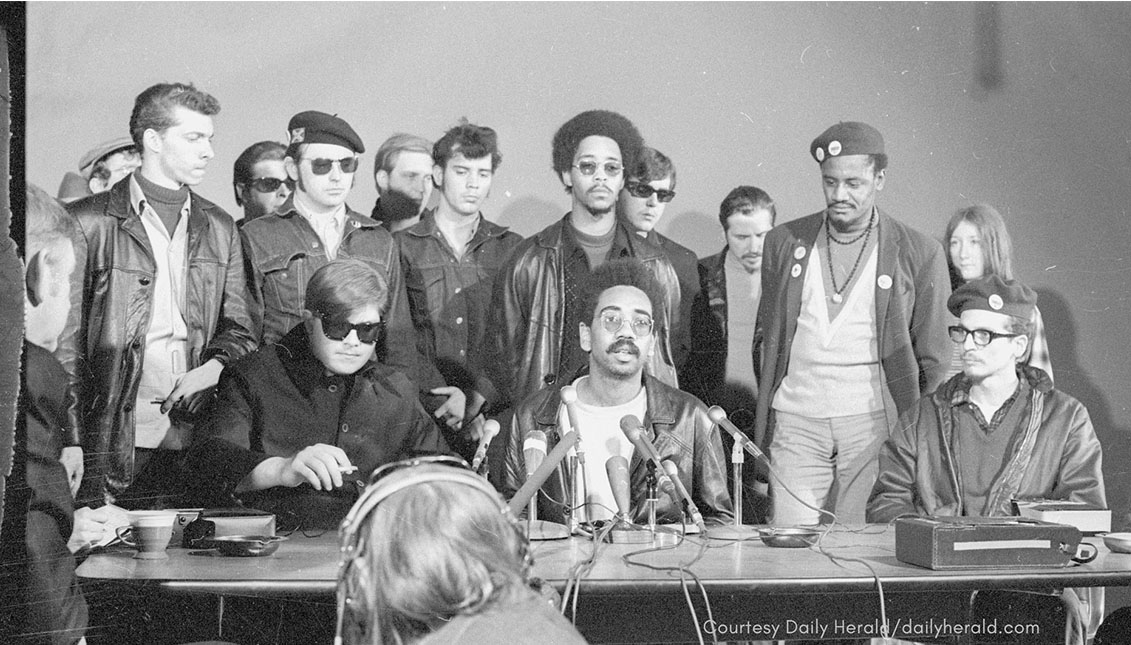
On this day in 1969, the Chicago Police Department assassinated revolutionary socialist and Black Panther Chairman Fred Hampton and fellow Panther Mark Clark. "You can kill a revolutionary but you can never kill the revolution."

Hampton also served deputy chairman for the national Panther party. In this capacity, he founded the Rainbow Coalition, a multi-racial class-conscious organization that included the Black Panthers, the Young Patriots, and the Young Lords, as well as an alliance among major Chicago street gangs to help them work for social change rather than fight amongst each other.

In 1967, Hampton was identified by the Federal Bureau of Investigation (FBI) as a threat. The FBI attempted to subvert his activities in Chicago, sowing disinformation among activist and placing a counterintelligence operative in the local Panthers organization.

On December 4th, 1969, Hampton was assassinated in his bed during a predawn raid at his Chicago apartment by a tactical unit of the Cook County State's Attorney's Office, in conjunction with the Chicago Police Department and the FBI. During the raid, another Panther, Mark Clark, was killed and several more were seriously wounded.

At a press conference the next day, police announced the arrest team had been attacked by the "violent" and "extremely vicious" Panthers, and had defended themselves accordingly.

In a second press conference on December 8th, police leadership praised the assault team for their "remarkable restraint", "bravery", and "professional discipline" in not killing all Panthers present.

Photographic evidence was presented of bullet holes allegedly made by shots fired by the Panthers, but this was soon challenged by reporters. It was later found that all but one of nearly 100 shots were fired by police.

Hampton's death was ruled a justified homicide at the time, although a civil lawsuit filed on behalf of the survivors and the relatives of Hampton and Clark won $1.85 million dollars in damages in 1982.

"You can kill a revolutionary but you can never kill the revolution."

- Fred Hampton


13


Eureka Rebellion (1854)

Sun Dec 03, 1854

Image

Image: A painting depicting the burning of Bentley Hotel during the uprising [Wikipedia]


On this day in 1854, a battle between Australian miners and British Colonial Authorities broke out at a makeshift stockade that the miners constructed, a working class revolt that killed dozens and led to democratic reforms in 1856.

The battle followed months of negotiations and civil unrest by miners, who wanted to loosen restrictions and the price on mining licenses. Colonial police would brutally enforce restrictive licensing laws by patrolling mines and harassing workers, pejoratively dubbed "license hunts".

As tensions between the miners and government increased, a militant labor leader, Peter Lalor, was elected. Lalor quickly organized the miners into a militaristic structure, with rebel brigades that would elect their captains.

The miners then set up an encampment and barricaded an area known as Bakery Hill to protect themselves from colonial officials and license Hunts. There, they raised the "Eureka Flag", a blue flag with a white Southern Cross with a deliberately absent Union Jack, the first ever flag to represent a Republican Australia.

On the early morning of December 3rd, 276 soldiers and policemen attacked the camp. The battle was short and a decisive victory for the government: 22-60 miners were killed and over 100 were captured, while only 6 soldiers were killed.

Thirteen leaders of the miners were placed on trial for treason. After an outpouring of popular support, the miners were freed and carried through the streets of Melbourne as heroes. This support contributed to the passage of male suffrage in 1856, one of the earliest democratic reforms in Australian history.


14


Bhopal Disaster (1984)

Sun Dec 02, 1984

Image


On this day in 1984, the Bhopal Disaster, one the world's worst industrial catastrophes, took place when a gas leak exposed more than 500,000 people to highly toxic methyl isocyanate gas. Estimates of those killed range widely, from 3,900 - 16,000 people dying as a result of the exposure, with tens of thousands injured.

The leak took place at the Union Carbide India Limited (UCIL) pesticide plant in Bhopal, Madhya Pradesh, India. Multiple leaks and worker exposures to toxic chemicals had taken place in the years leading up to the Bhopal Disaster, leading journalist Rajkumar Keswani to state "Wake up, people of Bhopal, you are on the edge of a volcano".

The mass leak of methyl isocyanate gas (MIC) was caused by widespread neglect of infrastructure and safety measures for storing the chemical. Thousands of people had died by the following morning, generally from choking, reflexogenic circulatory collapse, and/or pulmonary edema. MIC gas is also approximately twice as dense as air, leading to children inhaling significantly greater concentrations of the toxin. The stillbirth rate increased by up to 300% and the neonatal mortality rate by around 200%.

Lacking any safe alternative, on December 16th, tanks 611 and 619 were emptied of the remaining MIC by reactivating the plant and continuing the manufacture of pesticide, leading to a second mass evacuation from Bhopal.

In 1991, the local Bhopal authorities charged Warren Anderson, former Union Carbide Corporation CEO who had retired in 1986, with manslaughter (UCIL was majority-owned by UCC). Anderson was declared a fugitive from justice on February 1st, 1992 for failing to appear at the subsequent court hearings. The U.S. government declined to extradite him, and the Supreme Court ruled that victims of the Bhopal disaster could not seek damages in a U.S. court.

In June 2010, seven former employees of UCIL, all Indian nationals and many in their 70s, were convicted of causing death by negligence.


15


John Brown Executed (1859)

Fri Dec 02, 1859

Image


On this day in 1859, the U.S. government executed John Brown for his failed raid on a federal armory in Harpers Ferry, Virginia. For attempting to liberate enslaved people, Brown became the first American to be executed for treason.

Brown first gained national prominence when he led small groups of volunteers during the Bleeding Kansas crisis of 1856. He was dissatisfied with the pacifism of the organized abolitionist movement: "These men are all talk. What we need is action - action!"

In October 1859, Brown led a raid on the federal armory at Harpers Ferry, Virginia (today West Virginia), intending to start a slave liberation movement that would spread south through the mountainous regions of Virginia and North Carolina. Although Brown seized the armory, his raid was beaten militarily. Seven people were killed and at least ten were injured.

Brown had intended to arm slaves with weapons from the armory, but only a small number of local slaves were willing to join him, possibly due to an unfamiliarity with firearms. Within 36 hours, those of Brown's men who had not fled were killed or captured by local farmers, militiamen, and U.S. Marines, the latter led by Robert E. Lee.

Brown was hastily tried for treason against the Commonwealth of Virginia, the murder of five men, and inciting a slave insurrection; he was found guilty on all counts and was hanged. Brown was the first person executed for treason in the history of the United States.

"I, John Brown, am now quite certain that the crimes of this guilty land can never be purged away but with blood. I had, as I now think, vainly flattered myself that without very much bloodshed, it might be done."

- John Brown


16


Harlem Rent Strike (1963)

Sun Dec 01, 1963

Image


On this day in 1963, residents of 34 Harlem tenements (585 families in total) began a rent strike against inhumane living conditions. Their eviction cases were dismissed after tenants brought live rats from their homes to trial.

At the time of the strike, only 12 percent of the city's welfare recipients lived in public housing. The rest occupied the city's most dilapidated and dangerous buildings, many of which had long since been declared unlivable. Many tenants lived without consistent heat, electricity, and plumbing, as well as dealing with terrible pest infestations.

On December 30th, 1963, these tenants were expected to appear in Manhattan Civil Court to defend themselves against the landlords who ordered their evictions. With news media looking on, they brought rats, both dead and alive, to the court, along with evidence that the heat, electricity, working plumbing, and rodent extermination were routinely denied them. Their cases were dismissed.


17


Rosa Parks Refuses to Move (1955)

Thu Dec 01, 1955

Image


On this day in 1955, civil rights activist Rosa Parks rejected a bus driver's order to relinquish her seat to a white passenger in Montgomery, Alabama. Although the NAACP bailed her out of jail, both Parks and her husband lost their jobs.

Parks was not the first person to resist bus segregation, nor was it the first time she herself refused to accommodate the bus laws. As early as 1943, Parks exited the bus rather than to give up her seat and continue riding. Parks said "My resisting being mistreated on the bus did not begin with that particular arrest. I did a lot of walking in Montgomery."

The National Association for the Advancement of Colored People (NAACP), for whom Parks worked as a secretary, believed that she was the best candidate for seeing through a court challenge because she was perceived as a responsible, mature woman with a good reputation. Accordingly, the NAACP bailed her out of jail after her arrest.

Due to economic sanctions used against activists, Parks lost her job at the department store, and her husband quit his job after his boss forbade him to talk about his wife or her legal case. Parks was convicted in a local trial within a week of her arrest, and the appeals process was greatly slowed by the state government of Alabama. From the economic pressure of the Montgomery Bus Boycott, eventually the city conceded and reversed its segregation bus laws.


18


Wobbly B Duck Sue Attacked (1912)

Sat Nov 30, 1912

Image


The following passage is taken verbatim from the University of Washington's IWW History Project, which has produced a database of "Arrests, Prosecutions, Beatings, and other Violence 1906-1920" from the history of the Industrial Workers of the World (IWW):

On this day in 1912, Korean IWW organizer B Duck Sue was beaten severely with heavy whips for organizing fifty-two plantation laborers. He was forced out of the county, but the workers' wages were increased from twenty dollars a month to twenty four dollars a month.


19


Shirley Chisholm (1924 - 1995)

Sun Nov 30, 1924

Image


Shirley Anita Chisholm, born on this day in 1924, was an American politician, educator, and author who became the first black woman elected to U.S. Congress in 1968. Her campaign slogan was "Unbought and Unbossed".

Chisholm was born to immigrant parents from the Caribbean. When she was five, she was sent to live with her maternal grandmother in Barbados because her parents' work schedules made it difficult to raise children.

Chisholm returned to the United States at the age of ten, and spoke with a slight West Indies accent for the rest of her life. On her grandmother's influence, Chisholm later stated "Granny gave me strength, dignity, and love. I learned from an early age that I was somebody. I didn't need the black revolution to tell me that."

In 1968, she became the first black woman elected to the United States Congress in an upset victory where she defeated civil rights activist James Farmer. Her campaign slogan, later the title of her autobiography, was "Unbought and Unbossed".

Chisholm represented New York's 12th congressional district for seven terms from 1969 to 1983. In the 1972 United States presidential election, she became the first black candidate for a major party's nomination for President of the United States.

"In the end anti-black, anti-female, and all forms of discrimination are equivalent to the same thing: anti-humanism."

- Shirley Chisholm


20


Friedrich Engels (1820 - 1895)

Tue Nov 28, 1820

Image


Friedrich Engels, born on this day in 1820, was a German philosopher, journalist, and revolutionary socialist who collaborated with Karl Marx, co-authoring the "Communist Manifesto" and editing Marx's "Das Kapital".

Engels was born in Barmen, Rhine Province, Prussia (now Wuppertal, Germany), to a wealthy family. His father owned large textile factories in Barmen and Salford, England. His revolutionary predilections (and later, his atheistic beliefs) put him at odds with his family, who expected Engels to inherit the family business.

Engels' career became intertwined with Marx's when he began writing articles for "Rheinische Zeitung", a German newspaper that Karl Marx edited. In 1845, Engels published "The Condition of the Working Class in England", based on personal observations and research of poverty and disease in English cities. In 1848, Engels co-authored the "Communist Manifesto" with Marx.

Later, Engels supported Marx financially, allowing him to perform research and write "Das Kapital". After Marx's death, Engels edited the second and third volumes of "Das Kapital".

Additionally, Engels organized Marx's notes into "Theories of Surplus Value", which were later published as the fourth volume of "Das Kapital". In 1884, he published "The Origin of the Family", Private Property and the State", based on Marx's ethnographic research.

"An ounce of action is worth a ton of theory."

- Friedrich Engels


21


Théophile Ferré Executed (1871)

Tue Nov 28, 1871

Image

Image: Théophile Ferré in 1871, photographed by Eugène Appert. From the Musée de l'histoire vivante. [Wikipedia]


Théophile Ferré was a leader of the Paris Commune who was executed by the French government on this day in 1871. Ferré personally authorized the execution of the archbishop of Paris and was the first of 25 Communards to be executed.

Little is known about Ferré's early life, before his participation in the Paris Commune. After Paris was seized by revolutionaries in March 1871, Ferré served on the Commune's Committee of Public Safety, a body given extensive powers to hunt down enemies of the Commune.

On April 5th, the Commune passed a decree that authorized the arrest of any person thought to be loyal to the French government in Versailles, to be held as hostages. Prominent figures arrested included a Catholic priest Georges Darboy and the archbishop of Paris. The Commune hoped to exchange their hostages for Louis-Auguste Blanqui, a revolutionary and honorary President of the Commune, imprisoned by the state.

Following the events of the "Bloody Week", in which the French government summarily executed many suspected Communards, Ferré authorized the execution of several hostages, including Darboy and the archbishop.

After the resistance of the Commune collapsed, Ferré was captured by the army, tried by a military court, and sentenced to death. On November 28th, 1871, he was shot at Satory, an army camp southwest of Versailles. He was the first of twenty-five Communards to be executed for their role in the Paris Commune.


22


Harvey Milk Assassinated (1978)

Mon Nov 27, 1978

Image


Harvey Bernard Milk (1930 - 1978) was the first openly gay elected official in the history of California, elected to the San Francisco Board of Supervisors, and was assassinated on this day in 1978. Although he achieved national renown as one of the most pro-LGBT politicians in the United States at the time, politics was something Milk came to later in life, after his experiences with the counterculture movement of the 1960s.

In 1972, Milk moved from New York City to the Castro District of San Francisco and took advantage of the growing political and economic power of the neighborhood to promote his activism. Milk unsuccessfully ran for office three times, but finally won a seat as a city supervisor in 1977.

Milk was assassinated on this day in 1978, after only eleven months in office. He was killed by Dan White, a disgruntled former city supervisor.

During Milk's short time in office, he sponsored a bill banning discrimination in public accommodations, housing, and employment on the basis of sexual orientation. After his death, Milk became an icon in San Francisco and a martyr for the gay community.

In 2021, the U.S. Navy launched a ship named after Harvey Milk, who had been discharged from the Navy during the Korean War after being questioned about his sexual orientation.


23


Free Territory of Ukraine (1917)

Tue Nov 27, 1917

Image

Image: Two soldiers next to a Makhnovian flag, reading "Death to all who stand in the way of freedom for working people" in Cyrillic. Unknown date and location [Wikicommons]


Makhnovia, also known as the Free Territory of Ukraine, was an anarchist society established on this day in 1917 with the capture of the Ukrainian city of Huliaipole.

The Free Territory was an attempt to form a stateless anarchist society during the Ukrainian Revolution of 1917 to 1921, during which time "free soviets" and libertarian communes operated under the protection of Nestor Makhno's Revolutionary Insurrectionary Army (flag shown above).

As Makhnovia self-organized along anarchist principles, references to "control" and "government" were highly contentious. For example, the Makhnovists, often cited as a form of government (with Nestor Makhno as their "leader"), were ostensibly organized to serve in a purely military role, with Makhno himself functioning as more of a strategist than commander.

The economy of Makhnovia varied by region, from "market socialism" to anarcho-communism in character. Where money was used, production was often organized in the form of worker cooperatives.

The Bolsheviks were openly hostile to the Free Territory. On November 26th, 1920, less than two weeks after the Revolutionary Insurrectionary Army assisted Bolshevik forces in defeating the White Army, Makhno's headquarters staff and many of his subordinate commanders were arrested at a Red Army planning conference to which they had been invited by Moscow, and executed.

Makhno himself fled the region several months later, settling in Paris, France.


24


Indian General Strike (2020)

Thu Nov 26, 2020

Image

Image: Farmers gather as they take part in a nationwide general strike to protest against the recent agricultural reforms at the Delhi-Haryana state border in Singhu on December 8, 2020. From Sajjad HUSSAIN


On this day in 2020, the largest strike in world history began in India when 250 million workers from across the country struck both in solidarity with farmers protesting en masse and to demand better working conditions for themselves.

The strike took place following months of protest from Indian farmers, a response to three farm acts passed by the Parliament of India in September 2020. According to protesters, the farm acts would leave small farmers, the vast majority, at the mercy of large corporations. Poor farmers were already desperate before the laws were passed - in 2019 alone, 10,281 agricultural workers committed suicide.

Dozens of farm unions began organizing protests demanding the repeal of these laws. After failing to get the support of their respective state governments, the farmers decided to pressure the Central Government by marching to Delhi en masse.

The farmers arrived at Delhi on November 25th, 2020 and were met by police, who employed the use of tear gas and water cannons, dug up roads, and used layers of barricades and sand barriers to try and stop their march.

On November 26th, 250 million workers from all over the country initiated a general strike in solidarity with the farmer's struggle. According to Tricontinental: Institute for Social Research, trade unions issued a twelve-point charter of demands which included "the reversal of the anti-worker, anti-farmer laws pushed by the government in September, the reversal of the privatisation of major government enterprises, and immediate [Covid] relief for the population".

Farmer protests continued for more than a year, featuring mass marches, clashes with police, and many failed negotiations between farmers' unions and the government. Rakesh Tikait, a leader with Bharatiya Kisan Union (English: Indian Farmers' Union) stated in October 2021 that approximately 750 participants have died in the protest.

Among the dead was a Senior Superintendent of Police in the city of Sonepat, who committed suicide, saying he could not bear the pain of the farmers. His suicide note read "Bullets fired from the guns kill only those whom they strike. The bullet of injustice, however, kills many with a single stroke... It is humiliating to suffer injustice."

In a televised address on November 19th, 2021, Indian Prime Minister Narendra Modi stated that his government would repeal the three acts in the upcoming winter parliamentary session in December. The national spokesperson of the Bharatiya Kisan Union, Rakesh Tikait, stated the protests would only cease once the laws were repealed.

The film actor Deep Sidhu also joined the protests, and was quoted as having told a police officer the following: "Ye inquilab hai. This is a revolution. If you take away farmers' land, then what do they have left? Only debt."


25


Herman Gorter (1864 - 1927)

Sat Nov 26, 1864

Image


Herman Gorter, born on this day in 1864, was a prominent Dutch poet and council communist. He was a leading member of the "Tachtigers", a highly influential group of Dutch writers who worked together in Amsterdam in the 1880s.

Gorter's first book, a 4,000 verse epic poem called "Mei" (May), helped establish his reputation as a great writer upon its publication in 1889, and is regarded by critics as the pinnacle of Dutch Impressionist literature.

Gorter was also an outspoken advocate of revolutionary communism and Marxist theory. In 1917, he hailed the Russian Revolution as the beginning of that global revolution and had correspondence with Lenin on multiple occasions, wishing him well and asking for his support in condemning Dutch social democrats for not condemning American imperialism.

Lenin sent Gorter a copy of "State and Revolution" in response, which Gorter then offered to translate.

"Your words will be an incentive to me, once again, and to an even greater extent than before, to base my judgement in all matters of tactics, also in the revolution, exclusively on reality, on the actual class-relations, as they manifest themselves politically and economically."

- Herman Gorter, in "Open Letter to Comrade Lenin"


view more: next ›