Historic(al) Map Porn

1093 readers
1 users here now

Welcome to c/old_maps @ Mander.xyz!

A community about captivating historic and historical maps from around the world, from the oldest examples known to those created around 1950.


Notice Board

This is a work in progress, please don't mind the mess.


About

Rules

  1. Don't throw mud. Be kind and remember the human.
  2. Keep it rooted (on topic).
  3. No spam.


Links


Similar Communities


Sister Communities

Science and Research

Biology and Life Sciences

Plants & Gardening

Physical Sciences

Humanities and Social Sciences

Memes

founded 3 years ago
MODERATORS
1
11
Malta (~1690) (upload.wikimedia.org)
submitted 3 months ago by Innerworld@lemmy.world to c/old_maps@mander.xyz


The island Malta was generally known for its military, religious knight order of the Johanniters who had established themselves on the island. After the Crusades during which they distinguished themselves as hospital helpers, the Johanniters took care to secure the Mediterranean Sea against the Turks.

Malta is an island country in the Southern Europe, located in the central Mediterranean Sea between Sicily and North Africa. The archipelago's main inhabited islands are Malta, Gozo and Comino, with the capital at Valletta. It has a population of 574,250, spread over an area of 316 km2 (122 sq mi). Malta has been inhabited since prehistoric times and has been ruled by many powers, including the Phoenicians, Romans, Arabs, Normans, the Knights Hospitaller and the British Empire. It played an important strategic role during World War II and was awarded the George Cross in 1942. The country gained its independence in 1964 and became a republic in 1974. Malta is a parliamentary republic and a member of the European Union and Commonwealth of Nations. The official languages are Maltese and English and it is predominantly Catholic. The country is known for its strategic location, tourism industry, and its architectural and historical monuments, several of which are UNESCO World Heritage Sites.

Author: Nicolaes Visscher II

2


cross-posted from: https://slrpnk.net/post/37174794

For America-250 (gross) the state of Ohio is revisioning it's native vegitation maps and digitizing original surveyor notes.

They're updating thier progress quarterly, check it out here. Last update was in March. Its very cool.

https://ohiodnr.gov/discover-and-learn/land-water/18th-century-vegetation-of-ohio/vegetation-map/vegetation-map

3
 
 
4
4
Old World Map (theanythingblog2025.blogspot.com)
5


cross-posted from: https://lemm.ee/post/64866073

Absolute Nuclear (Light Yellow)
Definition: A family structure consisting only of parents and their children, with no extended relatives living together. Once children marry, they form their own independent households.

Regions: Predominantly in the UK, Ireland, and parts of Scandinavia. This reflects a cultural emphasis on individualism and early independence.

Egalitarian Nuclear (Orange)
Definition: Similar to the absolute nuclear family, but with more equality in inheritance and gender roles between spouses. Children still leave to form independent households, but there’s less rigid hierarchy within the family.

Regions: Found in Spain, Portugal, southern France, and parts of Italy. This structure aligns with Mediterranean cultural norms of balanced familial roles.

Stem Family (Light Blue)
Definition: A family where one child (usually the eldest son) remains in the parental home with their spouse and children, while other siblings leave to form their own households. The stem family ensures the continuity of the family estate.

Regions: Common in central Europe, including Germany, Austria, and parts of France. This reflects a tradition of preserving family property through one heir.

Incomplete Stem Family (Gray)
Definition: A variation of the stem family where the designated heir might not always stay with the parents, or the system is less rigid. Extended family involvement is limited compared to a full stem family.
Regions: Seen in parts of central and eastern Europe, like Poland and Hungary. This indicates a transitional family structure between stem and nuclear models.

Communitarian (Dark Blue)
Definition: A family structure where multiple generations live together, often with brothers and their families sharing a household. Inheritance is typically divided equally among siblings, and communal living is emphasized.

Regions: Predominantly in southern Italy, parts of the Balkans, and eastern Europe, including Finland. This reflects a collectivist culture prioritizing extended family unity.

6
 
 
7
24
submitted 2 years ago* (last edited 2 years ago) by FireTower@lemmy.world to c/old_maps@mander.xyz
 
 
8


Oculi Mundi is a digital heritage destination: the home of The Sunderland Collection of world maps, celestial maps, atlases, globes and books of knowledge.

The Collection was built out of a personal passion for travel, history, and the imagination. We seek to make it as accessible as possible — for study or for pure joy.

Oculi Mundi takes a fresh, innovative approach to presenting antique material online. We have tried to exploit the full potential of the digital environment and the best of current technology. As tech evolves, so will we!

9
 
 
10


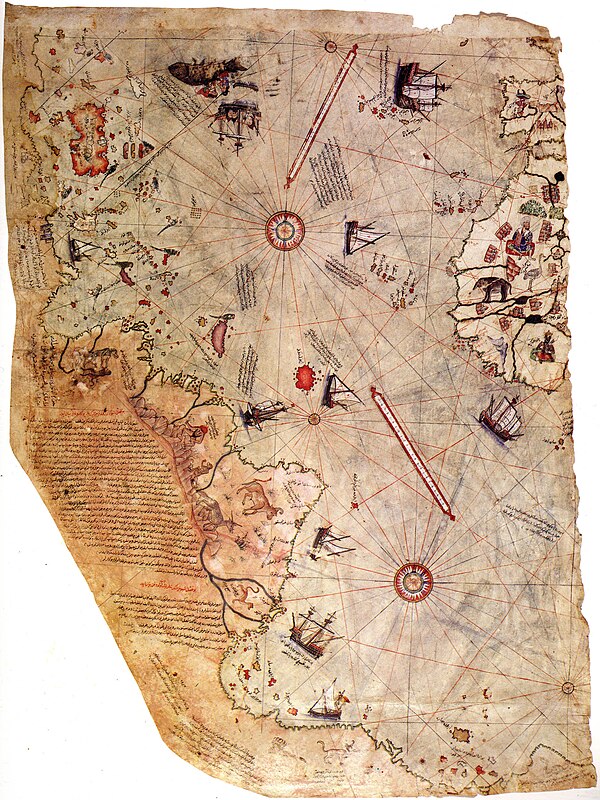
The map is known by the name of its author, admiral Piri Reis. Only half of the original map survives today.

Source: Wikipedia
11


I find it interesting that the maker chose to orient the map east upwards.

[Image description: an old map of the coast of southern and western Norway, decorated at the top with scenes of fisherman and pastoral life]

12


This will likely be rather rudimentary for experts and professionals, and the map itself isn't pre-1950 but I recently visited northern Italy and had my interest piqued by Aquileia; which lead me to begin looking for info on trade routes from which Baltic amber was able to reach ancient Egypt, Greece, Rome and The Caucasus.

I was aware that Cornish and Breton tin had been used in the Late Bronze Age in the Mediterranean but hadn't really considered the trading of Amber which for which the routes pre-date those for tin.

I find the idea of these ancient trade routes to be wonderfully thought provoking. Romanticising about how cultures like the Únêtice organised themselves and cooperated in order to facilitate trade.

If anyone here has spent any time reading about this trade route I would be grateful to hear of anything you found of interest regarding the settlements, societies, professions and daily lives of the peoples involved in this trade.

13