xtools

joined 2 years ago
MODERATOR OF
[–] xtools@programming.dev 9 points 2 days ago

If you dance with the devil, the devil don’t change, he changes you.

[–] xtools@programming.dev 2 points 1 week ago

what i did is going for the smallest sd card, and buy a proper bigger one, then clone the "stock" card, and copy over roms and metadata from my nicely curated Batocera drive.

it can be super tricky to get any OS that officially supports the R36S to run on the clones, so i run the OS it came with. the device isn't connected to the Internet so i don't worry too much about malware.

dreamcast is simpler to emulate, n64 notoriously isn't, I've been struggling with this system during my Raspberry Pi 3 emulation era already. the "real" R36S apparently is a tad more powerful than the cheap knockoffs, but i can't seem to find it anymore - the closest available official one would be the RG35XX for $55

[–] xtools@programming.dev 3 points 1 week ago* (last edited 1 week ago) (2 children)

at that price point, the R36S clones on Aliexpress, i got one on sale for ~€22. they play everything up to ps1/dreamcast, n64 not so much though. the romsets they come with and their metadata are really bad, and the sd card is prone to die spontaneously, so it requires some tinkering

[–] xtools@programming.dev 158 points 2 weeks ago (5 children)
[–] xtools@programming.dev 4 points 3 weeks ago (1 children)

it's cross-posted, but not every lemmy client show that explicitly

[–] xtools@programming.dev 1 points 3 weeks ago

this is the secret sauce for surface devices: https://github.com/linux-surface/linux-surface

[–] xtools@programming.dev 3 points 1 month ago

Mecha Pensioner

[–] xtools@programming.dev 2 points 2 months ago

time for a Nero move

[–] xtools@programming.dev 1 points 2 months ago

yeah i'm running a lts distro but keep the kernel up to date, it's super simple, there's even gui apps for it

[–] xtools@programming.dev 2 points 2 months ago

it's fun for microcontrollers, for when you get bored with software and want to venture out into hardware


a nice side effect from creating my project website though is that it includes a setup wizard, so you'll finally be able to actually do something with your Colibri wallet 😅 plus I've wrapped up the code I've used into a TS/React SDK that can be reused for the MyEtherWallet fork! just need some more time and energy, but soon ™️


cross-posted from: https://programming.dev/post/24922639

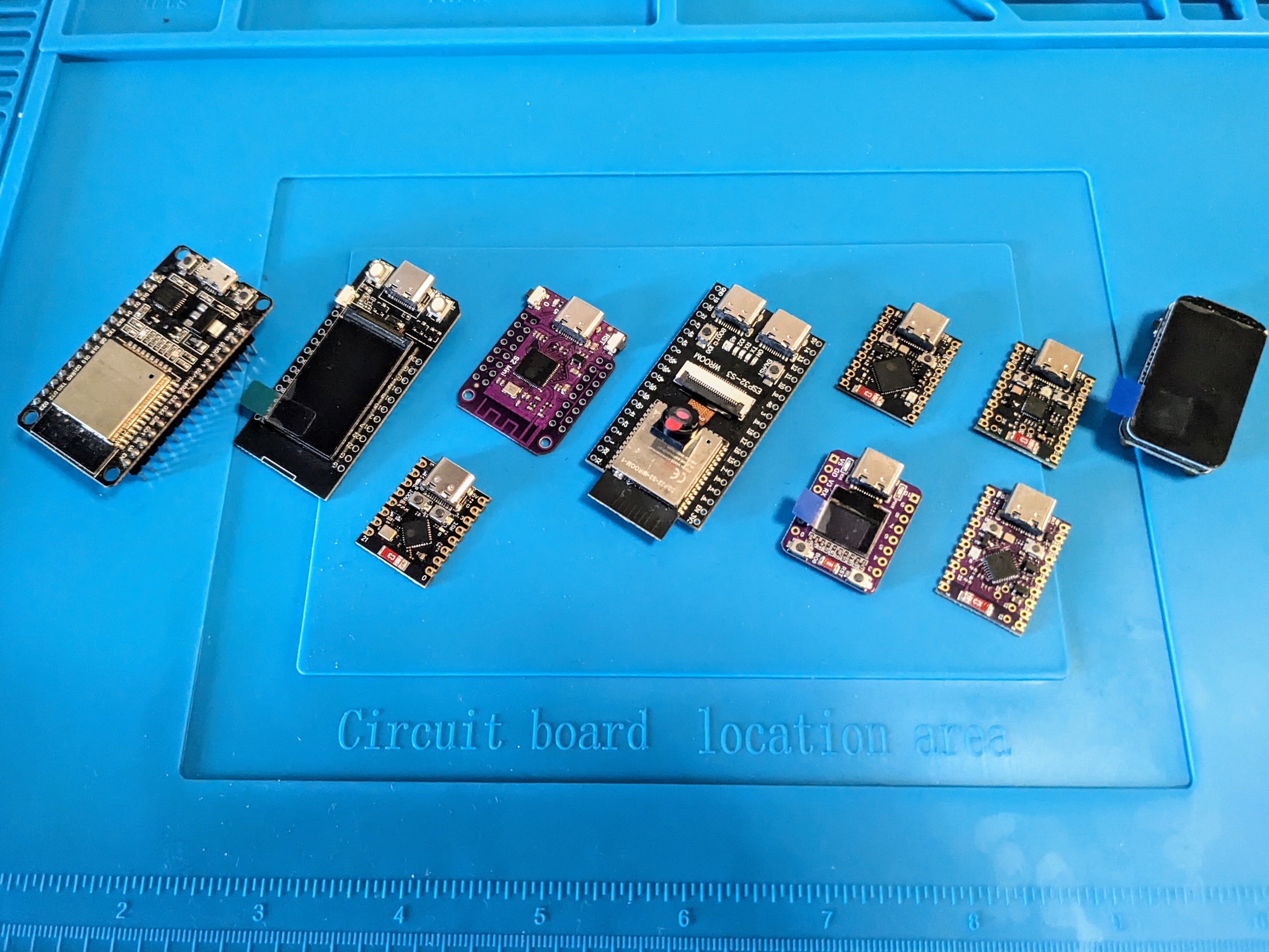
Any of these low-cost ESP32 development boards (ranging from ~$3 to ~$15) can be turned into a fully functional crypto hardware wallet with colibri.diy - ofc fully free and open source

The project is still in the pre-release stage, but if you like tinkering with Arduino & hardware, check out the github repository for the firmware and build instructions.

Please let me know what you think!


Any of these low-cost ESP32 development boards (ranging from ~$3 to ~$15 on Aliexpress) can be turned into a fully functional and secure crypto hardware wallet with colibri.diy - ofc fully free and open source

The project is still in the pre-release stage, but if you like tinkering with Arduino & hardware, check out the github repository for the firmware and build instructions.

Please let me know what you think!

7
submitted 1 year ago* (last edited 1 year ago) by xtools@programming.dev to c/colibri@programming.dev
 

Just packaged up version 0.0.4 of Colibri.diy!

While there haven't been too many major changes, I've added base address derivation for Solana and Polkadot/Substrate chains, and added DASH, DGB and ZEC support in the "Bitcoin-like" category.

In the background, I've also

  • prepared a Nextra.js skeleton for the companion webapp
  • planned the site's structure, functionality and content
  • sketched out the complete GUI design for the display integration in v0.1.x

The next release will be focused around the companion webapp, so that you can actually set up your wallet without having to resort to BLE debugging tools to do so.

After that's out of the way, I'll be integrating everything into a MyEtherWallet fork, so it finally starts to feel like a real hardware wallet :)

Any feedback appreciated!


Just released v0.0.3 of colibri.diy - new features include Ethereum transaction signing and basic Bitcoin support <3

Now working on a companion webapp to ease device setup, and the first 3rd-party wallet integration. Please let me know what you think!


the colibri.diy-project is still under development, please give it a star on Github <3


just released the firmware three days ago, head over to colibri.diy to find build instructions and more info or read the intro post


cross-posted from: https://programming.dev/post/22952335

Hi Lemmy,

I'm Martin and have been working on a free and open-source, fully DIY crypto hardware wallet for a couple of months now. I' ve just published the first functional preview of the firmware, which can be built by anyone easily using Arduino IDE, and flashed to a variety of $5-off-the-shelve ESP32 boards from Aliexpress.

The first release will allow for storing up to 30 encrypted seed phrases, and Ethereum signing via Bluetooth Low Energy. Under the hood, it's powered by the cryptographic libraries written and used by Trezor.io.

Support for more interfaces and chains can be added fairly easily due to a modular structure, and there is a whole roadmap planned to extend functionality (starting with support for displays).

If you're interested to learn more, check out the README in the Colibri repository.

Please let me know what you think, and leave a 🌟 on Github if you like the project.

Also if there's anything that you've always missed in or been annoyed by a hardware wallet, your input would be greatly appreciated!
 

cross-posted from: https://programming.dev/post/22952335

Hi Lemmy,

I'm Martin and have been working on a free and open-source, fully DIY crypto hardware wallet for a couple of months now. I' ve just published the first functional preview of the firmware, which can be built by anyone easily using Arduino IDE, and flashed to a variety of $5-off-the-shelve ESP32 boards from Aliexpress.

The first release will allow for storing up to 30 encrypted seed phrases, and Ethereum signing via Bluetooth Low Energy. Under the hood, it's powered by the cryptographic libraries written and used by Trezor.io.

Support for more interfaces and chains can be added fairly easily due to a modular structure, and there is a whole roadmap planned to extend functionality (starting with support for displays).

If you're interested to learn more, check out the README in the Colibri repository.

Please let me know what you think, and leave a 🌟 on Github if you like the project.

Also if there's anything that you've always missed in or been annoyed by a hardware wallet, your input would be greatly appreciated!


cross-posted from: https://programming.dev/post/22952335

Hi Lemmy,

I'm Martin and have been working on a free and open-source, fully DIY crypto hardware wallet for a couple of months now. I' ve just published the first functional preview of the firmware, which can be built by anyone easily using Arduino IDE, and flashed to a variety of $5-off-the-shelve ESP32 boards from Aliexpress.

The first release will allow for storing up to 30 encrypted seed phrases, and Ethereum signing via Bluetooth Low Energy. Under the hood, it's powered by the cryptographic libraries written and used by Trezor.io.

Support for more interfaces and chains can be added fairly easily due to a modular structure, and there is a whole roadmap planned to extend functionality (starting with support for displays).

If you're interested to learn more, check out the README in the Colibri repository.

Please let me know what you think, and leave a 🌟 on Github if you like the project.

Also if there's anything that you've always missed in or been annoyed by a hardware wallet, your input would be greatly appreciated!
 

cross-posted from: https://programming.dev/post/22952335

Hi Lemmy,

I'm Martin and have been working on a free and open-source, fully DIY crypto hardware wallet for a couple of months now. I' ve just published the first functional preview of the firmware, which can be built by anyone easily using Arduino IDE, and flashed to a variety of $5-off-the-shelve ESP32 boards from Aliexpress.

The first release will allow for storing up to 30 encrypted seed phrases, and Ethereum signing via Bluetooth Low Energy. Under the hood, it's powered by the cryptographic libraries written and used by Trezor.io.

Support for more interfaces and chains can be added fairly easily due to a modular structure, and there is a whole roadmap planned to extend functionality (starting with support for displays).

If you're interested to learn more, check out the README in the Colibri repository.

Please let me know what you think, and leave a 🌟 on Github if you like the project.

Also if there's anything that you've always missed in or been annoyed by a hardware wallet, your input would be greatly appreciated!

 

cross-posted from: https://programming.dev/post/22952335

Hi Lemmy,

I'm Martin and have been working on a free and open-source, fully DIY crypto hardware wallet for a couple of months now. I' ve just published the first functional preview of the firmware, which can be built by anyone easily using Arduino IDE, and flashed to a variety of $5-off-the-shelve ESP32 boards from Aliexpress.

The first release will allow for storing up to 30 encrypted seed phrases, and Ethereum signing via Bluetooth Low Energy. Under the hood, it's powered by the cryptographic libraries written and used by Trezor.io.

Support for more interfaces and chains can be added fairly easily due to a modular structure, and there is a whole roadmap planned to extend functionality (starting with support for displays).

If you're interested to learn more, check out the README in the Colibri repository.

Please let me know what you think, and leave a 🌟 on Github if you like the project.

Also if there's anything that you've always missed in or been annoyed by a hardware wallet, your input would be greatly appreciated!

view more: next ›