Hello! My name is Jürgen, and I translate German folk tales.
Folk tales are, essentially, another oral storytelling tradition like tabletop role-playing games, where stories are told by amateur storytellers for their audiences. There are some important differences, of course - tabletop role-playing games emphasize group storytelling, as well as (usually) serial storytelling involving the same protagonists, which are largely absent in traditional folk tales. Nevertheless, I've often noted that they share the same overall "chaotic energy" of more formal story structures in art and literature, and indeed both folk tale storytellers and role-players often have similar ideas.
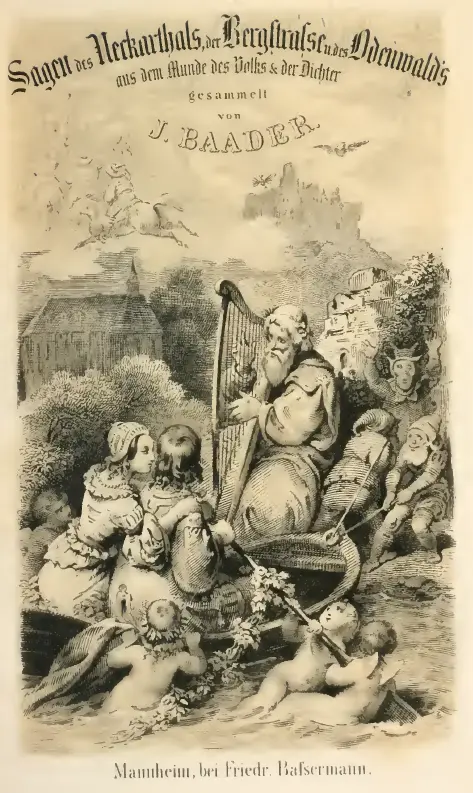
In the 19th century, German folk tales received a lot of scholarly attention. Numerous early folklorists inspired by the Brothers Grimm collected folk tales from specific regions and published them together with added commentary elabroating on the historical, cultural, and folkloric context of the tales.
I've been reading through a lot of these collection in recent years, and this has given me an idea for a new type of metafiction:
Imagine that you are a folklorist, and have researched folk tales featuring specific supernatural creatures. Then you publish them as a collection, adding your own scholarly commentary to the basic tales you have collected from the locals.
Only both the folklorist and the folk tales aren't from Earth, but from a fictional, D&D-type fantasy setting, and the supernatural creatures in question really do exist in that world.
So the folklorist in question could not only write about the folk tales themselves, but also compare and contrast the perception of the "common folk" (as shared in those tales) with what is known by other scholars and the latest "scientific knowledge" about these creatures.
A good example of this kind of metafiction can be found in assorted Elder Scrolls lore books - my favorite being "Ancient Tales of the Dwemer" where the editor constantly snarks about the shoddy scholarship of the original author - and this kind of snarking absolutely shows up in 19th century folk tale collections as well.
What do you think of this concept? Do you think this might sell?
And do you have any suggestions for improving this concept?





Mid-tier, I'd say. 😉
But a wiki is only a problem if you expect the players to read it all.