baconmaster

joined 2 months ago
MODERATOR OF
 

Across the wooded edges of Norfolk County, Massachusetts—especially near the quiet borders of Wrentham and Walpole—there’s a kind of story that doesn’t announce itself loudly. It doesn’t come with headlines or official reports. It spreads the slower way, passed between residents, repeated in fragments, and remembered in detail by the people who experienced it.

The pattern is consistent.

Late at night, along roads where the trees press close and streetlights give out, someone notices a figure standing just inside the tree line. Not on the road. Not approaching. Just there.

The descriptions rarely change. Tall. Dark. Sometimes described as more of a shape than a person—like a shadow that holds its form even when the light hits it. At first, it doesn’t move at all.

Then it’s noticed.

And that’s when something shifts.

Some witnesses say the figure disappears instantly, as if it was never there. Others report it moving back into the woods—but not like a person walking. There are no visible steps, no sound of branches breaking or leaves shifting. Just a presence that seems to recede without effort, slipping into the dark without resistance.

It never follows. It never approaches. It watches, and then it’s gone.

One version of the encounter comes up more than others. A driver moving down a quiet road at night, headlights cutting through a narrow tunnel of trees. The beam catches something off to the side—a person, maybe, standing just beyond the shoulder.

The driver slows.

At first, it makes sense. Someone out here alone might need help.

But as the car draws closer, the details stop lining up. The figure doesn’t react. It doesn’t turn its head. It doesn’t step back from the light. There’s something off about it—too still, too flat, too dark against the trees.

Then, without warning, it’s gone.

No movement across the road. No retreat into the brush. Just empty woods where something had been standing seconds before.

No one agrees on what these figures are. Most don’t try to explain them at all.

They just remember where they were when they saw one—and how quickly the road felt different after.
 

In Pittsfield, the story doesn’t center on a house or a graveyard. It centers on a street—North Street—and something people claimed to hear and see beneath it.

In the late 1950s, customers at the Bridge Lunch began reporting the same thing. It usually started as a sound. A low, distant rumble that didn’t match traffic. Then came the whistle—sharp, drawn-out, unmistakably that of a steam locomotive.

At first, it was dismissed. Pittsfield had a long railroad history, and people were used to trains. But by that point, steam engines had already been phased out. The tracks that ran beneath parts of North Street were still there, but the trains passing through were modern, quieter, different.

That didn’t match what people described.

Witnesses said the sound wasn’t just heard—it carried weight. The rumble built slowly, as if something large was approaching from a distance that couldn’t be measured from the surface. Glassware in the diner would faintly vibrate. Conversations would pause. Then, for a few seconds, the sound would peak—metal on metal, the rhythm of wheels, the force of something moving at speed directly below.

Some claimed to see more than hear it.

A few reported glimpses of white smoke rising where there should have been none, drifting up near street level before thinning into the air. Others described brief visual impressions—light moving below ground, as if something was passing through a space that no longer functioned the way it once had.

The timing wasn’t consistent. There was no schedule, no pattern that could be tracked. It happened sporadically, sometimes days apart, sometimes weeks. Enough to be noticed. Not enough to be predicted.

No official explanation ever confirmed what people were experiencing. The most common interpretation is what’s often called a “residual haunting”—not a conscious presence, but a repetition. A moment from the past replaying under the right conditions, tied to a place that once carried constant movement and industrial activity.

Pittsfield was built on that movement. Trains passed through regularly, carrying materials, people, and noise that defined the rhythm of the city. Even after the technology changed, the infrastructure remained, buried or repurposed but still present beneath the surface.

Whether the reports were caused by acoustics, structural vibration, or something less easily explained, the accounts shared the same core details. The sound of a steam engine where none should exist. The sense of something passing through, unseen but not unfelt.

The street above continued as normal—cars, foot traffic, storefronts. But for those who experienced it, there was always the same underlying detail: for a brief moment, the past didn’t feel gone. It felt like it was still moving, just out of sight, following a track that no longer officially existed.


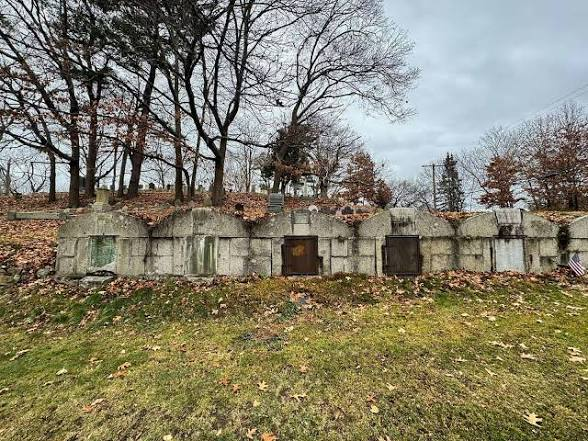
In Weymouth, the oldest stories are not tied to a single building, but to the ground itself—specifically the area around the Old North Cemetery and the nearby shoreline where the early Wessagusset Colony once stood.

The origin of the legend traces back to 1623, during a period of tension between English settlers and the local Massachusett people. Historical accounts describe a confrontation led by Myles Standish, resulting in the deaths of two indigenous leaders, commonly named as Pecksuot and Wituwamat. Their deaths were not treated quietly. According to records and later retellings, their heads were taken as a warning, an act meant to assert control rather than resolve conflict.

That part belongs to history.

What follows belongs to the town.

Over time, reports began to surface of figures moving through the cemetery grounds and the surrounding woods—most often described as two shadowed forms, walking without heads. The sightings are not dramatic. There are no chases, no direct confrontations. The figures are seen at a distance, moving slowly, sometimes near the tree line, sometimes closer to the older graves. They do not interact. They do not acknowledge. They move, then they are gone.

The story gained renewed attention in the early 1800s when a man named Edward Blanchard, digging a foundation near the cemetery, reportedly uncovered two headless skeletons. There is no confirmed record tying the remains directly to the events of 1623, but the timing and condition were enough to fuse the discovery with the existing legend. For many in the area, it wasn’t proof—it was confirmation.

The land itself carries the story forward. The cemetery sits near the water, and the surrounding woods break the wind just enough that sound behaves strangely. Footsteps can seem closer than they are. Movement at the edge of vision holds longer than it should. People walking alone in the area, especially near dusk, often describe the same thing: not fear at first, but awareness—like something else is present, moving on its own path.

Other locations in Weymouth carry their own smaller stories. The Emery Estate has been the subject of repeated reports involving shadow figures and physical sensations that visitors struggle to explain. At the Fogg Library, local tours reference long-standing rumors of unexplained activity tied to the building’s upper floors. Nearby, the Abigail Adams Birthplace draws quieter attention—less about sightings, more about a consistent sense of presence noted by visitors.

None of these accounts are verified in any formal sense. There are no confirmed identities, no physical evidence that ties what is seen or felt directly to the events described. But the consistency of the stories—spread across generations, locations, and different people—has kept them active.

In Weymouth, the oldest legend doesn’t rely on a house or a single moment. It rests in a place where history left something unresolved, and where, according to those who pass through it, that absence still moves.


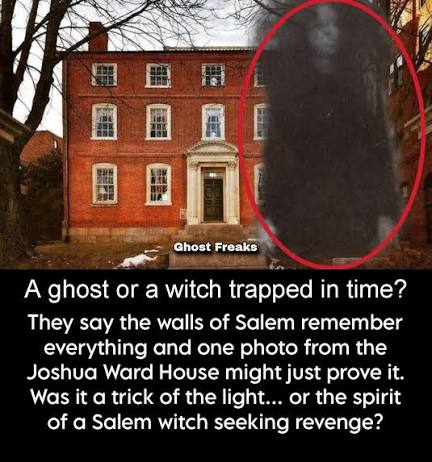
The Joshua Ward House is located in Salem, a city closely associated with the Salem Witch Trials. The building itself dates to the late 18th century and was constructed for Joshua Ward, a prominent local merchant. Its reputation as a haunted location is tied less to the structure alone and more to the history of the land it occupies.

Before the current building was constructed, the site was associated with George Corwin, who played a central role during the witch trials. Historical records indicate that Corwin was responsible for interrogations and enforcement during that period, and his name became closely linked with the events that took place in Salem in 1692. Over time, stories developed suggesting that his presence, or something connected to him, remained tied to the location.

Reports connected to the house are generally consistent in tone, though not in specific detail. Individuals who have worked in or visited the building have described hearing footsteps when no one else was present, doors moving without clear cause, and objects occasionally found out of place. Some accounts describe brief sightings of a figure in period-style clothing, most often near stairways or hallways, though these sightings are not consistent enough to form a single, confirmed description.

One area frequently mentioned is the lower level, where some people report a noticeable shift in atmosphere, including a sense of unease or the feeling of being observed. Others have described cold spots or unexplained sounds that do not match the building’s layout.

Despite these reports, there is no verified evidence confirming paranormal activity at the site. The building is old, and factors such as structural settling, acoustics, and lighting conditions can account for many of the experiences described. In addition, Salem’s historical association with the witch trials contributes to expectations that may influence how events are perceived.

Images circulated online, including those claiming to show figures or apparitions within the house, have not been verified. These images typically lack source information and can often be explained by motion blur, lighting artifacts, or other visual distortions.

Today, the Joshua Ward House remains a historic property and a known location within Salem’s broader collection of ghost stories. Its reputation is based on a combination of documented history and repeated anecdotal experiences, rather than confirmed supernatural evidence.


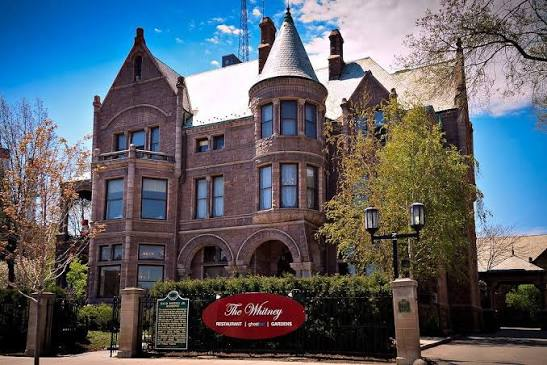
One of Detroit’s most well-known ghost stories is tied to The Whitney, a massive Romanesque mansion built in 1894 for lumber baron David Whitney Jr.. Located on Woodward Avenue, the house is known today as an upscale restaurant, but its reputation extends beyond its architecture and history.

Over the years, staff and visitors have reported a consistent pattern of unexplained occurrences inside the building. These reports are not tied to a single dramatic incident, but rather to repeated, smaller experiences that follow similar themes. The most frequently mentioned involves the sensation of being watched or accompanied when moving through certain parts of the mansion, particularly the upper floors and the grand staircase.

Employees working late shifts have described hearing footsteps on the stairs when no one else was present. In some cases, doors have been reported to open or close on their own, and lights have been seen turning on or off without explanation. Objects—particularly small items like utensils or bar tools—have occasionally been found moved from where they were left.

A commonly repeated detail is the presence of a figure believed to be connected to the Whitney family. Some claim to have seen a man in period clothing near the staircase or standing briefly in hallways before disappearing. Others describe a female presence, often associated with the upper rooms, though sightings vary and are not consistent enough to form a single, clear description.

One of the most specific patterns involves the elevator, which has reportedly been known to stop on floors where no button was pressed. Staff have also noted that activity tends to increase when the building is less occupied, particularly late at night after closing.

Despite these reports, there has been no definitive evidence to confirm any paranormal explanation. The building itself is old, with complex wiring, aging structural elements, and acoustics that can carry sound in unusual ways. These factors provide possible explanations for some of the experiences described.

Still, the consistency of the accounts over time has kept the mansion’s reputation intact. The reports come from different individuals—staff, guests, and visitors—many of whom were not familiar with the building’s reputation beforehand. This has contributed to the idea that whatever is being experienced is not purely the result of expectation or suggestion.

Today, The Whitney operates as both a restaurant and a local landmark. Its ghost stories are part of its identity, but they are not presented as proven fact. Instead, they exist alongside the building’s documented history, forming a layer of local folklore that continues to be repeated, observed, and questioned.


The Room at the Top of Berkeley Square

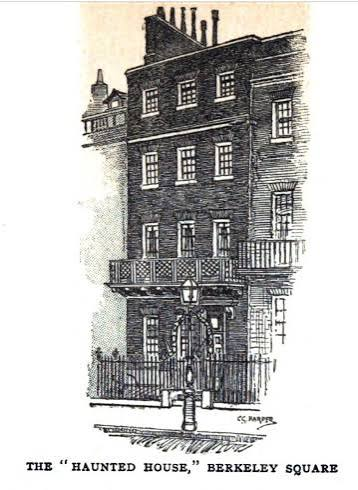
In the 19th century, a townhouse at 50 Berkeley Square in London developed a reputation that set it apart from the rest of the quiet, wealthy neighborhood. While the exterior appeared no different from the surrounding buildings, reports began to circulate about a particular room on the upper floor that people refused to occupy.

Accounts from the period describe the space as consistently unsettling, even to those who did not believe in anything supernatural. Visitors reported a strong sense of unease upon entering, often accompanied by sudden cold spots and unexplained sounds—footsteps, scraping, or movement that could not be traced to any visible source. Servants and occupants allegedly avoided the room entirely, and in some versions of the story, it remained locked or unused for extended periods.

The most widely repeated incident involves a man—his identity varies depending on the source—who chose to spend the night in the room to disprove its reputation. According to the story, he arranged a signal system so he could call for help if needed. At some point during the night, the signal was triggered with urgency. When others reached the room, they found signs of disturbance and discovered that the man had either fallen or jumped from the window.

Descriptions of his condition differ. Some accounts claim he died immediately, while others suggest he survived briefly but was unable to clearly explain what he had experienced. A common detail across retellings is that he appeared to have been in a state of extreme fear just before leaving the room.

It is important to note that while the house’s reputation for being “haunted” is well documented in newspapers and local accounts from the 1800s, the specific story of a man jumping to his death is not firmly verified by historical records. Much of what is known comes from repeated retellings, later compilations of ghost stories, and variations that grew over time.

Despite this, the association between the house and the incident has persisted. The room itself became the focal point of the legend, often described not in terms of a visible apparition, but as a place where something was felt rather than seen. This lack of a clear, consistent description contributed to the story’s longevity, allowing it to be retold without being tied to a single fixed version of events.

Today, 50 Berkeley Square remains part of London’s long tradition of urban ghost stories. Whether viewed as folklore, exaggeration, or something less easily explained, the reports connected to the house continue to center on the same idea: a single room, avoided over time, where multiple people experienced something they could not account for, and where at least one story claims the experience ended in fatal panic.


In the small farming community of Plainfield, Wisconsin, nothing about the land suggested what would be uncovered there in the 1950s. The roads were quiet, the houses spaced out, the routines predictable. Ed Gein lived alone on a worn, isolated property at the edge of town, known more as an odd recluse than anything else. He kept to himself, spoke softly when he did speak at all, and rarely drew attention. That made what was found inside his home feel even more unreal.

In 1957, local authorities searching for a missing hardware store owner traced their investigation back to Gein’s property. What they found inside the farmhouse did not resemble anything expected in a rural home. Furniture and household items had been fashioned from human remains—chairs upholstered with skin, bowls made from skulls, objects assembled in ways that blurred the line between use and fixation. The interior of the house was dim, cluttered, and sealed off in places, as if certain rooms had been deliberately preserved.

Gein admitted to digging up recently buried bodies from local graveyards, bringing them back to his home, and using parts of them to construct what he described as a kind of “second skin.” He had also murdered at least two women, though the full extent of his actions remains partially obscured by the condition of the evidence and the state of his confessions. His explanations did not follow a clear logic. He spoke about his mother often, about trying to recreate her presence, about wanting to inhabit something that no longer existed.

The case spread quickly beyond Wisconsin, not just because of the crimes, but because of the imagery. It reshaped how people understood horror rooted in real life. The idea of a man wearing human skin, living quietly in isolation while constructing something grotesque behind closed doors, became a blueprint that would later echo through fiction. Characters like Leatherface drew directly from the core elements of Gein’s story, even if the details were exaggerated or reimagined.

What remains most unsettling is not just what Gein did, but how contained it all was. There was no outward sign that matched the interior reality. No pattern of public violence, no visible escalation. Just a single property, a quiet man, and a series of acts carried out in isolation until something finally broke the surface.

The farmhouse itself was eventually destroyed, but the memory of what was found there never really faded. It persists not because of spectacle, but because of the disconnect—between appearance and reality, between the ordinary setting and what it concealed. That gap is what continues to define the story, long after the physical place is gone.


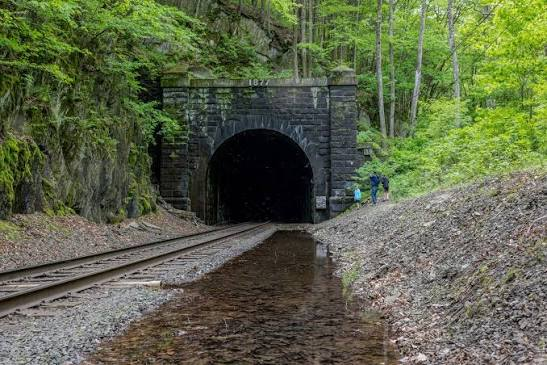
The Hoosac Tunnel cuts through the Berkshire Mountains of western Massachusetts, a long, cold passage driven through solid rock in the nineteenth century at a cost that never really left the place. It runs nearly five miles beneath the mountain, linking the towns of North Adams and Florida, and even now the air inside it feels different—heavy, damp, carrying a stillness that presses in on anyone who steps too far from the light.

During its construction, the tunnel gained a reputation long before it was finished. Work began in the 1850s and dragged on for decades, slowed by technical failures, flooding, cave-ins, and explosions. Nearly two hundred men died in the process. Some were crushed outright by falling stone. Others suffocated when ventilation failed or drowned when water broke through unfinished sections. One of the worst incidents came when an explosion trapped workers deep inside; attempts to rescue them only made things worse, and the men were left to die in the dark. Stories spread quickly among the crews. Men spoke of hearing voices where no one stood, of tools going missing and turning up in impossible places, of the constant sense that something was wrong beneath the mountain.

After the tunnel finally opened in 1875, the reports didn’t stop. Railroad workers assigned to maintenance shifts described hearing footsteps pacing alongside them in sections where no one else had been scheduled. Some claimed to see figures standing just beyond the reach of their lanterns, shapes that disappeared the moment they tried to approach. Others reported sudden drops in temperature, cold spots that seemed to move against the flow of air. The deeper sections, far from either entrance, were said to be the worst—places where sound carried strangely and where a man could feel watched without ever seeing anything at all.

Locals began to refer to it as the “Bloody Pit,” a name that stuck because it matched what people felt when they spoke about it. Even in daylight, the entrances appear dark and uninviting, the interior swallowing light after only a short distance. Modern visitors who walk or ride through the abandoned stretches often describe the same sensations reported more than a century ago: the echo of footsteps that don’t match their own, the impression of movement just behind them, the sudden urge to turn around and leave without knowing exactly why.

Nothing about the tunnel announces itself outright. There are no clear figures, no consistent sightings, nothing that can be pointed to and confirmed. What remains is the accumulation of small, repeated experiences—sounds, shifts, pressure, the feeling of not being alone—stacked over decades in a place where hundreds died without leaving. The mountain holds the tunnel in place, and the tunnel holds everything that happened inside it, sealed off from the surface but never entirely gone.

[–] baconmaster@hilariouschaos.com 2 points 1 month ago (2 children)

Everyone thinks poorly of microplastics but if they’re in all foods, i would say they’re pretty delicious 🤤

Unbiased information is best for a subject such as this

[–] baconmaster@hilariouschaos.com 1 points 1 month ago (1 children)

I felt bad for noah cz of the shape guy and beardo but imo what he needs to realize is these guys want a monopoly over the so called debunking community. Sane reason why rappers diss other rappers out if nowhere

I want to be his roommate or neighbor just for live performances

😂 i like silly comedy like that, brings me to another time

[–] baconmaster@hilariouschaos.com 2 points 1 month ago (2 children)

I like random things i never expected

[–] baconmaster@hilariouschaos.com 1 points 1 month ago (4 children)

“Does anyone know what pussies smell like, someone told me i snark like pussy a few minutes ago”~ Lady Jane The Mini Mermaid Absolutely a gem, ty for this

I did, but no one sees your community posts or at least mine

All you’re favorite movies and YouTubers and tv shows and streaming accounts use it nowadays. Stay blind

I had fun making this one. No offense to older people, just a little fun at your expense

view more: ‹ prev next ›