The Millennial Snowflake called it the "Freudian slip of the century."
Freudian Slip of the Century seems like an accurate description 💀
The Millennial Snowflake called it the "Freudian slip of the century."
Freudian Slip of the Century seems like an accurate description 💀
And then on top of that, since a ton of people were then connecting to cell service since their WiFi was out, that meant the cell towers were so overloaded they couldn't send data to operators that the car requires to be started up again, like multiple camera feeds, a 3d scan of the surroundings, etc.
Most apps use FCM so you need play services installed to get notifications, right?
Not all, and especially not 99% of FOSS alternatives. Many apps simply fallback if they can't reach Google's system service. For example, all my banking apps worked fine without play services, could send notifications, etc. Discord even sent relatively up-to-date (with a small delay) notifications... but one day, it stopped doing that, and now Discord requires (sandboxed) Play Services to send me notifications.
It's a bit of a mixed bag, but the vast majority of apps I've used seem to have fallbacks, excluding most games, and a larger percentage of banking apps compared to other ones.
How does that work through profiles though?
Think of profiles as just your regular user experience on the phone, just on a separate account that can do all the same things but is totally isolated, without shared app data, settings, etc. The user experience is like having two completely separate phones, just with the same cellular network, OS version, and it's running on the same hardware. (oh, and only your primary (default, one you start out with) profile can manage all the other profiles. It's sort of like the default "admin" account of the phone)
Everything is isolated, unless you tell GrapheneOS to connect the two in some way, the only way I know of currently being... Notifications!
Now imagine that if you're on Profile B, and Profile A gets a notification. You just get a notification saying "Profile A has a notification" with a button saying Switch to Profile A.
Simple as that. Profiles run in the background as long as you've unlocked the profile at least once since the phone's last restart, and any corresponding notification services on each, even though they're isolated to their own profiles, will just cause the system to send a notification to whichever profile you're on saying there's a notification available.
If I have Play Services installed on Profile A, and an app sends a notification through it, it doesn't matter if Profile B has Play Services, because the system is just picking up that a notification is detected on Profile A, and letting me know on Profile B.
Lemme know if you have any more questions. I've been daily driving GrapheneOS for a while now and have a current install on my phone, so I can help explain any specifics of most features it has that you're curious about.
I will try installing Graphene today.
Good luck!
First thing I'd recommend you do when you get it set up is literally just go through every single settings menu and see if anything catches your eye. There's a lot of random settings that GrapheneOS adds that can be very useful. Some of these might not be visible at first glance. (for example, when you're installing an app, a popup will appear asking if you want to grant the app network access when you install it, and if you toggle it off, that app can't talk to the internet at all, not for ads, telemetry, or anything at all.)
Just be aware that some features that Google implements on stock Android aren't available, because they're not part of the Android Open Source Project (AOSP)
Things like Google's Find My Device features, some of the extra lock screen customization (e.g. custom clocks other than just simple color changes), automatic music recognition, (e.g. Shazam but built into the OS and running in the background for some reason), etc.
That's exactly the point I think anyone reasonable would make.
It's not necessarily how they got the money, it's that they keep it. If I won the lottery, and got a multi-billion dollar payout, I could wire most of that money to a DAF, tell it to distribute the money to 200 different charities I like, and it could be done within the week.
Keeping that much money is a choice. Continuing to spend it all on lavish expenses while the poor suffer is a personal choice, not one they're forced to bear the consequences of due to their fame.
For me it was Madalin Stunt Cars 2.
Played that shit all the time in the computer lab with my friends.
Is it Focal Golf?
Would look something like this, but... green, of course.
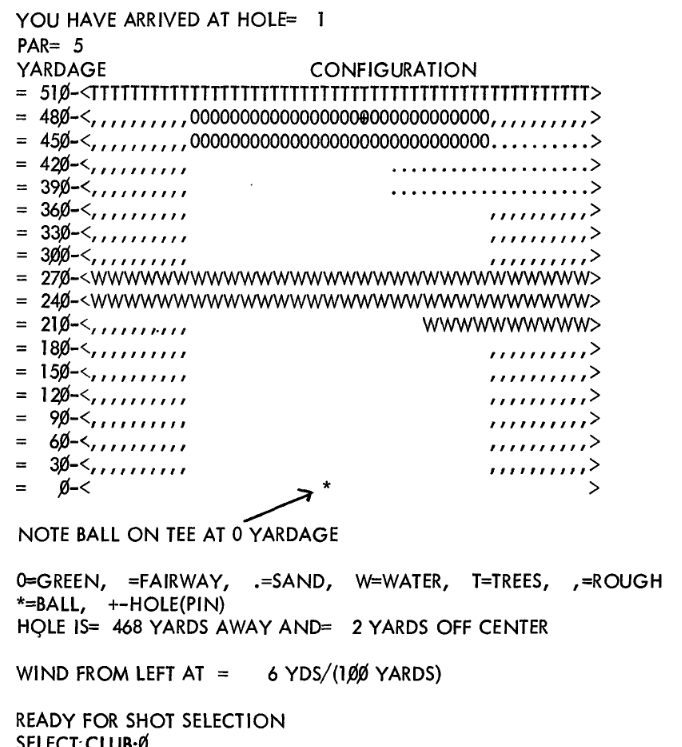
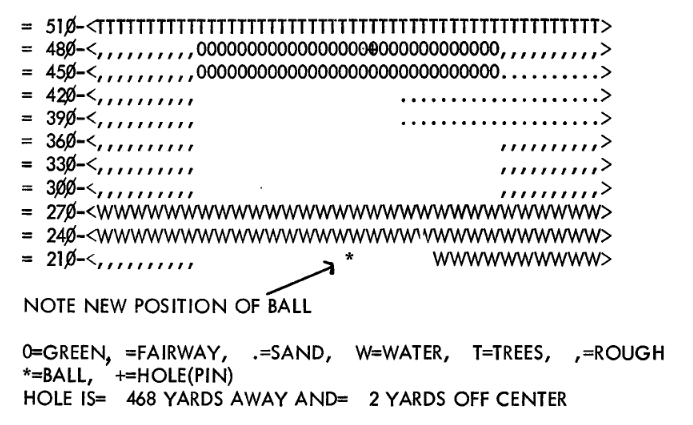
You could also check out this post on Atari Archive, this video by them too, and this collection of software you could search through using Ctrl + F and then "Golf". There's a lot of possible matches there.
There doesn't really seem to be a lot of actual playable options or even recordings of a lot of them, though.
To add to the security of the PIN and to prevent reading screen smudges you can enable an option so that the digits on the PIN pad are randomized each time it loads.
I can't believe I forgot to mention that! I use it myself, and while it can take a bit to get used to typing by actual numbers and not muscle memory, it's great for minimizing the risk of shoulder surfing.
Graphene also supports fully isolated user accounts.
And it supports stock Android's Private Space feature, too!
Yeah, Fairphone doesn't have a huge focus on security architecture, so a lot of GrapheneOS security features would not just be severely crippled, but would simply not be available at all.
Hey there, GrapheneOS user here!
They also allow you to get a new random MAC for every connection that you make (not sure whether this is very useful, as this can cause problems).
This can not only be turned off entirely in settings, but you can actually modify it on a per-network basis! For example, on my home network, I can tell it to use no randomized MAC at all, or a per-network randomized MAC, meaning it will choose a different MAC address than my normal one whenever I connect to my home network, but it will always be the same MAC on my home network, only changing on other networks.
They have their own reverse proxies that they use to talk to Google on your behalf when needed.
Which you can also disable if you don't want GrapheneOS to proxy any particular type of your data, and you'd rather it just go straight to Google instead for security reasons, even if you give up a little privacy.
Apparently, in the USA you can be compelled to provide a fingerprint or Face ID
BUT you cannot be compelled to provide a password/PIN.
Yep, however an important caveat is that if you're not a US citizen, you can still be compelled to give up your password or PIN, otherwise you'll be denied entry to the country. And, if you're a US citizen, you can have your phone seized and held for some time (i.e. months), even if you're then allowed entry to the country. (this is likely so the government can wait for an exploit to become known, or have more time to run a cracking algorithm that's computationally expensive)
GrapheneOS has a two-factor system where, after using your fingerprint, you still need to enter a PIN
Not enabled by default though! This can also be used within the OS itself. For example, I can set a PIN+Fingerprint access for my lockscreen, or PIN-only access, then still individually lock an app on my phone with a fingerprint without it also having to be enabled for my lockscreen. I'm unsure if that's supported on stock Android.
They also have a BFU state after reboot, which is the safest and requires you to enter your full passphrase
All phones have a BFU (before first unlock) state, and GrapheneOS doesn't require a passphrase unless you've set one, otherwise it's your PIN. Fingerprint unlock is disabled until after BFU though, so it requires essentially using a backup PIN even if you always use your fingerprint, at least for first unlock.
However, GrapheneOS is unique in that companies like Cellebrite, who sell the government hardware and software to crack people's phones and exfiltrate their sensitive data, have stated in leaked slides that they can't unlock GrapheneOS devices BFU, (if they're updated to at least security patches after 2022, which any GrapheneOS user reasonably should be) while they can crack stock Android devices BFU.
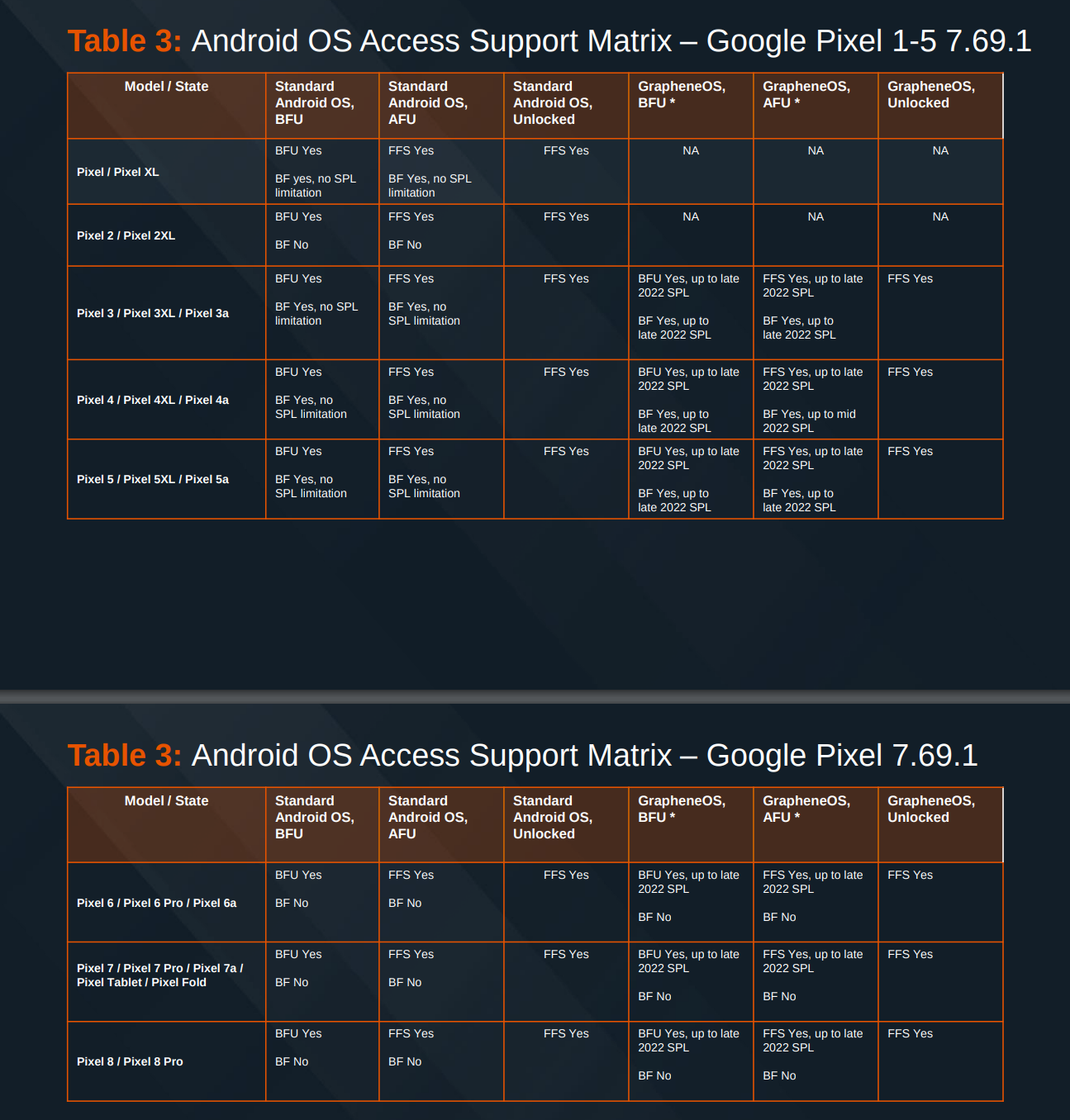
This is why I always make sure to fully shut down my phone before I go through airport security, for example. It's also possible to simply "Lockdown" the phone to disable biometrics again and require a PIN/Password like during BFU, but in that state the phone is not actually in a BFU state, so it's not fully protected.
even when WiFi/Bluetooth are “off,” stock Android can still scan in the background to improve location accuracy (by matching visible networks/devices against Google’s database). So basically, even with WiFi/Bluetooth off, Google still knows where you are. In GrapheneOS, this option is off by default.
There's a tiny bit more nuance to this. Your cell service will still be active even if you disable WiFi/Bluetooth, and that can still track you, even if it's not through Google's location services, since your carrier still gets pings from your phone.
GrapheneOS's airplane mode disables the cellular radio entirely, whereas some OEMs don't do that on their phones, even when you turn on airplane mode, meaning your cell provider could still triangulate your position regardless of if you have airplane mode on or off.
Also, GrapheneOS additionally supports a proxy service for more accurate GPS positioning, which can reduce the amount of data available to Google, even if you need more accurate positioning data using nearby networks.
Nobody. That's the answer. Absolutely nobody does. They're doing this shit of their free will.