this post was submitted on 10 Oct 2026
48 points (74.5% liked)

science

29413 readers
636 users here now

A community to post scientific articles, news, and civil discussion.

dart board;; science bs

rule #1: be kind

lemmy.world rules

founded 3 years ago
MODERATORS
 

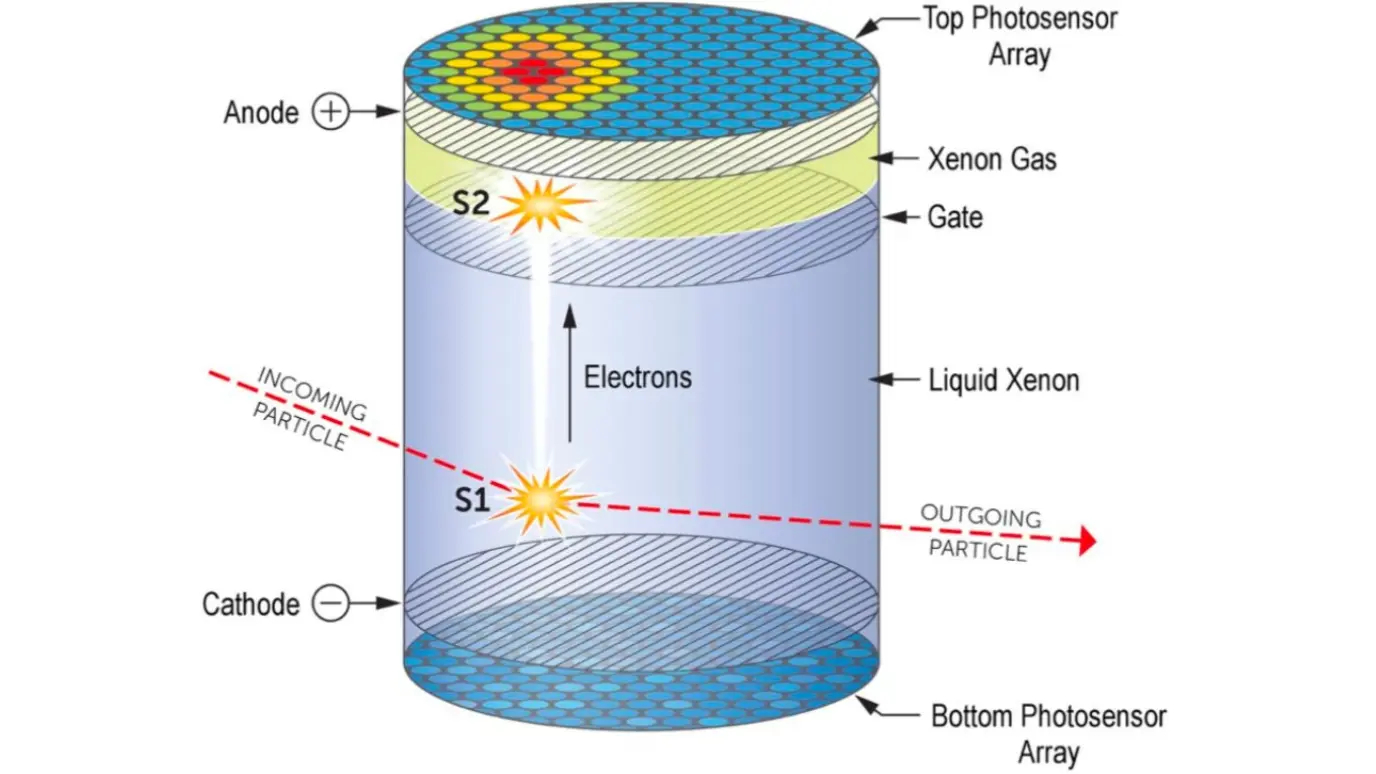
I post the detection of a alleged Dark matter particle, because it's so vague, 1 data point per a test. Something is there but I don't think it's dark matter in the way it's explained now.

Might it just be possible that because we built everything around this one theory that we can't get physical proof that we are missing multiple different reasons and even fields.

I feel a lot of science has bogged it's self down with theory and maybes for decades and decades now with no proof. And with the paper printer of Universities, even old or disprove theories keep getting posted.

I am not denying the existence of some kind of matter but everything is so varied I don't believe just dark matter exists. And Science just keeps bogging it's self down in theories and running around in circles

Wanna see a opinion or someone disproving me.

I need to go to bed so I won't be answering if people have some questions in couple of hours.
top 50 comments
sorted by: hot top controversial new old
[–] JohnnyEnzyme@piefed.social 42 points 1 week ago (1 children)

Dark Matter is just a placeholder AFAIK until something more proven comes along. It explains why galaxies hold together, but it's just a stand-in for the time being.

I feel a lot of science has bogged it’s self down with theory and maybes for decades and decades

I mean, scientifically there's a huge difference between the two. For example, the theory of gravity is so well-tested and supported that it's about as close to proven as can be. A "maybe" isn't even a hypothesis yet, but it's perhaps an intermediate step. Maybes are good, because they represent relevant scientists coming up with ideas to help explain reality, which can then fade away or solidify as things unwind. Without maybes you don't get well-supported theories... which is like science not able to get anywhere.

[–] gastroglizzy@piefed.social 4 points 1 week ago (1 children)

Came here to say this. It's called "dark" because we know so little about it. Everything we know about it is based on what has to be there to make the equations we've "proven" balance. As we know more about it, we'll give a new name to reflect what we've learned about it.

[–] queerlilhayseed@piefed.blahaj.zone 13 points 1 week ago (1 children)

I think it's "dark" because it doesn't interact with photons (except gravitationally, of course)

[–] TheTechnician27@lemmy.world 33 points 1 week ago* (last edited 1 week ago) (3 children)

Dark matter is not a theory. Stop treating it like one.

Wanna see a opinion or someone disproving me.

How about just sitting down and recognizing when you have no idea what you're talking about instead of trying to backseat a field whose understanding you have is "I watched some YouTube videos lol".

You sound like a shitty regurgitation of grifter Sabine Hossenfelder.

[–] JohnnyEnzyme@piefed.social 12 points 1 week ago

Understandable reaction, but I think it's good to remember that most people are going to have fuzzy understandings of these things and will naturally ask somewhat naïve questions like this. Personally I think it's better to find ways not to be too hard (or hostile) when responding with better information, else they get the swift idea 'well, if they're going to treat me like an arse then me mind's made up,' and all that jazz. And nothing changes.

Just my tuppence of course.

My original comment / response appears at the top of the thread, so feel free to critique, TBF.

[–] Enkrod@feddit.org 1 points 1 week ago

+1 to identifying Sabine Hossenfelder as a grifter. She's the worst.

load more comments (1 replies)
[–] egerlach@lemmy.ca 25 points 1 week ago

That is exactly what the "dark" in "dark matter" and "dark energy" means: that our theories require it to exist to explain our observations, but we have no way to detect it, ergo it is "dark".

It's like the infamous cosmological constant that Einstein initially added to the theory of relativity. Just like the "dark" things it had no physical analogue, and was there so that his equations held for a universe of constant size. When Hubble demonstrated that (contrary to the belief at the time) the universe was expanding the cosmological constant was no longer needed.

It is entirely possible that a new theory will explain what the dark stuff is and we will be able to remove those terms from the equations that need them in order to explain our observations. It is possible that we will find some kind of actual matter that interacts with the gravitational force but not the strong, weak, or electromagnetic forces, which I think is what would be needed for a "dark matter particle".

In my personal opinion, the best explanation I've heard is that the error terms are best explained by the expansion of space itself. Specifically, we have some very recent evidence that the expansion of space isn't uniform, and that might explain a significant amount of the dark energy. PBS Space Time does a good job with relevant videos and keeping up with the science.

No physicist will tell you that we know what "dark matter" or "dark energy" is, because we don't. I think most would agree with you that ultimately we will find multiple explanations that add up to "dark matter + dark energy".

I think the one thing that I disagree with you on is that science is "bogged down" with theories and maybes. The theories and maybes are where the most exciting research is happening!

Science isn't the body of knowledge that results from experimentation; it's the cycle of theory and experimentation that generates new knowledge. We don't remember the hundreds and hundreds of false theories that had to be argued about and discarded to get to relativity or quantum theory. Today we only read the papers that were proven right in hindsight. If you look at "dark matter/energy" science of today we're in that churn, so it looks different. In time, all these disproved theories will be forgotten, too.

"Dark matter" and "dark energy" are the "errors in the prediction of Mercury's orbit" (relativity) or "errors in the predictions of black-body radiation" (quantum) of our time.

[–] TheJesusaurus@piefed.ca 23 points 1 week ago (1 children)

More like it needs to exist for THE RESULTS OF YOUR EXPERIMENT to make sense. Not the universe.

Dark matter is what you call whatever is left over when your instruments are telling you there is more something there, but it's impossible to measure any of the something using the methods we have now.

Nobody is saying to you "dark matter must exist for the universe as I understand it to exist"

They are saying to you "if the universe exists as we understand it, there is something more here that we do not understand"

[–] CrimeIsLegalNow@ani.social 2 points 1 week ago

There is something more here that we have not directly detected.

That's a big difference. Dark matter can literally be celestial dust, it doesn't need to be some exotic form of matter.

[–] frongt@lemmy.zip 19 points 1 week ago (1 children)

Our current mathematical models are pretty damn close to how stuff works in reality. But like you said, for it to work out, you need to fudge the numbers a little. That's dark energy.

Dark matter is, as far as we can tell, a real thing, just really hard to detect. It's not a placeholder in the same way dark energy is. Something out there is exerting actual gravity.

Millions of man-hours have been spent on this. No one is going to prove or disprove it for you in some Lemmy comments. I would seek out talks from actual astrophysicists, not YouTube junk pop science.

[–] DomeGuy@lemmy.world 5 points 1 week ago

"Dark matter" is both the imputed matter our models tell us has to be there to match our stellar observations, and the locally-testable explanation that all this imputed matter is some freakish particle we have literally never encountered before.

The former is about as close to a scientific fact as anything gets in astronomy, while the latter is more of a "if flies hatch from eggs where are the shells" kind of thing. It'll be really significant if a "quasi local meta-particle" or whatever is found, so both excitement and skepticism are absolutely appropriate here.

I just wish pop science was a little clearer about the distinction between "this is what we see" and "this is why we think it's like that."

[–] AbouBenAdhem@lemmy.world 16 points 1 week ago (3 children)

There are some particles that don’t interact via the electromagnetic force. There are some particles that don’t interact via the strong force. And there are some particles that don’t interact via the weak force. All the particles we know, we’ve detected because they interact via at least one of those forces—but there’s no rule that says a particle must interact with any of them.

Why should we assume that every particle in existence must be conveniently detectable? It’s like a blind person assuming nothing can exist unless it makes a noise.

[–] nullify3112@lemmy.world 2 points 1 week ago (3 children)

Well if the particle doesn’t interact with anything does it matter if it exists or not?

[–] AbouBenAdhem@lemmy.world 7 points 1 week ago* (last edited 1 week ago)

Dark matter particles would still interact with gravity, but not the other forces. Gravity by itself is too weak to detect individual particles, but the effects of large numbers of them could still be seen.

[–] masterofn001@lemmy.ca 1 points 1 week ago

Emergent properties.

It could be there is another force or state or something we don't yet know about (or can measure directly), which itself doesn't interact, but its emergent properties do.

The subatomic levels of whatever it is may not cause anything on its own, but as a system it may have completely different properties and interactions.

load more comments (1 replies)
load more comments (2 replies)
[–] nullify3112@lemmy.world 12 points 1 week ago (1 children)

Checkout Angela Collier’s video on the topic. Dark Matter is not a theory!

https://www.youtube.com/watch?v=PbmJkMhmrVI

load more comments (1 replies)
[–] Wirlocke@lemmy.blahaj.zone 11 points 1 week ago* (last edited 1 week ago)

The galaxies in the universe don't match the speeds we get from the proven set of physics.

So either something is physically there contributing mass, or the proven set of physics behaves differently at those scales.

Don't worry, people are looking into alternative equations that match what we see without dark matter, but the search for those equations have been just as elusive as dark matter.

So for decades the sky has looked wrong and we simply haven't been able to find or prove the answer why. That's why it feels like everyone's grasping for straws.

[–] rockSlayer@lemmy.blahaj.zone 10 points 1 week ago* (last edited 1 week ago) (2 children)

Dark matter isn't proven or disproven. Dark matter is an unknown force or substance that is required to exist, based on mathematical models of the universe

load more comments (2 replies)
[–] betanumerus@lemmy.ca 10 points 1 week ago* (last edited 1 week ago)

Observed galaxy rotation doesn't fit the centripetal force equation (classical Newtonian mechanics). You are 100% free to make any new equation that fits observations, as well as the rest of useful physics equations. Dark matter is simply the best explanation so far, but not a barrier in any way to better ideas.

[–] jerkface@lemmy.ca 9 points 1 week ago

Dark matter is not a theory, it is an observation.

Tons of fundamental particles were merely hypothesized until people actually built particle accelerators large enough to detect them. Theories are how scientists puzzle out what's worth exploring next. (See the eightfold way )

The reason particle physics might seem to be moving slower than it used to is just because we've found all the "easy" stuff. The more elusive particles are going to be a lot trickier to wrangle.

[–] Pratai@piefed.ca 7 points 1 week ago (3 children)

I look at it as a placeholder theory. There’s something there that is either dark matter, or has the properties of what we believe dark matter to be. Either way- eventually, it’ll be discovered.

[–] quediuspayu@lemmy.dbzer0.com 6 points 1 week ago* (last edited 1 week ago)

It is a placeholder name, not a placeholder theory. There's something there, there are a bunch of theories trying to explain what, in the meantime we call it dark matter.

[–] deft@lemmy.wtf 3 points 1 week ago

It is discovered. This is the same way gravity and black holes were discovered.

Someone did math and said, wait what the fuck? Something is missing. We still don't understand black holes or gravity but since the day we understood something was missing, it was discovered. Our understanding can change but that space in the math and understanding is clear. There is no placeholder

load more comments (1 replies)
[–] deft@lemmy.wtf 7 points 1 week ago* (last edited 1 week ago) (1 children)

Science doesn't bog itself down that's so ridiculous.

Best way to put it, it's math. If you did all the math in the universe you'll end up with some questions. This is how we got black holes, dark matter, gravity.

I don't understand your perception of run around in circles or bog down. You want science that states 2+2 is 4. But the idea of fully understanding something is infinite. If you mix two cups of water and two cups of alcohol, you'll get less than 4 cups so 2+2 does not equal 4 here.

It's just like how infinity isn't at the end of counting all the numbers. It's between every number. Things are absolutely impossible to fully define.

load more comments (1 replies)
[–] Rhaedas@fedia.io 6 points 1 week ago (2 children)

Saying "just dark matter" might be missing what could be a whole category of types of objects and particles. The wiki for dark matter is rather long and detailed. There isn't one type, that's part of the problem of seeing unexplained influences that need certain properties but by principle is hard to detect normally.

In short, something is going on in the observed evidence of what is termed as dark matter. Normal matter we're familiar with doesn't work. So we make models of things it might be and try to verify them.

load more comments (2 replies)
[–] Flower@sh.itjust.works 3 points 1 week ago

Might it just be possible that because we built everything around this one theory that we can’t get physical proof that we are missing multiple different reasons and even fields.

Sort of. Physical proof says our current theory about the universe is incomplete and everyone is trying to find out what we are missing. You could say we're in the dark about the missing parts, be it matter and/or energy.

[–] HubertManne@piefed.social 3 points 1 week ago

dark matter could be a lot of things. its a known x factor and it does not necessarily mean its definately some kind of esoteric matter. That is why they work to detect it to narrow down what it could be. I mean I have not looked at the most up to date stuff and honestly don't care to atm. its a complicated topic. would likely look for a pbs space time if anything. there are lots of things like that when you get to the edges.

[–] Fleur_@aussie.zone 3 points 1 week ago* (last edited 1 week ago)

Dark matter has not been observed directly so can not be said to conclusively exist but given our current understanding it is by far the best model for describing how the universe works. There are other theories but they do not describe reality as we observe it.

Dark matter does describe reality as we observe it we just haven't observed dark matter itself.

[–] daggermoon@piefed.world 2 points 1 week ago

Link to videos?

[–] weps@lemmy.world 1 points 1 week ago

we're running out of theories of where dark matter could be

we better find it soon

[–] queerlilhayseed@piefed.blahaj.zone 1 points 1 week ago (2 children)

Keep an eye out for results from the Roman space telescope, with any luck we're about to have a buttload of new data about dark matter.

And, predictably, Americans will literally use anything before they use the metric system.

qVFe3fdJJ3adnQa.png

[–] sparkyshocks@lemmy.zip 4 points 1 week ago (3 children)

And, predictably, Americans will literally use anything before they use the metric system.

But what metric unit would you use instead of square degrees?

Oh, I was talking about the 25,500 full moons.

load more comments (2 replies)
[–] grillgamesh@lemmy.dbzer0.com 3 points 1 week ago* (last edited 1 week ago) (1 children)

I take offense to that, we use the metric system all the time!

why, one of our most popular products is in 9mm!

(alt: Glock 9mm pistol)

we even produce our own!

(alt: Browning hi-power chambered in 9mm)

[–] queerlilhayseed@piefed.blahaj.zone 3 points 1 week ago (1 children)

I'm as American as the notion that apple pie is American and I use metric all the time. I convert in my head though, I can't get my brain to completely switch over.

It is super funny that Americans will deign to use millimeters for ammo, considering how much cultural cachet "caliber" has. Or had, I guess, I think it's less cool than it used to be.

[–] grillgamesh@lemmy.dbzer0.com 3 points 1 week ago

I use light nanoseconds for measurement :)

1 (C)ns = 11.802in, which is basically a foot..... or, its 29.979cm

its an astoundingly easy way to measure things after all :)

[–] svdasein@lemmy.world 1 points 1 week ago* (last edited 1 week ago) (1 children)

I think it sits in a place similar to where "the ether" used to sit. Similar because lots of ppl take that it is an actual known thing. Dissimilar b/c those who do work around it understand it's more like, as you've found, stuff implied from all we've learned regarding physics to date. Without it the math kinda falls apart.

Then you might ask "well, could the math we use now actually be wrong?" I think the answer to that comes back around to "but the math we do have actually works really well; throwing that out is very hard to do".

Personally I think it needs new naming; calling it anything other than a question adds bias that may end up wasting time.

load more comments (1 replies)
load more comments
view more: next ›