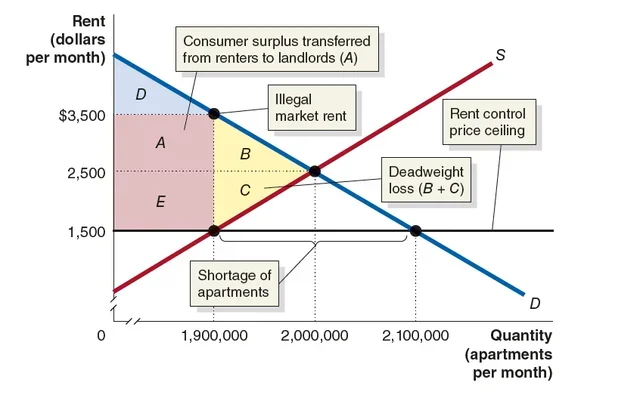
Who makes an annotated graph like this in the shower?
A "Showerthought" is a simple term used to describe the thoughts that pop into your head while you're doing everyday things like taking a shower, driving, or just daydreaming. The most popular seem to be lighthearted clever little truths, hidden in daily life.
Here are some examples to inspire your own showerthoughts:
If you made it this far, showerthoughts is accepting new mods. This community is generally tame so its not a lot of work, but having a few more mods would help reports get addressed a little sooner.
Whats it like to be a mod? Reports just show up as messages in your Lemmy inbox, and if a different mod has already addressed the report, the message goes away and you never worry about it.
Who makes an annotated graph like this in the shower?
OP, using AI, which is why it makes no sense.
Housing is more complex than a simple supply and demand chart especially one with straight lines. Every product is like this actually.
Low housing supply actually increases rents.
Ai graph that doesn't show anything
And also not shower thought.
It's like that economist logic that giving money to everyone would make everyone poor, if everyone had a house everyone would be homeless, and if everyone had shoes we would all have to walk barefoot.
You don't need to control rent, though, just control hoarding.
You do that by building housing whether it's going to make a bunch of money or not. Which means the government has to do it.
Like what China did
Yeah, that's not what China did. They tried to manufacture demand. If you wanted to make housing affordable for all you build where there's demand.
The large majority of Chinese ghost cities became populated, because that's how long term planning works
While that may be true, though I don't know, I do know that they didn't fix the cost of housing in their country.
They have a nationwide homeownership rate between 90% and 95%. I think they're doing just fine.
That's not what the citizens are saying.
You mean that's not what Western media is accentuating about what some citizens are saying? China has a billion people with home ownerships rates that high. But even that high, it's still millions of people who don't own their homes, and most of them are in the big cities. It's not hard to find people who will complain about the cost of housing so you can write a news article that pretends that this is a problem for all citizens.
It's not. It's far and away a better situation in China than in the US.
Well if your data is coming from the Chinese government it's not trustworthy either. I notice you're providing a lot of statistics without sources. I think that's because you know nobody is going to believe those incredible numbers if they come from the CCP.
Cool story, roofus.
In China, housing investment is fueled by middle-aged households saving for retirement or for their children’s marriage. Home ownership has always played a prominent role in the Chinese society, and is remarkably high, standing at roughly 90 percent compared to about 65 percent in the United States
Source: https://dash.harvard.edu/server/api/core/bitstreams/d07a648e-b821-4485-b59f-09f11679e500/content
American Economic Association's Journal of Economic Perspectives
That source kind of points to previously state and implied issues though. Where there is actual demand to live, housing pricing is increasing astronomically, but the buying of ghost investment property in low demand cities is where the money is flowing.
The use of property as investment in China, last I heard on the subject, is largely because of the lack of other investment vehicles as well.
So it's not buying themselves, and their kids a house to live in. Any more than a US based 401k is buying stocks to run a business. It's mostly a speculative comoditity market. Where they hope to sale the ownership of a thing they have never had in person to someone else that will probably never have in person.
Both seem kind of farcical on the whole tbh but what do I know
but what do I know
Do you know that between 90% and and 95% of people in China own the homes they live in? Because that sort of changes everything about the conversation.
The CPC incentivized the creation of ghost cities as part of their plan to get ahead of housing demand, which seems to have been successful considering the ghost cities have filled up.
Yes, there have been people in China that wanted to use housing as a speculative investment, which is what American economists believe everyone should do. But the CPC doesn't govern based on what's most profitable for a small group of speculative investors, so they have been popping their own housing bubble and both American economists and Chinese speculators go to Western media and proclaim how broken the Chinese economy is.
And still, 90% to 95% of Chinese people own the homes they live in.
The use of property as investment in China, last I heard on the subject, is largely because of the lack of other investment vehicles as well.
Makes sense, right, since they're a country run by a communist party? The reason there aren't asset classes to invest in for retail investors in China is because China isn't focused on creating a speculative investment market to produce a path from working class to bourgeoisie through passive income, pump-and-dump schemes, insider trading, or dumb luck.
They're focused on ending poverty and meeting the needs of a billion people.
Honestly even with the community land trust model that real estate has in China (the land is actually leased from the state) that is a really awesome metric.

This graph makes no sense
It's a supply demand chart, they do makes sense, but usually require a bit of explaining to really understand.
The short answer though is that population growth has outstripped housing growth since Reagan, limiting supply. While interest rates since Reagan have increased demand. Lots of reasons why, on both sides, end result is a deep hole of expensive housing, and a lot of bad ways to fix it.
I've heard this before, but that chart does not support the argument. Do you have other sources?
Why doesn't the chart support the argument? You can see the black dots showing the (illegal) increased rent, or the supply shortage