this post was submitted on 10 Mar 2026
8 points (100.0% liked)

Climate

8413 readers
199 users here now

Discussion of climate, how it is changing, activism around that, the politics, and the energy systems change we need in order to stabilize things.

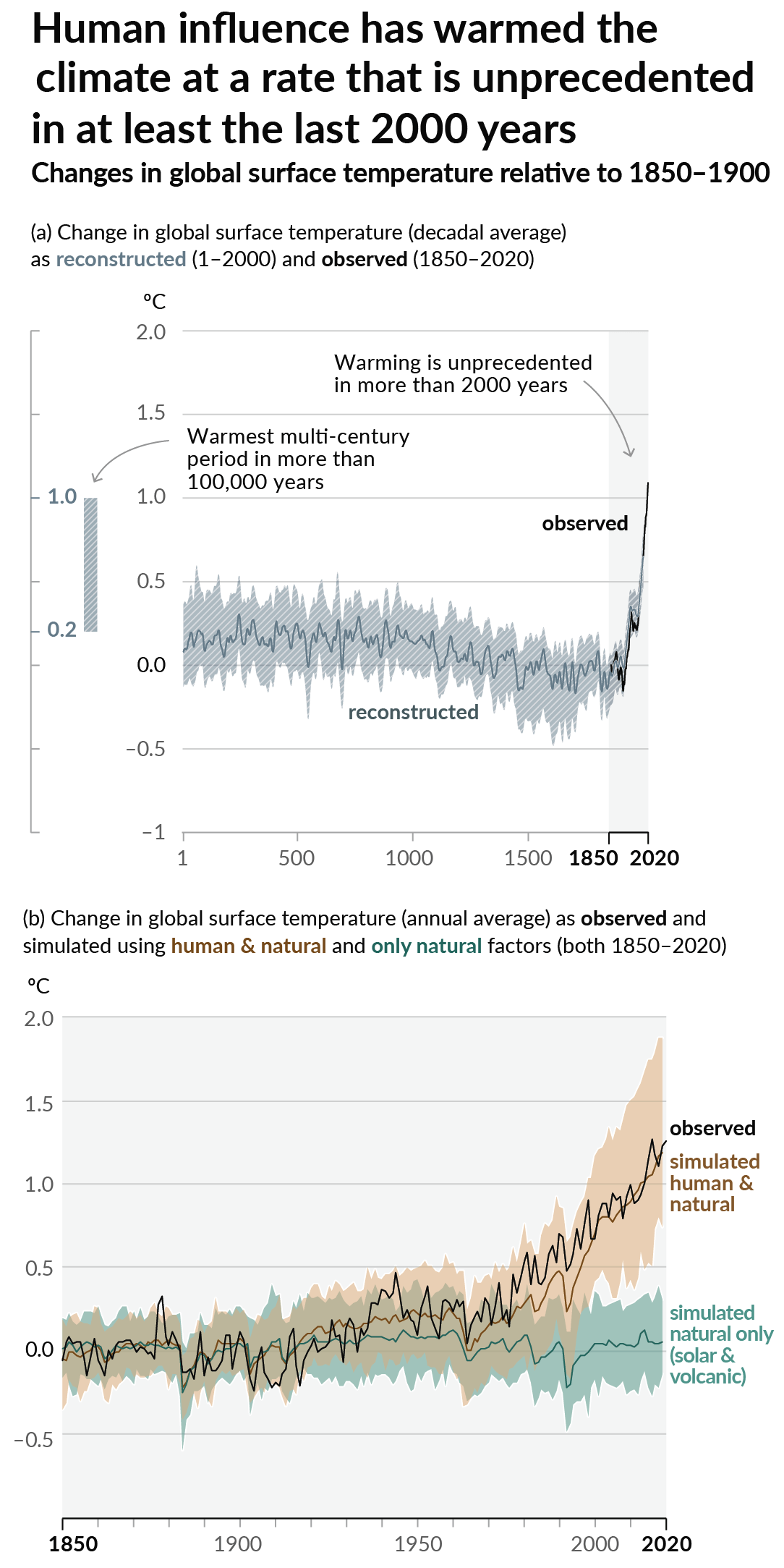
As a starting point, the burning of fossil fuels, and to a lesser extent deforestation and release of methane are responsible for the warming in recent decades: Graph of temperature as observed with significant warming, and simulated without added greenhouse gases and other anthropogentic changes, which shows no significant warming
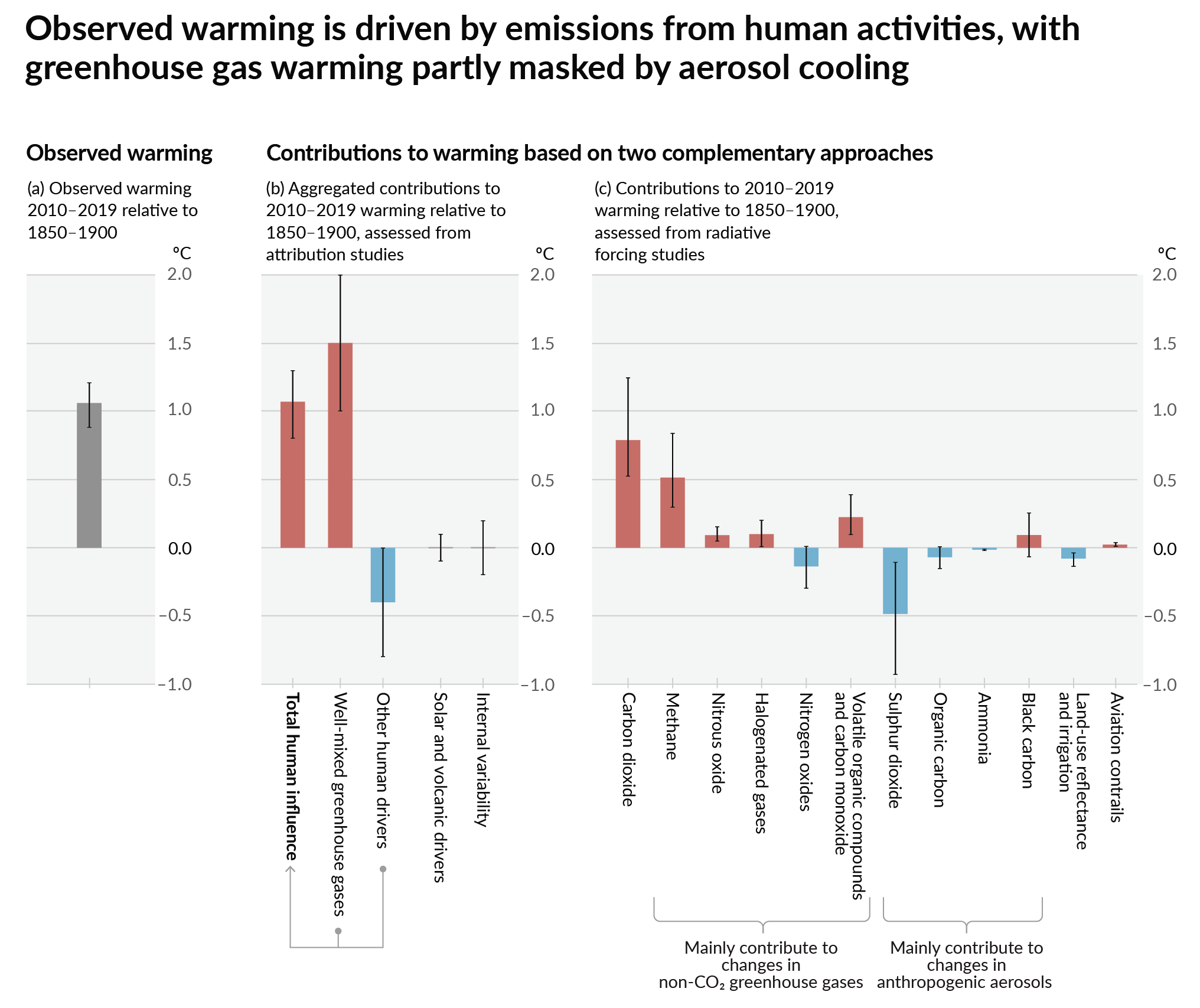
How much each change to the atmosphere has warmed the world: IPCC AR6 Figure 2 - Thee bar charts: first chart: how much each gas has warmed the world.  About 1C of total warming.  Second chart:  about 1.5C of total warming from well-mixed greenhouse gases, offset by 0.4C of cooling from aerosols and negligible influence from changes to solar output, volcanoes, and internal variability.  Third chart: about 1.25C of warming from CO2, 0.5C from methane, and a bunch more in small quantities from other gases.  About 0.5C of cooling with large error bars from SO2.
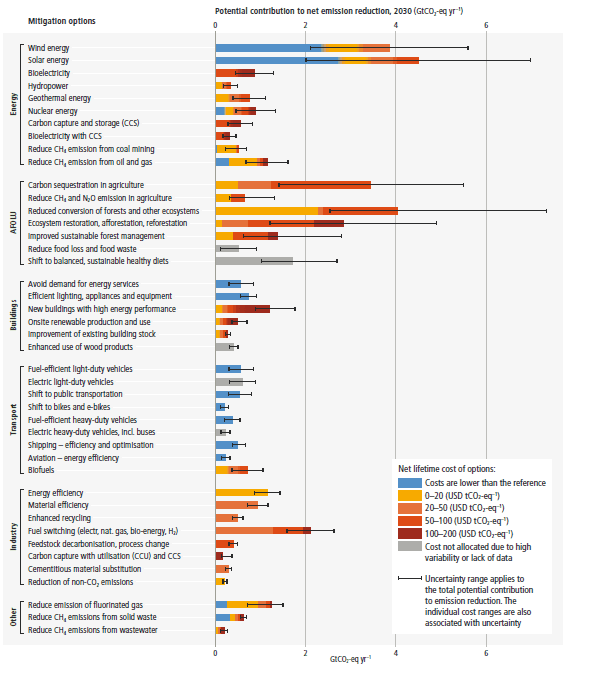
Recommended actions to cut greenhouse gas emissions in the near future:
Anti-science, inactivism, and unsupported conspiracy theories are not ok here.

founded 2 years ago
MODERATORS
 

The paper is here

Per the article, the following are the ones which work:

  • Carbon pricing and taxation (8 policies): Carbon taxes across sectors, emissions trading schemes, congestion charges and fossil fuel excise taxes all show robust effects, even when controlling for all other policies. This counters the claim that carbon pricing only seems effective because it’s usually accompanied by complementary measures.

  • Energy efficiency and standards (5 policies): Building energy codes, air emission standards, minimum energy performance standards and motorway speed limits consistently reduce emissions.

  • Renewable energy and research (11 policies): R&D expenditure on carbon capture, nuclear, hydrogen, energy efficiency and renewables, and planning for renewable expansion and auction schemes all reliably drive emission reductions.

  • Reporting and accountability (3 policies): Greenhouse gas emissions reporting requirements across sectors show significant effects.

  • Subsidy reduction (1 policy): Eliminating fossil fuel subsidies in transport reduces emissions.

no comments (yet)
sorted by: hot top controversial new old
there doesn't seem to be anything here