Off the coast of Yonaguni Island lies one of the most debated underwater formations in the world. While mainstream geology classifies it as a natural sandstone structure shaped by tectonic forces and erosion, there is a serious case to be made that it represents the remains of a submerged prehistoric city.
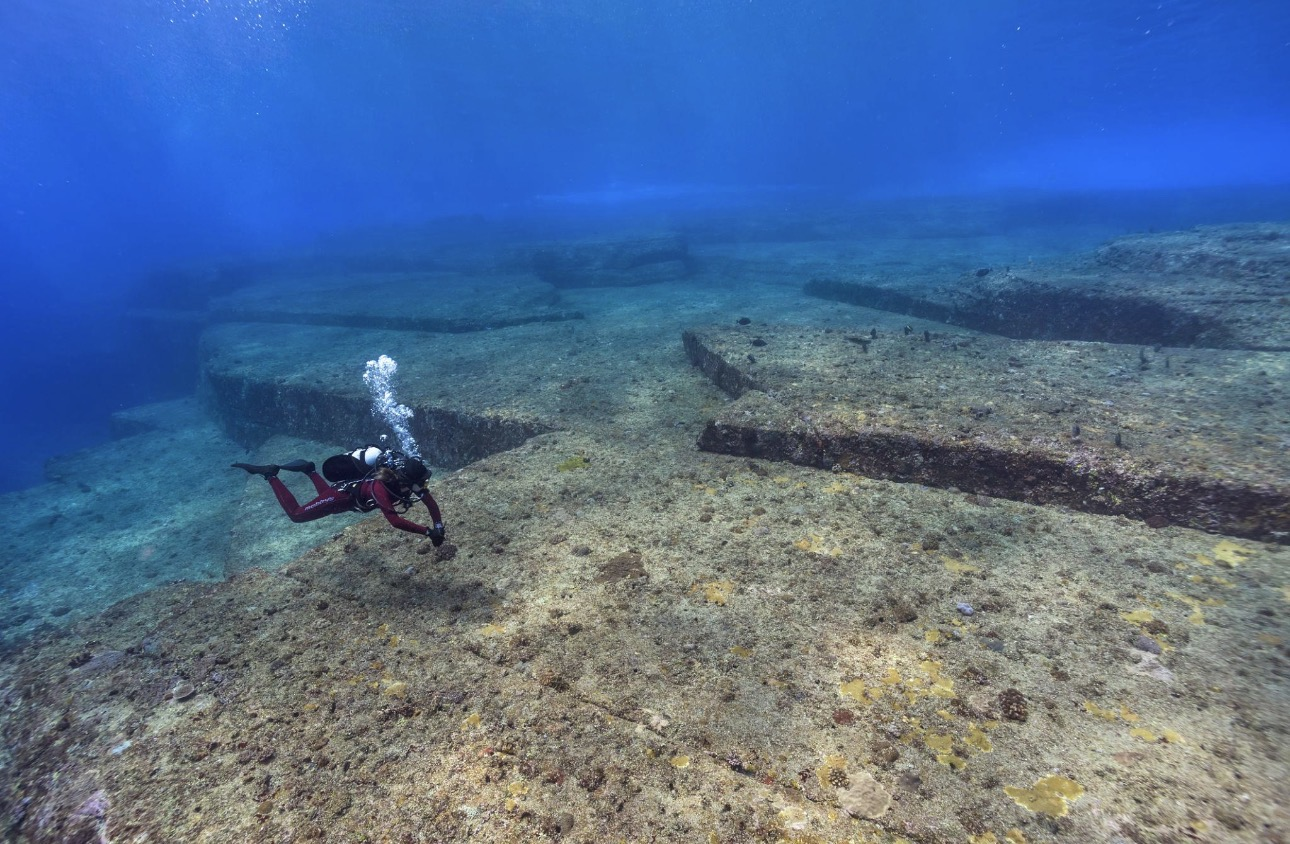
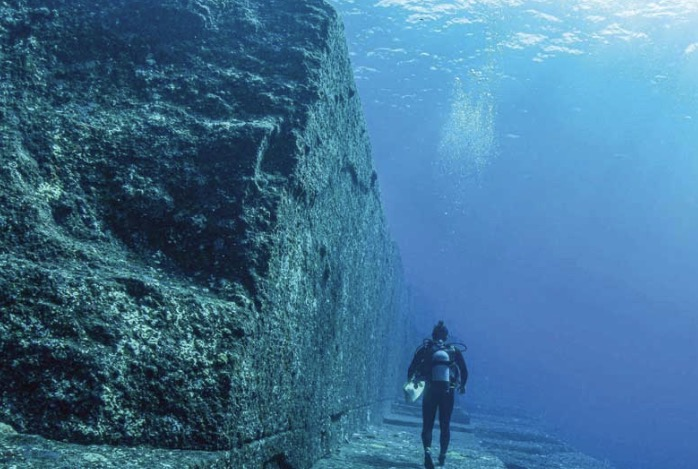
First, the geometry is difficult to dismiss. The formation includes flat terraces, sharply defined right angles, consistent step-like platforms, and what appears to be a massive rectangular “plaza” area. Natural fracturing can produce straight lines, but the scale and repetition here suggest intentional design. Multiple tiers resemble constructed platforms rather than random breakage. The symmetry across several levels is what raises eyebrows: nature creates fractures, but it rarely produces multi-tiered, staircase-like formations with such proportional consistency.
Second, the geological context allows for the possibility of human construction. During the last Ice Age, sea levels were significantly lower—by more than 100 meters globally. The area around Yonaguni would have been exposed land roughly 10,000–12,000 years ago. If humans occupied that region during the late Paleolithic or early Jōmon period, coastal settlements would have been logical. As sea levels gradually rose, such structures could have been submerged over centuries rather than destroyed abruptly.
Third, there are features that appear to go beyond simple fracture lines. Some researchers, including marine geologist Masaaki Kimura, have argued that certain surfaces look intentionally smoothed, and that some stone blocks appear separated from the bedrock in a way suggestive of quarrying or shaping. While these interpretations remain controversial, they introduce the possibility that natural formations may have been modified by human hands. Even partial modification would imply deliberate activity at the site.
Critics argue that no definitive artifacts—pottery, tools, inscriptions—have been recovered from the structure itself. However, coastal and marine environments are dynamic systems. Strong currents, typhoons, seismic activity, and sediment shifts can relocate or bury smaller artifacts over millennia. The absence of loose cultural debris does not automatically invalidate the presence of large-scale stone work, especially if the builders primarily used the native bedrock rather than transported materials.
Additionally, human history has repeatedly pushed back the timeline of complex behavior. The Jōmon culture of Japan dates back over 14,000 years and produced some of the world’s earliest pottery. Megalithic construction elsewhere in the world—such as Göbekli Tepe in Turkey—demonstrates that large stone architecture existed far earlier than once believed. If one region developed monumental stone traditions unexpectedly early, it is not unreasonable to consider similar experimentation in other coastal societies.
Ultimately, the argument for Yonaguni as a sunken city rests on cumulative plausibility: geometric consistency, paleo-sea-level data, possible human modification, and the growing recognition that ancient societies were more capable than previously assumed. While definitive proof remains elusive, dismissing the structure outright as purely natural may overlook a transitional possibility—that prehistoric people encountered a striking natural formation and shaped it into something more.
Until exhaustive archaeological excavation and mapping are completed, the door remains open.