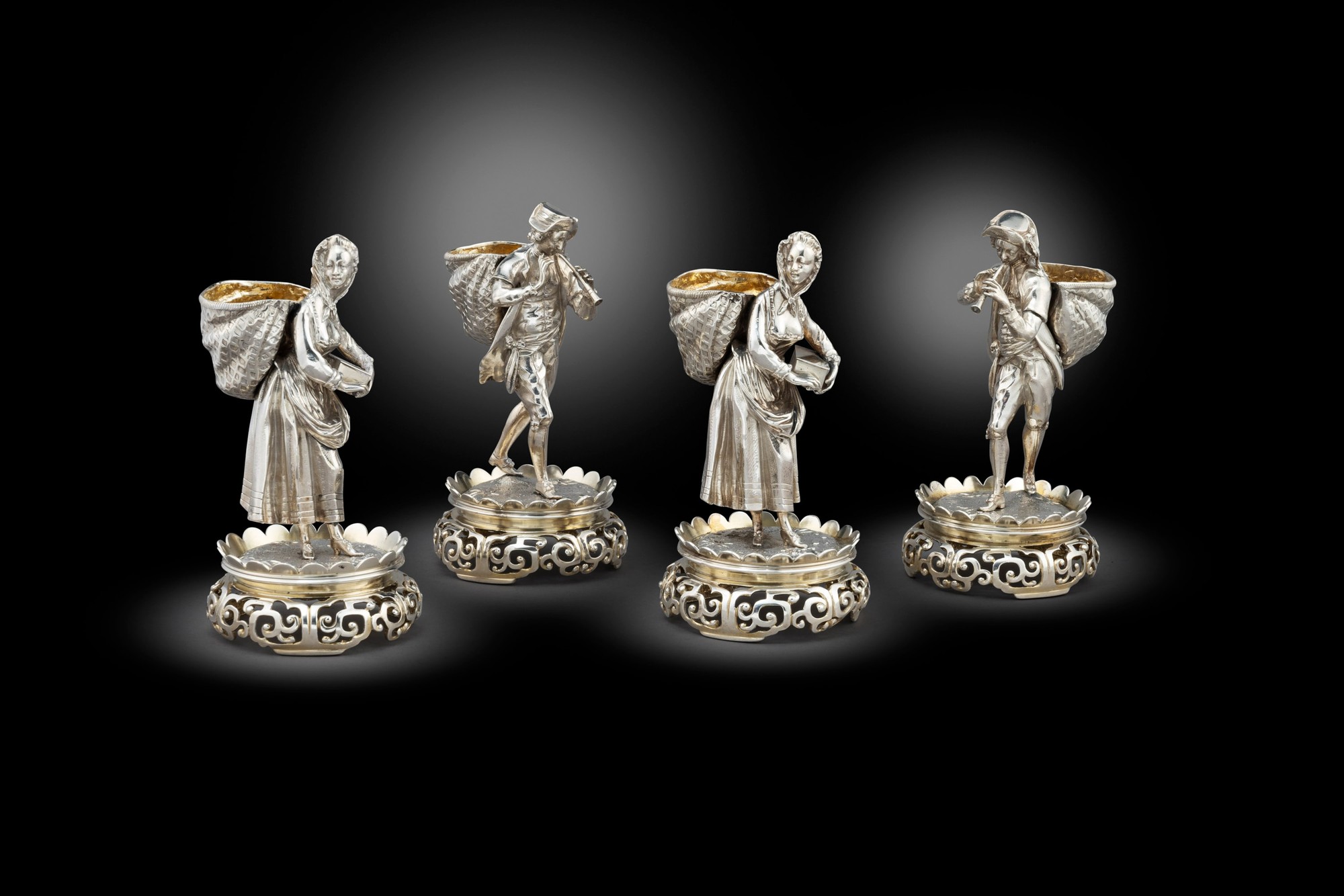
Unless they are painted they aren't allowed to be used in Warhammer 40K.
Just a community for everyone to share artifacts, reconstructions, or replicas for the historically-inclined to admire!
Generally, an artifact should be 100+ years old, but this is a flexible requirement if you find something rare and suitably linked to an era of history, not a strict rule. Anything over 100 is fair game regardless of rarity.
OTHER COMMS IN THE HISTORYVERSE:
Unless they are painted they aren't allowed to be used in Warhammer 40K.
Does my suspicion that they were over-designed to be inefficient at dispensing salt on purpose was because of how precious and expensive spices were in the past have any merit?
In other open-salt containers I've seen, there's usually a small spoon (or similar) associated. Perhaps a small silver spoon which could rest on the fringed base?
@PugJesus@piefed.social
Not in this case - not only were 'exotic' spices becoming much cheaper in this period, but salt has effectively always been affordable, save in a few very specific areas, like the Sahara. People can't live without it.
Interesting. I always wondered if a man was worth his salt, based on their salary
(/Humor)
You say humor, but the Ancient Romans (who loved discussing etymology) speculated that salary came from sal, salt, from a time when Rome was too poor to pay its soldiers in precious metals!
It's considered unlikely by modern linguists, both the etymology and the idea of paying soldiers in salt (whose primary source is... later Romans making the etymological connection), but the belief is (literally) ancient!