this post was submitted on 18 Jul 2025
23 points (100.0% liked)

Climate

8494 readers
257 users here now

Discussion of climate, how it is changing, activism around that, the politics, and the energy systems change we need in order to stabilize things.

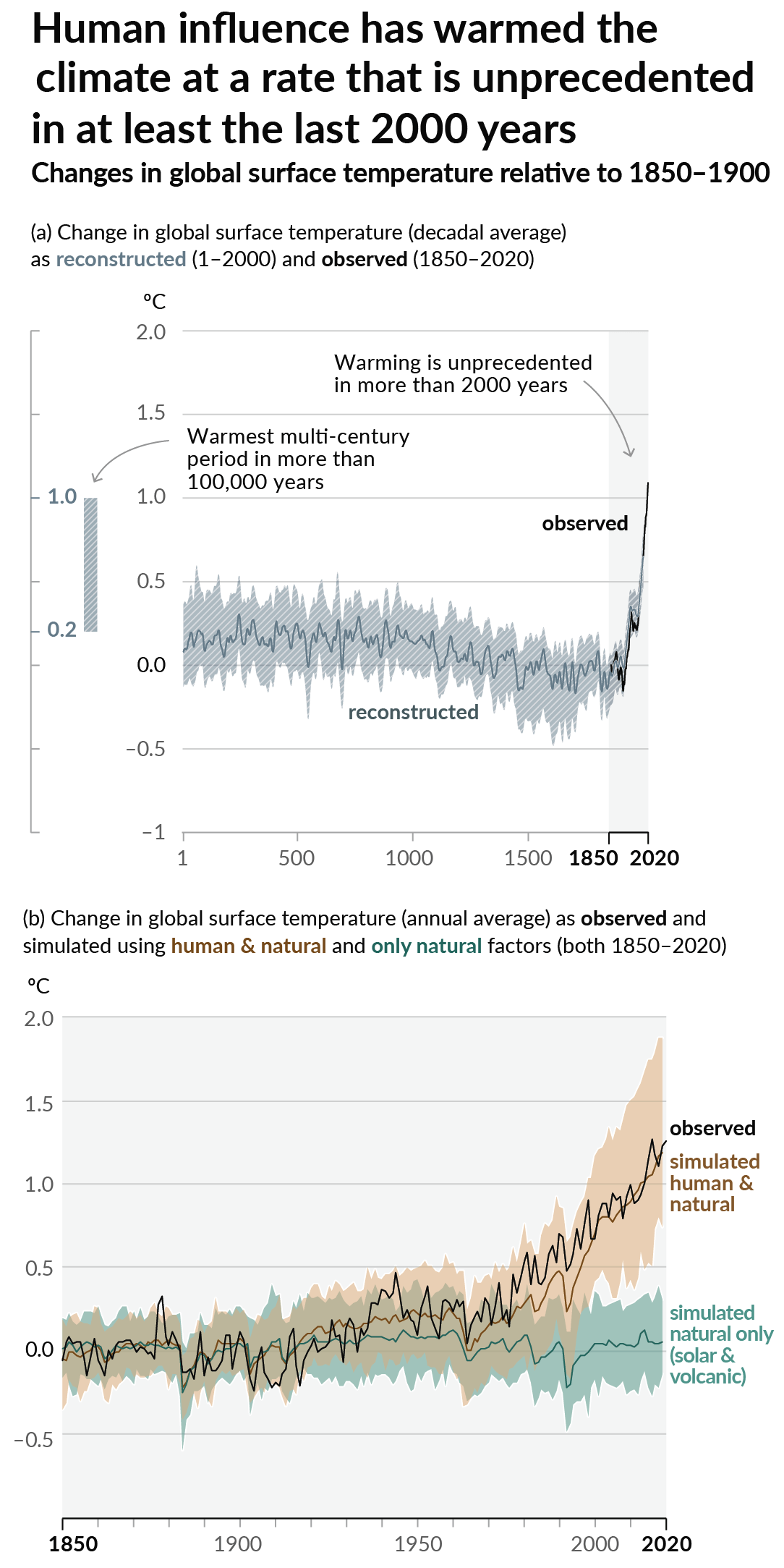
As a starting point, the burning of fossil fuels, and to a lesser extent deforestation and release of methane are responsible for the warming in recent decades: Graph of temperature as observed with significant warming, and simulated without added greenhouse gases and other anthropogentic changes, which shows no significant warming
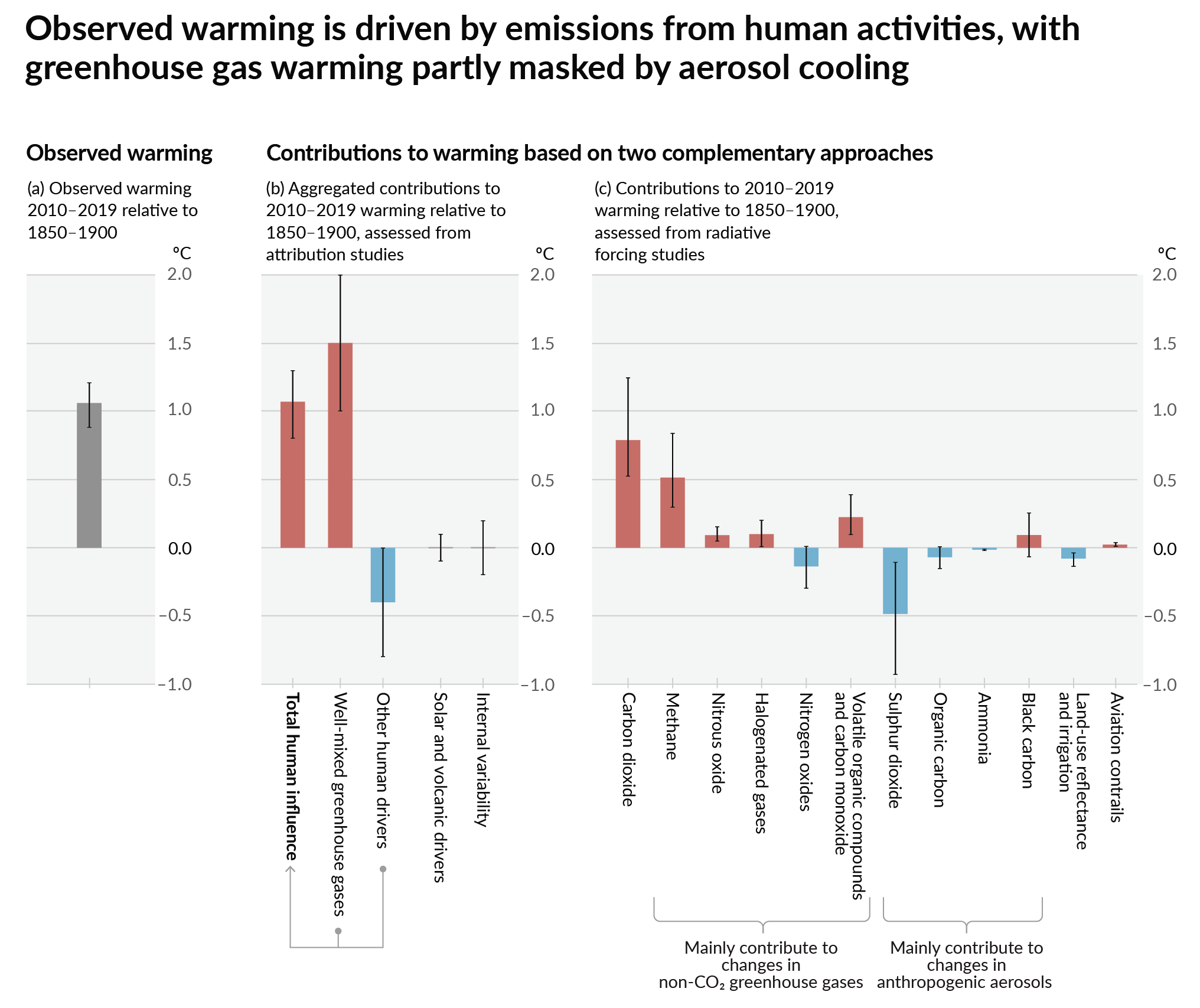
How much each change to the atmosphere has warmed the world: IPCC AR6 Figure 2 - Thee bar charts: first chart: how much each gas has warmed the world.  About 1C of total warming.  Second chart:  about 1.5C of total warming from well-mixed greenhouse gases, offset by 0.4C of cooling from aerosols and negligible influence from changes to solar output, volcanoes, and internal variability.  Third chart: about 1.25C of warming from CO2, 0.5C from methane, and a bunch more in small quantities from other gases.  About 0.5C of cooling with large error bars from SO2.
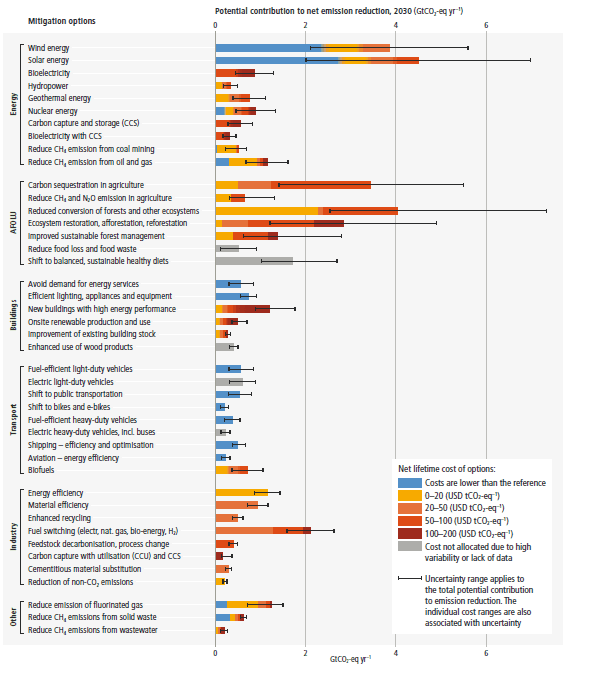
Recommended actions to cut greenhouse gas emissions in the near future:
Anti-science, inactivism, and unsupported conspiracy theories are not ok here.

founded 2 years ago
MODERATORS
 

Authors:

  • Colombe Nirina Sehenomalala | PhD candidate, Anthropology, Université de Montréal
  • Iulia Bădescu | Associate Professor, Anthropology, Université de Montréal

Most people’s encounters with lemurs have occurred through their representations in popular children’s media, like Zoboomafoo or Madagascar. However, most people don’t know that lemurs play an important role in forest renewal and that they’re currently in grave danger from climate change.

In my home country of Madagascar, there is an amazing array of creatures that are not found anywhere else in the world. Madagascar is a biodiversity hotspot, and approximately 90 per cent of plant and animal species on this island are endemic.

Among them are lemurs, a group of primates that are not only the flagship symbols of the island’s fauna, but also one of the key players in the health and stability of Madagascar’s ecosystems because they do the very important work of dispersing seeds.

I am a primatologist who researches the interactions between infant-and-mother lemur dyads in wild. Their bond is a reminder of what we stand to lose, as it shows care, learning and viability. When forests disappear, so does this fragile bond, and a whole way of life we can never replace.

Lemurs’ habitats and survival are increasingly being threatened by human activities such as deforestation, forest resource exploitation and hunting. There is an urgent need for conservation projects that involve local communities in preserving Madagascar’s unique biodiversity.

no comments (yet)
sorted by: hot top controversial new old
there doesn't seem to be anything here