-
What do you think the percentage is of Americans who throws out good food (even junk food) based on the expiration date? I mean - they do so not because the food might be stale but because they believe it suddenly became possibly toxic to eat.
-
What's the percentage for non-food stuff like soap? The other day I noticed my liquid hand soap has an expiration date for whatever reason. I better hurry up - I only have two years left of it being safe.
I started thinking about it after I read this...
"Good thing I read the labels and dates before I opened or ate anything. I avoided potential food poisoning and/or a trip to urgent care by paying attention."
It's from an Amazon review. After they checked the label - they learned the package was delivered with an expiration date two weeks past. They are talking about a Ruffles potato chip variety pack.
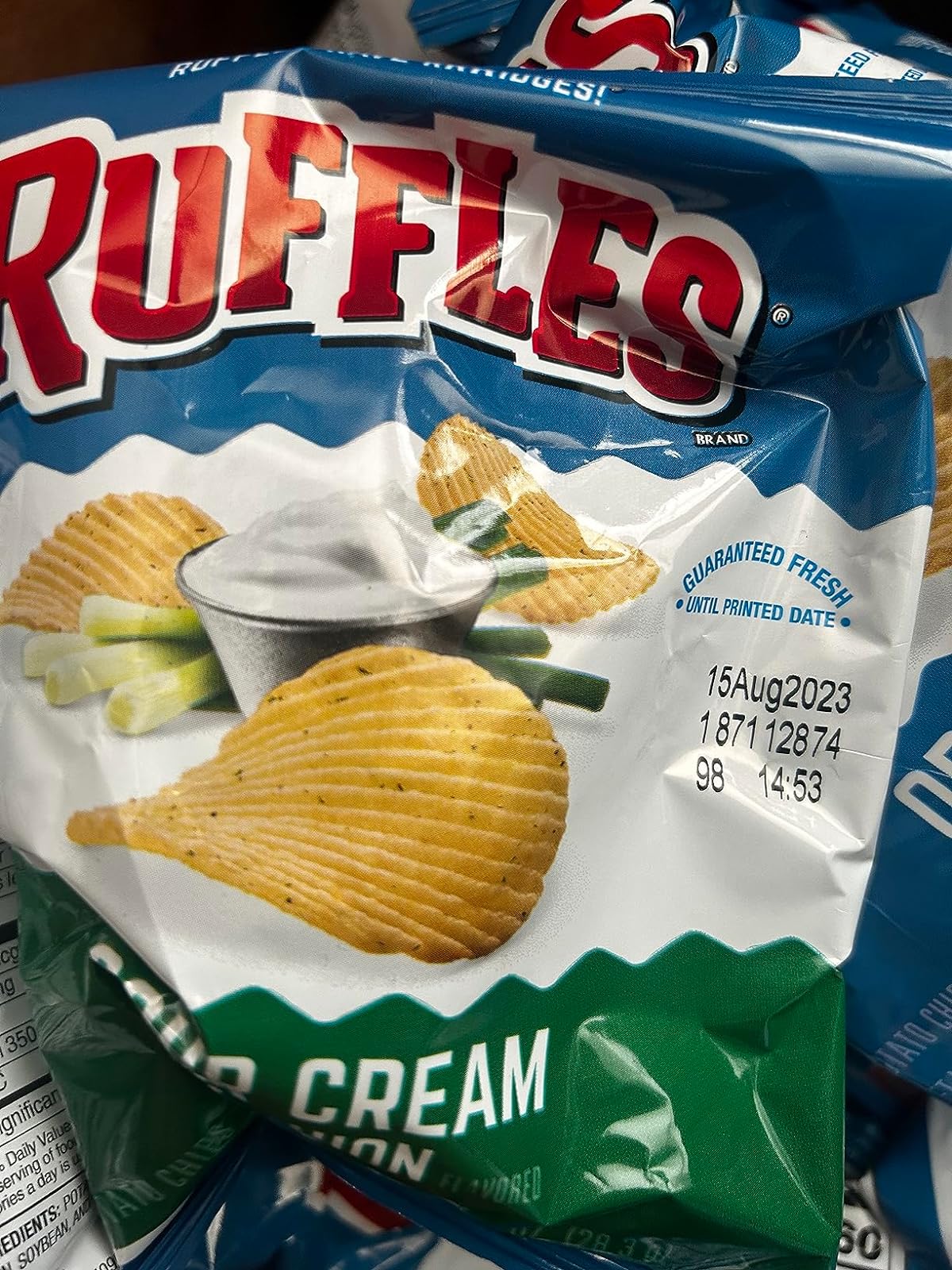
Expiration dates, as I understand them, are a date which the producer has expended some effort to prove the product won't harm you within some day. If you're trying to prove the milk won't be bad a month from the cow tit, it's not so hard or expensive. If you're trying to prove the potato chips won't harm you a month from packaging, also not hard.
If you're trying to prove a salt shaker won't harm you five years after packaging, even if there is no biological or chemical process we know of that might have caused the salt to magically become toxic, a company can't put an expiration date thru haven't proved.
In cases like the potato chips, it probably costs less to eat the loss of all chip baggies that haven't sold in six months than it would have cost to prove they wouldn't cause harm for longer. Even if an understanding of the involved biological and chemical processes would imply the product would never actually expire, to print an expiration date there must be some degree of proof by experimentation showing the product causes no harm after that period of time.
PSA: I don't know what I'm talking about, I'm summarizing a reddit comment I read probably a decade ago.