politics
Welcome to the discussion of US Politics!
Rules:
- Post only links to articles. Title must fairly describe link contents. If your title differs from the site’s, it should only be to add context or be more descriptive. Do not post entire articles in the body or in the comments.
Links must be to the original source, not an aggregator like Google Amp, MSN, or Yahoo.
Example:
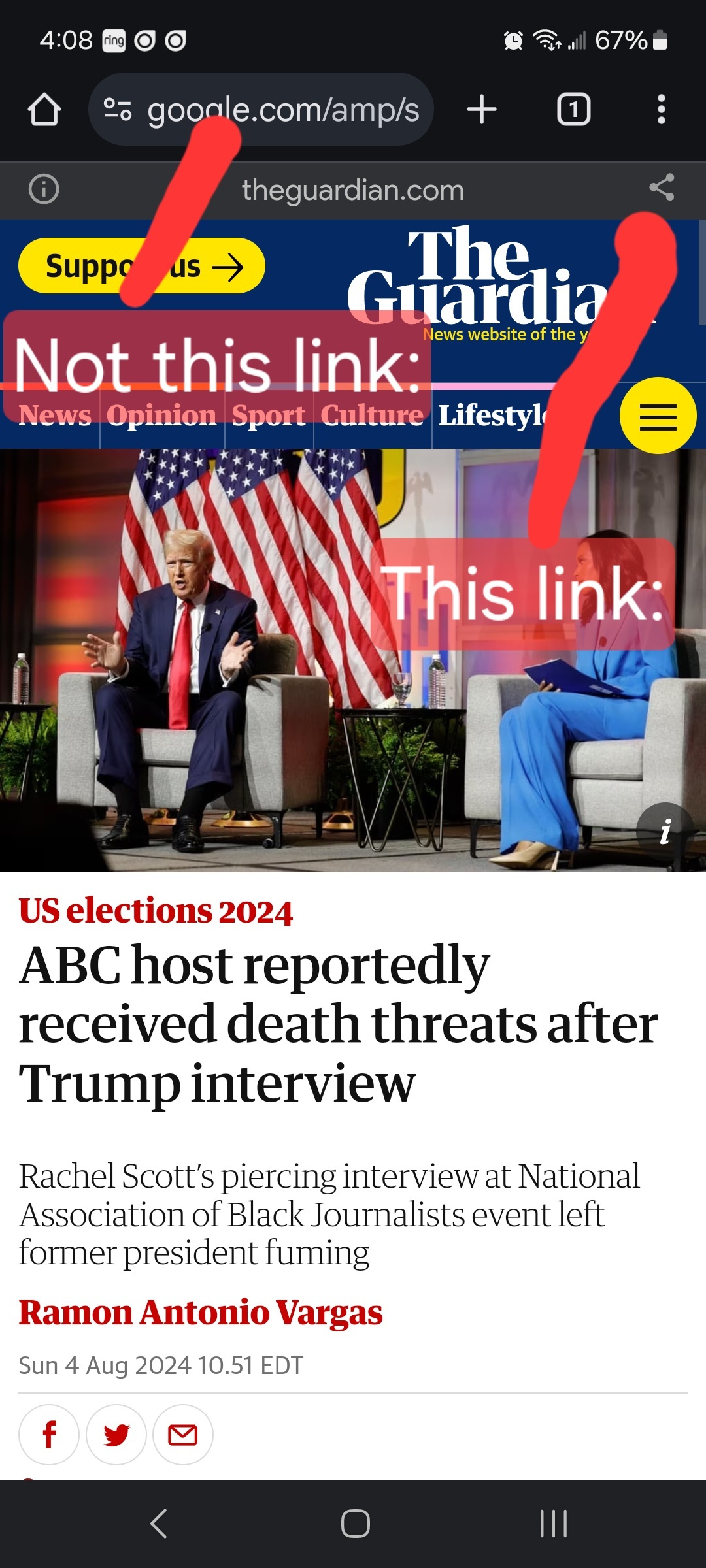
- Articles must be relevant to US politics and contain quality and original content. Social Media adjacent hosts like Substack are allowed, but ONLY if they tie back to a company/subsidiary. No personal or friend group blogs and no self-promotion. Articles should be worth reading. Clickbait, stub articles, and re-hosted or stolen content are not allowed. Check your source for Reliability and Bias here.
- Be civil, No violations of TOS. It’s OK to say the subject of an article is behaving like a (pejorative, pejorative). It’s NOT OK to say another USER is (pejorative). Strong language is fine, just not directed at other members. Engage in good-faith and with respect! This includes accusing other users of being bots or paid actors.
- No memes, trolling, misinformation, or low-effort posts/comments (including reposts). If you see posts like this that anger you, do not engage. Report, block, and live a happier life than they do. Any slap-fight is subject to comment removals. Fights full of rule violations will result in temporary bans to cool off.
- No manipulating votes via bots or alt accounts; this will result in permanent bans. Vote based on comment quality, not agreement. This community aims to foster discussion; please reward people for putting effort into articulating their viewpoint, even if you disagree with it.
- No hate speech, slurs, celebrating death, advocating violence, or abusive language. This will result in an account ban. Usernames containing racist, or inappropriate slurs will be permanently banned.
We ask that the users report any comment or post that violate the rules and use critical thinking when reading, posting, and commenting. Users that repeatedly have comments or posts removed, weaponize reports, or violate the code of conduct, will be banned.
All posts and comments will be reviewed on a case-by-case basis. This means that some content that violates the rules may be allowed, while other content that does not violate the rules may be removed. The moderators retain the right to remove any content and ban users. The reason(s) behind moderator action(s) are publicly available through the Modlog.
That's all the rules!
Civic Links
• Congressional Awards Program
• Library of Congress Legislative Resources
• U.S. House of Representatives
Partnered Communities:
• News
view the rest of the comments
This is paywalled. Here's the context:
Of the more than 10,000 votes cast by Senator Susan Collins of Maine, there is one that has shadowed her like no other as she runs for a sixth term.
On Oct. 6, 2018, Ms. Collins, one of only two Senate Republicans who support abortion rights, cast a deciding vote to confirm Brett M. Kavanaugh to the U.S. Supreme Court. Four years later, Justice Kavanaugh voted with the conservative majority to overturn Roe v. Wade, which had guaranteed a constitutional right to abortion for nearly half a century.
The vote cut against her well-cultivated reputation as a moderate Republican who is unafraid to break ranks. It also put her at odds with abortion rights activists, who had previously backed her campaigns, and with advocates for victims of sexual violence, who rallied behind a woman who accused Mr. Kavanaugh of sexual assault, an allegation he denied.
Now, Ms. Collins’s support for Justice Kavanaugh has become a major issue in her first re-election campaign since Roe was overturned, a race that could swing control of the Senate. The 2018 vote has emerged as a character test of Ms. Collins for Maine voters: Some consider her a principled lawmaker taking tough votes, while others see a calculating politician determined to keep her job.
Publicly, Ms. Collins appears unbowed. “I do not regret that vote,” she told reporters in Portland in June. She went even further after an event at a fire station in Randolph, Maine, this month.
“I would vote for him again, yes,” she said, according to audio acquired by an operative for American Bridge, a major Democratic super PAC.
But people who interacted with her during the Kavanaugh hearings say Ms. Collins still harbors frustrations about the continued backlash after a confirmation process she described in 2018 as “more like a caricature of a gutter-level political campaign.”
Even as she was accused of capitulating to the demands of her party and President Trump, Ms. Collins believed she took the more politically difficult vote while representing a Democratic-leaning state, she told a confidant at the time. And in the years since, she has appeared to hold grudges against people who criticized her vote.
“She takes all of it very personally,” said Dana Singiser, a former Planned Parenthood vice president, who raised concerns about Judge Kavanaugh with Ms. Collins during his confirmation process. “For us, it’s not really personal, it’s just about our mission. That was an abortion-defining vote.”
This account is based on interviews with more than two dozen former aides, Senate colleagues, activists and others involved in the confirmation process. Some spoke on the condition of anonymity to discuss private conversations.
Ms. Collins declined an interview request from The New York Times. Blake Kernen, a spokeswoman for Ms. Collins, dismissed criticism of the senator’s vote as driven by “hyperpartisan voices.”
“Senator Collins fully and honestly explained her decision in the days before and the years that followed Justice Kavanaugh’s nomination,” she said.
Ms. Kernen also drew a contrast between the senator, who she said “has always been pro-choice,” and her Democratic opponent, Troy Jackson, who opposed abortion as a state lawmaker until about a decade ago. He later helped enact a Maine law that allows abortion at any stage of pregnancy, as long as a doctor deems it necessary — one of the most permissive in the country.