this post was submitted on 13 Aug 2026
169 points (83.9% liked)
Perry Bible Fellowship
1108 readers
199 users here now
This is a community dedicated to the webcomic known as the Perry Bible Fellowship, created by Nicholas Gurewitch.
https://www.patreon.com/perryfellow
New comics posted whenever they're posted to the site (rarer nowadays but still ongoing). Old comics posted every day until we're caught up
founded 2 years ago
MODERATORS
you are viewing a single comment's thread
view the rest of the comments
view the rest of the comments
Clothes and cars are a bit complicated since they are often essential, and the more ethical options are more expensive so not everyone can afford them. I'd still say those who could buy the more ethical options ought to do so.
Meat and coffee are resource intensive goods with cheaper alternatives which cause way less suffering.
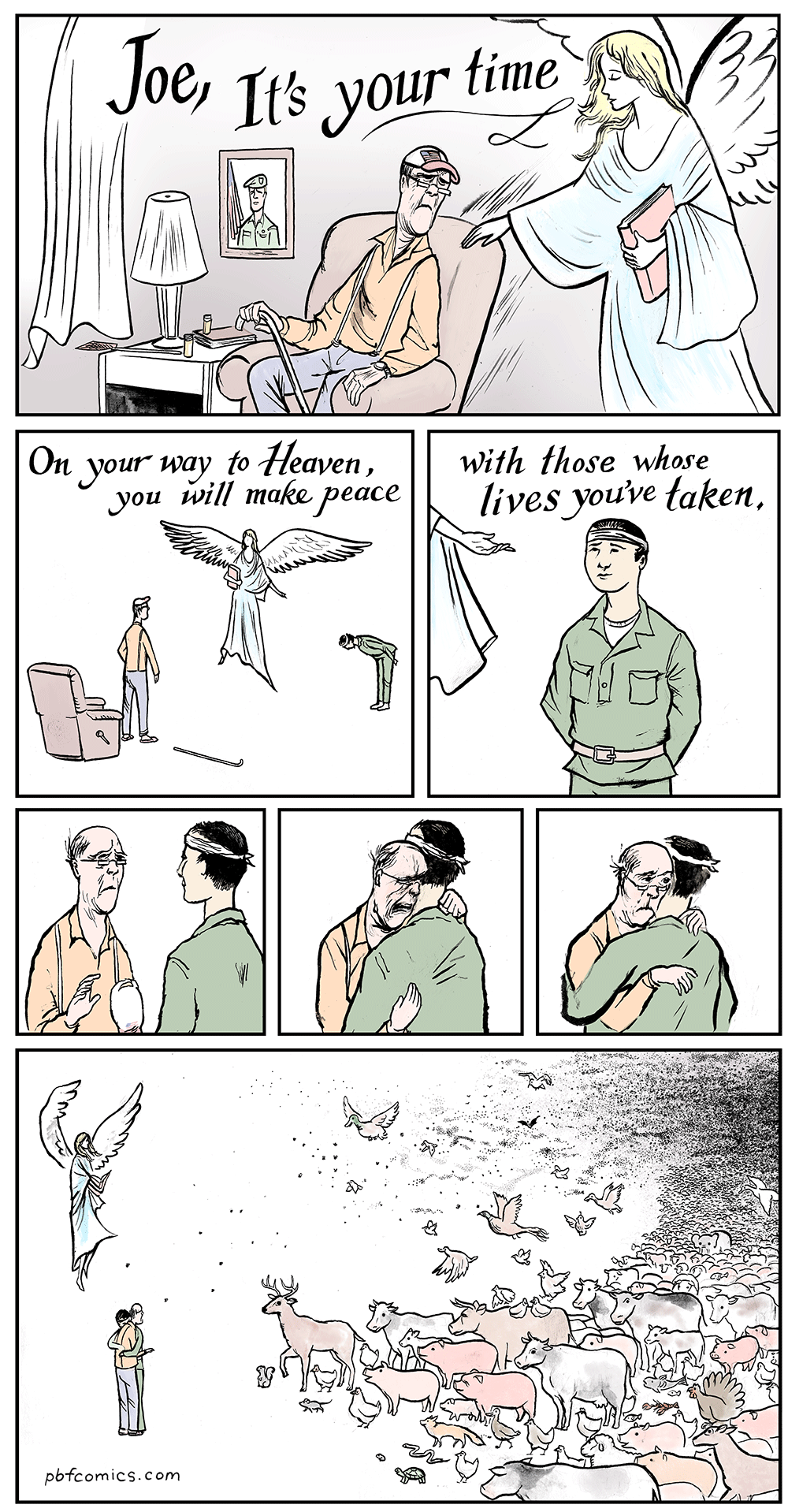
So yes, paying people to mistreat humans without need is cruel. Paying people to brutalize animals to death is cruel too. One logically can't justify the other.
Where have we gone wrong that people always feel the need to argue for putting animals into literal death camps, of all things? I just wish people would strive to make the world a less cruel place for once, but that is just too much to ask for in this society.
personally meat that's been tenderized through animal cruelty is the whole point!
you can't imagine how hard I get while gnawing on a thick juicy steak. sometimes I'll even use the juice from the meat as lube when I fuck tomorrow's roast and blast ropes into the creamy center. it's even better when I stuff some warm veal up my asshole.
since most cabbageheads want to make normal everyday eaters into monsters, I'll play the villain you made up in your mind.
It's not the first time in history where everyday people contribute to a very inhumane industry. These industries are usually not perpetuated by consumers who want to be evil. They are perpetuated by consumers who are somewhere between uninformed and complicit, usually somewhere in between.
I don't think that the average meat eater is a monster. It's very normalized to buy factory farmed products without knowing and thinking about the cruelty that animals had to endure for it.
Many people know that there are instances of cruel treatment, but assume that these are just a few bad apples and that this has nothing to do with the products they buy. This is partly wishful thinking, partly just too abstract in their head to influence buying decisions, partly complicit, to varying degrees.
If someone knew quite a bit about the unimaginable suffering caused by the industry though, and continued funding it without thinking "well, that's not good, it would be better if would stop contributing to that", then this is malicious behavior. What else could I conclude?
So I would attribute varying responsibility to the consumer, based on how much they know, and on how easy it would be for them to choose alternatives.
It's not too much to ask for a kinder society, but asking doesn't make it one. The only way we stop mass animal cruelty is by revolting against our capitalist oppressors that make commodities of living things. I look forward to when we can live in a society that can systemically reject it.
That would be great, we can agree on that. The capital only seems to grow more powerful though, but the whole system is also unsustainable and therefore inherently unstable, so we'll see.
I think the changes that will bring down factory farming first will be climate change combined with resource inefficiency increasing the price (we can already see this happening), while plant based alternatives become more normalized, tasty, widely available, and cheaper relative to meat (there has been a lot of progress on these in the last 10 years, at least here in Germany).
An avian flu pandemic also seems likely at some point and would accelerate the transition.
We need to remember that the harder capitalism tightens its grip, the more contradictions it creates, and the easier it will be to raise peoples awareness.
I see that happening in the US too, and the govt subsidies are slowly disappear which has helped prop it up as long as has affordability-wise. I see eating meat quickly becoming less accessible today in the US, and like many commodities it's going to become one for the bourgeois only. The alternatives are getting better for weening people off, but there is definitely a counter-culture to it too.
I feel like there can be steps in between that we aren't utilizing while the meat industry still exists whether or not we want it. I have have had roommates that would not be happy with chicken nuggets, no fake ones would do. So I started making them myself, with a lot of vegetable filler, and eventually weened the meat down over 6 months down to <25% + a little chicken stock, and that was only from my local grocery store. I feel like if I had access to any form of actual production, I could have gone lower, about ~10% (this is when they started to notice and I had to dial it back). There were 4 of us, so we effectively had 3/4 vegetarians in the house, and I feel strongly that if vegetarians approached it like this, we could pare down the amount of actual meat intake to about 5% of what we have today rapidly, and then it'd be much much easier to entirely end meat usage because our microbiomes aren't screaming for it in the way they do now.
almost no one does this though. a few people do.
It's an entire industry. https://animalclock.org/
stalking me, now?
I thought you blocked me
Another assumption without evidence, shocking.
I am correcting your deadly disinformation for everyone else's benefit.
you said goodbye forever. so you just lied, I guess.
what I said is true
Slaughterhouses use brutal force to kill animals.
yep. most people dont work in slaughterhouses