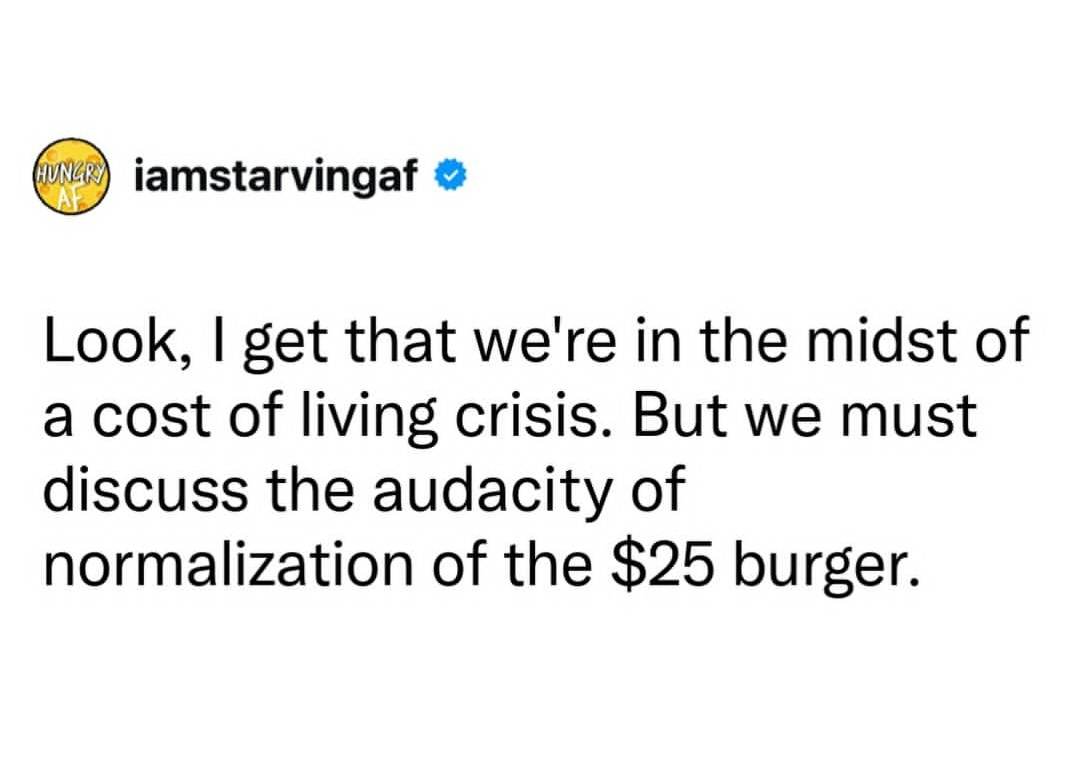
this post was submitted on 02 Aug 2026
397 points (98.8% liked)

Political Memes

12279 readers
2456 users here now

Welcome to politcal memes!

These are our rules:

1) Be civilJokes are okay, but don’t intentionally harass or disturb any member of our community. Sexism, racism and bigotry are not allowed. Good faith argumentation only. No posts discouraging people to vote or shaming people for voting.

2) No misinformationDon’t post any intentional misinformation. When asked by mods, provide sources for any claims you make.

3) Posts should be memesRandom pictures do not qualify as memes. Relevance to politics is required.

4) No bots, spam or self-promotionFollow instance rules, ask for your bot to be allowed on this community.

5) No AI generated content.Content posted must not be created by AI with the intent to mimic the style of existing images

founded 3 years ago
MODERATORS
 
you are viewing a single comment's thread
view the rest of the comments
[–] FireRetardant@lemmy.world 45 points 1 day ago (4 children)

Fast food at home takes a higher level of time and skill commitment. For fried chicken i gotta source all ingredients for the batter, make more than i need for the chicken to have adequate coatings, use a shitload of oil for a deep fry or buy a deep fryer, cook the chicken, then clean up the dishes and kitchen afterwards.

It is still defintely possible but many people working long shifts or overtime find it hard to do. My method for nearly any meal with more than 5 minutes of prep+cook time is to make lots of it, as you get more food per time invested that way and just eat it for a few days or freeze extra servings.

[–] DarrinBrunner@lemmy.world 2 points 10 hours ago

Which is why I don't have fried chicken anymore. It's not the end of the world, turns out.

[–] fartographer@lemmy.world 6 points 20 hours ago* (last edited 19 hours ago)

Almost every issue you're describing can be addressed with proper mise en place. Unfortunately, it's a skill that requires practice and can be improved by training. Teaching mise en place as a core skill in schools could help everyone with anything from cooking to home repair, but we apparently don't want people to know diy skills...

Anyway, here's a few tips:

  • For burgers: Find some frozen patties that you like. I really like Birchwood Beef Burgers (not beef patties, different products). I go with frozen so that I didn't feel pressured to eat more beef in a week than I want to, just because I bought it.
  • Also for burgers, but great for home cooking: Buy frozen, diced onions. An entire bag usually costs less than two onions. When you're about to flip your frozen burger patties, lay a small bed of frozen onions, sprinkle on salt and pepper, and flip the burger directly on them. This trick also works great with Morningstar veggie burgers.
  • Fried chicken marinating: Use a bag and insert a straw to create a small opening before you close the bag. Then, slowly submerge the bag in water while you seal it. Once your marinade starts going above the top of your seal, pull the straw out and seal your bag. This will substantially save on the volume necessary to marinate the chicken.
  • Fried chicken dredge 1: Add a little corn starch to your eggs. You can put the corn starch directly on your raw chicken, but that tends to lead to waste. The corn starch helps the eggs and batter stick. Don't worry about lumps. Chopsticks are great for mixing.
  • Fried chicken dredge 2: Use the chopsticks or a fork to dribble your dredge into your breading, then give it a slight mix. This will give your chicken a crispy texture.
  • Fried chicken breading 1: Mix your spices first. Keep it relatively simple. My favorite mix is plenty of salt, a little msg,, lots of garlic powder, little onion powder, white chili powder, black and white pepper, freeze dried chives. Add your flour to your spice blend, and taste it. Add flour until the spices give you just the right kick. The floury flavor will go away when it cooks, but it'll still dilute the spices, so the flavor profile shouldn't change much while the chicken cooks.
  • Fried chicken breading 2: Use a container that is deeper than you think you'd need; it's easier to conserve breading when you stack the chicken instead of spreading them out. Place all or as much of the chicken into the breading, coating and covering one piece at a time. Let them sit in there for a while before you start frying them. Fry in batches, you'll have to re-coat the chicken in the breading before frying the later batches. These will be extra crispy.
  • Fried chicken breading 2: Don't make too much. Make more if you need more and then dump it on top of the chicken laying in the breading, but you'll need far less than cooking videos will make you believe.
  • Fried chicken frying 1: Use a high temp oil, and don't let it get too hot. You can use a thermometer if you want, but sprinkling in some of your breading will let you know if you're at the right temperature. Instant bubbles that swell then subside, and then slowly turning brown is exactly what you want. If it bubbles slowly start and you don't notice a color change after 10-30 seconds, your oil isn't hot enough. If it bubbles rapidly and changes colors immediately, your oil is too hot. Give your oil a few minutes to reach temp, 3-10 should be good.
  • Fried chicken frying 2: I favor wider pans over deeper pans. You want the pan about 1 or 2 inches taller than the halfway point of your thickest piece of chicken. That extra 1-2 inches is to prevent your oil from spilling over. Even if your oil level doesn't quite reach halfway up your thickest piece of chicken, the oil will bubble and climb its way up your fried chicken. So, you'll likely be fine if you're under by as much as a quarter of an inch. I've used cake or pie pans and tongs on a hot plate to fry chicken, and it comes out great. My preferred pan is a deep saute pan.
  • Fried chicken frying 3: Keep a plate or something with a wire rack over it to drain your chicken after they're done. Sprinkle salt over the pieces immediately once the next round of chicken comes out of the fryer, you can move the chicken from the rack to a plate. Add soon as the last batch of chicken goes into the fryer, dump what little breading you have left into the trash, and then at least rinse the container. When you're done, allow the oil to cool completely, and then filter it through some coffee filters. If you kept the oil at a good temperature, you should get one or two more uses after it.

If you follow the fried chicken tips correctly, you should have used:

  • 1 ziplock bag
  • 1 straw
  • 1 pair of chopsticks
  • 1 bowl
  • 1 container
  • 1 oil frying thing
  • 1 funnel
  • A few coffee filters
  • 2 plates
  • 1 wire rack

If you clean as you go, your kitchen should be clean (except for the still-hot oil in the pan or fryer or whatever) before you bring the chicken to the table. That'll give it enough time to rest and be juicy as fuck instead of drying out the instant you bite into a steam bomb.

[–] Grimy@lemmy.world 5 points 1 day ago* (last edited 1 day ago) (1 children)

An air fryer goes a long way, I don't see much difference in terms of crispyness compared to regular oil frying and it's a lot less cleanup and work.

[–] darkdemize@sh.itjust.works 4 points 1 day ago (1 children)

I use an air fryer to reheat fried chicken. Are you using it for the initial cook too?

[–] Grimy@lemmy.world 2 points 1 day ago

For big batches to freeze I use oil. For a small meal without oil, I've found it works if you spray on the oil during the air frying a few times. I mostly do that for tofu. I toss mushrooms or other veggies in olive oil, herbs and garlic, and toss it in there too with a bit of cheese sometimes.

[–] ieatpwns@lemmy.world 5 points 1 day ago (1 children)

More than one hour of hourly wage for a single meal. Or more than one hour of work for multiple homemade meals? I’m going with more than one hour of work for multiple meals. But you do you

[–] FireRetardant@lemmy.world 7 points 1 day ago (2 children)

This ignores the skill portion. I might ruin 3 meals before i make something edible that my body actually wants me to keep eating. I also keep coupons and know the local deals, my avergae fast food order ends up being about 30 minutes worth of wages. And tbh my work doesnt have a proper lunch break so I'm often still getting paid for 15-20 minutes i spend ordering and eating. It is still a loss compared to bringing food, which i usually do, but its not a massive loss.

Part of my problem as well is i dont work a defined shift and often end up spur of the moment working late. So if I pull something out to defrost or start soaking beans in the morning. Working ovetime can delay my cooking time from 5 pm to 8 pm, often cutting into the time i should be going to bed or getting other important shit done. I do meal prepping to help mitigate this but then im often eating the same lunch and dinner for 3-4 days straight, which can get difficult on the pallete.

[–] HandMadeArtisanRobot@lemmy.world 3 points 22 hours ago

Try prepping food that freezes better. I've got sandwich bags with servings of frozen rice or whole potatoes, quart bags with soups, red curry, lentils, etc. When I get home from work, I pick something and defrost it in the microwave. Ready in <10 minutes.

[–] Daft_ish@lemmy.dbzer0.com -2 points 21 hours ago* (last edited 21 hours ago)

Youre fighting this "cook your own food" suggestion too hard.

Way way way too hard.