this post was submitted on 02 Aug 2026
839 points (97.1% liked)
Work Reform
17490 readers
1846 users here now
A place to discuss positive changes that can make work more equitable, and to vent about current practices. We are NOT against work; we just want the fruits of our labor to be recognized better.
Our Philosophies:
- All workers must be paid a living wage for their labor.
- Income inequality is the main cause of lower living standards.
- Workers must join together and fight back for what is rightfully theirs.
- We must not be divided and conquered. Workers gain the most when they focus on unifying issues.
Our Goals
- Higher wages for underpaid workers.
- Better worker representation, including but not limited to unions.
- Better and fewer working hours.
- Stimulating a massive wave of worker organizing in the United States and beyond.
- Organizing and supporting political causes and campaigns that put workers first.
founded 3 years ago
MODERATORS
you are viewing a single comment's thread
view the rest of the comments
view the rest of the comments
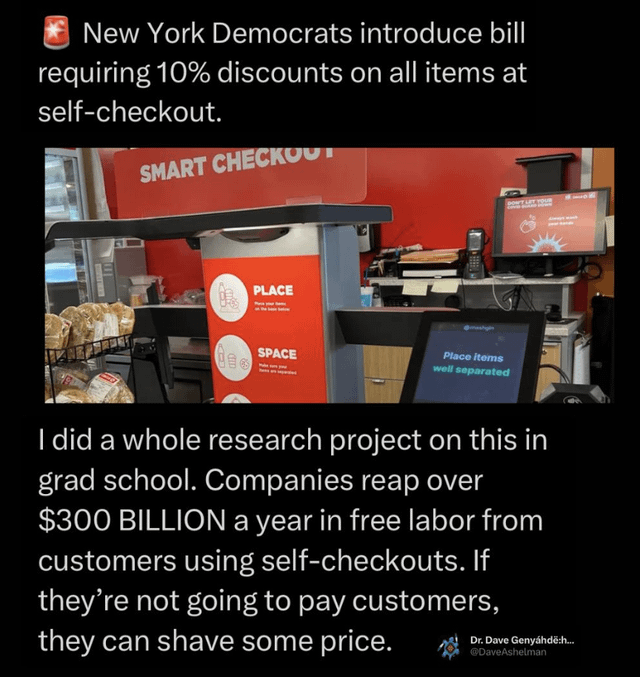
If you have a $150 grocery bill, it's being hiked to ~$166.66 before you get to the checkout. Then the 10% discount is bringing it back down to the $150 you were paying before. The net discount is zero: you're paying exactly what you're paying now.
If you keep going to the cashier after this, you're paying the company the hiked price, which gives them an extra $16.66 for maybe 5 minutes of cashier labor. The company turns around and pays the cashier $1.66, netting an extra $15 from you for their shareholders.
Cost of labor, overhead, and profit are already accounted for in that $150 price of the goods. That's why the store charges $150 for them - because that's what covers the wages, overhead, and includes the maximum markup they can get away with (~3% margin for grocery stores afaik).
All I'm saying is, they do have to be able to cover costs. So because of that and their thin margins, they'd just hike prices (probably more than they'd need to take advantage of the situation).
So it makes more sense to either tax them for avoiding using human labor and passing that labor on to customers (to help pay for the drain they're placing on the economy by not hiring people), or just ban the practice outright. Couple that with price controls to ensure they can't unfairly inflate prices. Things they can't avoid rather than a fee they can hike prices to avoid.