politics
Welcome to the discussion of US Politics!
Rules:
- Post only links to articles, Title must fairly describe link contents. If your title differs from the site’s, it should only be to add context or be more descriptive. Do not post entire articles in the body or in the comments.
Links must be to the original source, not an aggregator like Google Amp, MSN, or Yahoo.
Example:
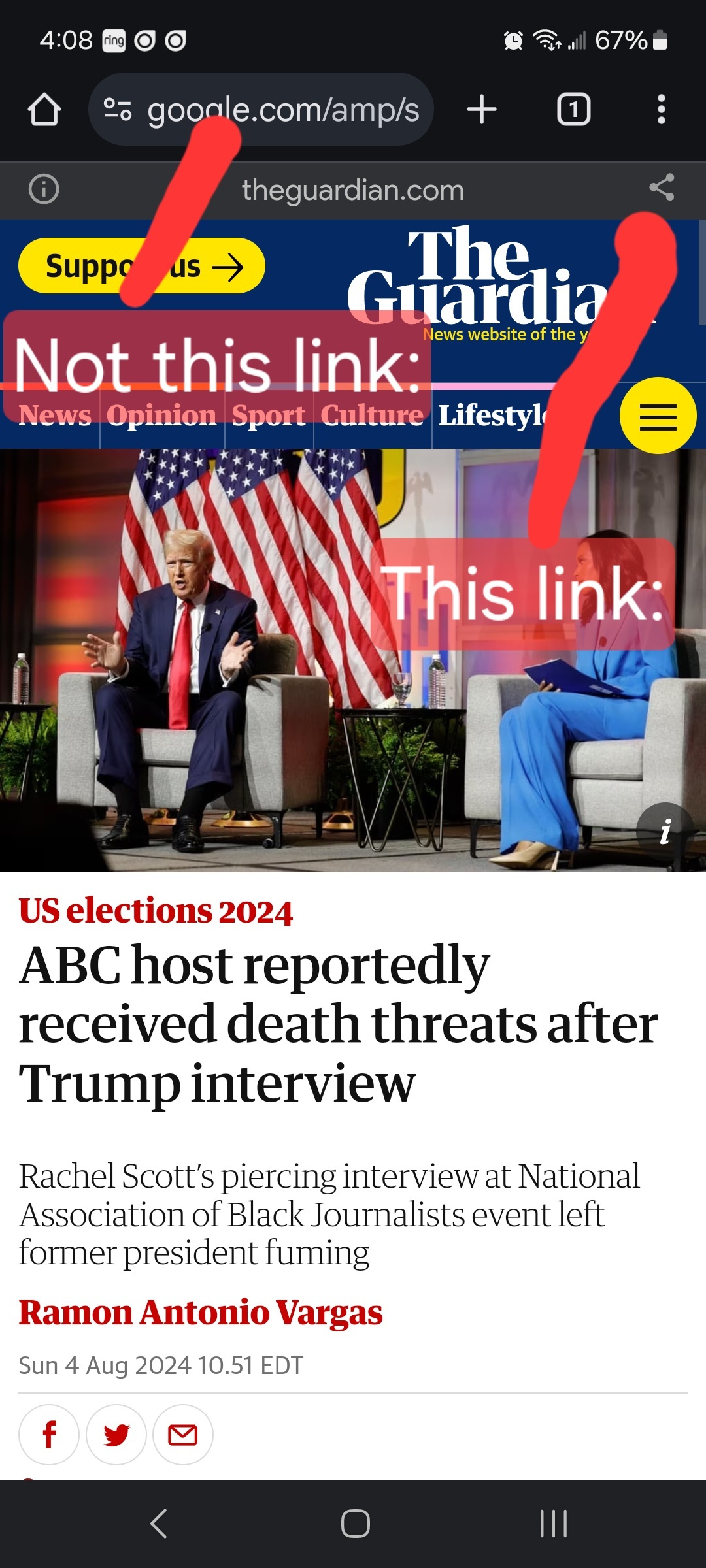
- Articles must be relevant to politics. Links must be to quality and original content. Articles should be worth reading. Clickbait, stub articles, and rehosted or stolen content are not allowed. Check your source for Reliability and Bias here.
- Be civil, No violations of TOS. It’s OK to say the subject of an article is behaving like a (pejorative, pejorative). It’s NOT OK to say another USER is (pejorative). Strong language is fine, just not directed at other members. Engage in good-faith and with respect! This includes accusing another user of being a bot or paid actor. Trolling is uncivil and is grounds for removal and/or a community ban.
- No memes, trolling, or low-effort comments. Reposts, misinformation, off-topic, trolling, or offensive. Similarly, if you see posts along these lines, do not engage. Report them, block them, and live a happier life than they do. We see too many slapfights that boil down to "Mom! He's bugging me!" and "I'm not touching you!" Going forward, slapfights will result in removed comments and temp bans to cool off.
- Vote based on comment quality, not agreement. This community aims to foster discussion; please reward people for putting effort into articulating their viewpoint, even if you disagree with it.
- No hate speech, slurs, celebrating death, advocating violence, or abusive language. This will result in a ban. Usernames containing racist, or inappropriate slurs will be banned without warning
We ask that the users report any comment or post that violate the rules, to use critical thinking when reading, posting or commenting. Users that post off-topic spam, advocate violence, have multiple comments or posts removed, weaponize reports or violate the code of conduct will be banned.
All posts and comments will be reviewed on a case-by-case basis. This means that some content that violates the rules may be allowed, while other content that does not violate the rules may be removed. The moderators retain the right to remove any content and ban users.
That's all the rules!
Civic Links
• Congressional Awards Program
• Library of Congress Legislative Resources
• U.S. House of Representatives
Partnered Communities:
• News
view the rest of the comments
Misogyny & the right: https://www.tandfonline.com/doi/full/10.1080/1369118X.2024.2445637#abstract
Andrarchy/misogyny is THE bedrock prejudice, & all other racisms/classisms are secondary.
Due to the false-framing of the original-article, that it's local a problem, here are evidences of it being global:
< I asked an LLM to find me the one on women's rights vanishing in zionism >
It appears you are referring to a widely circulated 2023 opinion piece or reportage by Haaretz, a major Israeli newspaper, which discusses the decline of women's rights in Israel under the current political climate. While several articles touch on this theme, the most prominent one—often cited by international observers—is an opinion piece by Netta Ahituv titled "Women’s Rights Are Vanishing in the New Zionism" (or similar variations depending on the translation).
Key Arguments of the Article
The article argues that the rise of religious nationalist factions within the Israeli government has led to a systematic "vanishing" of women from public spaces and decision-making roles. Key points highlighted include:
Similar Coverage in Jewish/Israeli Media
If that specific article isn't the one you're looking for, the following publications frequently cover the same "vanishing rights" beat:
References
Caplan, K. (2003). The internal popular discourse of Israeli Haredi women. Archives de sciences sociales des religions, (123), 77–101. https://doi.org/10.4000/assr.1069 Cited by: 33
Devendra, N. (2026). Feminism of the besieged: The case of the Tal’at movement. British Journal of Middle Eastern Studies, 29(1). https://doi.org/10.1080/13530194.2026.2639511
Grinberg, O., & Aharoni, S. B. (2024). The human rights archival gap: Ethno-archiving the silencing of radical activism and Israel’s violence against Palestinian women. The International Journal of Human Rights, 29(2), 129–154. https://doi.org/10.1080/13642987.2024.2383733 Cited by: 3
Helms, M. (n.d.). How does religion affect Jewish women’s rights in Israel? – Podcast. Israel's Divides. https://opentext.ku.edu/israelsdivides/chapter/womens-rights/
Christofascism's "biblical" bulls+cows "relationship" is what we, in our culture, are encountering.
Therefore we're more likely to be knowing it than the misogyny that other parts of the world, other cultures, are embodying..
Islamists .. anybody here remember when the Taliban put a bullet in Malala Yousafzai's face, because she was a girl who advocated for education-rights?
I do.
Afghanistan's reversion to the bulls+cows "relationship" has been as baldfaced as can be.
Apparently G-D was incompetent & wrong, to have put spectacular LivingPotential in the lives of girls+women among our planet, & they're MAKING G-D's mistake be corrected..
< the millions of missing women genocide >
The phenomenon you are referring to is known as the "Missing Women" crisis. It was first famously quantified by Nobel Prize-winning economist Amartya Sen in a landmark 1990 essay, using data from the decennial Indian Census and other international demographic benchmarks (Sen, 1990).
Key Data and Findings
The core finding of this research is that in parts of the world—most notably India and China—the ratio of women to men is significantly lower than in regions where women and men receive similar medical care and nutrition (Anderson & Ray, 2010).
Trustworthy Resources
For accurate and academic-grade information, you can refer to these primary sources:
References
Anderson, S., & Ray, D. (2010). Missing women: Age and disease. The Review of Economic Studies, 77(4), 1262–1300. https://doi.org/10.1093/restud/rdq019 Cited by: 116
Jha, P., Kesler, M. A., Kumar, R., Ram, F., Ram, U., Aleksandrowicz, L., Bassani, D. G., Chandra, S., & Banthia, J. K. (2011). Trends in selective abortions of girls in India: Analysis of nationally representative birth histories from 1990 to 2005 and census data from 1991 to 2011. The Lancet, 377(9781), 1921–1928. https://doi.org/10.1016/s0140-6736(11)60649-1 Cited by: 426
Jha, P., Kumar, R., Vasa, P., Dhingra, N., Thiruchelvam, D., & Moineddin, R. (2006). Low male-to-female sex ratio of children born in India: National survey of 1.1 million households. The Lancet, 367(9506), 211–218. https://doi.org/10.1016/s0140-6736(06)67930-0 Cited by: 625
John, M. E. (2011). Census 2011: Governing populations and the girl child. Economic and Political Weekly, 46(16), 10–12. https://www.jstor.org/stable/23018151 Cited by: 49
Sen, A. (1990). More than 100 million women are missing. The New York Review of Books, 37(20), 61–66.
Sen, A. (1992). Missing women. BMJ: British Medical Journal, 304(6827), 587–588. https://doi.org/10.1136/bmj.304.6827.587
I've ripped-out the bogo-links & that's about it.
See the forest, not just the near-trees.
This is a millenia-long genociding that's been going on, & so long as we ignore the totality-of-it, we're helping it perpetuate, through our ignoring.
That isn't a world-viable path/vector, now: we have to get upright if we are to be viable, through The Great Filter.
_ /\ _