109
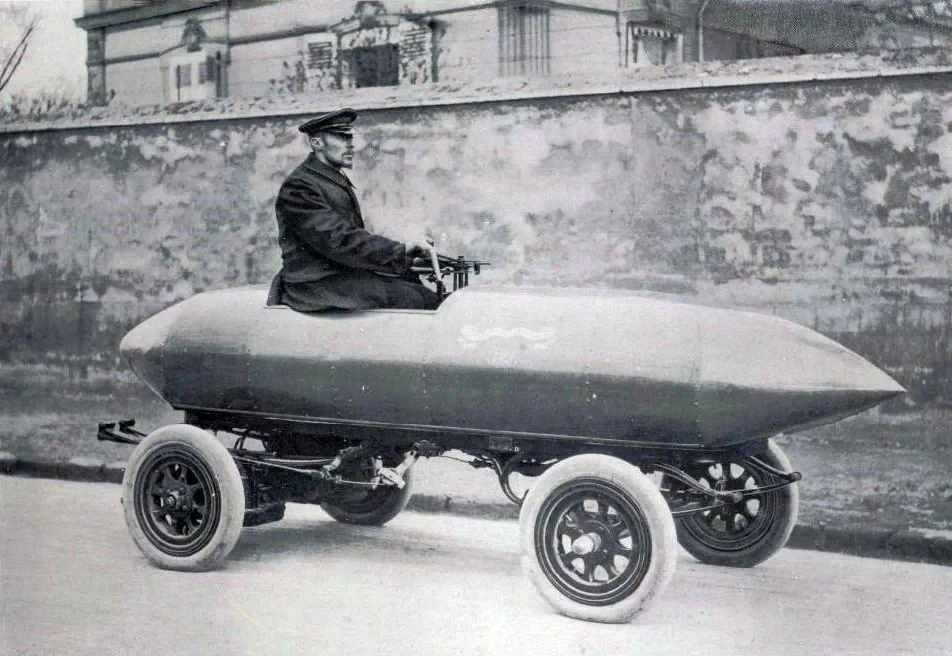
Belgian race car driver Camille Jenatzy with his record-breaking electric car, La Jamais Contente, which exceeded 100 kph, 1899
(media.piefed.social)
HistoryPhotos is for photographs (or, if it can be found, film) of the past, recent or distant! Give us a little snapshot of history!
Rules
Related Communities:
A typical 22kw electric engine today weighs about 200kg, so I don't think 250kg is too much
https://www.auctelia.com/en/materiel-occasion/moteur-electrique-22-kw-weg-w22/uQ7C20m1XhI1_5uS6FaAM
That's due to the materials, cooling, & intended (decades of continuous, low-vibration, & safe industrial?) use - the one you linked has a cast iron frame, which is prob the majority of those 200kg.
Here is a random example (bcs there is a table included with power & weight) under 100kg that looks about the same: globalsources.com/permanent-magnet-motor_1210699575f.htm.
But I def don't know anything about electric motors 120 years ago, what was available, how the rich kids did their hobbies, etc.
And I do agree that the 250 estimate might not be too much - ~~however that means that the car was unbalanced af & the driver had to sit on the opposite side of the (initially one) electric motor to provide counterbalance (instead of the motor just being mounted in the centre of the car)~~ nvm, it had two.