this post was submitted on 29 Mar 2026
4 points (100.0% liked)

Climate

8481 readers
348 users here now

Discussion of climate, how it is changing, activism around that, the politics, and the energy systems change we need in order to stabilize things.

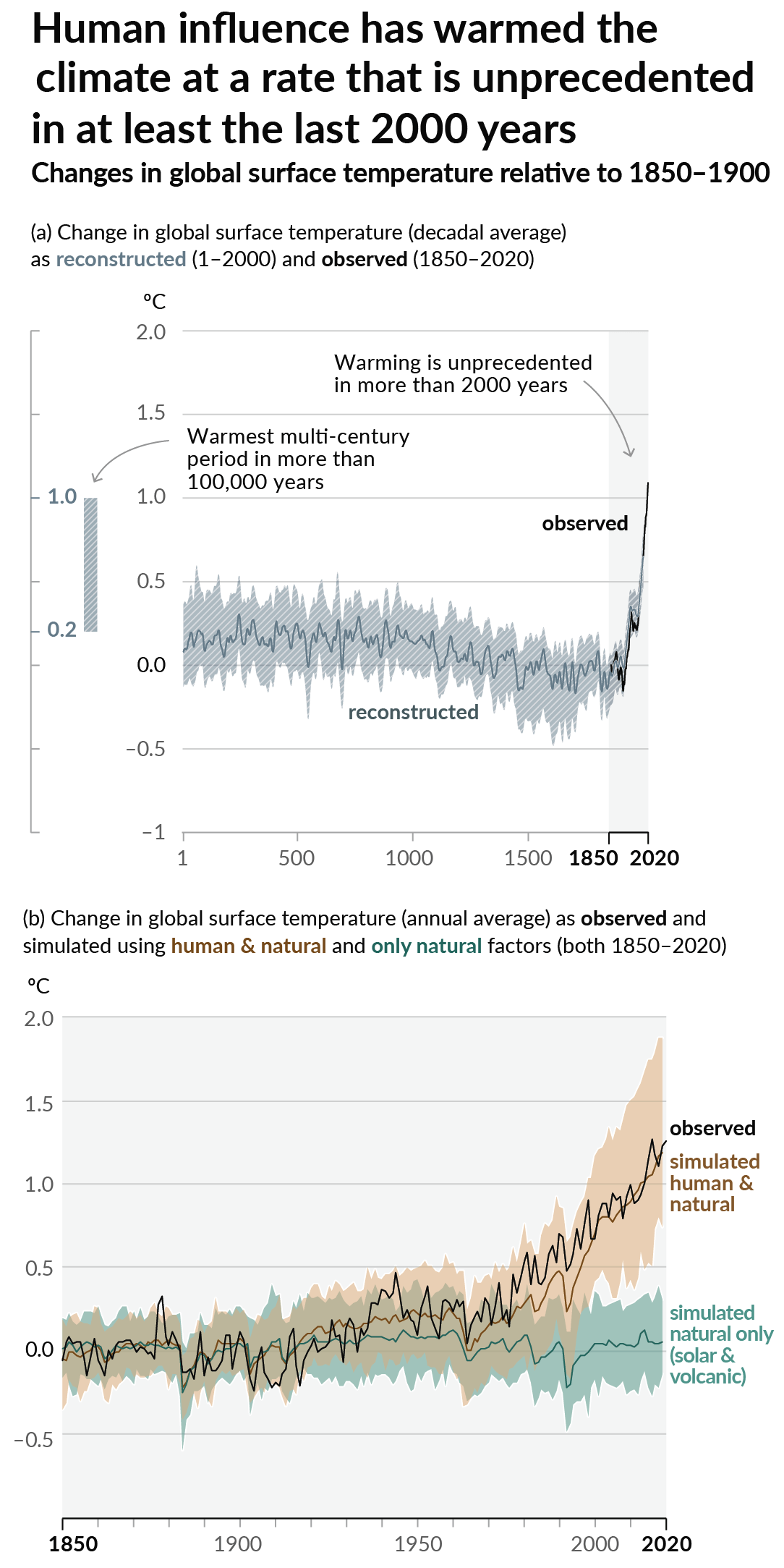
As a starting point, the burning of fossil fuels, and to a lesser extent deforestation and release of methane are responsible for the warming in recent decades: Graph of temperature as observed with significant warming, and simulated without added greenhouse gases and other anthropogentic changes, which shows no significant warming
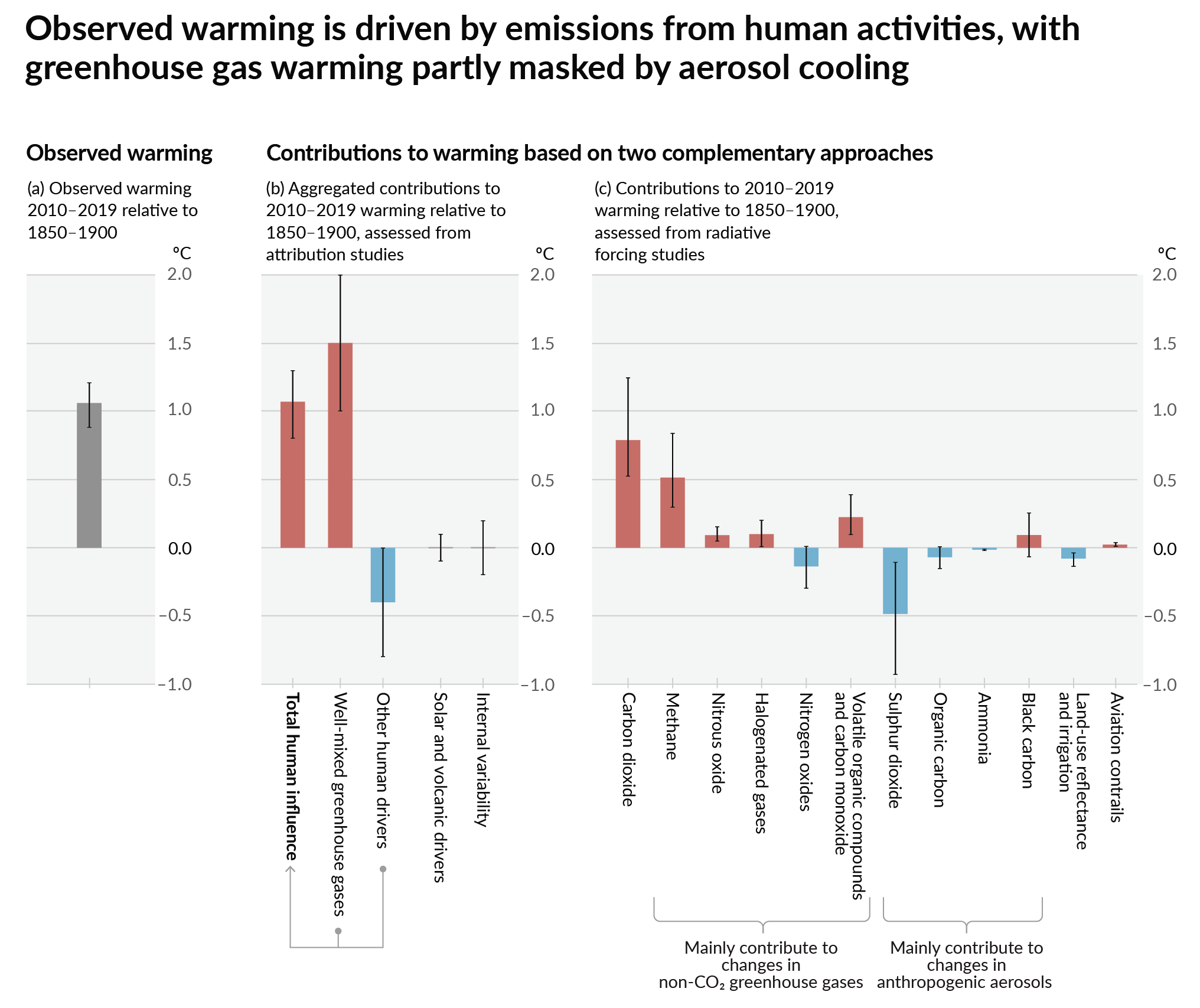
How much each change to the atmosphere has warmed the world: IPCC AR6 Figure 2 - Thee bar charts: first chart: how much each gas has warmed the world.  About 1C of total warming.  Second chart:  about 1.5C of total warming from well-mixed greenhouse gases, offset by 0.4C of cooling from aerosols and negligible influence from changes to solar output, volcanoes, and internal variability.  Third chart: about 1.25C of warming from CO2, 0.5C from methane, and a bunch more in small quantities from other gases.  About 0.5C of cooling with large error bars from SO2.
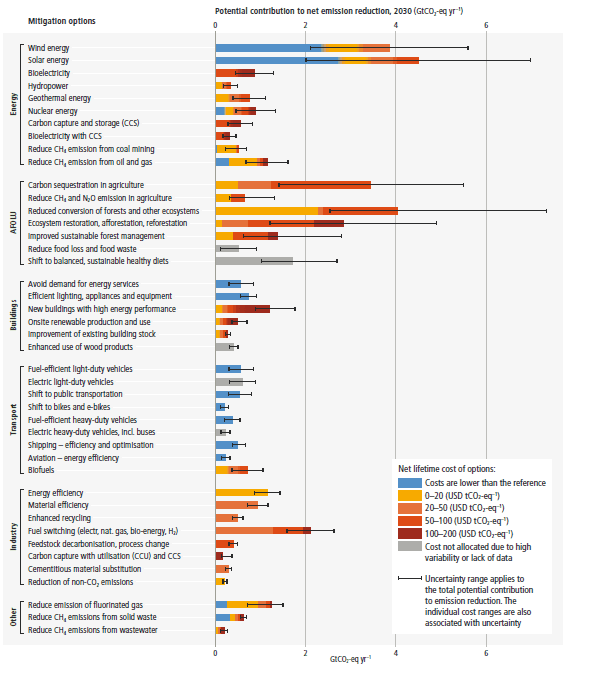
Recommended actions to cut greenhouse gas emissions in the near future:
Anti-science, inactivism, and unsupported conspiracy theories are not ok here.

founded 2 years ago
MODERATORS
 

A long-running experiment in Colorado provides an ‘alarming’ view of how rapidly unchecked global heating could transform fragile ecosystems

you are viewing a single comment's thread
view the rest of the comments
[–] blueworld@piefed.world 2 points 9 hours ago

The Rocky Mountain Biological Laboratory is in the former ghost town of Gothic, abandoned after the closure of its silver mines. Over winter, the landscape lies quietly under a bed of snow. In early spring, the only way for researchers to get to experimental sites – at an altitude of 10,000ft – is by skiing across country.

Electric infrared radiators warmed five experimental plots of 30 sq metres year-round. Head-height heaters were on day and night over a patch of meadow, keeping it 2C above normal temperatures with an annual electricity bill of $6,000 (£4,450). They warmed the top six inches of soil. Animals could come and graze and the natural system was preserved as much as possible.

Over 29 years, researchers found that shrubs increased by 150% in warmed plots compared with those without warming. The surface of the soil was dried by up to 20%, and shallow-rooted plants became stressed. Some wildflowers went extinct in heated plots. "It's a sign of things to come," says lead researcher Lara Souza from the University of Oklahoma.

Scientists also noted big changes in the invisible world of soil fungi and microbes. Shrubs and sage brush don't rely on fungi in the same way as grasses. They found a decline in fungi that help plants acquire nutrients, and an increase in fungi that decompose organic matter. "This highlights that when you have a big change above ground, you've likely got a big change below ground," says Souza. "Turning back is very unlikely."