this post was submitted on 05 Mar 2026
38 points (100.0% liked)

Climate

8395 readers
961 users here now

Discussion of climate, how it is changing, activism around that, the politics, and the energy systems change we need in order to stabilize things.

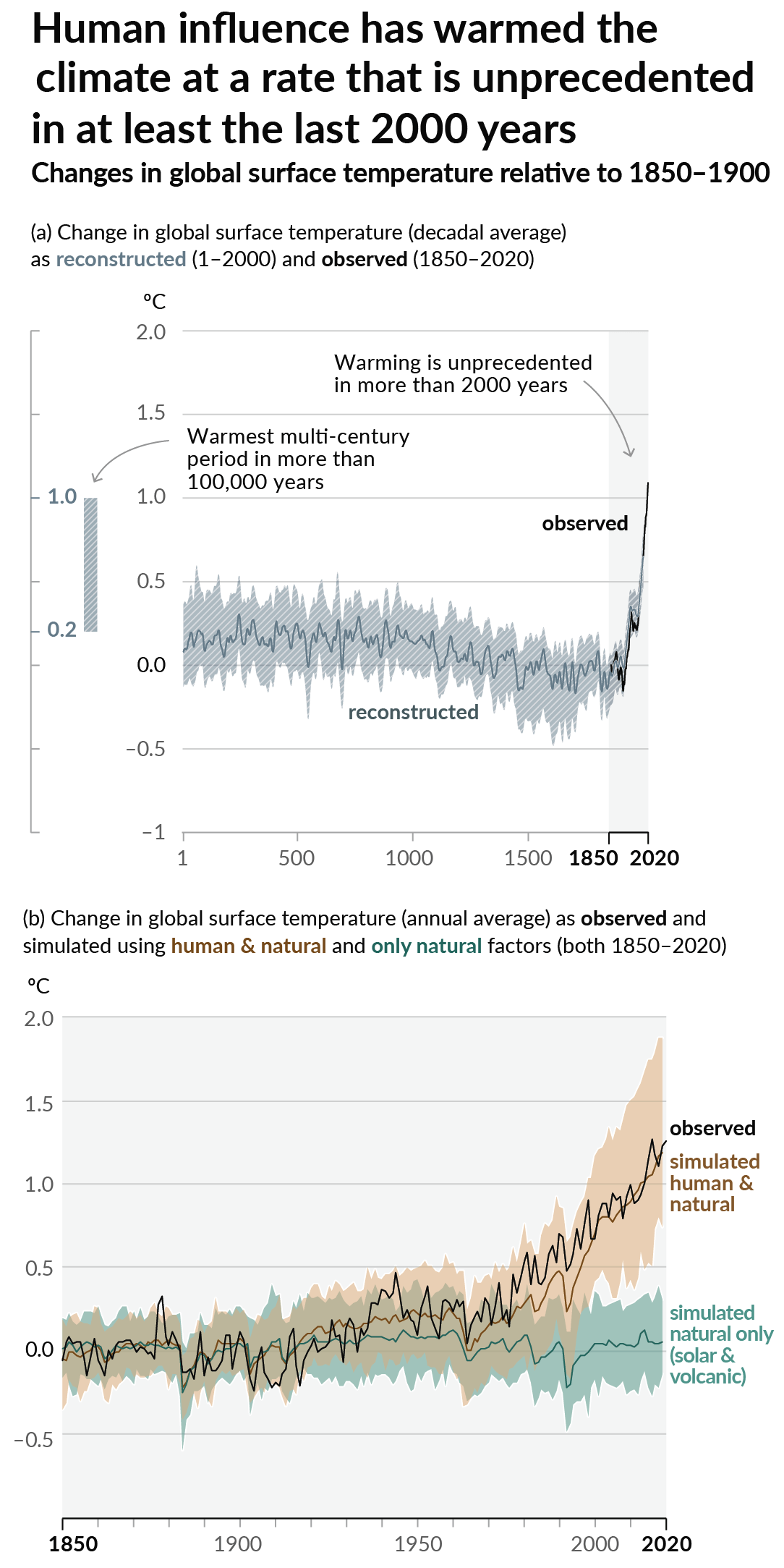
As a starting point, the burning of fossil fuels, and to a lesser extent deforestation and release of methane are responsible for the warming in recent decades: Graph of temperature as observed with significant warming, and simulated without added greenhouse gases and other anthropogentic changes, which shows no significant warming
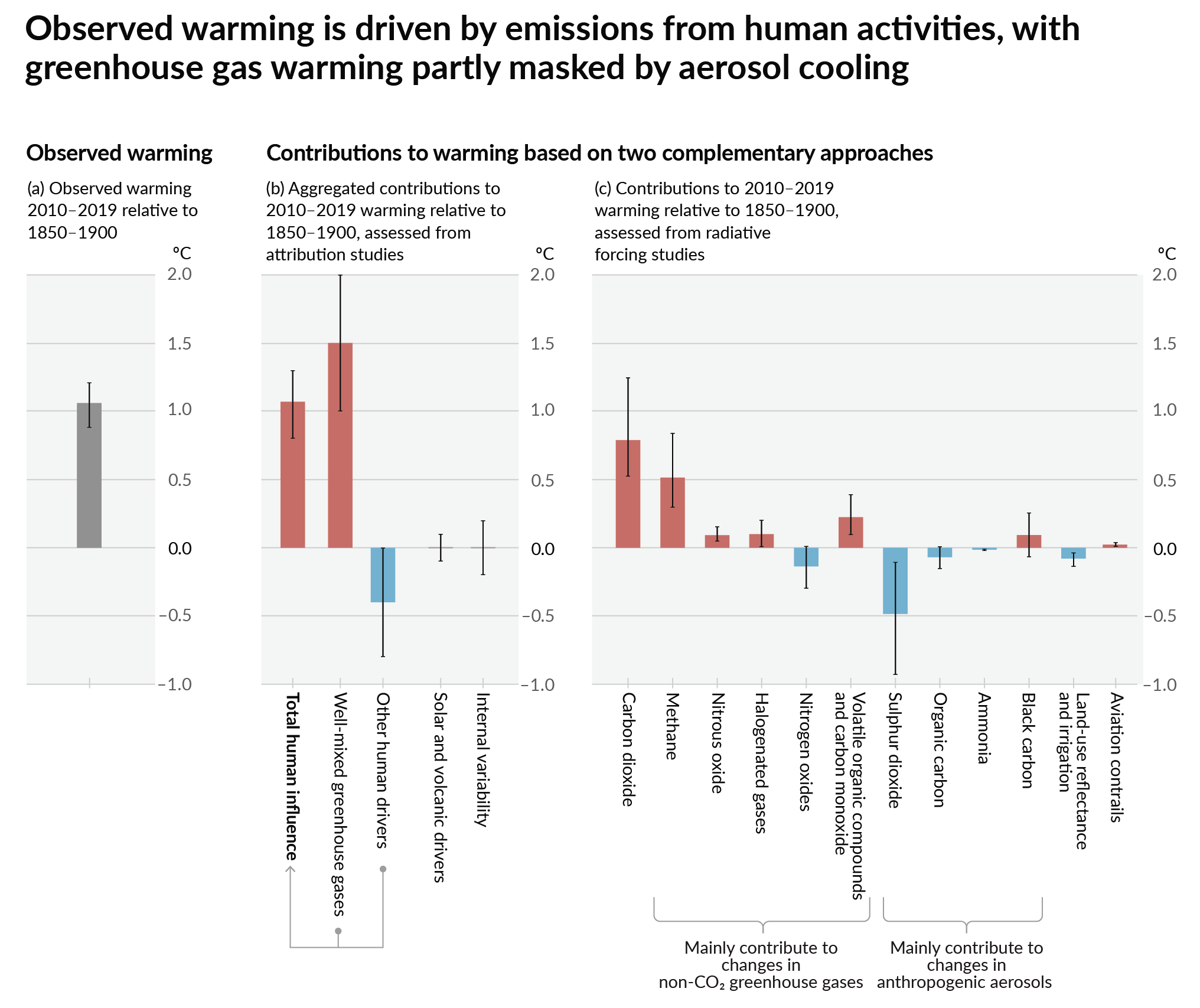
How much each change to the atmosphere has warmed the world: IPCC AR6 Figure 2 - Thee bar charts: first chart: how much each gas has warmed the world.  About 1C of total warming.  Second chart:  about 1.5C of total warming from well-mixed greenhouse gases, offset by 0.4C of cooling from aerosols and negligible influence from changes to solar output, volcanoes, and internal variability.  Third chart: about 1.25C of warming from CO2, 0.5C from methane, and a bunch more in small quantities from other gases.  About 0.5C of cooling with large error bars from SO2.
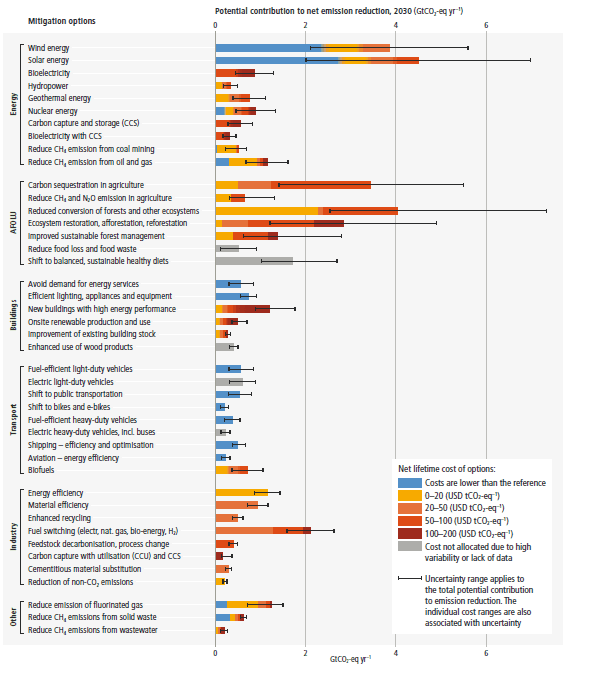
Recommended actions to cut greenhouse gas emissions in the near future:
Anti-science, inactivism, and unsupported conspiracy theories are not ok here.

founded 2 years ago
MODERATORS
 

If there is a readily accessible hydrocarbon to metabolize, life will evolve a way to metabolize it. Bacteria, fungi, and even some insects have already shown scientists they have figured out how to do this with certain types of plastic. Where does this lead?

One great thing this leads to is an eventual future where microplastics are cleaned up by the tiny organisms beneath our notice. Yay the pollution will clean itself up. Unfortunately, that also means that those hydrocarbons will be broken down, turned into CO2 or Methane, added to the atmosphere. Will this be a significant amount? I am unable to answer.

More startlingly, the other conclusion i draw is that all plastic in the world will someday be food for bacteria, mold, and grubs. Look around and note where you see plastic. It holds our food, it is the siding on some houses, it could be your building's insulation, it is the insulation on the wires in your house and outside. It holds your car together to varying degrees. It is the structure of many decks, benches, mobility aides etc.

Someday, these items will all be eaten slowly, or perhaps quickly. When will this begin in force? When will it affect our daily lives and health? Will we be able to prepare?

you are viewing a single comment's thread
view the rest of the comments
[โ€“] naught101@lemmy.world 4 points 22 hours ago (1 children)

I doubt that plastic in a well maintained state will rot fast. Wood rots quickly in the wild, but can last millennia in controlled conditions (kept clean and dry)

[โ€“] poVoq@slrpnk.net 4 points 20 hours ago

Sure, but often plastic is used precisely because it doesn't rot when wet for extended periods.