politics
Welcome to the discussion of US Politics!
Rules:
- Post only links to articles, Title must fairly describe link contents. If your title differs from the site’s, it should only be to add context or be more descriptive. Do not post entire articles in the body or in the comments.
Links must be to the original source, not an aggregator like Google Amp, MSN, or Yahoo.
Example:
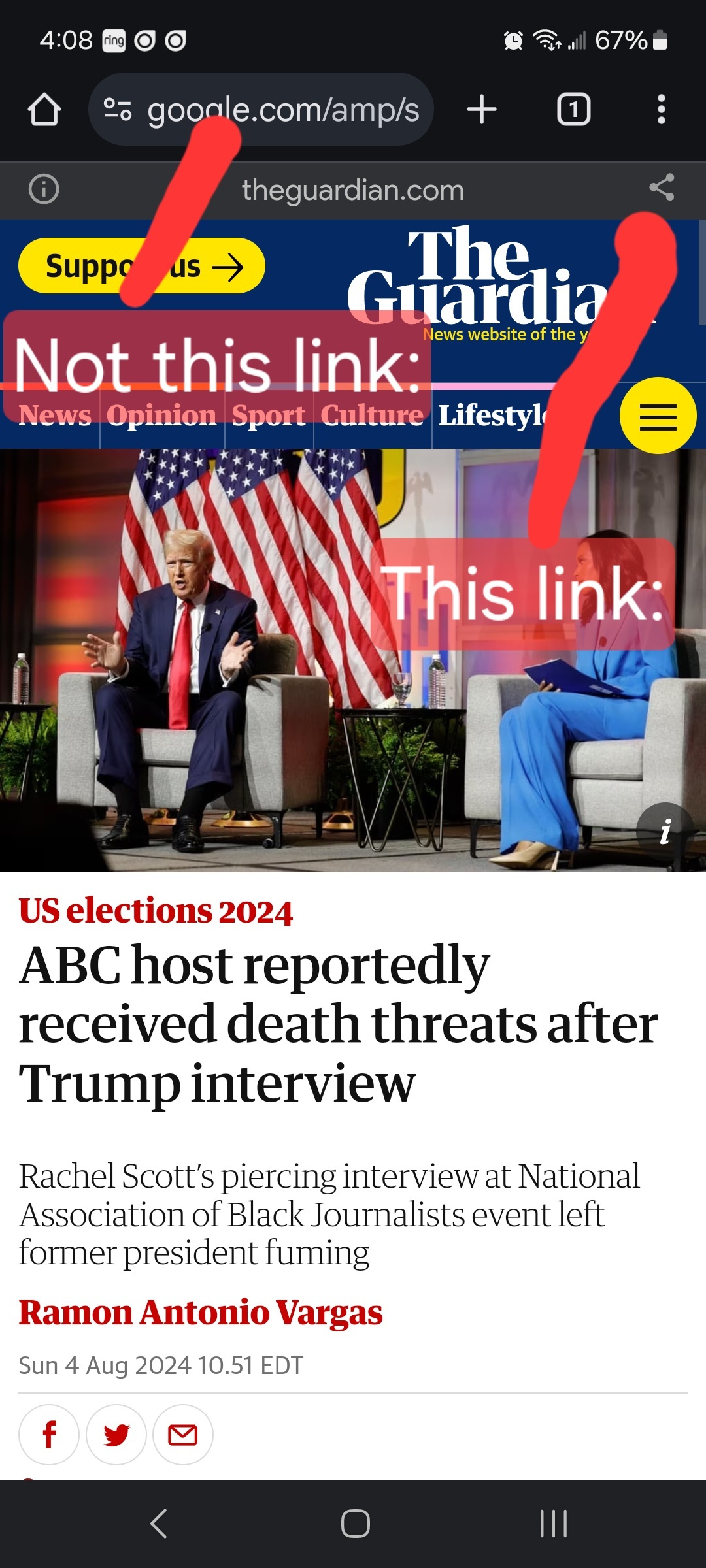
- Articles must be relevant to politics. Links must be to quality and original content. Articles should be worth reading. Clickbait, stub articles, and rehosted or stolen content are not allowed. Check your source for Reliability and Bias here.
- Be civil, No violations of TOS. It’s OK to say the subject of an article is behaving like a (pejorative, pejorative). It’s NOT OK to say another USER is (pejorative). Strong language is fine, just not directed at other members. Engage in good-faith and with respect! This includes accusing another user of being a bot or paid actor. Trolling is uncivil and is grounds for removal and/or a community ban.
- No memes, trolling, or low-effort comments. Reposts, misinformation, off-topic, trolling, or offensive. Similarly, if you see posts along these lines, do not engage. Report them, block them, and live a happier life than they do. We see too many slapfights that boil down to "Mom! He's bugging me!" and "I'm not touching you!" Going forward, slapfights will result in removed comments and temp bans to cool off.
- Vote based on comment quality, not agreement. This community aims to foster discussion; please reward people for putting effort into articulating their viewpoint, even if you disagree with it.
- No hate speech, slurs, celebrating death, advocating violence, or abusive language. This will result in a ban. Usernames containing racist, or inappropriate slurs will be banned without warning
We ask that the users report any comment or post that violate the rules, to use critical thinking when reading, posting or commenting. Users that post off-topic spam, advocate violence, have multiple comments or posts removed, weaponize reports or violate the code of conduct will be banned.
All posts and comments will be reviewed on a case-by-case basis. This means that some content that violates the rules may be allowed, while other content that does not violate the rules may be removed. The moderators retain the right to remove any content and ban users.
That's all the rules!
Civic Links
• Congressional Awards Program
• Library of Congress Legislative Resources
• U.S. House of Representatives
Partnered Communities:
• News
view the rest of the comments
I mean, it's absolutely a sign of weakness - which is to say, it's a sign that the incumbent isn't popular. The institutional response to an incumbent's unpopularity is to mask it by forcing rivals out of the primary process (as with Biden going uncontested in '24).
In 1803, a single House Rep had a district of about 34,000 people. In 1903, a district held 193,167 people. In 1953, 334,587 people. In 2023, 761,169 people. These seats weren't great at representing large-ish constituencies 220 years ago. They're absolutely dogshit at it now. Members exist to represent the party on behalf of local party members not the people of the district. In many cases, a Rep is explicitly antagonistic towards minority members of their district in an attempt to curry favor with the majority.
The two year window is not about direct accountability to the district nearly so much as it is direct accountability towards the donor class that sponsors their campaigns. And the near-continuous need to fundraise in order to cover the cost of advertising and self-promotion within the district has turned House Reps into patronage positions of the most servile sort.
The problem with primaries, in the modern political equation, is that they drive up the cost for donors to hold any single seat. And for parties to control a House majority (as non-incumbents are more vulnerable to a seat flip).
So suppressing primaries, suppressing voter turnout, and suppressing opposition parties through gerrymandering are - at the end of the day - cost control measures for national parties and corporate interests.
They're the best because at that age they've proven themselves to be unfailingly loyal. This is, again, an issue of cost control and risk mitigation. Nobody who has been in the Senate for 50 years is going to pitch any curveballs. Nobody who has climbed to the top of the ladder in their House Committee is going to deviate far from their proven ideology.
Unlike with freshmen who can waffle erratically from their original campaign pledges (see: Fetterman and Sinema, for instance) the 70 year old multi-election incumbent - a la Chuck Schumer or Diane Feinstein - is very predictable.
It doesn't have to be, though. Even framing it this way is kind of playing into the DNC's hand on this matter. A primary just means that other people think they could do a better job of it than the incumbent, for whatever reason. It could be that the incumbent is unpopular, but it could also be that the challenger brings a new perspective or new knowledge to the table that makes them more suitable to hold the office. It could just be someone who wasn't eligible to run in the previous election for that position, but they are now.
Vanity campaigns are consistently the worst