Vietnam Việt Nam

137 readers
1 users here now

Vietnam


Community dedicated to discuss everything related to Vietnam. Its culture, its language, its politics and its people.


Rules:

  1. Posts must be in Vietnamese or in English.
  2. Add a flair in the title of every post.

List of flairs:

[News] [Culture] [Discussion]
[Question] [Request] [Guide]

Việt Nam


Cộng đồng dành riêng để thảo luận về mọi thứ liên quan đến Việt Nam. Văn hóa của nó, ngôn ngữ của nó, chính trị của nó và con người của nó.


Quy tắc:

  1. Bài viết phải bằng tiếng Việt hoặc tiếng Anh.
  2. Thêm một sự tinh tế trong tiêu đề của mỗi bài đăng.

Danh sách các hội chợ:

[Tin tức] [Văn hóa] [Thảo luận] 
[Câu hỏi] [Yêu cầu] [Hướng dẫn]

founded 4 years ago
MODERATORS
1
2


"gamble" lol

3


I'm not even gonna image how miserable that would be bruh

Expand article

A meeting with an American professor led Dr Do Lenh Hung to a breakthrough that freed thousands of patients from the daily burden of wearing a urinary drainage bag.

After more than six hours in the operating theatre, Hung, head of the urethral reconstructive surgery department at Binh Dan Hospital, left completely drained.

He had just performed a complex microsurgery to remove hardened scar tissue, locate two severed ends of the urethra deep in the pelvis and reconnect them with ultra-fine sutures to restore natural urinary flow.

He informed the waiting relatives that the surgery had been successful before leaving to rest.

On the operating table a 30-year-old man had undergone reconstruction after four years of living with a urine bag following a urethral rupture caused by a fall.

He had endured multiple failed operations, quit his job, sabotaged his relationship and struggled with suicidal thoughts.

After the successful surgery he again started to urinate normally, married his longtime partner, now has two children, and runs his own business.

| Bác sĩ Lệnh Hùng trao đổi cùng bệnh nhân người Mỹ sau ca mổ thành công. Ảnh: Trần Nhung | | Dr Do Lenh Hung speaks with an American patient after a successful surgery. Photo by VnExpress/Tran Nhung |

He is among more than 3,000 patients who no longer rely on an external urinary drainage bag thanks to the 44-year-old doctor.

Nearly two decades ago, when he was a resident, Hung admitted he disliked working in this field.

At that time, traumatic urethral stricture had limited treatment options in Việt Nam. Patients either lived with a permanent suprapubic catheter and urine bag or returned routinely for urethral dilation.

Watching patients writhe in pain as metal rods of increasing size were inserted through the urinary tract, only for the stricture to recur, Hung says he felt powerless and often tried to avoid assisting in such procedures.

In 2015 Prof Joel Gelman of the University of California, Irvine, a leading US specialist in urethral reconstruction, visited Việt Nam.

Assigned as an interpreter, Hung was surprised when the professor reported a success rate of up to 99 per cent. After examining a postoperative patient and finding no recurrence, Hung applied to train under him.

Four years earlier, at the age of 29, Hung had completed a one-year fellowship at the University of Michigan in the U.S. in robotic and female urologic surgery.

He passed Gelman’s rigorous evaluations and returned to the US to train in urethral reconstruction. He learned end-to-end anastomosis and reconstruction techniques using oral mucosa or penile skin flaps and brought them back to Việt Nam.

Binh Dan Hospital upgraded its operating facilities to US standards with support from Assoc Prof Tran Vinh Hung, its director. The previous rigid endoscopes were replaced with flexible ones to reduce trauma.

Hung’s first-time surgeries now record a near-perfect success rate while the hospital’s overall rate stands at 98 per cent.

Annual case numbers have increased from 100–200 in the early years to more than 800 in 2025.

Hung says the greatest challenges involve patients who previously underwent multiple failed surgeries. Scar tissue and altered anatomy make such procedures unpredictable, he adds.

One patient from Hung Yen Province sought his help after enduring 16 painful dilations and a failed operation.

Some surgeries last 12-13 hours.

Hung’s team remains on its feet from morning until late at night without breaks, locating and reconnecting severed urethral ends embedded in dense scar tissue.

Hung says the responsibility of handling failed cases has caused him sleepless nights. In some situations he advises patients to wait several months while his team prepares an optimal plan.

A 47-year-old American businessman recently travelled to Binh Dan Hospital after 15 years with the condition and six failed surgeries in the US, Singapore and Thailand.

Following a two-hour operation by Hung and three weeks of catheterisation, his urinary function was fully restored.

"I feel reborn after years of despair and searching everywhere for treatment. I never imagined that Việt Nam would be the place that finally cured me."

| TS.BS Đỗ Lệnh Hùng (bên trái) và giáo sư Joel Gelman trong phòng mổ. Ảnh: Trần Nhung | | Dr Do Lenh Hung (L) and Prof Joel Gelman in the operating room. Photo by VnExpress/Tran Nhung |

Binh Dan Hospital has become a regional training centre for urethral reconstruction.

US doctors visit to observe and practice with rare and complex cases while Hung travels to Japan, Thailand and Malaysia to demonstrate surgical techniques.

Hung says urethral disease is not immediately life-threatening but hugely affects a patient’s quality of life and mental health.

Restoring natural urination often brings strong emotional reactions, with some patients breaking down in tears upon discharge, he adds.

4


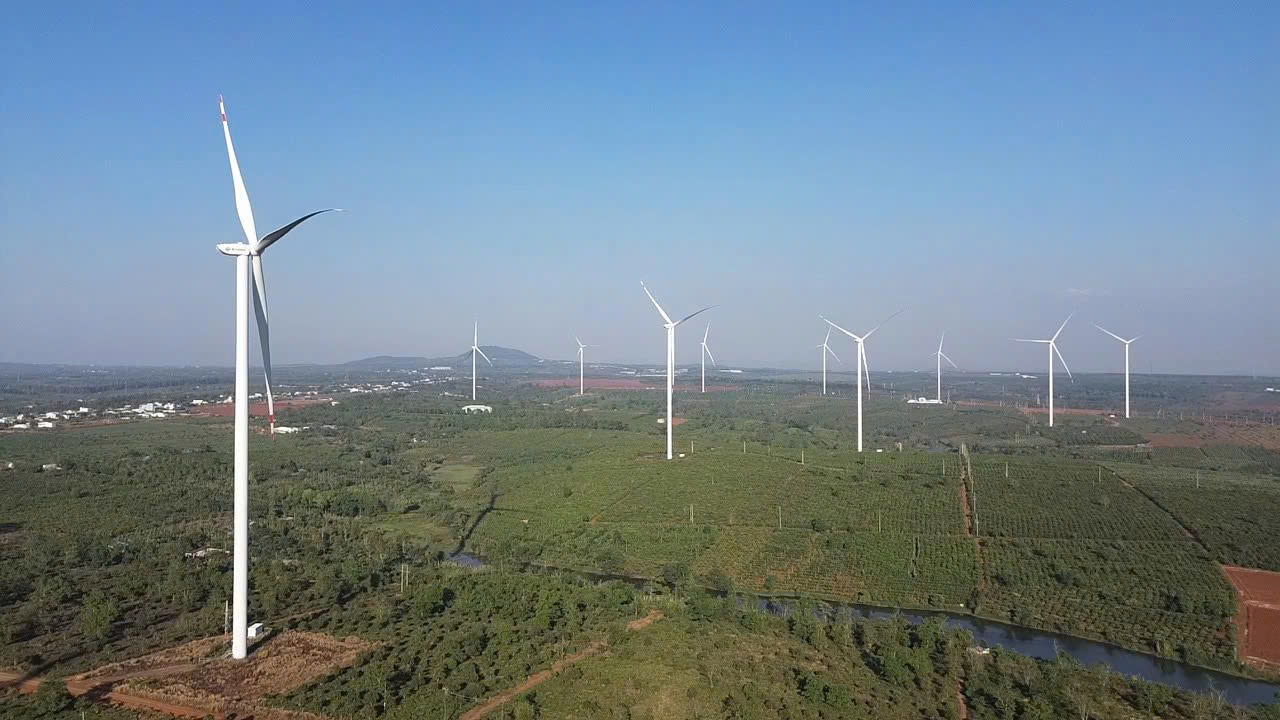
Investors eye new wind, solar projects worth $430mn in Vietnam’s Gia Lai- Ảnh 1.

A wind power project operates in western Gia Lai Province, located in Vietnam’s Central Highlands. Photo: Tan Luc / Tuoi Tre

The Gia Lai administration on the same day approved investor interest registration results for the nine projects located in the province’s western region.

The projects are expected to begin construction in September this year and start operations by December next year.

A consortium comprising EMI Investment JSC, Nhon Hoa 1 Wind Electricity JSC, and Nhon Hoa 2 Energy JSC has been selected for five projects with a combined investment of more than VND6.6 trillion ($250 million).

These include three solar power plants and two wind farms.

Among them, the Nhon Hoa 1 solar plant, located in Ia Le Commune, covers 70 hectares with a capacity of 49 MW and an estimated investment of VND836 billion ($31.7 million).

The Nhon Hoa 1A solar project, also in Ia Le and integrated with a battery storage system, has a similar scale and investment of VND831 billion ($31.5 million).

The larger Nhon Hoa 2 solar plant spans 135 hectares, with a capacity of 90 MW and an investment of VND1.545 trillion ($58.6 million).

The two wind power projects, Nhon Hoa 3 and Nhon Hoa 4, are located in Chu Puh and Ia Le Communes. Each project has a capacity of 42 MW and an estimated investment of VND1.72 trillion ($65.3 million) and VND1.678 trillion ($63.7 million), respectively.

Other approved projects include the Ia Ko 1 and Ia Ko 2 wind farms, with a combined capacity of 84 MW and total investment of VND2.962 trillion ($112.4 million), led by Tay Nguyen Power Development JSC.

Another project, the An Thanh Gia Lai wind farm, has a capacity of 40 MW and investment of VND1.586 trillion ($60.2 million).

A smaller solar project, Ia Rsuom - Bitexco - ToNa, will be developed in Uar Commune with a capacity of 11.84 MW and an estimated investment of VND198 billion ($7.5 million).

Gia Lai has recently positioned itself as a major renewable energy hub in Vietnam, benefiting from favorable wind and solar conditions.

The Central Highlands province continues to attract large-scale investments, including recent approvals for wind power projects worth more than VND53 trillion ($2 billion) linked to VinEnergo Energy JSC, a member of Vietnam’s largest private conglomerate Vingroup.

5
6


Things the "you can just do things" guys mysteriously never do. They insist it's a bad idea. At least their cabin has a few panels. (Occupied 2% of the year.)

Expand article

Prime Minister Pham Minh Chinh has issued a directive, requesting stricter electricity-saving measures and accelerated development of self-produced, self-consumed rooftop solar power, as Viet Nam moves to secure energy supply amid rising demand and global uncertainties.

The directive underscores the top and urgent priority to ensure safe, stable and uninterrupted power supply for production and daily life is saying that these hold decisive importance for economic growth and national energy security.

To proactively implement solutions for managing electricity demand in 2026, the PM has instructed ministries, sectors, local authorities, state-owned groups and corporations, as well as organisations and individuals to urgently and effectively carry out assigned tasks and measures in a timely and decisive manner.

The target is to save at least 3% of total national electricity consumption in 2026, and to achieve a minimum 10% reduction in electricity use during peak hot months (April, May, June, and July).

The PM also requested synchronously implementing demand-side management and demand response (DSM/DR) programmes, aiming to cut at least 3,000 MW of load capacity during peak hours when there is a risk of supply–demand imbalance in the power system.

The directive underlined the need to prioritises rapid expansion of rooftop solar for self-use across public offices, production and service facilities, and households, and the installation of integrated battery energy storage systems (BESS), towards realising the goal for around 10% of public offices and 10% of households nationwide to adopt rooftop solar systems annually, or for total installed capacity to reach 20% of planned rooftop solar capacity in each locality during 2026–2030.

Local governments are tasked with developing tailored deployment plans.

The PM also called for maximising on-site and backup power sources at enterprises and institutions, while Viet Nam Electricity (EVN) is required to reduce transmission and distribution losses to below 6%.

Ministries, agencies, localities, businesses and households must formulate and implement action plans for 2026 with defined targets, roadmaps and responsibilities. Performance in electricity saving will be linked to leadership evaluation, the directive said.

Meanwhile, public offices must enforce strict energy-saving practices during peak hours, replace inefficient equipment, and adopt digital monitoring tools. Public lighting systems are required to cut consumption by at least 30%, including switching off decorative and advertising lighting where possible, while still ensuring safety.

Commercial establishments such as hotels, restaurants, office complexes and apartment buildings must reduce at least 50% of outdoor decorative lighting capacity during evening peak hours. Households are encouraged to install rooftop solar and energy storage, as well as solar water heating systems.

Industrial producers, especially major energy users, must integrate energy-saving targets into business plans, participate in DSM/DR programmes, and shift production away from peak hours. Facilities consuming over 500,000 kWh annually are required to reduce electricity use by at least 3%.

EVN is instructed to upgrade grid infrastructure, enhance technical management, and ensure reliable operation, while supporting customers in adopting rooftop solar and participating in demand response programmes.

The directive also urges stepping up communication and public awareness campaigns on the benefits and policies of energy saving. Media agencies are tasked with intensifying communications on the guidelines, targets, benefits, and policies related to efficient and economical electricity use, as well as the advantages and incentives for rooftop solar development, thereby contributing to promoting renewable energy, and advancing the green transition.

VNA

Prime Minister Pham Minh Chinh issued a directive making safe, stable power supply a top priority for economic growth & national energy security. The target is to save "at least 3% of total national electricity consumption in 2026" and cut use by "a minimum 10%... during peak hot months (April, May, June, and July)."

The PM also ordered demand-side management to shed "at least 3,000 MW of load capacity during peak hours" when supply is strained. On rooftop solar, the directive calls for rapid expansion for self-use across public offices, businesses & households, aiming for "around 10% of public offices and 10% of households nationwide to adopt rooftop solar systems annually, or for total installed capacity to reach 20% of planned rooftop solar capacity in each locality during 2026–2030."

State utility EVN must cut transmission & distribution losses "to below 6%." Public offices face strict savings during peak hours; public lighting must reduce consumption "by at least 30%, including switching off decorative and advertising lighting." Hotels, restaurants & apartment buildings must cut "at least 50% of outdoor decorative lighting capacity during evening peak hours."

Industrial users consuming over 500,000 kWh annually are required to reduce electricity use "by at least 3%" and shift production away from peak hours. Performance on saving electricity will be "linked to leadership evaluation." Media agencies are tasked with intensifying communications on efficiency policies & rooftop solar incentives.

7


Yes, I am aware that LNG production + transit has leaks. I'll cover the whole green transition including petrochemicals soon

Petrovietnam has completed Vietnam’s first integrated LNG-to-power chain, linking the Thi Vai LNG terminal (operated by PV GAS) with the Nhon Trach 3 and 4 power plants (operated by PV Power). The Thi Vai terminal serves as Vietnam’s first industrial-scale LNG import facility, while Nhon Trach 3 and 4 are the country’s first LNG-fueled power plants using high-efficiency gas turbine technology. The chain was developed without government loan guarantees, with Prime Minister Pham Minh Chinh praising it as a model of “scale, technology, and competitive commercial electricity prices.” Petrovietnam positioned itself as an integrator across the full value chain, aiming to strengthen energy security and support Vietnam’s net-zero emissions target. According to PV Power Chairman Hoang Van Quang, “the success of Nhon Trach 3 and 4 stems from the energy transition orientation, the national industrial-energy development vision, and the internal value chain built by the Group over many years.”

8


Euroids kirkenuinely believe this light work gives them more leverage than China here. Buddy they don't even let me have leverage. Cough it up crackers! See how they're being forced to put it in infrastructure? No goofy "defense pacts"!

Expand article

The announcement came during the EU-Vietnam Global Gateway Business and Investment Forum in Hanoi, where Síkela appeared alongside representatives from European companies and development banks.

Síkela said the planned investments are expected to create jobs, support green economic growth, and reduce pollution.

In the energy sector, the package will support Vietnam’s first pumped storage hydropower plant, Bac Ai, in Khanh Hoa Province.

The plant, with a capacity of 1,200 MW, is backed by nearly €230 million ($266.6 million) in loans under an agreement between state utility Vietnam Electricity, the French Development Agency, and Proparco, a development finance institution under the agency.

Bac Ai is designed to function as a large-scale energy storage system for the power grid, storing electricity when supply is abundant and releasing it during peak demand to improve the reliability of renewable energy.

The European Investment Bank has also announced a €200 million ($231.8 million) credit facility agreement with Vietnam Technological and Commercial Joint Stock Bank (Techcombank) to expand financing for private businesses, including small and medium enterprises, investing in renewable energy, energy efficiency, and electric mobility.

The funding is expected to deliver benefits such as cleaner air, lower energy costs, and job creation.

In transport, the EU plans to launch a €40-million ($46.3 million) Sustainable Transport Facility to support major public infrastructure projects across Vietnam, with a focus on railways such as the Hanoi-Ho Chi Minh City high speed rail line, inland waterways, and urban mobility.

EU cooperation in transport has already contributed to the extension of Hanoi’s metro line No. 3 and is expected to support the development of the Lien Chieu container port in Da Nang.

Additional programs include a €23-million ($26.6 million) expansion of the Energy Transition Facility, a €20-million ($23.2 million) sustainable forest management program, and a €50-million ($57.9 million) initiative with Germany and France to strengthen technical and vocational training in green and digital skills.

Síkela said the package demonstrates how the EU-Vietnam partnership can deliver tangible results, including jobs, stronger growth, a cleaner energy system, and improved transport connections.

Vietnam’s Deputy Prime Minister Ho Duc Phoc welcomed the initiatives, saying they align with the country’s sustainable development goals and its comprehensive strategic partnership with the EU.

He encouraged European businesses to invest in major projects, including international financial centers in Ho Chi Minh City and Da Nang, to support Vietnam’s green transition, digital development, and deeper integration into EU supply chains.

Síkela said Vietnam is one of the EU’s top partners in ASEAN, underlining the shared commitment to sustainable development and human-centered growth.

He added that the EU has removed 99 percent of tariffs to facilitate bilateral trade and is seeking to strengthen cooperation in investment, infrastructure, energy transition, and workforce development for a green, digital and circular economy.

The European Union will provide over €560 million (about $650 million) to advance “sustainable transport and promote clean energy” in Vietnam, including nearly €230 million for the country’s first pumped storage hydropower plant, Bac Ai, and a €200 million credit facility with Techcombank to expand financing for private businesses in renewable energy and electric mobility. A €40 million Sustainable Transport Facility will support public infrastructure projects with a focus on railways such as the Hanoi‑Ho Chi Minh City high‑speed rail line.

9


Apart from boosting production and business activities to meet domestic demand, the Viet Nam National Industry–Energy Group (Petro Viet Nam) and its subsidiaries have identified improving production capacity, competitiveness, and expanding international cooperation as key priorities, thereby creating new momentum to achieve growth targets for the 2026–2030 period.

According to Van Tien Thanh, General Director of Ca Mau Petroleum Fertiliser Joint Stock Company (PVCFC), the company has recently exported its first shipment of 40,000 tonnes of fertiliser to the US market — one of the most technically demanding markets in the world with stringent quality standards. This successful export of the shipment not only marks a new milestone in the company’s market expansion strategy but also affirms its competitiveness and product quality meeting international standards.

According to him, in the first three months of the year, the company maintained strong growth momentum, with total export output reaching 150,000 tonnes, up 25% compared to the same period in 2025. Exports to demanding markets such as Australia exceeded 32,000 tonnes. In the coming period, the company plans to further expand into new markets, particularly those with high-quality requirements and greater added value.

“We will continue to closely monitor market developments, diversify information sources and improve forecasting capacity to make proactive business decisions. At the same time, trading terms will be applied flexibly to optimise logistics costs and enhance competitiveness of the product. In addition, we will gradually establish commercial hubs abroad to facilitate distribution and effectively exploit trade incentives in each market,” Thanh said. Beyond traditional markets, the company also aims to expand operations in Southeast Asia and several South Asian countries to increase sales volume and diversify markets.

From the beginning of the year, Petro Viet Nam Fertilizer and Chemicals Corporation (PVFCCo) has implemented flexible management and operational solutions to market developments to ensure continuous and safe operations. In addition to domestic consumption, the company has exported two shipments with high efficiency. In 2026, it targets the production of 903,000 tonnes of urea equivalent, 180,000 tonnes of Phu My NPK, 10,000 tonnes of UFC85, and 129,000 tonnes of chemicals, with indicators in the first two months reaching 110–155% of the plan. In the coming months, the company will continue to maintain stable operations, optimise production capacity, ensure domestic supply, boost exports, enhance commercial efficiency, control input costs, improve resource utilisation, and accelerate progress of investment projects as planned.

Over recent years, Petro Viet Nam and its subsidiaries have steadily expanded markets and developed networks of customers and strategic partners in oil and gas exploration and production, gas, electricity, refining, and petrochemicals, as well as energy-related technical services. Under its strategy for market development, business, and international cooperation, Petro Viet Nam aims to strengthen partnerships with major energy corporations in the world; expand its network of strategic partners; and promote investment, trade, and energy services in international markets.

Through cooperation with international energy groups, Petro Viet Nam not only attracts advanced technology, financial resources and modern management experience but also creates opportunities for Vietnamese enterprises to participate more deeply in global supply chains. At the same time, expanding cooperation in new energy sectors such as offshore wind power, hydrogen, green ammonia, and clean energy technologies is expected to open new development space for the domestic business ecosystem.

Chairman of the Members’ Council of Petro Viet Nam Le Ngoc Son said that the revenue from the international business in 2025 reached more than 144,700 billion VND, while export value amounted to 2.1 billion USD, demonstrating the effectiveness of the group’s market expansion and international cooperation. Through multi-level cooperation and linkages, the group has gradually formed interconnected chains from energy supply, industrial production to consumption and services, thereby improving overall production and business efficiency. This approach not only helps Petro Viet Nam share risks amid volatile market conditions but also mobilise additional resources in terms of capital, technology, markets, and management experiences.

10


Under an official dispatch issued on Saturday, the government leader assigned the Ministry of Public Security to work with relevant agencies to investigate and strictly handle organizations and individuals found to be engaging in speculative practices, stockpiling materials, or artificially inflating prices for profit.

The directive comes amid ongoing tensions in the Middle East, which may drive up fuel prices both internationally and domestically, creating ripple effects across Vietnam’s construction sector.

Provincial and municipal leaders are instructed to step up inspections and ensure compliance with pricing regulations.

The Cabinet leader emphasized a zero-tolerance approach toward profiteering behaviors, including spreading misinformation or exploiting market fluctuations to justify unreasonable price hikes.

It is vital to ensure a stable supply of materials for key national projects and urgent public works.

The prime minister also called for a comprehensive review of mineral reserves and common construction materials to expedite licensing procedures and boost extraction capacity.

Relevant units are required to closely monitor fuel and building material price movements and assess their impact on project budgets and financing.

In particular, the Ministry of Construction is responsible for overseeing local compliance in publishing accurate pricing data for materials, labor, and machinery.

It is also in charge of guiding localities in resolving bottlenecks and ensuring adherence to regulations, while directing contractors and investors to maintain continuous construction schedules, including during weekends and holidays, to speed up progress on key national projects.

Meanwhile, the Ministry of Agriculture and Environment is urged to review and streamline procedures related to licensing mineral exploration and extraction for construction materials.

The Ministry of Industry and Trade are tasked with directing market surveillance forces to step up inspections and impose strict penalties on acts of hoarding, price gouging and the circulation of counterfeit or untraceable construction materials.

Beyond pricing and supply issues, the directive also places strong emphasis on expediting land clearance for major infrastructure developments.

Many provinces such as Tuyen Quang, Lang Son, Quang Tri, Quang Ngai, Dak Lak, Dong Nai, Lam Dong, and An Giang have been ordered to complete site handovers for key expressway projects in March.

Bac Ninh, Dong Nai, and Lam Dong Provinces are urged to resolve obstacles and accelerate land clearance for critical transport corridors.

The ongoing conflict in the Middle East has contributed to strong fluctuations in global energy markets.

Global energy prices have surged since military tensions involving the United States, Israel, and Iran escalated in the region in late February, disrupting shipments through the Strait of Hormuz, a key route for about one-fifth of global oil consumption.

11
6
submitted 3 months ago* (last edited 3 months ago) by yogthos@lemmy.ml to c/vietnam@lemmy.ml


12
13
14
15
16
17
18
19
20
21
22


Bạn đọc thân mến, mình rất buồn khi phải thông báo tới bạn đọc rằng sách Nguồn Cội đã không vượt qua được sự kiểm duyệt vì lý do "nhạy cảm"!

Tác phẩm Nguồn Cội đi rất sâu vào nghiên cứu nguồn gốc dân tộc, vượt qua tất cả những giới hạn về mặt chính trị, lãnh thổ hiện đại để đi tìm tới tận cùng của nguồn gốc người Việt. Nhưng cũng vì lý do đó, mà sách đã bị xem là "nhạy cảm", bởi động chạm tới anh bạn hàng xóm phương Bắc, và cũng vì vấn đề nguồn gốc dân tộc được liệt vào dạng "chủ đề nhạy cảm", không nhiều người dám động tới vấn đề này (chưa nói tới là dám nói lên sự thật) như tác giả đã làm.

Vì lý do đó, mà tác phẩm đã không vượt qua các vòng kiểm duyệt cuối, và tác giả cũng nhận được câu trả lời tương tự từ các nhà xuất bản khác. Do đó, dù admin vô cùng tâm huyết, thậm chí nỗ lực hết sức mình trong đợt Tết vừa rồi để tác phẩm trở nên thật hoàn hảo, các bước xuất bản cũng đã hoàn tất, chỉ chờ giấy phép để chuyển in, nhưng cuối cùng tác phẩm vẫn không thể ra đời. Thực sự là rất buồn, nhưng cũng không còn cách nào khác ngoài chấp nhận.

Tác giả đã gửi mail thông báo tới tất cả những người đặt trước về việc hoàn tiền, mong bạn check mail và điền form như mình đã gửi trong mail cho bạn. Các bạn có nhu cầu đặt ebook có thể đặt ngay trong form đã được gửi.

Tác giả đã nghĩ tới nhiều phương án để bạn đọc vẫn có thể tiếp cận, nhưng chỉ duy nhất một phương án khả thi là bán bản ebook. Ad cũng trăn trở rằng có thể file sách sẽ lọt ra ngoài, nhưng cũng không còn cách nào khác để nội dung sách có thể tới với bạn đọc, vốn là mục đích chính mà admin xuất bản cuốn sách này.

Bạn đọc có thể đặt ebook sách Nguồn Cội tại đây, giá 250k, ebook sẽ được gửi tới bạn trong ngày 20/3/2025 qua mail bạn đã đăng ký.

Link đặt ebook: https://forms.gle/uSx9DJRjoSf2xno97

Cảm ơn sự đồng hành, thấu hiểu và cảm thông của tất cả mọi người!

23


ĐỘC LẬP-TỰ DO-HẠNH PHÚC - phương châm này do một chí sĩ Trung Hoa, theo đạo Tin Lành, là TÔN DẬT TIÊN (Sun Yat-sen: 孫逸仙) khởi xướng!

... Cách đây mấy năm, trước khi bùng dịch bí hiểm, tôi có dịp đến thăm Khu lưu niệm chí sĩ Phan Bội Châu ở Nam Đàn xứ Nghệ. Tôi không khỏi cảm khái mà nhớ tới lúc còn sống (theo sử ghi lại) chí sĩ Phan Bội Châu chịu ảnh hưởng thuyết "Tam Dân" ( tam dân chủ nghĩa: 三民主義) của Tôn Dật Tiên.

Bậc chí sĩ họ Tôn, bên Trung Hoa tôn là "quốc phụ", là người lập nên Trung Hoa dân quốc (Republic of China) vào năm 1911-1912.

"ĐỘC LẬP / TỰ DO / HẠNH PHÚC" là do chính Tôn Dật Tiên khởi xướng vào đầu thế kỷ 20:

ĐỘC LẬP dân tộc (獨立 民 族)

TỰ DO dân quyền (自由 民權)

HẠNH PHÚC dân sanh (幸福 民生)

Công lao Tôn Dật Tiên lập nên nền cộng hòa lớn tới mức không chỉ Đài Loan (Trung Hoa dân quốc) mà cả chế độ Bắc Kinh của đảng CSTQ cũng ghi nhận (ghi hẳn vào trong Lời mở đầu của Hiến pháp Cộng hòa nhân dân Trung Hoa).

Theo Peter Barry, việc Tôn Dật Tiên theo Cơ Đốc giáo ảnh hưởng sâu sắc tới những lí tưởng kiến quốc mà ông hằng theo đuổi.

(trong cuốn "Sun Yat-sen and Christianity": "Tôn Dật Tiên và Cơ Đốc giáo")


(Cột trái): Gian chánh tưởng niệm chí sĩ Phan Bội Châu

(cột phải, trên): Nhà phục dựng tại Khu lưu niệm Phan Bội Châu

(cột phải, dưới): Khu tưởng niệm Tôn Dật Tiên tại Đài Loan.

24


📢 Miễn phí tham quan Danh thắng Ngũ Hành Sơn & các bảo tàng tại Đà Nẵng trong 3 ngày đặc biệt! 🎉

✨ Tin vui cho du khách và người dân Đà Nẵng! Đà Nẵng sẽ miễn phí tham quan Di tích Danh thắng Ngũ Hành Sơn và các bảo tàng lớn: Bảo tàng Mỹ Thuật, Bảo tàng Điêu khắc Chăm, Bảo tàng Đà Nẵng trong 3 ngày quan trọng của năm 2025:

📅 Lịch miễn phí tham quan:

✔ 29/3/2025 – Ngày Giải phóng thành phố Đà Nẵng

✔ 07/4/2025 (10/3 âm lịch) – Ngày Giỗ Tổ Hùng Vương

✔ 02/9/2025 – Quốc khánh nước Cộng hòa Xã hội Chủ nghĩa Việt Nam

Đặc biệt: Bảo tàng Đà Nẵng mới (42 - 44 Bạch Đằng & 31 Trần Phú) sẽ được miễn phí tham quan đến khi có quy định mức thu phí mới.


Free Entry to Marble Mountains & Museums in Da Nang on 3 Special Days! 🎉

Great news for tourists and locals! Da Nang will offer free entry to the Marble Mountains Scenic Area and major museums in the city on three important days in 2025:

📅 Free Admission Dates:

✔ March 29, 2025 – Da Nang Liberation Day

✔ April 7, 2025 (10th day of the 3rd lunar month) – Hung Kings' Commemoration Day

✔ September 2, 2025 – Vietnam’s National Day

Special Notice: The new Da Nang Museum (42 - 44 Bach Dang & 31 Tran Phu) will remain free to visit until a new fee regulation is issued.

📌 Don't miss this chance to explore Da Nang’s cultural and historical treasures for free!

25


Lóng rày trên mạng đồn rùm lên về việc sáp nhập, trong đó tên gọi SÀI GÒN sẽ trở lại trong định danh thành phố (?). Nhà nước chưa có thông báo chánh thức, thành thử không cần bàn về tin đồn này làm chi!

Điều tôi mong muốn chia sẻ là hai chữ "SÀI GÒN" cho đến hiện nay vẫn sống trong ký ức biết bao thế hệ...

TÊN GỌI "SÀI GÒN" CÓ TRƯỚC 1 THẾ KỶ RƯỠI SO VỚI TÊN GỌI "HÀ NỘI"

/1/ Vào năm 1834, Hoàng đế Minh Mạng ban hành tên gọi "Hà Nội" (河內).

/2/ Trong Phủ biên tạp lục của Lê Quí Đôn có đoạn ghi chép như sau: “Thống suất Nguyễn Dương Lâm vâng lệnh chúa Nguyễn đánh Cao Miên và Lũy Sài Gòn vào NĂM 1674”. Hai chữ 柴 棍 được dùng, để ghi cách gọi là: “SÀI GÒN”.

/3/ “SÀI” được viết: 柴. Ở đây, chữ Nôm được cấu tạo theo cách “đồng âm dị nghĩa”.

柴: âm Hán-Việt là “sài”, âm Nôm cũng đọc “sài” (đồng âm); nghĩa của “sài” (Hán-Việt) là củi khô, cành khô.

"GÒN” được viết: 棍 . Ở đây, chữ Nôm cấu tạo theo lối “dị âm dị nghĩa”.

棍: âm Hán-Việt là “côn”, nhưng âm Nôm đọc thành “GÒN” (dị âm); nghĩa của “côn” (Hán-Việt) là cây gậy.

/4/ Không lẽ, nếu mang nghĩa trong Hán-Việt, sẽ là ..."cây gậy củi", "củi gậy"?

Chúng ta đang đứng trước một qui luật gọi là “tiếp biến ngôn ngữ”, như sau:

4a) Vào năm 1620, vua Chân Lạp là Chey Chettha II lấy công chúa Ngọc Vạn, ái nữ của chúa Nguyễn Phước Nguyên, mở ra cơ hội cho người Việt thâm nhập vào đồng bằng châu thổ sông Mekong bấy giờ thuộc Chân Lạp.

Năm 1623, vua Chân Lạp đồng thuận theo yêu cầu của chúa Nguyễn là chúa Nguyễn có quyền mở những trạm thu thuế tại vùng Prey Nokor.

4b) “Prey” ព្រៃ, nghĩa là “rừng rậm”; “Nokor” នគរ, nghĩa là “vùng, hoặc vương quốc".

“Prey” phát âm gần với /rai/, “nokor”: /no/ đọc lướt, rất nhẹ, /kor/ phát âm gần với /gor/. => Prey Nokor đọc gần như /rai gor/. Trong cuốn Histoire de la Mission Cochinchine (Lịch sử truyền giáo ở Nam Kỳ), năm 1747, có ghi chép: “vùng Rai Gon”... biến âm “Rai Gon” thành “Sài Gòn”.

Đến đây, quí bạn ắt tỏ tường về “nguyên tắc dị nghĩa” trong cấu tạo hai chữ Nôm 柴 棍 :

  • Phiên âm từ “Prei” thành “SÀI”, ghi lại như sau: 柴, mang nghĩa là “rừng rậm” (dị nghĩa so với nghĩa gốc “củi” của 柴);

  • Phiên âm từ “Nokor” thành “GÒN”, ghi lại như sau: 棍 , mang nghĩa là “vùng” hoặc “vương quốc” (dị nghĩa so với nghĩa gốc “cây gậy” của 棍).

/5/ Lưu dân người Việt đã có mặt nơi đây còn lẻ tẻ, nhưng thành “đợt”, “luồng lưu dân” có qui mô là vào NĂM 1658 (sau khi công chúa Ngọc Vạn đã trở thành hoàng hậu Chân Lạp).

Lưu dân người Việt đã gọi biến âm "Prey Nokor" thành "Sài Gòn". Cách gọi "SÀI GÒN" được thấy xuất hiện, ghi lại trong Phủ biên tạp lục (nêu ở phần đầu bài viết): "... vào NĂM 1674".

Như vậy, tên gọi "Hà Nội" được đặt vào năm 1834, tên gọi "SÀI GÒN" đã xuất hiện trước năm 1674, có thể là vào năm 1658. Tức là "SÀI GÒN" đã có trước tên gọi "Hà Nội" khoảng 160-170 năm!


Hình ảnh (cột trái, trên): Bài SÀI GÒN trích trong sách DẤU (tác giả Nguyễn Chương-Mt - Dương Kiều)


  • Ghi chú thêm:

Vào năm 1679, chúa Nguyễn đã cho Trần Thượng Xuyên, Dương Ngạn Địch gốc Quảng Đông kéo hơn 3.000 người vào định cư, lập nghiệp tại vùng lãnh thổ này.

Tức là người Tàu đến đây SAU người Việt ít nhứt hai mươi năm (1679 so với 1658).

Người Tàu (gốc Quảng Đông) nghe người Việt đọc tên vùng này là “Sài Gòn” => họ phiên âm qua tiếng Quảng Đông, đọc hao hao là "Xây Gồng" => họ ghi phiên âm bằng chữ Hán: 西 貢.

Hai chữ 西 貢, đọc theo âm Quảng Đông là /Xây Gồng/, âm Hán-Việt của hai chữ này là "Tây Cống".

  • Trình tự trước sau theo thời gian:

cách đọc của người Khmer: Prey Nokor ព្រៃ នគរ => cách đọc của người Việt: SÀI GÒN (chữ Nôm: 柴棍) => sau đó, mới có cách đọc của người Tàu (người Minh hương): "Xây Gồng" (西貢, "Tây Cống" theo âm Hán-Việt).

view more: next ›