
(Adapted and expanded from Stubsack: weekly thread for sneers not worth an entire post, week ending 23rd August 2026)
You came up with your own calendar system centered around your institution and you want to tell me you’re not a cult??? - istewart
One of the least online TESCRAL groups is the Monastic Academy for the Preservation of Life on Earth in Vermont. They are Buddhist Singularitarians, lead by a guru named Soryu Forall who studied at monasteries in Japan, ~~China,~~ and India from 1998 to 2007. Early on he taught meditation in the local Quaker hall and mindfulness in schools and hospitals and coauthored a book on early Buddhism. Around 2013 money started to come in from people in the California tech industry (per The Atlantic) and Forall started to acquire rural property where he and his disciples could meditate about how AI is going to end the world. Renouncing worldly things like "heating" and "minimum wage laws" probably helps. The umbrella organization seems to be CEDAR, the academy in Vermont is MAPLE, the branch in Berkeley is OAK, and the branch in Canada is WILLOW. The nonprofit is the Center for Mindful Learning. Their Form 990 is here but not very detailed. Many of his disciples are Rationalists and Effective Altruists from the West Coast. As you would expect, some very nasty things seem to happen at these retreats.
Background
Forall is a Rationalist guru out of central casting:
- born 1977 (aged 36 in 2013, so about the same age as Yudkowsky and only seven years older than Alexander)
- middle-class parents
- "intense" as a child
- watched Terminator 2: Judgment Day at an impressionable age
- eventually finished a bachelor's degree but no traditional jobs or volunteer work on record
- gives endless lectures based on pop science and thinking really hard about how scary AI could be
- grandiose goals like "design a trustworthy religion"
- boundlessly confident
- alleged to date his students
- dreams of creating supermen (saints) who can solve problems no ordinary human can)
He does not talk to reporters about connections to Rationalism or EA and the two Old Media stories on the Academy did not pull that thread (The Atlantic and Vermont Community News & Citizen). He told one reporter that he admires Yuval Noah Harari (transhumanism-curious historian), Zak Stein (philosopher with many 'AI safety' connections who serves on the board of MAPLE), and Tristan Harris (a grad-school dropout turned 'product philosopher' at Google). Rationalists and EAs tend to assume everyone knows about him and that living on his compound for a few months or a few years is the kind of thing one does. Several whistleblowers cross-posted to LessWrong and got a lively response where everyone takes for granted that people in their circles have traveled to MAPLE (first whistleblower, second whistleblower).
One of many red flags is that Forall boasts of a long list of spiritual or martial-arts affiliations:
Few Westerners have trained as deeply in traditional wisdom lineages as Forall. As a teenager, he entered a Rinzai monastery, where he was ordained under the renowned Zen Master Shodo Harada Roshi. He spent a decade training in monasteries around Asia in the Zen, Tibetan, Ch’an, and Ambedkar Buddhist traditions. While in India, he led community efforts to combat the caste system’s injustices. Since returning to the United States, he has continued to regularly work with Harada Roshi, while also training in Abenaki, Lakota and Diné Native American traditions. (A local news story claims he also studied in Israel)
Shodo Harada aka. Harada Roshi is Japanese and very old (b. 1940). Dr. Bhimrao Ramji Ambedkar was Indian. Chan Buddhism is Chinese. The Abenaki, Lakota, and Diné live in North America. Greedy teachers often claim a long list of titles to impress young students who have no way to discover that their knowledge is skin-deep or to deflect when students ask questions they can't answer. Reporters often focus on his time in Japan so may be unsure about his other travels. This academic page on American Buddhists is a bit confused about where he fits too. The Japanese take teachers declaring students authentic heirs to the lineage seriously, and it looks like Forall never received that endorsement. Someone called Gordon Worley explains:
Traditionally, it's pretty common that anyone leading anything in Zen has dharma transmission. In Japan, even the lowliest temple priest has received transmission, though not permission to teach. Soryu, to the best of my knowledge, is in the opposite situation: he received some limited permission to teach (though the bounds of that permission are unclear to me), but did not receive transmission, so he cannot be said to be fully initiated into the lineage in which he trained and thus can't pass it on.
What this effectively means is that he teaches based on charismatic authority. This is not unheard of in religions, though it is unusual within Zen. A great many religions rely on charismatic authority in some form, though the strongest version of it I'm familiar with is in Evangelical Christianity.
Charismatic authority is classic rationalism. These people do not like to find a place in existing institutions where people with more skill and experience judge newcomers. They want to impress people who have no technical knowledge or training with their language and physical presence. I don't think any students can tell if Soryu's Pali hymns and commentary on ancient texts are correct.
They are connected to a movement called Second Renaissance which uses the same cartographer as Scott Alexander used for his map of the LessWrong blogosphere.
Allegations and Responses (cw: sexual and emotional abuse)
Around 2021 a student said that she was raped by a teacher at OAK then expelled when she reported this and Forall shut down any official response. She said that after she left Soryu Forall started to openly date his current and former students. It appears likely that at least one of the Zizians was in touch with MAPLE because on the same day the first newspaper reported that two of them had got into a gunfight with federal agents in Vermont, the Academy fired up a dormant Twitter account to say that lying about murder was wrong. In 2025 and 2026, more people posted about bad experiences at MAPLE, and British journalist Sam Kriss came by with questions:
- My experience inside Soryu Forall's AI-Centered Monastic Academy (2025)
- The High Control Dynamics at MAPLE (2026)
- Emerging: Making Sense of Soryu Forall and the Spiritual Rape Academy (four-hour audio, 2026). The woman who was raped at a meditation workshop says Forall "makes shocking remarks about rape and how it isn't really as bad as what corporations do" which reminds me of Robin Hanson and Scott Aaronson
- Kriss' article does not seem to have been published yet but he published one on Scott Alexander and Valinor
The stories have the same themes as stories from CFAR, Leverage Research, Brent Dill, and Ziz Lasota:
- deception of potential students
- bait-and-switch once they signed up
- esoteric doctrines and mysticism ("Soryu has claimed to have entered such a deep samadhi he was able to use the kinds of spiritual powers that masters usually use to read people’s minds, but this time instead used it to read the mind of the global AI egregore—or 'cyborgregore,' the collective mind of all AI systems")
- reprogramming with sleep deprivation, constant busywork, separations from family and advisors, and endless reminders of the impending end of the world (apocalypse)
- male leaders who abused their power
- a leader whose vision of "protecting life" includes the possibility of human extinction as a means to a higher goal ("He has repeatedly shared that killing every human on Earth to protect the rest of life on earth was his explicit life purpose from ages nine to nineteen—with CRISPR (a gene modifying technique that could be used to create a novel bio-weapon) as his best available means—until his vision shifted to 'killing them spiritually' (a way he frames awakening) as a superior alternative.")
- leaders who burst out in anger when people do not give them exactly what they want
- a quiet hostility towards women and femininity except as ways of keeping men in line
- rejection of any responsibility to the mundanes next door ("Asked how many townspeople it (MAPLE) would take in (if the United States collapsed), Soryu closed the question off, aghast—'take people in?! Oh god...'—setting the number at zero")
- pressure on underlings to provide free or poorly-paid labour and domestic service so the leaders do not need day jobs
- paranoia about outsiders
- mental breakdowns, panic attacks, Complex PTSD, and hospital visits for mental disturbance
Students say they were recruited for a casual meditation retreat, reprogrammed, and pushed to commit their lives or money to the organization, and that criticism is deflected back on them rather than being used to reform the organization. It also mentions that when COVID reached the academy in 2022 Soryu pushed them to ignore it ("Interviews resumed in a 9x9 room with little ventilation while Soryu himself had COVID.") Rationalists are proud that they took quick action on COVID in 2020, but silent on what to do about it since vaccines arrived. Soryu's hostility to outside experts and authorities included telling students that "if we study anything from teachers other than Soryu, they must be both Asian and ordained (thus excluding the entire Western world)." One of the reporters noticed that the disciples were overwhelmingly white and mostly male, but Forall does not seem to be keen on race talk. The same report mentions a 2023 exodus by seven people which sent a report which Soryu tossed down the memory hole.
Insiders responded to the allegations by means such as:
Is it true that Soryu is not authorized to teach or run a residential Buddhist training center?
This is false. Before starting MAPLE he was authorized to do so by well-known teachers of the Vipassana and Zen traditions.
Is MAPLE a primarily hierarchical organization?
No. The org chart is quite flat. We regularly have whole-organization meetings in which everybody’s views are taken into account.
...
At another time, while Soryu was away traveling, the leadership team tried to convert the entire organization away from Buddhism. When Soryu returned, he saw this and told the leaders that if they wanted to go in this direction, they could, and that he would go do something else. They were unwilling to take on the financial responsibility of the organization and refused the offer.
- Publishing a YouTube parody of one of the accusers (this by a "coach" at the same organization as mathematician and sometimes rationalist Qiaochu Yuan)
- Reaffirming their undying devotion to Soryu Forall thought:
In the late spring of the 15th year of training at Monastic Academy (MAPLE), a writer named Sam Kriss came to MAPLE. In the last hours of his visit, Soryu Forall guided the community in a workshop on mindful decision making.
Mid-way through the workshop, Sam Kriss shifted the topic of focus from decision making to structures of domination, e.g. hierarchies, with a particular emphasis given to the lens of Marxism. He asked: “What creates mechanisms of domination?” and “In environments [e.g. MAPLE] where people are trying to clear out the attachment to thinking, are there fewer structures of domination?”
To the first question, the community answered: “Attachment to thinking.” Vimoksha engaged with Sam in detail on this to open a way for him to see how structures of domination are caused by mind.
To the second question, the community answered: “There are fewer structures of domination here than in the mainstream.”
As these points were made and as Sam Kriss was beginning to engage with the points more directly, the community sat in agreement and clarity, happy with these teachings.
As these points were made, I felt a sense of appreciation and celebration for this community of leader-sages-in-training.
Aella pronounced that this sounds bad and abusive and totally unlike Tuesday at Lighthaven. https://x.com/Aella_Girl/status/2091015022042595743#m https://archive.ph/fZ0Lc
Conclusion
Ask (Anthropic's president) Daniela (Amodei) about it and she says, "I'm not the expert on effective altruism. I don't identify with that terminology. My impression is that it's a bit of an outdated term". Yet her husband, Holden Karnofsky, cofounded one of EA's most conspicuous philanthropy wings, is outspoken about AI safety, and, in January 2025, joined Anthropic. - Wired, March 2025 (more here)
Forall said he was unfamiliar with the Zizians and the January incident (shootout) — as a Buddhist he has taken vows against killing for any reason. ... “I’ve heard of The Rationalists, but I’m no expert in that way of looking at things,” Forall said. - Vermont News & Citizen, May 2025
I believe people's reports that they were abused by OAK and MAPLE staff. People told similar stories about CFAR and Leverage Research and VibeCamp (not to mention Maoism and Scientology). It looks like Forall controls the revenue and the daily lives of people at the academy. I am more interested in MAPLE's connections to other TESCREAL groups. Some of the Zizians were arrested in Vermont, and the local news story noticed that MAPLE tweeted that killing was wrong on the day the first reporter linked a shooting in Vermont to the Zizians. Bay Area rationalism and postrationalism have Buddhist connections but the leaders of Bay Area Rationalism tend to have Jewish or Christian backgrounds. Did he really fall into the same vices as the rats on his own? It would be typical if the same guru who tells students not to use screens has intense online connections. I would also like to know more about where he fits into Buddhist traditions and practices, because founding your own monastery with eclectic practices is a great way to delete the 'preventing abuse' parts of existing Buddhist traditions.
Some EAs share the Buddhist concern about the suffering of wild animals and insects.
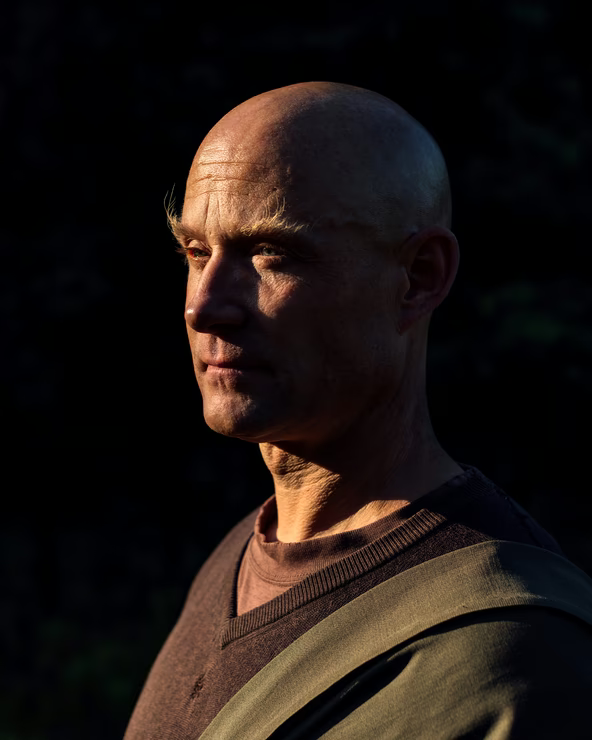
Never heard of him and can't find him in the archives of SneerClub or TechTakes just https://en.wikipedia.org/wiki/Paul_Christiano