
The second Donald Trump administration has turbo-powered a far-right takeover of Latin America. And for the sake of peace and justice both regionally and globally, everyone should know how this happened and the damage it’s causing.
Index
-
Honduras — dodgy dealings between high-profile drug convict, Trump, and Israel
-
Colombia — Trump wannabe wastes no time following razor-thin election win
-
Brazil — outspoken Lula da Silva campaigning for another term in October’s elections
-
Venezuela — finally back under the US thumb following presidential abduction
-
Cuba — a genocidal US assault to finish almost seven decades of unfinished business
Trump lowers the mask of US terror
US elites have long seen Latin America as their sphere of influence almost by divine right. And the US waged a campaign of terror in Latin America during the Cold War to stop the region moving to the left. This quietened down after the fall of the USSR, turning mostly into more subtle influence campaigns.
The billionaire class, however, isn’t happy that Latin America has increasingly chosen to do business with China since the end of the Cold War. The first Trump regime tried to challenge China while tightening the screws on regional left-wing governments. But it had limited success.
While there was a temporary far-right coup in Bolivia under Trump 1.0, escalating hostility against Cuba, Venezuela, and Nicaragua only hurt ordinary people. If anything, these governments dug in.
The second Trump regime, however, has unleashed all it can get away with. Along with covert influence campaigns, it has also brought a ‘might is right‘ approach front and centre once again. And this resuscitation of Cold War military intervention has helped to put the far right firmly on the front foot in Latin America.
Trump 2.0 benefited a lot from Democratic predecessors granting Israel impunity and supporting its genocide in Gaza. This set in motion a clear assault on international law, showing the billionaire class it could get away with much more than before. Trump simply escalated the attack.
Resurrecting US tactics from some of the most blatant interventions of the Cold War, Trump 2.0 has assassinated people at sea, abducted a president to steal oil, joined Israel’s wars in the Middle East, and starved an entire island, all while continuing campaigns of electoral interference.
‘Communism’ and a green light for a new Dirty War
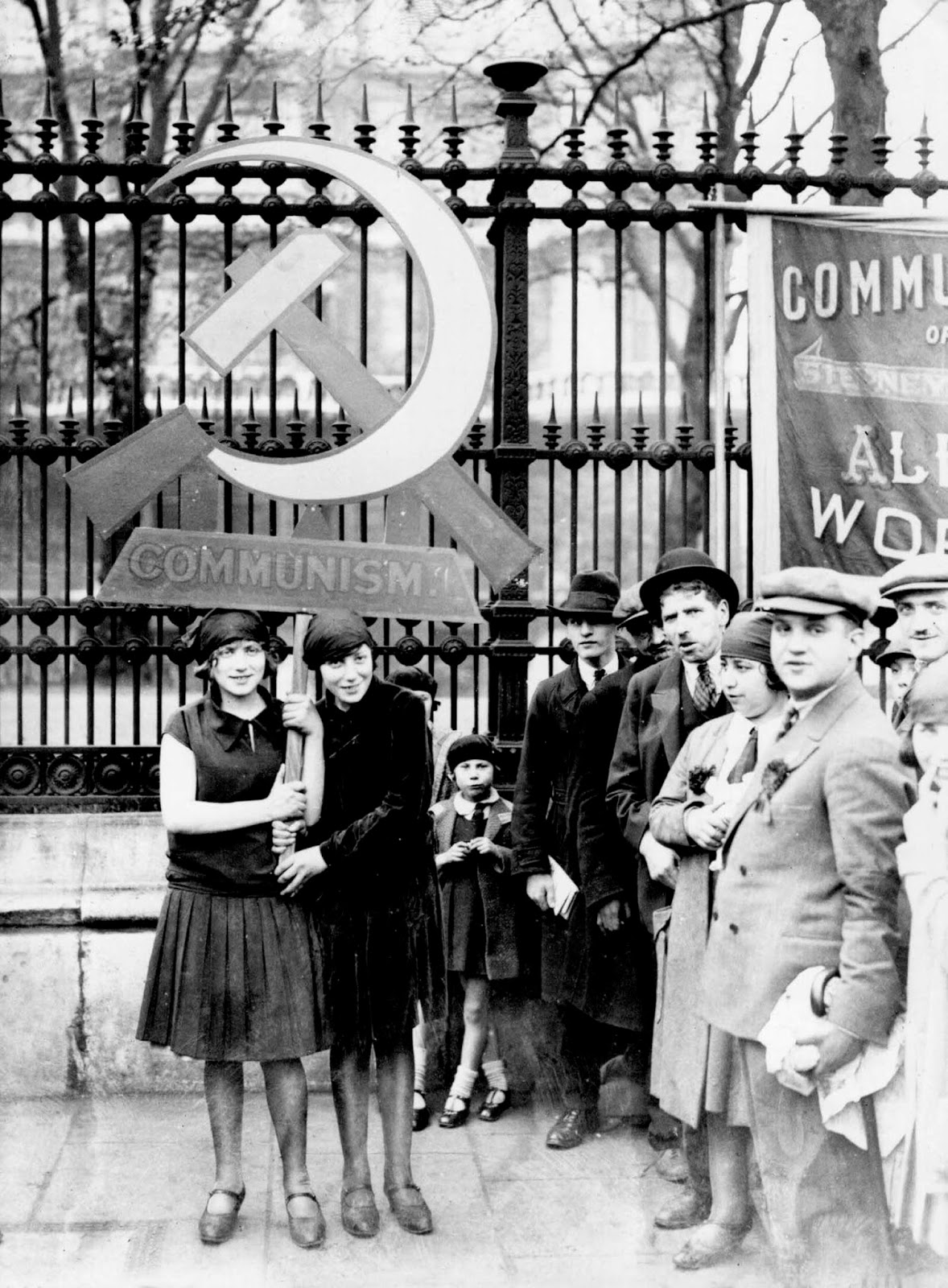
Trump is now repeating the word ‘communism‘ over and over, even to talk about Democrats (whose party establishment has a severe aversion to even social-democratic politics). Because communism still represents fear for older generations in the US (which have tended to lean towards Trump), it’s a word worth evoking for Trump.
The resurging obsession with communism, however, also reflects US anger about superpower rival China becoming an important partner for Latin American governments. And talking as if communism is somehow a grave threat to the region helps Trump to justify his brash attempts to reassert US domination.
US elites have long wanted Latin America to itself. First came the Monroe Doctrine, asserting that European influence in the region wasn’t welcome. Then, the Roosevelt Corollary argued that the US could act as a police force to enforce this. Essentially, this attitude ended up justifying US interventionism and dominance.
This intensified after 1954’s ‘Caracas Declaration of Solidarity‘, in which most Latin American nations essentially affirmed that communism wasn’t welcome in the Western Hemisphere and that they would do what was necessary to fight against it.
Trump’s ‘secretary of war’ Pete Hegseth is just one regime figure now pushing the ‘Donroe Doctrine‘, which tries to sell the intensifying US offensive as ‘defending the Western Hemisphere from external threats‘. It doesn’t, however, defend the hemisphere from Trump’s push for regional allies to dump international law.
In some Latin American nations, violent US-backed campaigns against the left during the Cold War gained the title ‘Dirty War‘. And today, Trump is giving a green light (and active support) for a new generation of rogues to wage their own 21st-century Dirty Wars.
2026 as a turning point for Latin America
Together with academics William Callison and Verónica Gago, Shock Doctrine author Naomi Klein has described 2026 as a “turning point“, with Latin America:
fast becoming a frontyard of fascist experimentation
Countless regimes, they said, are now testing out:
authoritarian exit strategies from liberal democracy
The goal is to impose elite control over natural resources and populations via increasing militarisation and unaccountability for the billionaire class. And the regimes responsible call opponents of their anti-democratic rampage ‘terrorists’, sometimes with clear overtures to the brutal Cold War repression of pro-US dictators.
This time, however, evil tech giants are around to lend a hand.
Trump ally and fascist Palantir mogul Peter Thiel, for example, has already moved to Argentina. There, he and others have a clear path to exploit key Argentine resources with almost no regulations or accountability. Chile’s far-right president has also met secretly with Thiel, and other Trump allies also have links with firms like Palantir.
The small consolation amid all of this is that elites wouldn’t be putting so much money and effort into taking control if they didn’t fear the power of mass movements to stop their power grabs. Ordinary people absolutely have power, and that’s a key reason why the billionaire class is trying its best to reduce or erase that power.
Argentina — a laboratory of capitalist extremism
President: Javier Milei. Perhaps one of the worst far-right leaders in Latin America right now, he says he’s “proud to be the most Zionist president in the world“. His hyper-corporate agenda at home has caused great suffering in Argentina since 2023. And Trump had to bail him out in 2025 to keep him in business.
Milei’s policies: The neoliberal extremist has slashed workers’ rights, pushed for lower taxes, and removed energy subsidies while pushing for more foreign influence in natural resource extraction (with few strings attached). He has also submitted to the dangerous elitist whims of the International Monetary Fund (IMF).
He wants to reform the electoral system before his next election campaign. And it’s unsurprising that he’d want to boost his chances when street-sleeping has increased massively, ordinary people are entering into more and more debt just to buy basic goods like food, and his government has enabled the worst wildfires in decades.
Milei has also sought to gut human rights policies. And he has built a close alliance with Israeli war criminal Benjamin Netanyahu, visiting the genocidal apartheid state on numerous occasions and entering new trade deals (particularly with tech firms and on ‘security’ issues). His ‘Isaac Accords‘, meanwhile, have sought to champion Israeli interests in Latin America.
Context: Argentina is by far the country that owes the most money to the IMF (almost $60bn as of 2025). US-backed dictators in the Cold War ramped up Argentina’s debt massively while increasing poverty and inequality with extreme capitalist policies.
Infighting and failures in the main left-leaning party contributed to Milei’s rise to power. In particular, poverty continued to increase under Milei’s centrist predecessor, who oversaw austerity measures despite initially criticising the IMF. This left some people in difficult situations willing to give Milei a chance.
El Salvador — the prison-loving crypto dictator
President: Nayib Bukele. Bukele is good at bigging himself up in government propaganda. People soon called the media-savvy populist a ‘cool dictator‘ as he became more and more authoritarian.
Past: During the Cold War, the US backed brutal efforts to repress the left in El Salvador. The country’s civil war left serious economic and social problems, and hundreds of thousands of people had fled to the US. When the US deported large numbers of convicts in the late 1990s, organised crime in El Salvador skyrocketed.
The country has a poor education system and high levels of poverty. Many citizens continue to leave the country. And money that Salvadorans living abroad send home accounts for a large part of the country’s economy.
Bukele’s policies: Bukele has used a ‘state of emergency‘ (an increasingly common far-right technique) to concentrate his dictatorial powers. And while his hardline approach on crime had an impact on statistics, human rights abuses ballooned (including arbitrary arrests, torture, and extreme subjugation of prisoners).
At the same time, he has done little to tackle the causes of crime – like the insatiable US demand for drugs.
Bukele’s government made Bitcoin legal tender in 2021. Although the possibility of greater financial inclusion looked attractive, the project failed in many ways (though not for Bukele) and in 2025 his government partially rolled back Bitcoin’s usage.
Ecuador — Extreme wealth and an intensifying drug war
President: Daniel Noboa. Born in Miami. Son of Ecuador’s richest person. The extreme wealth of his family – one of Latin America’s richest – comes from real estate, mining, and the banana trade. The family banana company allegedly colluded with drug traffickers in the past.
Past: At the start of the 21st century, left-leaning president Rafael Correa successfully reduced poverty and inequality, saw off regular US interference, and gave Julain Assange asylum. But Correa’s successor betrayed this project, setting Ecuador on a neoliberal path that it has remained on ever since.
Noboa’s policies: Noboa hasn’t just continued the destructive neoliberal policies of his predecessors (which have increased inequality, poverty, and militarisation). He has also been rehashing drug war failures of the past to position himself as a strongman in times of increasing violence, while putting civil rights at risk.
There are already significant humanitarian concerns about a lack of accountability for military abuses during Noboa’s drug war.
Ecuador’s prime location between key drug-producing nations Colombia and Peru means it would be difficult to free the country from drug crime without dealing with the massive demand from Global North countries like the US. But Noboa is focusing on building joint military efforts with the US, Peru and Colombia.
Controversies: From early on, Noboa made numerous controversial attempts to disempower his vice president (also a proud right-winger). There were also allegations of fraud during his 2025 re-election campaign. Amid violent crackdowns of protests, rising living costs also affected Noboa’s popularity.
Honduras — dodgy dealings between high-profile drug convict, Trump, and Israel
President: Nasry ‘Tito’ Asfura. Blatant US interference (including a Trump endorsement and threat) and dodgy efforts behind the scenes helped to secure Asfura’s controversial election win in Honduras in 2025. The proud Christian Zionist quickly boosted relations with Israel, whose name appeared in the Hondurasgate revelations.
Controversy: The Hondurasgate files revealed a secret coordination of efforts to undermine democracies both in Honduras and across Latin America. The Trump regime had been conniving with Israel, convicted drug trafficker and far-right ex-president of Honduras Juan Orlando Hernández, and Argentina’s far-right president Javier Milei.
Asfura’s policies: In government, Asfura has sought to deepen the power of private corporations while weakening state regulations. And he has faced accusations of repressing opponents in service of international and national elites. The state, for example, has labelled activists terrorists to justify violence against them.
Past: Honduras was a key military hub for US destabilisation in Central America in the Cold War. Brutal pro-US regimes led it to have one of the world’s highest murder rates and serious drug cartel problems, leading many ordinary people to flee the country. The US backed a coup in 2009 to avoid losing influence in Honduran politics.
Sharing a long border with Nicaragua, Honduras played a key role in the brutal US ‘Contra‘ war against its neighbour in the 1980s. Nicaragua had dared to overthrow an oppressive US-backed dictatorship, and the US violated international law trying to punish it. Ordinary Hondurans also suffered from the increasing militarisation.
Drug trafficking became an important tool for the Contra mercenaries in their fight against the Nicaraguan left.
Colombia — Trump wannabe wastes no time following razor-thin election win
President: Abelardo de la Espriella. Although predecessor Gustavo Petro made traditional US ally Colombia a prominent critic of the Gaza genocide, millionaire and far-right Israel fanboy de la Espriella quickly sought to change that after his extremely narrow election victory.
De la Espriella lived in Miami before the election campaign and worked for years as a lawyer to high-profile criminals. As president, he has pushed for and committed to “joint military operations to destroy terrorists”, with $1bn of US ‘security assistance’.
Controversy: Private firms have long operated Colombia’s elections. And dominant tax-haven-based logistics company Thomas Greg & Sons may have links with de la Espriella. The company’s owners have faced numerous fraud convictions, and played a role in Honduras’s highly controversial 2025 election.
De la Espriella’s policies: Amid an earthquake disaster following his inauguration, he declared an “economic emergency” to reassign public resources and establish means for channelling money (on a supposedly temporary and limited basis).
He was also quick to formally accept (alongside only the US) Israel’s annexation of the illegally occupied Golan Heights. And he welcomed Israeli figures into Colombia to ‘help’ after the earthquake, despite reportedly rejecting support from Mexico.
His election wish list was a far-right dream. Apart from cosying up to Israel, he pledged to join Trump’s regional aggression by intensifying militarisation, building mega-prisons, and increasing police powers. He also promised to boost exploitation of natural resources, slash private-sector taxes, and gut public spending.
Petro’s left-wing Historic Pact coalition could, however, put up some resistance as the biggest force in Colombia’s congress until 2030.
Past: Colombia is still emerging from a brutal 50-year civil war, and the country’s right was not happy about the peace deal that ended it. Warmonger de la Espriella looks set to give the right what they want by ramping the conflict up again.
Bolivia — from left-wing success story to neoliberal lab
President: Rodrigo Paz. He pledged “capitalism for all“, which resonated for many people because of Bolivia’s massive informal sector (in which workers lack legal and social protections).
Controversy: Paz unleashed austerity on the country following his election, sparking mass protests. His government then sent the military in.
Argentine adviser Fernando Cerimedo had been advising Paz, as he had other far-right leaders in Latin America. But he currently faces accusations of both illicit enrichment and an attempt to orchestrate the murder of an ex-partner. The woman in question had apparent links with Bolivia’s shift from left to right in recent years.
Past: Before a 2019 coup deposed left-wing president Evo Morales, Bolivia was the South America’s fastest-growing economy. Under Morales, poverty had fallen by 42% since 2006. And amid increasing public investment, unemployment also fell. A central policy helping to fuel all this was the nationalisation of key natural resources.
Peru — nostalgia for a war criminal dictator
President: Keiko Fujimori. Daughter of dictator Alberto Fujimori, whose regime committed countless war crimes during his rule in the 1990s. The Fuerza Popular party, which continues his political legacy, remains a dominant force in Peru. And Keiko narrowly won Peru’s 2026 election.
Context: Peru has one of the biggest economies in Latin America. But it also has profound poverty and the highest regional levels of informal work. It’s a very conservative country that has historically suffered from a lot of racist discrimination and US influence (including militarily).
Peru’s capital Lima is where the political and economic power lies. And left-leaning politicians have often tried to appease the conservative city to get or keep power. And the state’s rural war with Maoist rebels in the 1980s and 90s still weighs heavily on the minds of many voters. The right knows this, and plays on people’s fears.
Fujimori’s policies: The new president wants to attract private investors and launch a military crackdown against criminals. This message resonated in Lima, while her main opponent had support in more rural areas.
There are now concerns for the democratic future of Peru, though some believe she won’t go as far to the right as other regional leaders. Fujimori was quick to back Trump’s ‘Shield of the Americas’ project, however. And a pattern of immunity for military crimes seems to be continuing under her rule. several soldiers
Chile — a flip back to the (far) right
President: José Antonio Kast. Some have called the millionaire politician the “first far-right president since Pinochet“.
Past: Augusto Pinochet ran an oppressive neoliberal dictatorship after taking power in the bloody 1973 coup. After his defeat at the end of the Cold War, centre-left governments won consecutive elections for 20 years. But since 2010, the country has flipped from right to left and back again every four years.
Kast’s policies: Chile has the largest lithium reserves in the world. And the government of outgoing left–wing president Gabriel Boric had continued to insist on state regulation and control of the lithium industry. But amid pressure from Trump, Kast has promised to increase the role of the US in extracting the precious resource.
Kast has also promised Trump-style crime and immigration policies.
Dominican Republic — wealth, racism, and US influence
President: Luis Abinader. One of the wealthiest leaders in the continent, he is a far-right Israel fanboy who has cut public spending and taxes for the rich.
Abinader’s policies: He has rendered tribute to the Trump regime by expelling Cuban officials. He has also overseen racist deportation practices that violate people’s human rights. But to please Trump, he has pledged to take in third-country deportees from the US.
Context: The Caribbean matters to US elites because of both its proximity and the headache of Cuba’s independence. That’s why the US has long kept a firm foot in the island region.
In the Dominican Republic, for example, there was only a small break from decades of brutal US-backed dictatorship before the US invaded to stop the left and secure the rule of another pro-US dictator.
The country’s neighbour Haiti has had years of acute crisis, with massive poverty rates and extreme food insecurity, partly due to longstanding US meddling. And amid this humanitarian catastrophe, Amnesty International has documented Abinader’s cruel approach to Haitians and people with Haitian ancestry.
Other countries in Trump’s sphere of influence
- Panama. Current president José Raúl Mulino made genocide-inciting Israeli president Isaac Herzog the first Israeli president to officially visit the country. He is also happy to push Chinese influence out and restore US power despite its past crimes [in Panama](https://www.thecanary.co/trending/2018/12/07/watch-mehdi-hasan-nail-exactly-how-the-mainstream-me