
Puyallup Fish-in (1964)
Mon Mar 02, 1964
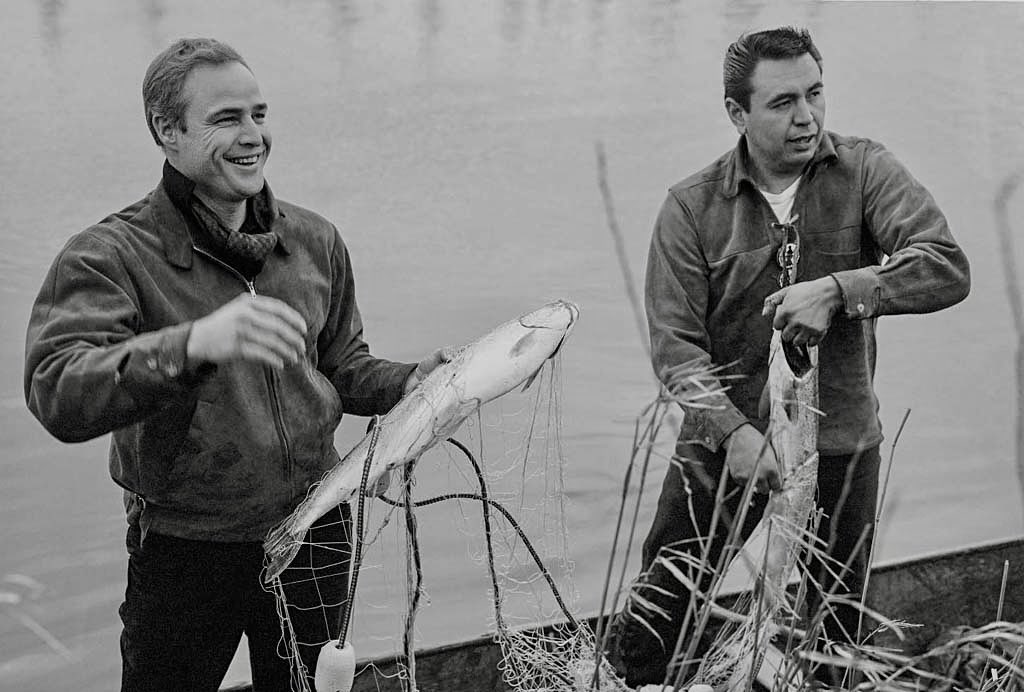
Image: Actor Marlon Brando and Puyallup tribal leader Bob Satiacum just before Brando's arrest during a fish-in, March 2nd, 1964 [historylink.org]
On this day in 1964, a group of indigenous rights activists, among them actor Marlon Brando and Puyallup tribal leader Bob Satiacum, illegally fished in the Puyallup River to protest the denial of treaty rights to Native Americans. This form of civil disobedience is known as a "fish-in", and in this specific incident both Brando and an Episcopal clergyman were arrested.
The fish-in was staged by the National Indian Youth Council, a Native American civil rights organization formed in Gallup, New Mexico in 1961. It became part of the so-called "Fish Wars", a set of protests spanning decades in which Native American tribes around the Puget Sound pressured the U.S. government to recognize fishing rights granted by the Point No Point Treaty.
The protests eventually won indigenous people in the area the right to fish without state permits - in the 1974 case "United States v. Washington", U.S. District Court Judge George Hugo Boldt stated that treaty right fishermen must be allowed to take up to 50% of all potential fishing harvests and required that they have an equal voice in the management of the fishery.
The so-called "Boldt Decision" was reaffirmed by the Supreme Court in 1979 and has been used as a precedent for handling other, similar treaties.
- Date: 1964-03-02
- Learn More: www.historylink.org, en.wikipedia.org.
- Tags: #Indigenous, #Protests.
- Source: www.apeoplescalendar.org