this post was submitted on 23 Dec 2025
71 points (100.0% liked)

History Memes

1220 readers
740 users here now

A place to share history memes!

Rules:

  1. No sexism, racism, homophobia, transphobia, assorted bigotry, etc.

  2. No fascism (including tankies/red fash), atrocity denial or apologia, etc.

  3. Tag NSFW pics as NSFW.

  4. Follow all Piefed.social rules.

Banner courtesy of @setsneedtofeed@lemmy.world

OTHER COMMS IN THE HISTORYVERSE:

founded 7 months ago
MODERATORS
 
top 3 comments
sorted by: hot top controversial new old
[–] Ininewcrow@piefed.ca 3 points 6 hours ago (1 children)

One of the reasons why Europeans became so immune to these new diseases was that they lived absolutely filthy lives with their farm animals back in Europe. Native American tribes noted how much these new foreigners smelled when they first met.

And the only reason why they survived those deadly diseases was not because they had stronger immune systems ..... millions of people had to die first and it was the survivors who carried on. The diseases that flourished was a fine balance between being infectious enough to spread but not so deadly so as to kill people too quickly to stop the spread.

First Nation people weren't exactly ultra clean themselves but they kept a distance from wanting to live with a bunch of live animals in their living space.

[–] PugJesus@piefed.social 5 points 5 hours ago

One of the reasons why Europeans became so immune to these new diseases was that they lived absolutely filthy lives with their farm animals back in Europe.

Or in proximity with them at all. Even clean living would result in high disease loads compared to societies without large amounts of domesticated animals.

Domesticated animals are a double-edged sword - animals are useful, but also genetically close enough to us to transmit many diseases.

And the only reason why they survived those deadly diseases was not because they had stronger immune systems ….. millions of people had to die first and it was the survivors who carried on. The diseases that flourished was a fine balance between being infectious enough to spread but not so deadly so as to kill people too quickly to stop the spread.

Yep. The more vulnerable die, the less vulnerable get sick and survive, and perhaps curse their luck. It's why epidemics, especially pre-modern epidemics, come in waves. The more 'resistant' a population is, the fewer transmission vectors there are... but that resistance itself is only around because so many of our ancestors' friends and neighbors died.

First Nation people weren’t exactly ultra clean themselves but they kept a distance from wanting to live with a bunch of live animals in their living space.

Not-so-fun fact: Europe (and the Old World in general) in this period still commonly built wattle-and-daub housing with animal (or sometimes human) manure as a binder. 😬

[–] PugJesus@piefed.social 13 points 9 hours ago

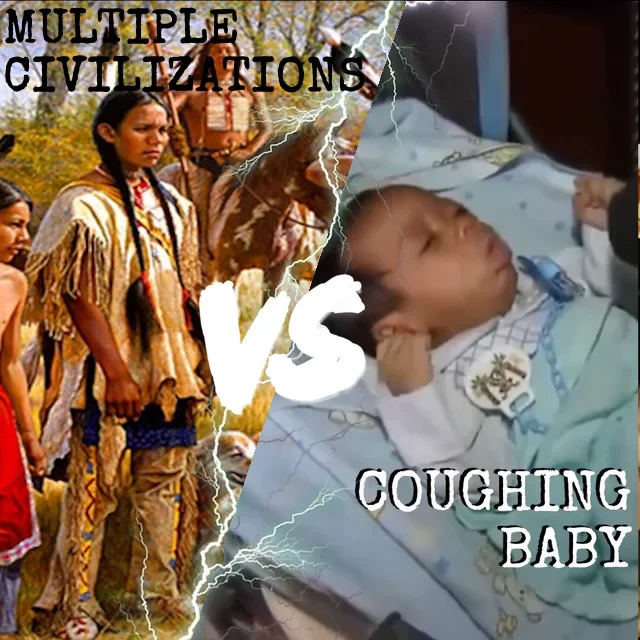
Explanation: For those of you who are not aware, when Europe made contact with the Americas, it unwittingly brought along a whole host of diseases that Native Americans did not have any natural resistance to. For this reason, disease swept through the Americas after the European arrival, causing the total collapse of several Native civilizations, and leading to a massive depopulation and a near-post-apocalyptic landscape, with entire villages being killed or abandoned due to these new diseases.

Naturally, this depopulation and destabilization did the Native Americans no favors when Euro colonists came sniffing around to claim 'virgin' lands.