this post was submitted on 12 Nov 2024
3 points (100.0% liked)

askchapo

23252 readers
268 users here now

Ask Hexbear is the place to ask and answer ~~thought-provoking~~ questions.

Rules:

  1. Posts must ask a question.

  2. If the question asked is serious, answer seriously.

  3. Questions where you want to learn more about socialism are allowed, but questions in bad faith are not.

  4. Try !feedback@hexbear.net if you're having questions about regarding moderation, site policy, the site itself, development, volunteering or the mod team.

founded 5 years ago
MODERATORS
 

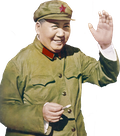
We know the heads of Marxism are usually Marx, Engels and Lenin, often plus Stalin and Mao.
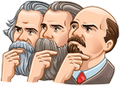
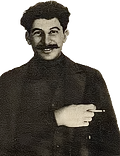
three-heads-thinking stalin-cig mao-wave

But who would be the five heads of revolutionary liberalism (before it became a totally bankrupt, anti-emancipatory, status quo project)?

My suggestion: John Locke, Thomas Paine, Robespierre, Toussaint, & Simon Bolivar

Also considered: Oliver Cromwell and Garibaldi

all 22 comments
sorted by: hot top controversial new old
[–] BurgerPunk@hexbear.net 2 points 1 year ago

Locke or Hobbes, Rousseau, Olivar Cromwell, Robespierre, Napoleon add Simon Bolivar in the Mao position

Toussaint deserves to be on there, but Libs are not cool enough to deserve him

[–] iByteABit@hexbear.net 2 points 1 year ago* (last edited 1 year ago) (1 children)

Marat should definitely be referenced too, hardline revolutionary until the very end.

Also Adam Smith when it comes to liberal economic theory

Smith has to be one. He's literally the father of capitalism, and viewed it as revolutionary against the existing feudal order.

The fact that the European empires later weaponized it as colonial enforcement and industrialization came along shortly afterwards to finish off what he viewed as a way for guildsman to control their own destinies is a tragedy beyond his control.

[–] FourteenEyes@hexbear.net 1 points 1 year ago

Just you five times

(owned)

[–] HiImThomasPynchon@hexbear.net 1 points 1 year ago

It's called Mount Rushmore, bud

[–] propter_hog@hexbear.net 1 points 1 year ago

Probably it would end with like Bernie or some libshit like that, beside him is probably some European libshit like Macron, then like three older presidents of maybe Sweden or something

[–] PM_ME_YOUR_FOUCAULTS@hexbear.net 1 points 1 year ago* (last edited 1 year ago) (1 children)

Sorry, the leftists are claiming Tom Paine

Your list is more like the coolest liberals rather than the most representative. I'd sub in the Liberal Mao, George Washington

[–] Chapo_is_Red@hexbear.net 1 points 1 year ago (1 children)

Fair enough. In the same vein maybe Napoleon over Toussaint.

Ah yes, the Liberal Stalin

[–] buh@hexbear.net 1 points 1 year ago
[–] DragonBallZinn@hexbear.net 0 points 1 year ago (1 children)

As far as the best liberalism had to offer, here's mine: Thomas Paine, Rousseau, Henry George. John Stuart Mill, Robespierre.

I feel like most of them could be comrades if push comes to shove, but they exemplify the liberalism I would more than happily live under

[–] DeathToBritain@hexbear.net 1 points 1 year ago

as much as I love Robespierre as a historical figure in the 'doing the shit that needs to be done' department, the guy was very anti left. the blooming beginings of French socialism and feminism had begun, and he absolutely tried to stamp those out

[–] PorkrollPosadist@hexbear.net 0 points 1 year ago* (last edited 1 year ago) (1 children)

Is Locke really that noteworthy? I haven't given him a serious read but from a skim he basically just seems like "The king shouldn't be allowed to take away my Funko Pops." Very proto-liberal compared to other figures like Montesquieu ("The Spirit of Laws") or Rousseau ("The Social Contract"), which, sure, are idealist slop, but actually have something resembling a vision for society.

T-Paine definitely makes the cut.

[–] PM_ME_YOUR_FOUCAULTS@hexbear.net 0 points 1 year ago* (last edited 1 year ago)

Locke is important for understanding the ideological justifications that the liberals themselves used to underpin their political projects. That's about it. A material analysis will otherwise give a much better understanding of the historical conditions that created liberalism, which is really just the bourgeoisie trying, successfully, to wrestle power away from the aristocracy. Whatever they said about Locke or Rousseau was just in service of that in the end.

[–] HauntedBySpectacle@hexbear.net 0 points 1 year ago (1 children)

I think the lib pantheon is a little more crowded because their leaders are more often notable for either intellectual or political work rather than both, the way Lenin onward are. Early liberal revolutionaries didn't tend to write theory as significant or famous as that of their Enlightenment philosopher contemporaries, especially in Europe. Who in the modern day is reading Robespierre or Cromwell the way they would Smith or Ricardo? The United States had more crossover in fields though

Intellectually the 5 are probably John Locke, Adam Smith, Montesquieu, Rousseau, snd Voltaire. Maybe swap in James Madison, David Ricardo, or de Tocqueville for one of them.

For political leaders and revolutionaries, Oliver Cromwell, George Washington, Maximilien Robespierre, Simon Bolivar, Giuseppe Garibaldi.

[–] Chapo_is_Red@hexbear.net 0 points 1 year ago (1 children)

That's an interesting observation. I wonder why theory and practice tend to go together for Marxist revolutionaries but not for liberal ones.

My idealistic guess would be the philosophical split between rationalism and empiricism, which is a lot less pronounced in Marxism. See: Where Do Correct Ideas Come From?

I don't know what material factors would influence this division