this post was submitted on 22 Oct 2026
1078 points (98.5% liked)
pics
30185 readers
603 users here now
Rules:
1.. Please mark original photos with [OC] in the title if you're the photographer
2..Pictures containing a politician from any country or planet are prohibited, this is a community voted on rule.
3.. Image must be a photograph, no AI or digital art.
4.. No NSFW/Cosplay/Spam/Trolling images.
5.. Be civil. No racism or bigotry.
Photo of the Week Rule(s):
1.. On Fridays, the most upvoted original, marked [OC], photo posted between Friday and Thursday will be the next week's banner and featured photo.
2.. The weekly photos will be saved for an end of the year run off.
Instance-wide rules always apply. https://mastodon.world/about

founded 3 years ago
MODERATORS
you are viewing a single comment's thread
view the rest of the comments
view the rest of the comments
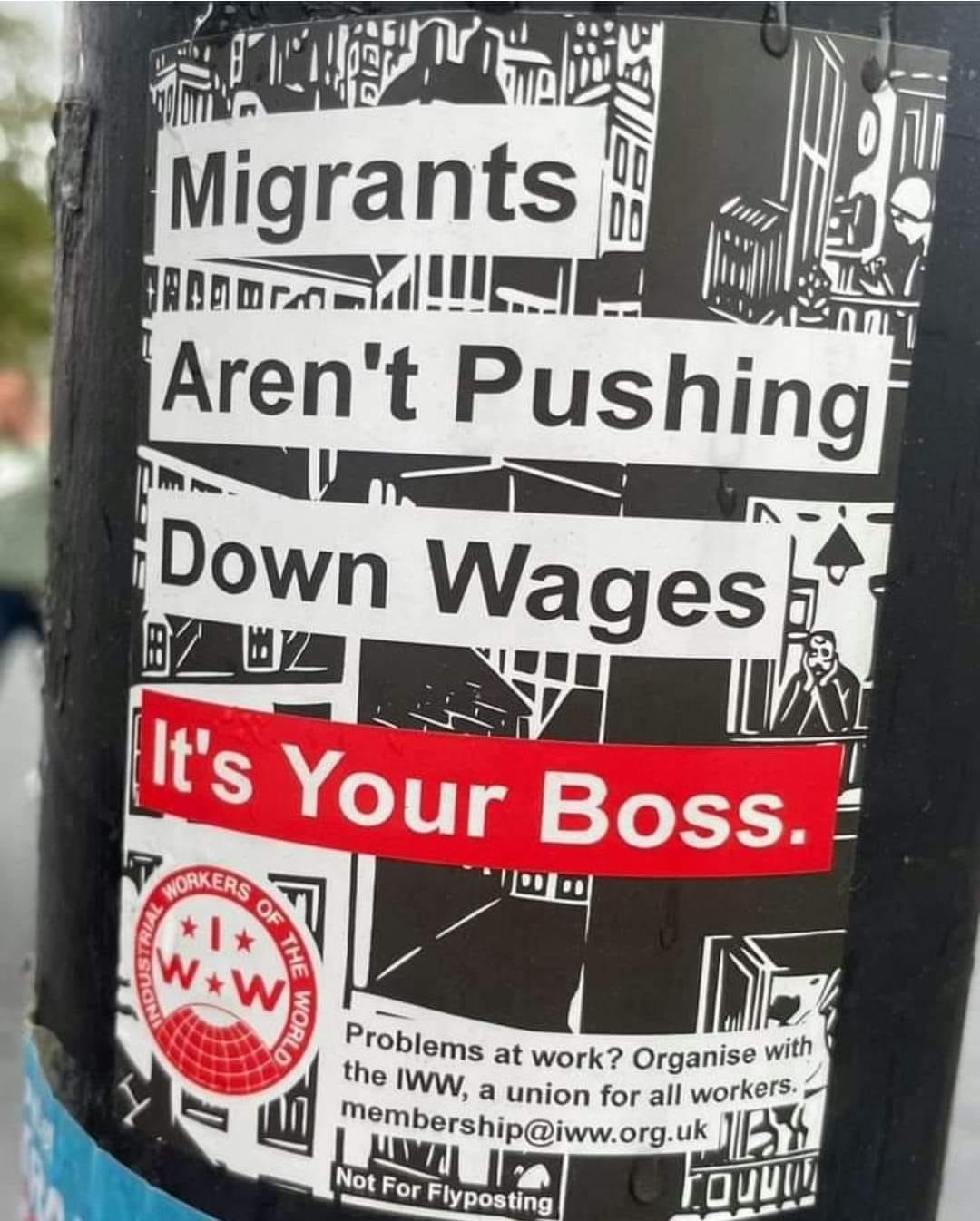
It's pretty disgusting you'd try to use this misleading appeal to authority, attempting to frame this as some reputable government finding when it's only just a third party document mirrored by the congress website. Let's dive into the obvious problems here.
Unknown author and funding: No named author, no disclosure, no sign of peer review.
Advocacy-linked sources: Key claims cite Cato, NFAP (Stuart Anderson) and the Partnership for a New American Economy. All are policy advocacy organisations.
It's 9 pages with no original analysis beyond a couple of charts. Its conclusions depend on a handful of studies chosen by the author.
Old data: It's a 2016 brief using 2009-2013 figures, so it misses the post-2020 immigration surge, post-pandemic labour markets and recent fiscal studies.
"Economists generally agree": The only support is a 2013 IGM expert poll in a footnote.
Contested findings downplayed: Borjas's estimate that 1980-2000 immigration cut wages about 3% is footnoted, then treated as an outlier.
Static framing: It doesn't model scenarios, uncertainty ranges or sensitivity to assumptions.
The brief's chain of reasoning is that immigration adds labour supply, wages dip, firms invest more, capital per worker recovers, and so wages recover. Except no evidence is presented for wage recovery. The theory needs capital per worker to hold. Wages also depend on labour's share of income, which the brief admits has fallen since 2000. It dismisses that in a footnote as "technology and globalisation"
The two studies in Table 2 are simulations that build in the investment response and imperfect substitutability between immigrants and natives. The roughly +0.5 percentage point result for native wages depends partly on those assumptions, so it is not an observed wage change.
I could go on but the fact you're trying to claim this very misleading report produced by lobbyists is reputable is insane. If anything, it strongly supports immigration causing immediate dip in wages. They have a theoretical simulated scenario to suggest wages might improve afterwards.
It is a peer reviewed non-partisan Congressional report about the country with the most immigrants in the world. Clearly you are much smarter than these experts.
Edit: Just a few more sources all saying the exact same thing. Feel free to do your arm chair AI dissection.
https://www.americanimmigrationcouncil.org/blog/immigrants-do-not-take-americans-jobs-wages/
https://docs.house.gov/meetings/JU/JU01/20251217/118767/HHRG-119-JU01-20251217-SD001-U1.pdf
https://www.cato.org/blog/immigrants-dont-lower-blue-collar-american-wages
https://immigrationlab.org/2017/08/31/fact-check-immigration-harm-american-workers/
https://theconversation.com/nobel-winner-david-card-shows-immigrants-dont-reduce-the-wages-of-native-born-workers-169768
https://www.brookings.edu/articles/what-immigration-means-for-u-s-employment-and-wages/
https://pmc.ncbi.nlm.nih.gov/articles/PMC8612123/
https://migrationobservatory.ox.ac.uk/resources/briefings/the-labour-market-effects-of-immigration/
https://timesofsandiego.com/politics/2016/09/21/influential-report-finds-immigrants-dont-lower-wages-or-steal-jobs/
https://ucalgary.ca/news/nobel-winner-david-card-shows-immigrants-dont-reduce-wages-native-born-workers
With ALL key sources being policy advocates?
Stop pretending and go shovel your AI slop somewhere else.