842
this post was submitted on 10 Oct 2026
842 points (98.7% liked)
politics
31407 readers
2134 users here now
Welcome to the discussion of US Politics!
Rules:
- Post only links to articles. Title must fairly describe link contents. If your title differs from the site’s, it should only be to add context or be more descriptive. Do not post entire articles in the body or in the comments.
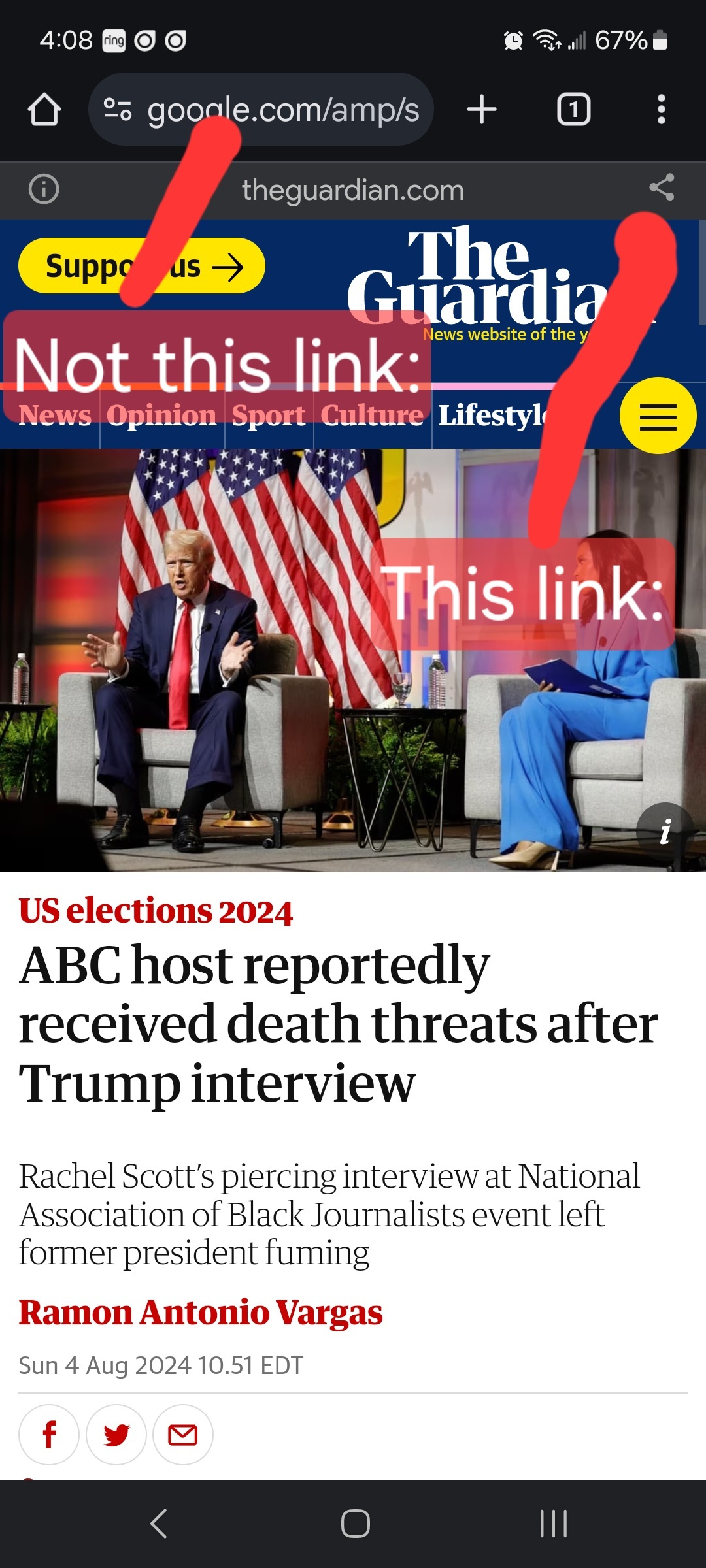
Links must be to the original source, not an aggregator like Google Amp, MSN, or Yahoo.
Example:
- Articles must be relevant to US politics and contain quality and original content. Social Media adjacent hosts like Substack are allowed, but ONLY if they tie back to a company/subsidiary. No personal or friend group blogs and no self-promotion. Articles should be worth reading. Clickbait, stub articles, and re-hosted or stolen content are not allowed. Check your source for Reliability and Bias here.
- Be civil, No violations of TOS. It’s OK to say the subject of an article is behaving like a (pejorative, pejorative). It’s NOT OK to say another USER is (pejorative). Strong language is fine, just not directed at other members. Engage in good-faith and with respect! This includes accusing other users of being bots or paid actors.
- No memes, trolling, misinformation, or low-effort posts/comments (including reposts). If you see posts like this that anger you, do not engage. Report, block, and live a happier life than they do. Any slap-fight is subject to comment removals. Fights full of rule violations will result in temporary bans to cool off.
- No manipulating votes via bots or alt accounts; this will result in permanent bans. Vote based on comment quality, not agreement. This community aims to foster discussion; please reward people for putting effort into articulating their viewpoint, even if you disagree with it.
- No hate speech, slurs, celebrating death, advocating violence, or abusive language. This will result in an account ban. Usernames containing racist, or inappropriate slurs will be permanently banned.
We ask that the users report any comment or post that violate the rules and use critical thinking when reading, posting, and commenting. Users that repeatedly have comments or posts removed, weaponize reports, or violate the code of conduct, will be banned.
All posts and comments will be reviewed on a case-by-case basis. This means that some content that violates the rules may be allowed, while other content that does not violate the rules may be removed. The moderators retain the right to remove any content and ban users. The reason(s) behind moderator action(s) are publicly available through the Modlog.
That's all the rules!
Civic Links
• Congressional Awards Program
• Library of Congress Legislative Resources
• U.S. House of Representatives
Partnered Communities:
• News
founded 3 years ago
MODERATORS
you are viewing a single comment's thread
view the rest of the comments
view the rest of the comments
That's very much an unwritten law, like much of the UK constitution. As a general rule every country that has a codified constitution has very much bound the hands of future governments, to a greater or lesser extent.
The UK constitution is written. It's just not in one document. In this case I think it comes from the civil war when the absolute powers of the crown were given to parliament.
Which is rather the point, there comes another act of parliament and more constitution is formed. What came before can't stop that process. Even with a codified Constitution like the US one, there's always a process of amendments which can change the previous versions. The fact that the US hasn't had an amendment in a very long time is just a lack of political will.
So I think my question is a reasonable one. The founding fathers felt that the constitution should always be able to be changed, so wouldn't state legislation also always be able to be modified by a future legislature?
Eh... yes and no. But we'll get to that.
To answer your question, there's a principle in legal philosophy called the rule of recognition, which, basically, describes how a court determines what the law is.
The US constitution is considered the highest law of the land, and describes the process by which legislation has to be passed (usually by simple majority vote) by Congress and the Senate and assented to by the President before it becomes statutory law. It also describes the process by which the constitution itself can be amended, which is a much more stringent process. Basically, an amendment must be proposed and than accepted by either a national convention (which has never even been tried) or by being passed by a 2/3 majority vote in both the Congress and the Senate. It then has to be ratified by at least 3/4 of the states. Further, it also contains some amendments that limit what statutory law can do.
So the rule of recognition in the US is, basically, is the law constitutional? Which is to say, is the legislation enacted according to the rules in the constitution, and not invalidated by any of limits set out in the constitution? And if the answer to that question is "no" then the court will disapply that law. If legislation was passed saying slavery is legal again then, in theory at least, the court would say "no, there is a constitutional amendment that says slavery can't be legal, this is not good law". The only way to override that would be to pass a new amendment to remove that amendment. And unless the new amendment is passed according to the rules laid out, the courts would not recognise it. So in this way, the US legislature has very much been bound.
The fundamental principle of UK's constitution, on the other hand, is that the King-in-Parliament has absolute sovereignty. Now, while this is certainly acknowledged in legislation and lots of court decisions, it isn't written down in the sense that there is a clear definition of what that means.
The rule of recognition is generally taken to be that an Act passed by Parliament and given royal assent is the law, no matter what it says, and is the highest form of law in the land. To see an example of how seriously that is taken, see the mess that is the Human Rights Act 1998 and its "declaration of incompatibility" apparatus, which exists because courts cannot disapply an Act of Parliament. (To be clear I'm in favour of the European Convention/Court of Human Rights, I just think the HRA is massive bodge (precisely because our constitution is the way it is).) To see an example of how flexible it can be when it comes to interpreting Acts of Parliament, see the Metric Martyrs case decision.
It is an open questions as to what extent, if any, Parliament can bind itself because it's unclear what a court would do if an Act of Parliament was given royal assent despite the fact a previous Act of Parliament technically says it shouldn't have done. And to avoid a constitutional crisis, Parliament, by convention, doesn't try.