this post was submitted on 11 Jul 2026
1067 points (99.5% liked)
Work Reform
16843 readers
92 users here now
A place to discuss positive changes that can make work more equitable, and to vent about current practices. We are NOT against work; we just want the fruits of our labor to be recognized better.
Our Philosophies:
- All workers must be paid a living wage for their labor.
- Income inequality is the main cause of lower living standards.
- Workers must join together and fight back for what is rightfully theirs.
- We must not be divided and conquered. Workers gain the most when they focus on unifying issues.
Our Goals
- Higher wages for underpaid workers.
- Better worker representation, including but not limited to unions.
- Better and fewer working hours.
- Stimulating a massive wave of worker organizing in the United States and beyond.
- Organizing and supporting political causes and campaigns that put workers first.
founded 3 years ago
MODERATORS
you are viewing a single comment's thread
view the rest of the comments
view the rest of the comments
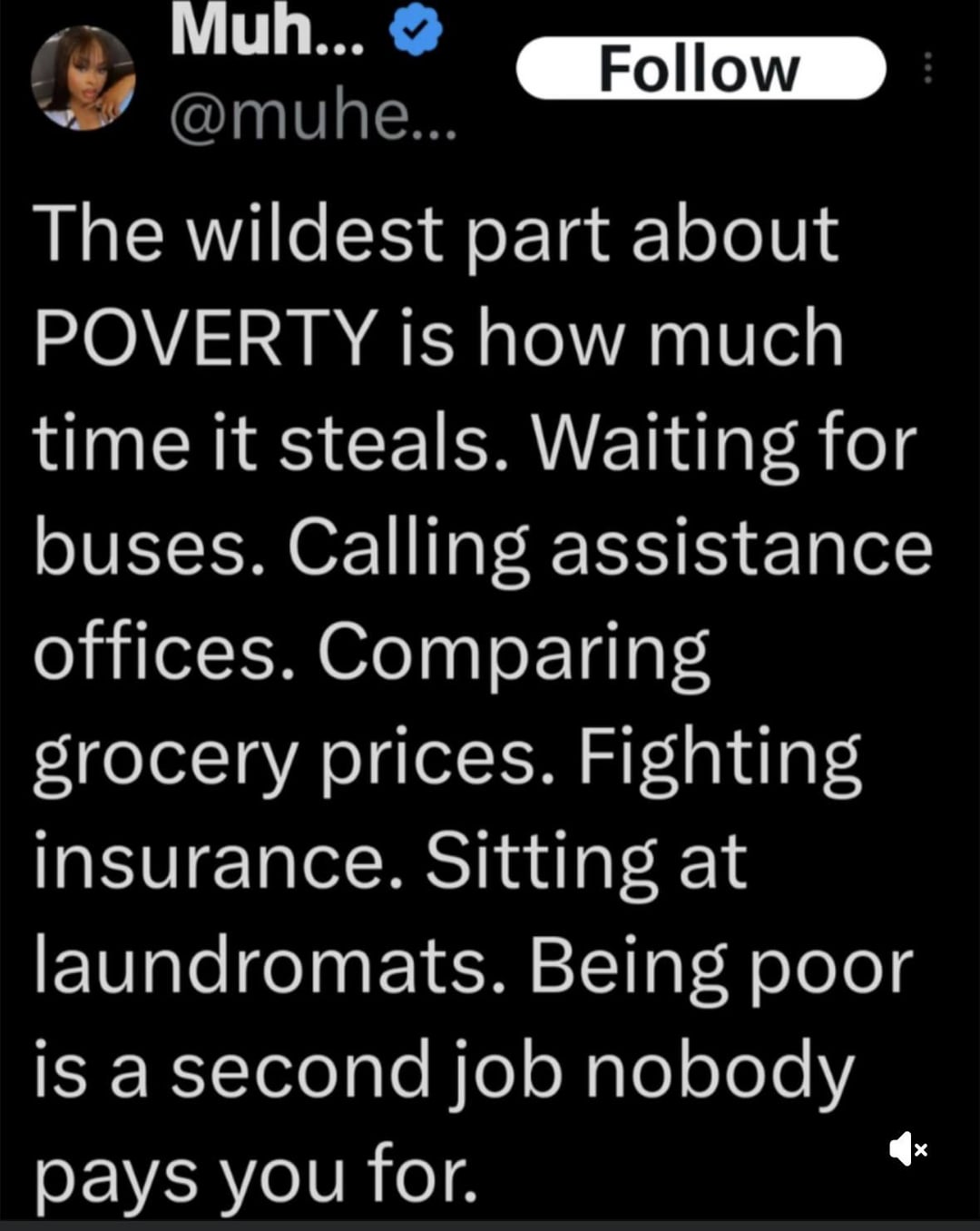
Waiting for busses isn't a poverty problem, it's a policy problem.
It's both.
In fact, poverty itself is a policy choice of forced deprivation.
It's a poverty problem because you don't have a choice but to rely on policy. That's what all of those listed things are illustrating.
Hunting for cheaper insurance instead of getting the best coverage, waiting an hour for a bus instead of calling an Uber, searching multiple flyers for the best grocery prices and coupons instead of ordering takeout. These are all "frugal" when you have the money to do otherwise.
It's poverty when you need to do those things or you just can't afford to do them.
I see your point, well put.
I'm entirely in favor of raising the foundation of the social fabric, it just bugs me when busses are portrayed poorly when they're underfunded, and made to seem as if they're only a poverty choice. That is the exact sort of thinking in my city, and the bus service has suffered for decades because of it.
I wish folks would see busses as superior to personal automobiles, and they would be funded accordingly.
It's probably by design to stigmatize charity and public policy, and brew the sort of hyperindividualized culture that sees no problem with policies that range from "inadequate" to "truly inhumane."
It's true "thinking buses are for poor people" could lead to underfunded buses. But that leads to questions about why underfunding resources for the needy is some people's default presumption.