this post was submitted on 20 Feb 2026
115 points (94.6% liked)
Electric Vehicles
2390 readers
101 users here now
Overview:
Electric Vehicles are a key part of our tomorrow and how we get there. If we can get all the fossil fuel vehicles off our roads, out of our seas and out of our skies, we'll have a much better environment. This community is where we discuss the various different vehicles and news stories regarding electric transportation.
Related communities:
- !automotive@discuss.tchncs.de
- !avs@futurology.today
- !byd@lemmy.world
- !ebike@lemm.ee
- !energy@slrpnk.net
- !geely@lemmy.world
- !micromobility@lemmy.world
- !polestar@lemmy.ca
- !rivian@lemmy.zip
- !teslamotors@lemmy.zip
- !xiaomi@lemdro.id
founded 2 years ago
MODERATORS
you are viewing a single comment's thread
view the rest of the comments
view the rest of the comments
If the battery is actually burning, yes... But that's not a given. Upholstery burning is still a car fire.
Regardless, there's a lot fewer fires. The easiest fire to extinguish is one that didn't happen.
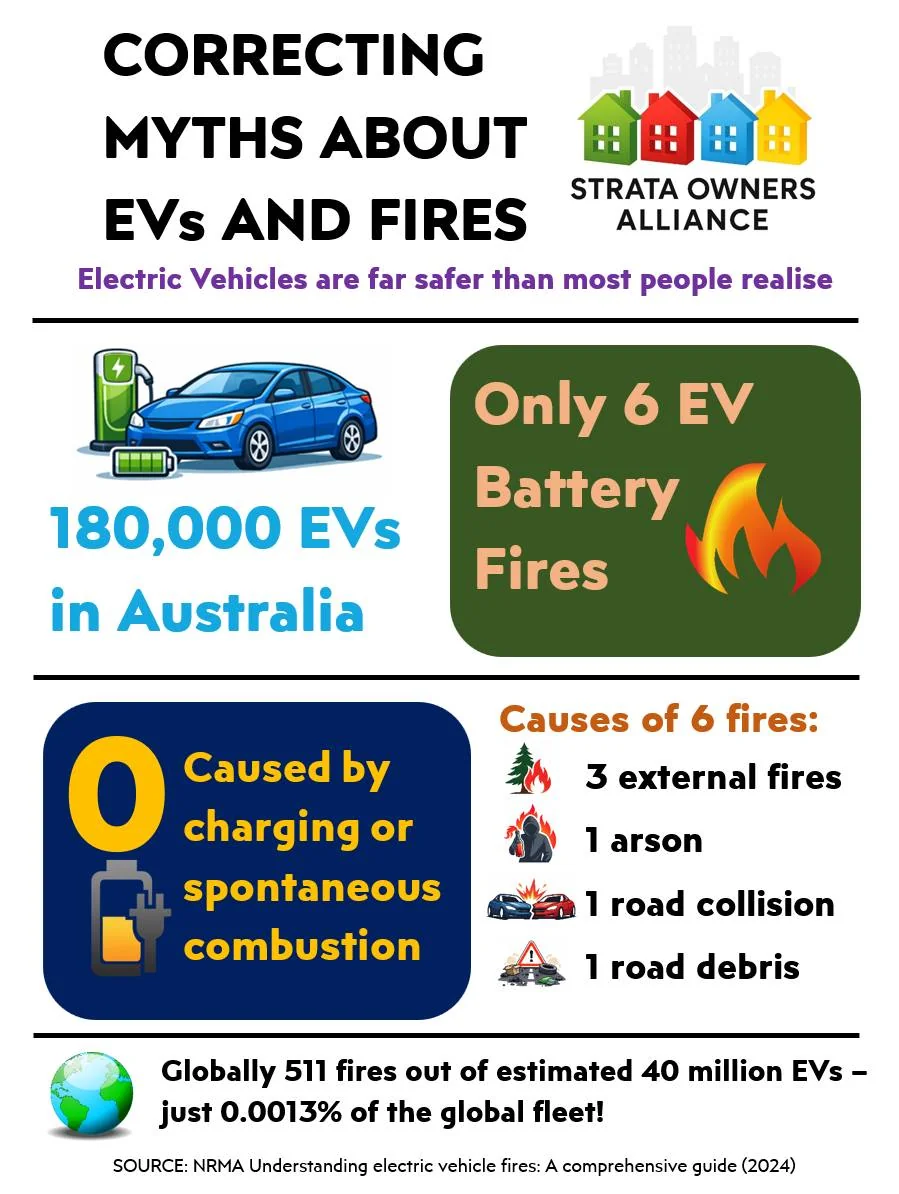
Do you have a source for fewer EV fires? The graphic doesnt seem to have any comparisons to ICE car fire rates.
Estimates are between 25 and 50x fewer fires per 100,000 for EV.
EV Fires vs. ICE Fires: Safety Comparison and Analysis — Lectron EV https://share.google/10FD9YASthmasL0mg
Somehow, people have no idea that petroleum is explosive and holds a huge amount of energy, and it is piped at high pressure around the occupants.
Neither do they realise....
They're probably saying the battery is 4x the weight of a fuel tank. Not far off.
TBF, that is comparing the potential energy difference of a charged/uncharged battery to the total energy potential of gas.
It's that potential energy that gets released when they burn. 9 times more energy equals a bigger woof when it goes.
There may also be some energy released from the battery materials themselves burning (like, an uncharged battery might have a significant amount of energy to release when combusting)
No, it's not and you probably intuitively know this already, but an uncharged battery burns almost exactly the same as a charged one.
Here is a other way to think about it. Let's trade "gallons of gas" for "bowling ball at the top of the slide" both object represent an amount of stored potential energy.
Let's arbitrarily say that you gallon of gas is equivalent to a bowling ball sitting on top of a 1ft tall slide. The gas tank is the equivalent of a ball sitting on top of an 18ft tall slide, and the battery is roughly a 3ft tall slide. If someone asked you which slide had more potential energy, you might say "the gas one", but what we have missed is that the gas slide was built at sea level, and the battery slide is sitting on top of a mountain. Normally, that whole mountain's height isn't considered in the potential energy of the ball on the slide, but the battery fire is a catastrophic event where the ball flies off the end of the slide and falls down the side of the mountain.
Basically, the battery has a ton of potential chemical energy in it, which is used to store a little bit of electrical potential.
Aside from the battery, there is no other source to fuel a fire in an EV.
That’s not true; most cars have a lot of plastic in trim, upholstery, etc.
it doesn't just catch fire.
Neither do gasoline or batteries.