Sort of similar to the white coating on a blueberry where touching it leaves a mark. I don't think I've seen this on any other Russula or other mushroom I've come across and was wondering if there is a term for this. If I was smarter I'd have put it under the scope to take a look at the very surface. I don't think it was just dust from the road because this was found well into the woods and the roads weren't particularly dusty that day.
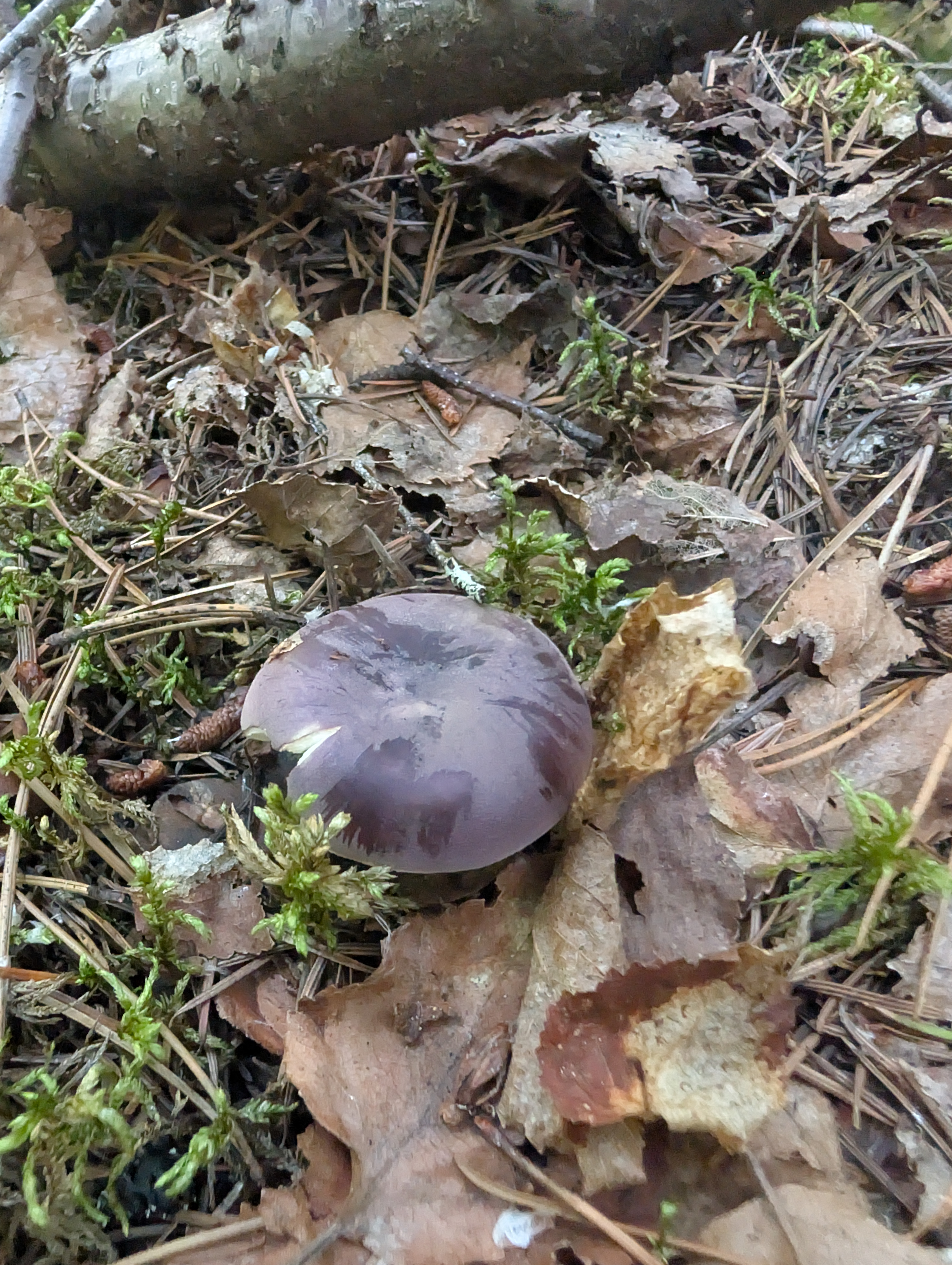
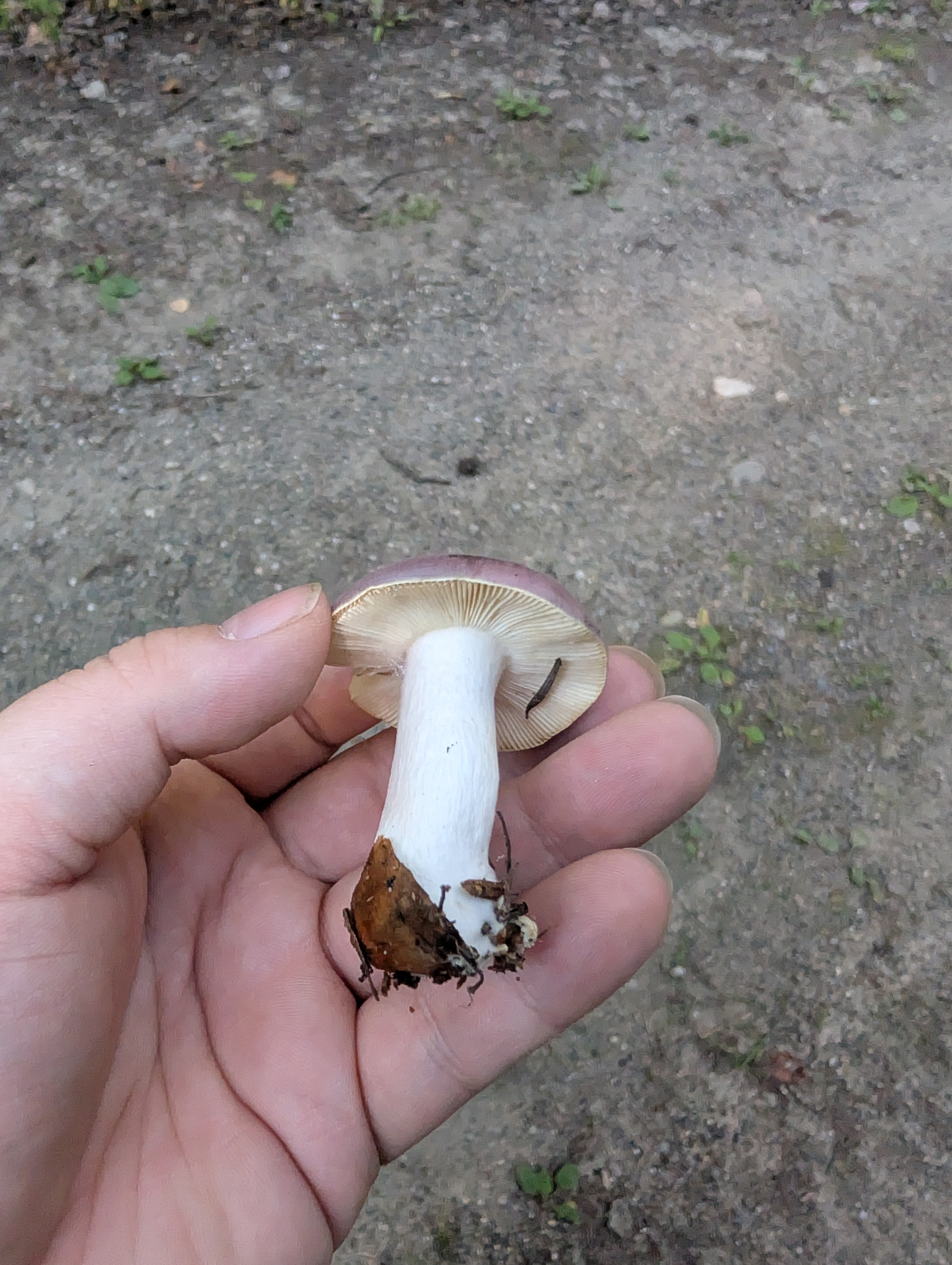
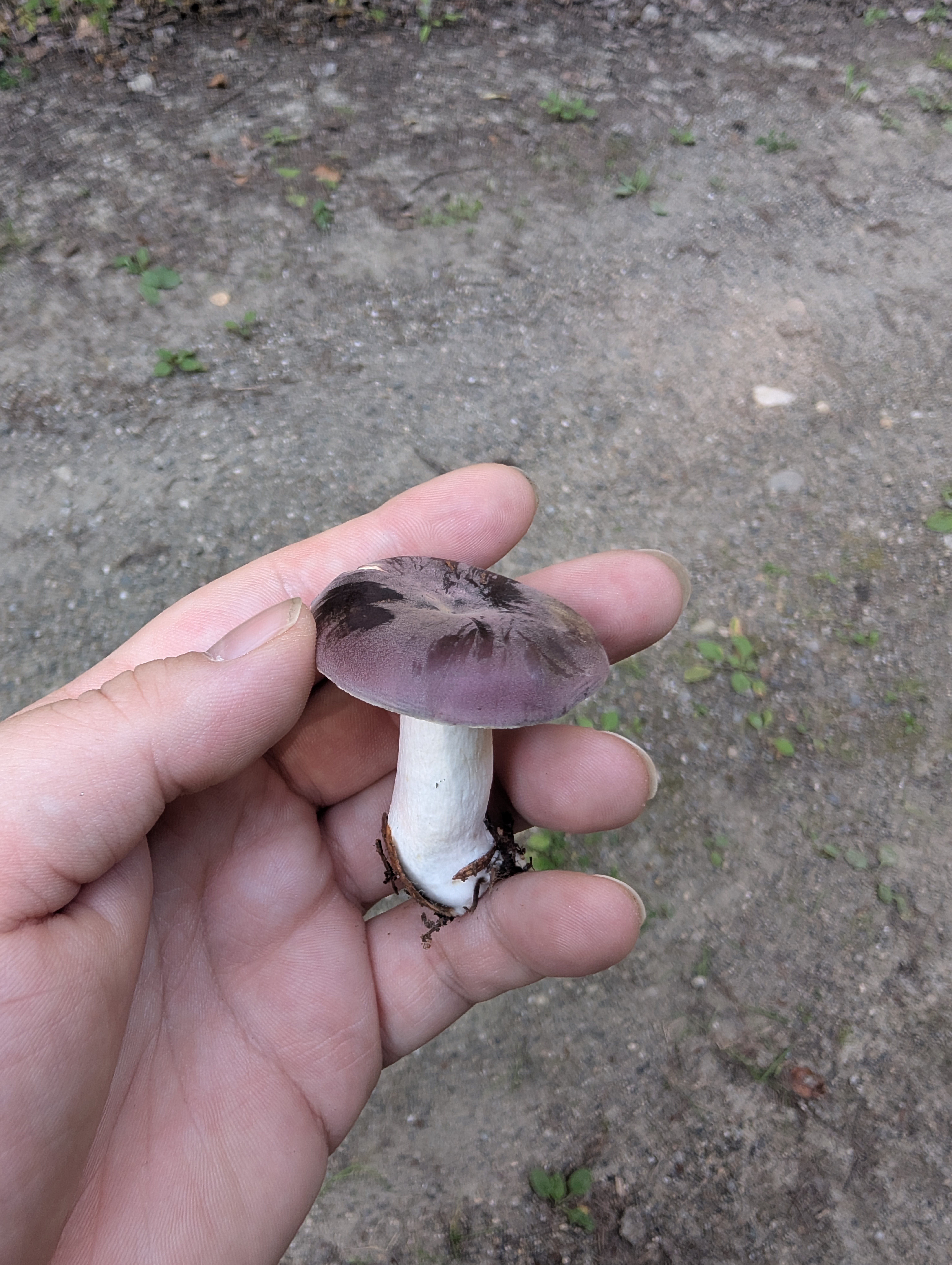
I'm in the central interior of BC, Canada. I gave up trying to ID Russulas a long time ago but I always love to see them out in full force. If I had found this just a week later it definitely would have been sent in for sequencing for MycoMapBC
Here are my notes from iNat: Coniferous habitat; scent not distinct; taste mild, very slight tingle; cap surface a deep wine-purple, slightly frosted look to it; cap peeling half-way to two-thirds of the way to centre
I broke out my keys and there are a handful that fit the bill based off what I can gather from your photo, so I won't venture a guess. That white powder though is a common trait called "bloom" for some Russula. Cool stuff I have never seen that in Indiana before. Beautiful picture.
Thanks! I appreciate you doing that.
It's really common give up on Russula because of how impossible they are to get to species but you can learn to get them to section/group which I personally find worthwhile. It helps if you enjoy eating them like I do, I spent a lot of time figuring out how to ID Russula olympiana and the other PNW xerampelina group species because of how much I like using them to make vegetarian fish broth.
The cap colors are often misleading as you noted but in many cases there are undertones you can learn to look for which are more consistent. For example, R. olympiana has this specific burgundy undertone mixed into whatever primary color the cap decided to be so I can usually tell before picking a Russula if it's possible for it to be R. olympiana or not. R. olympiana, R. emetica, and R. americana can all be "red" but they actually can't be the same shade of red if that makes sense.